

Tilat n: Augmented University Campus _ Helsinki Finland



Program Aalto University Campus Centre: Schools of Arts, Architecture and Film, Library, Cafés, Restaurants and Shops
Area 60,000 m²
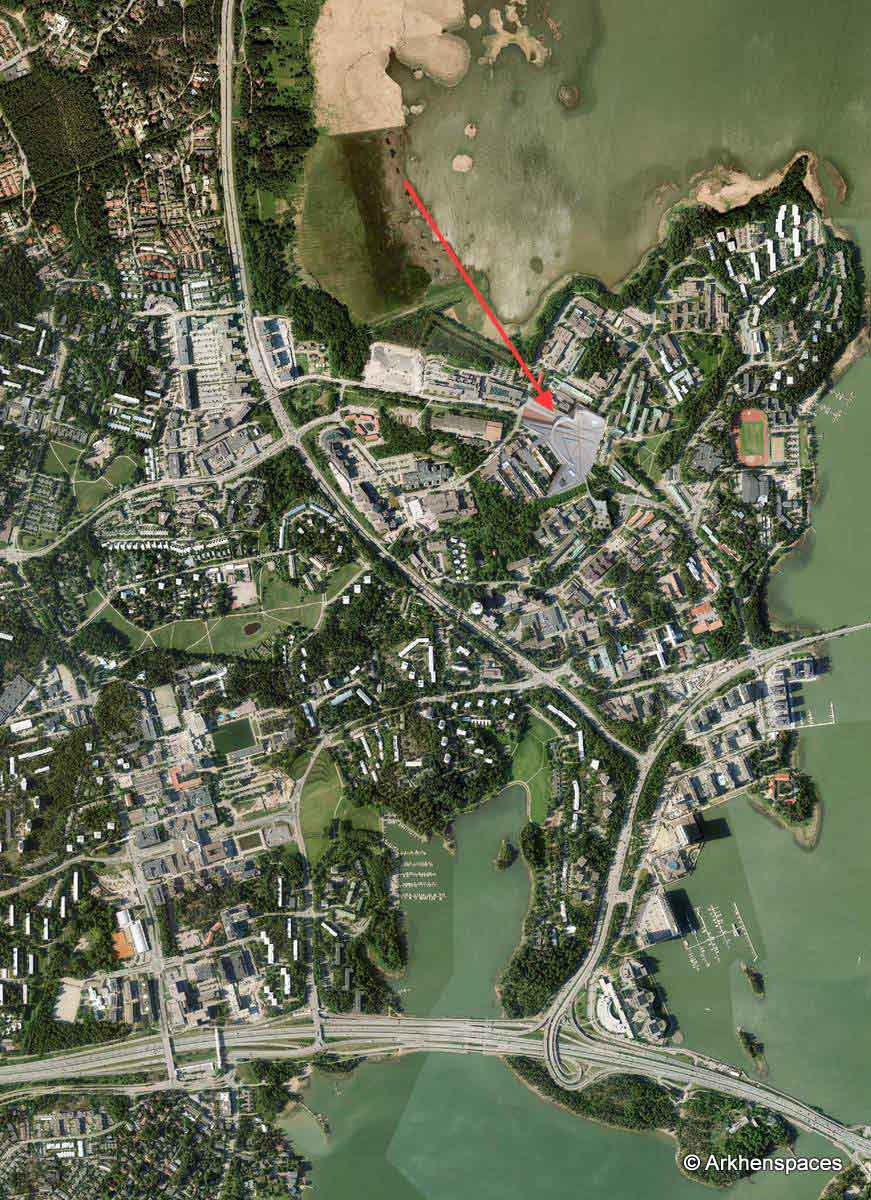
Location Otaniemi, Espoo (Helsinki), Finland
Date 2012
Team Éric Cassar, Aurélien Bonvalet, Florian Harry, Julien Papaud, Javier Murillo
Client Aalto University
General Principles
Tilatn is conceived as the nerve centre of the Aalto campus: a place for encounters, learning and interaction between students, teachers, researchers and visitors.
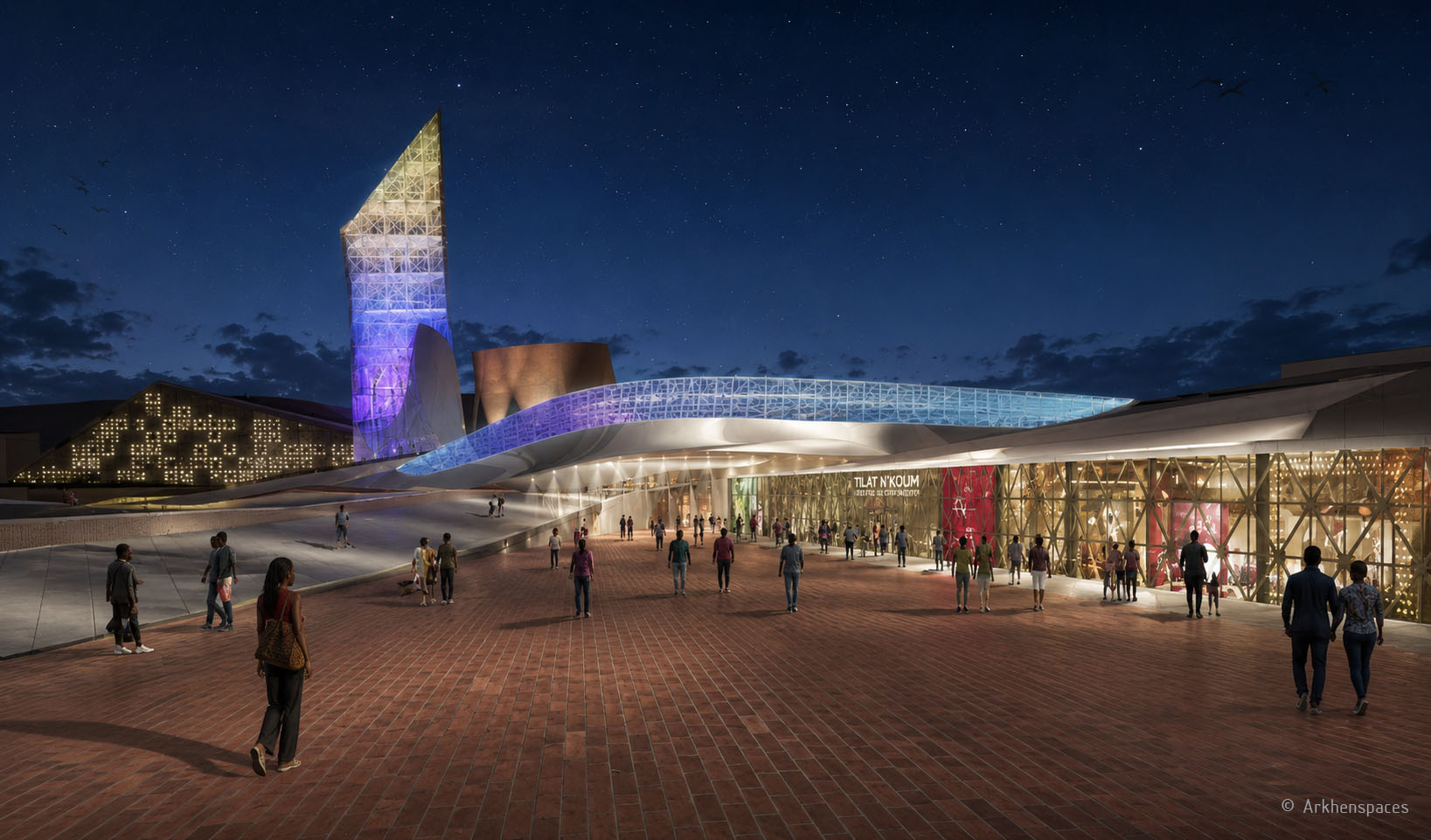
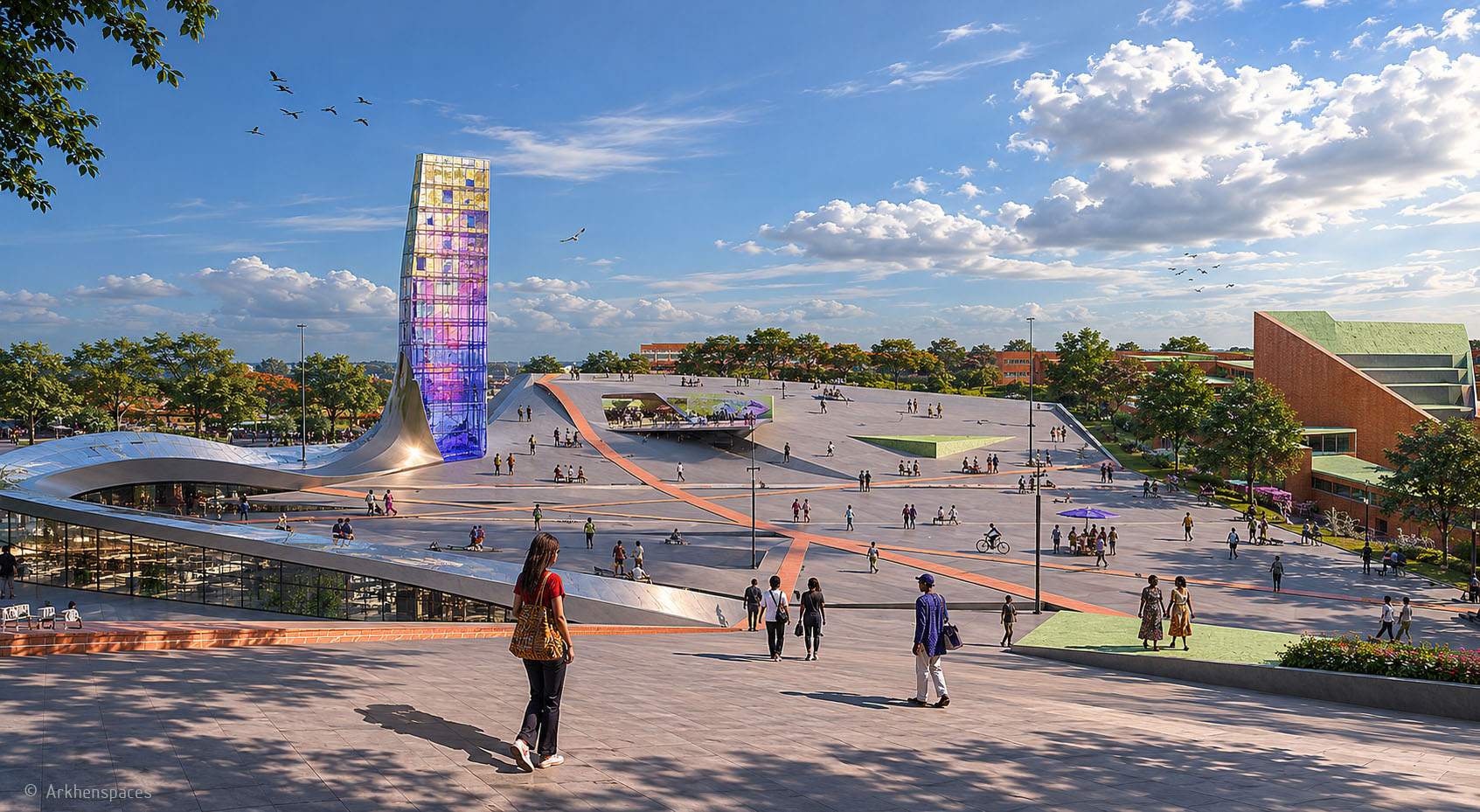
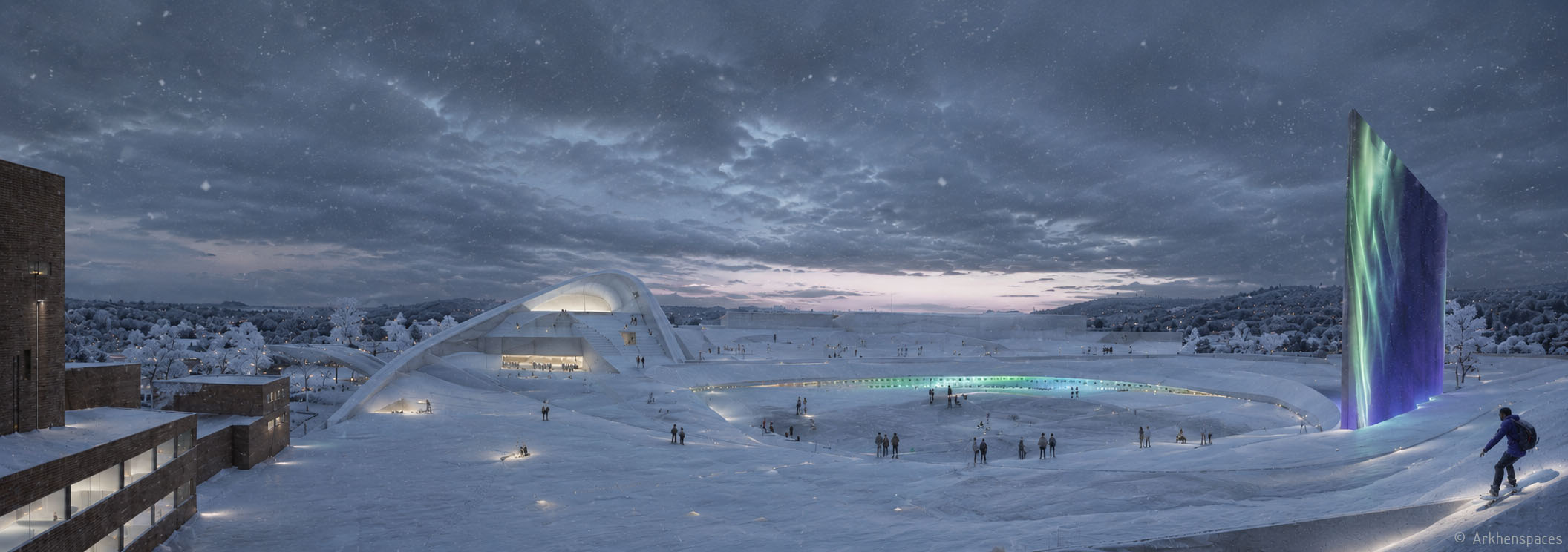
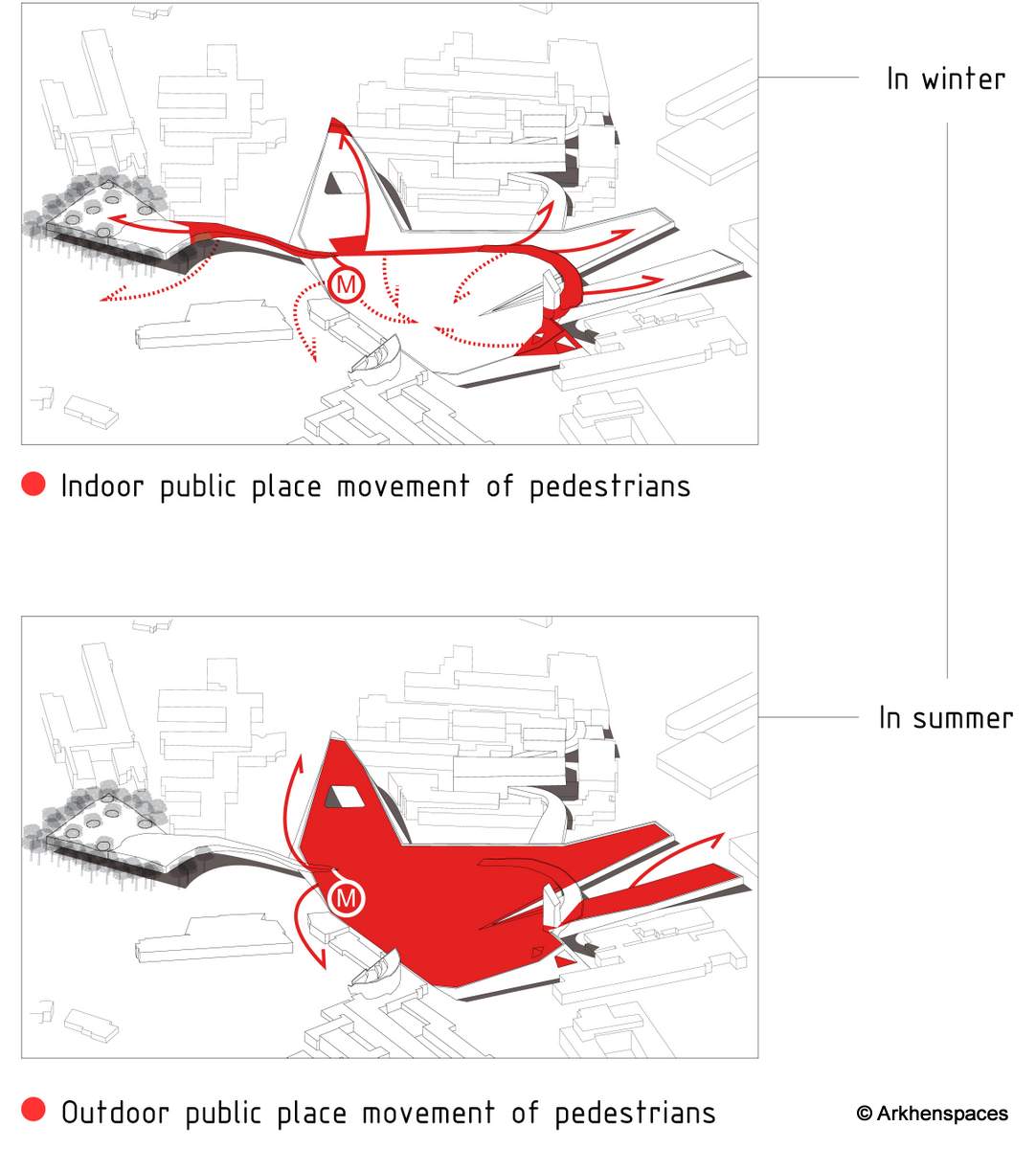
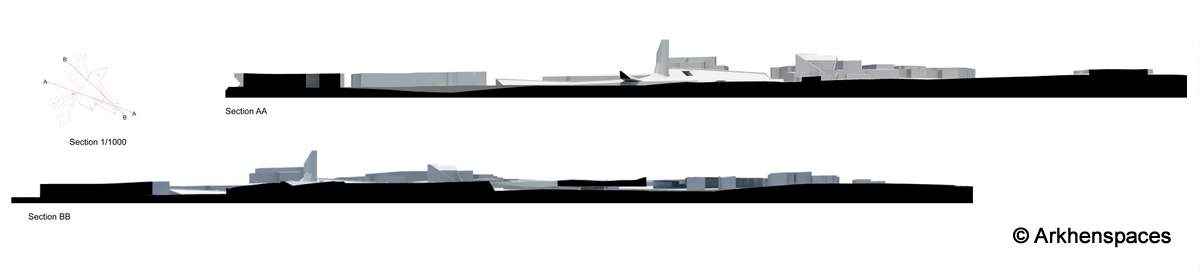
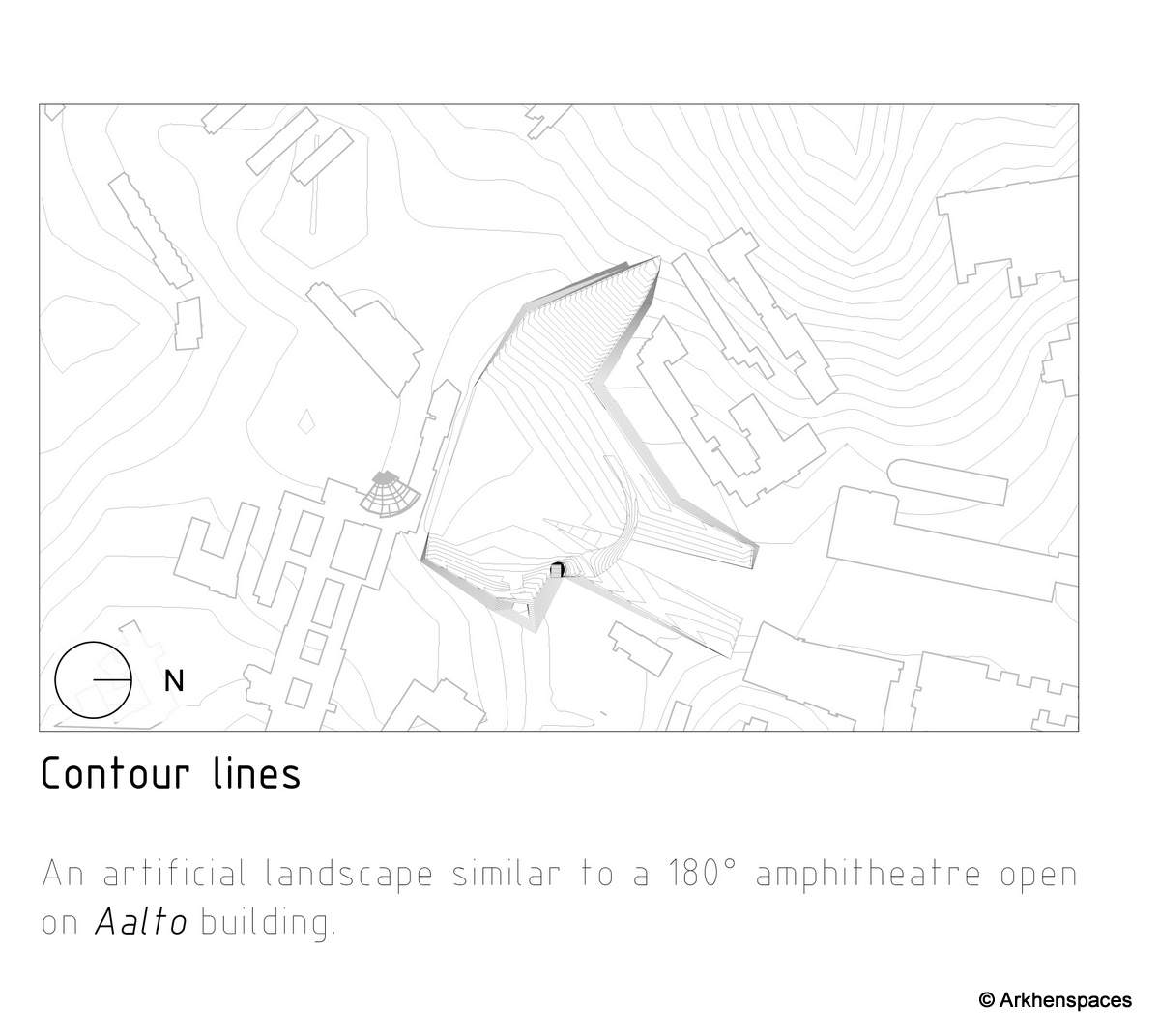
More than a building, Tilatn is an inhabited artificial landscape. It expands the amount of public space available and transforms the heart of the campus into a landscape accessible throughout the year and adapted to the Finnish climate.
Protected from prevailing winds and open to everyone, the project encourages connections between people, disciplines, places and information.
Architecture becomes an instrument of relationships capable of connecting nature, knowledge, physical spaces and digital environments.
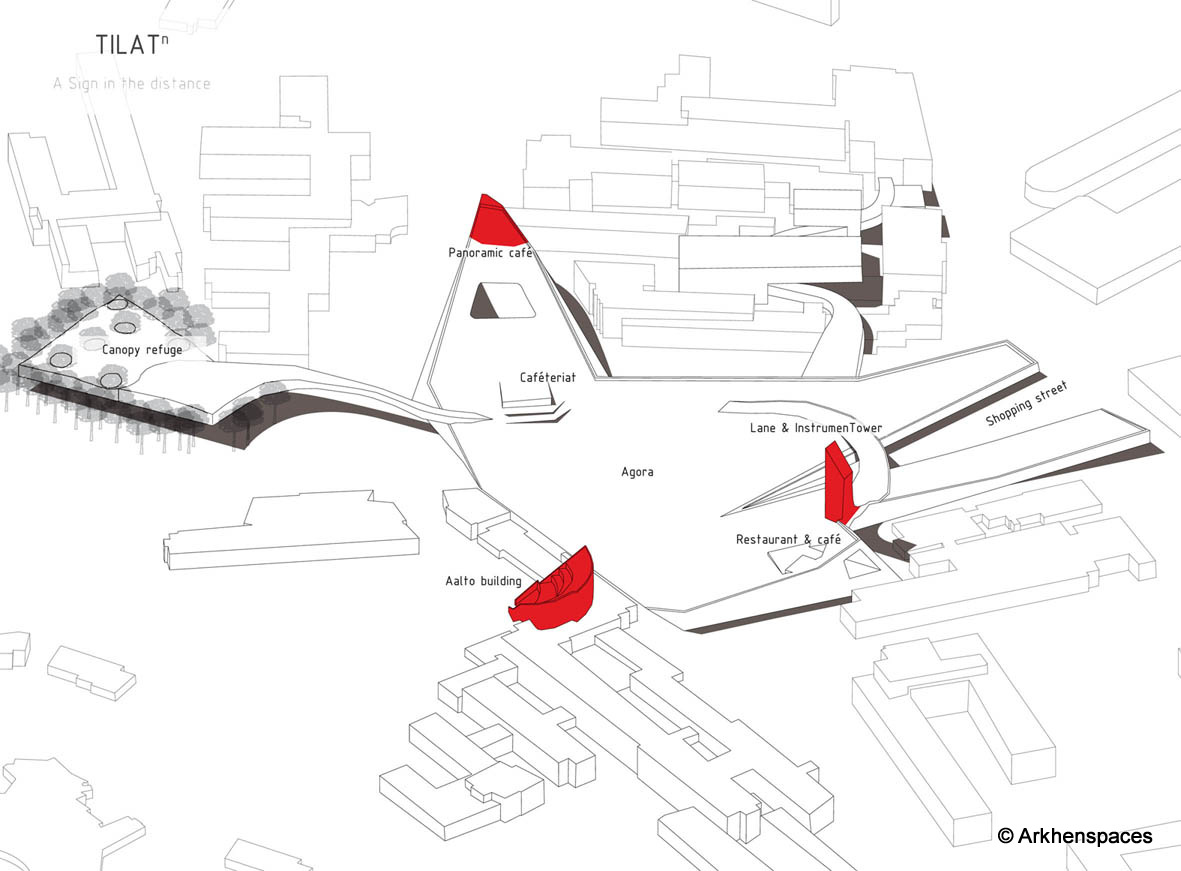
The Agora: A Public Square on the Roof
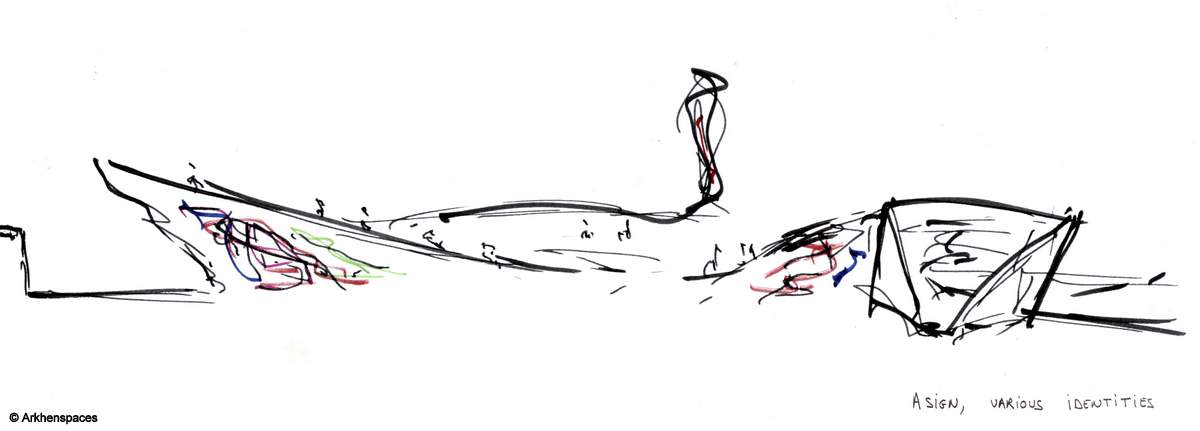
Tilatn’s roof becomes a vast mineral public square overlooking the campus.
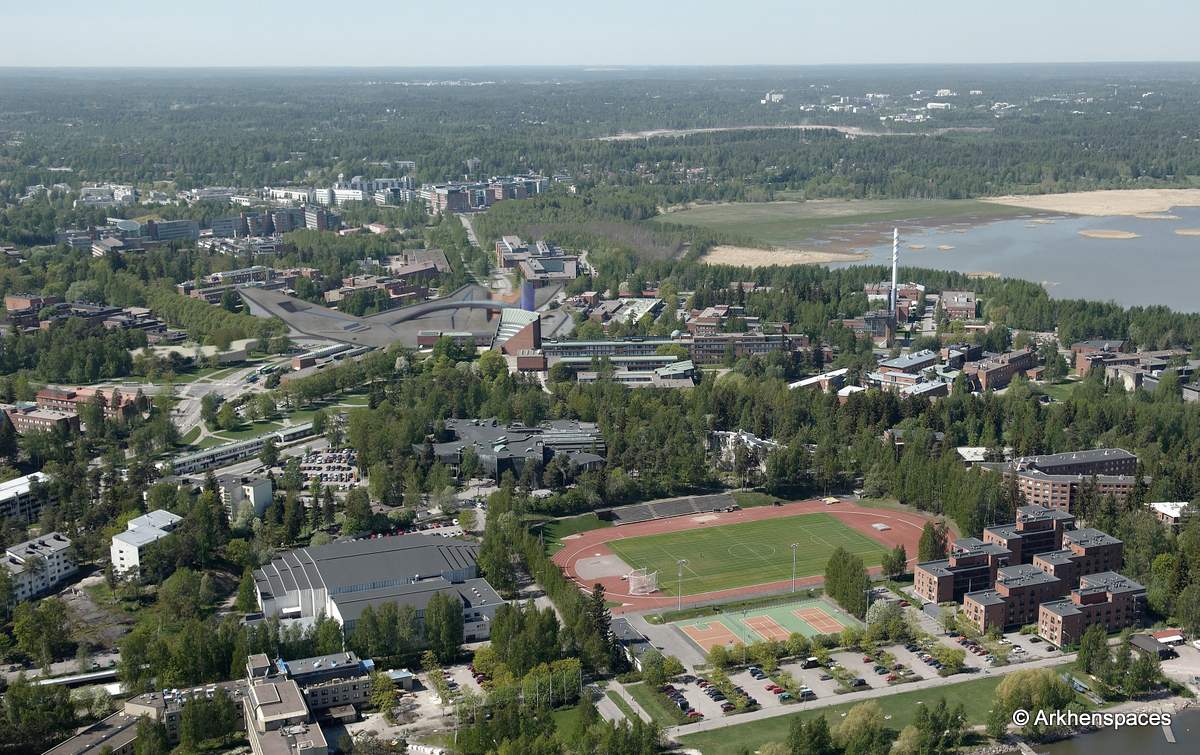
Gently sloping, the Agora invites students to sit, study, meet and attend events while facing the historic building designed by Alvar Aalto.
Cafés, restaurants, markets, exhibitions and concerts can freely take place there.
Three elements structure this new centre of gravity:
- the square itself;
- a tower visible from afar;
- a ramp that seems to lead towards the sky.
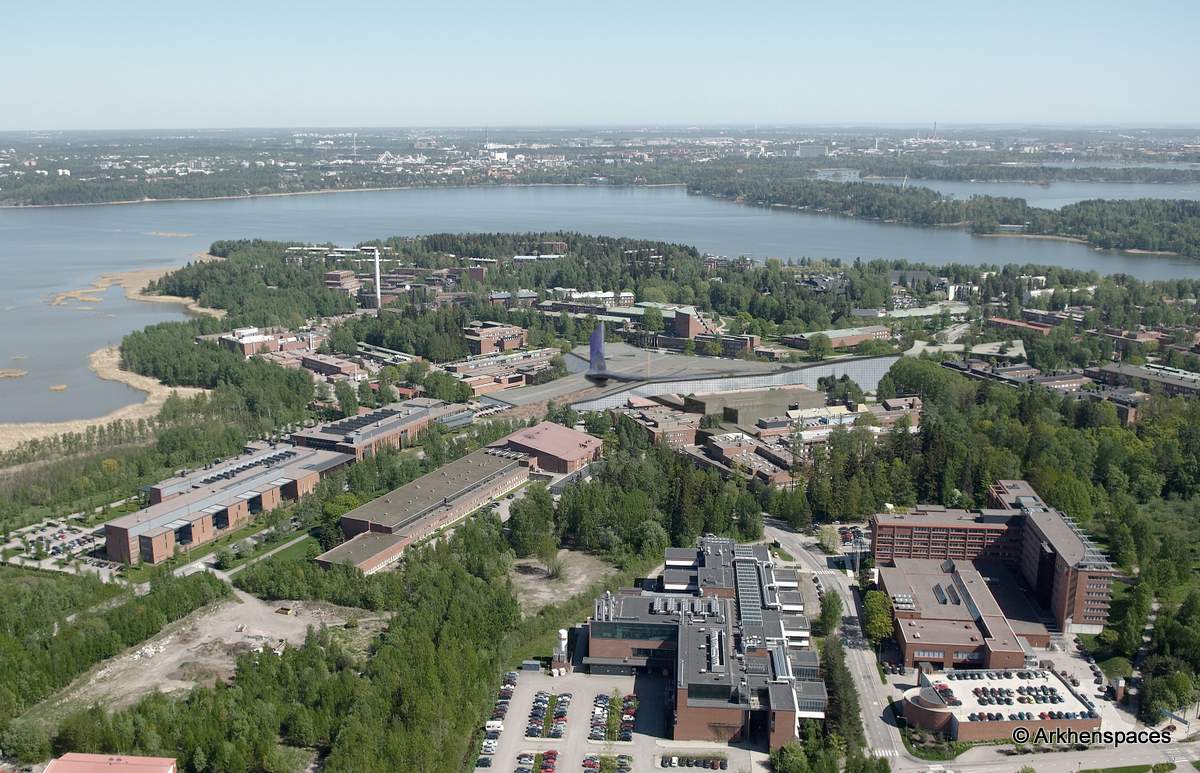
These landmarks make it possible to identify the heart of the campus from across the university grounds.
A Constructed Landscape
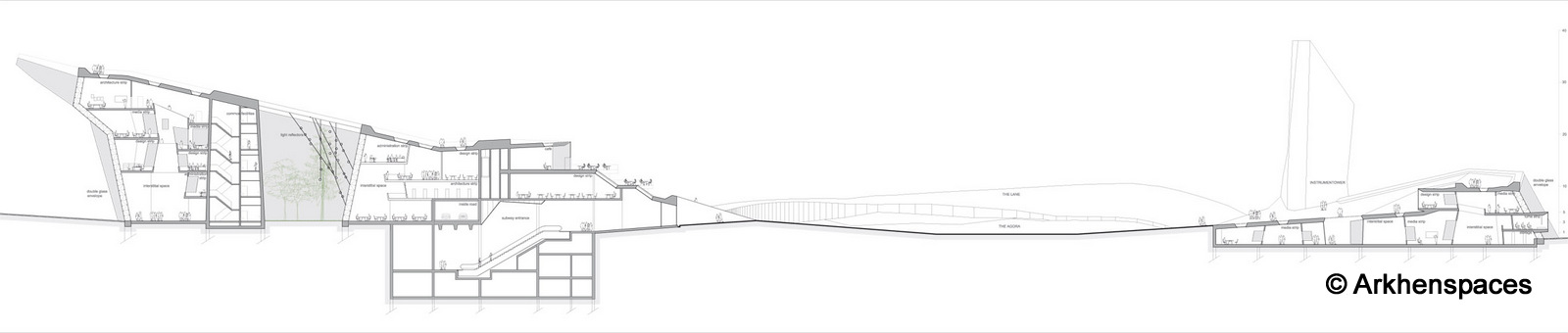
Beneath the Agora are located the different university programmes.
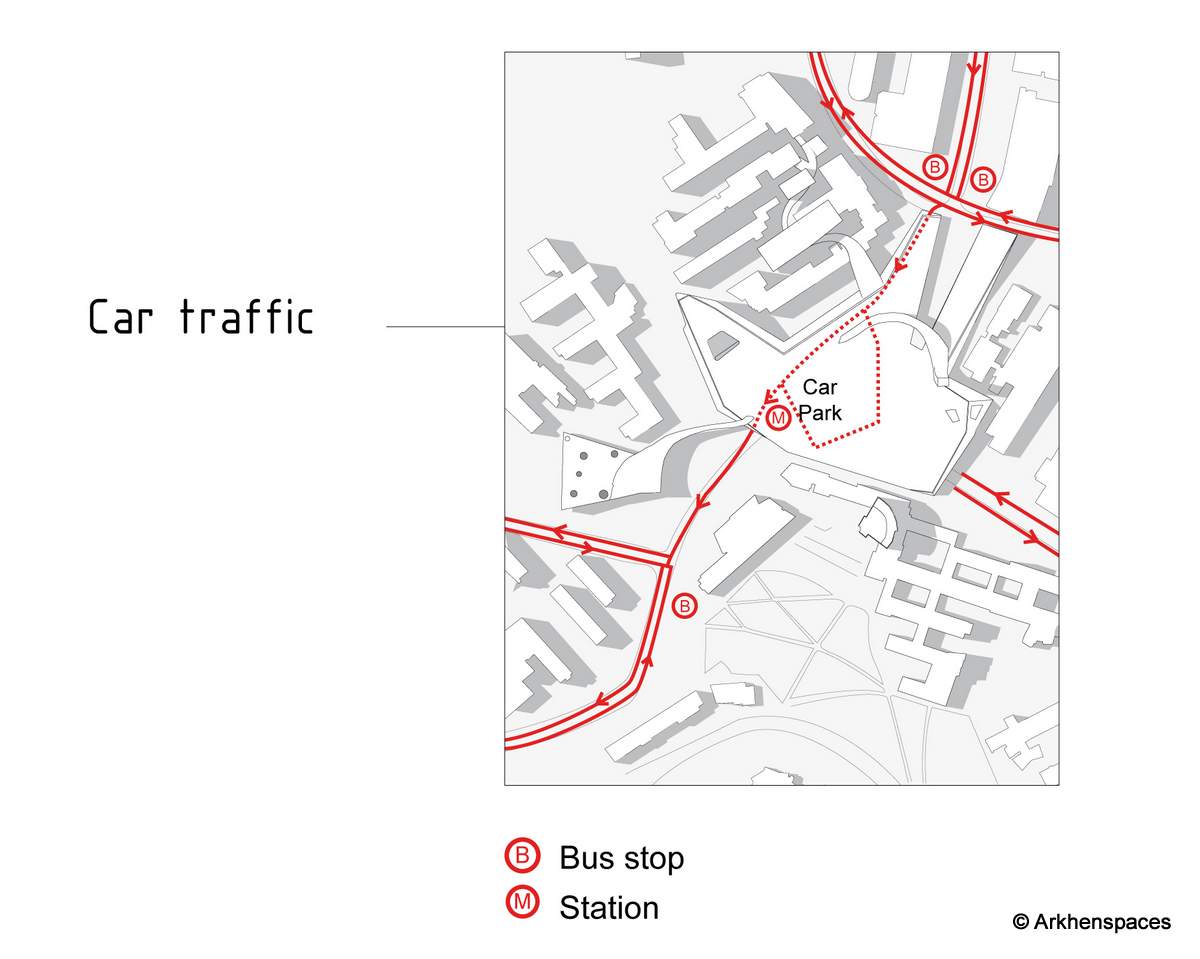
Vehicle traffic disappears into a tunnel, freeing the entire surface for pedestrians. The campus gains a new layer where public spaces and buildings overlap.
This artificial landscape protects users from the wind while creating conditions of comfort and experience adapted to the Nordic climate.
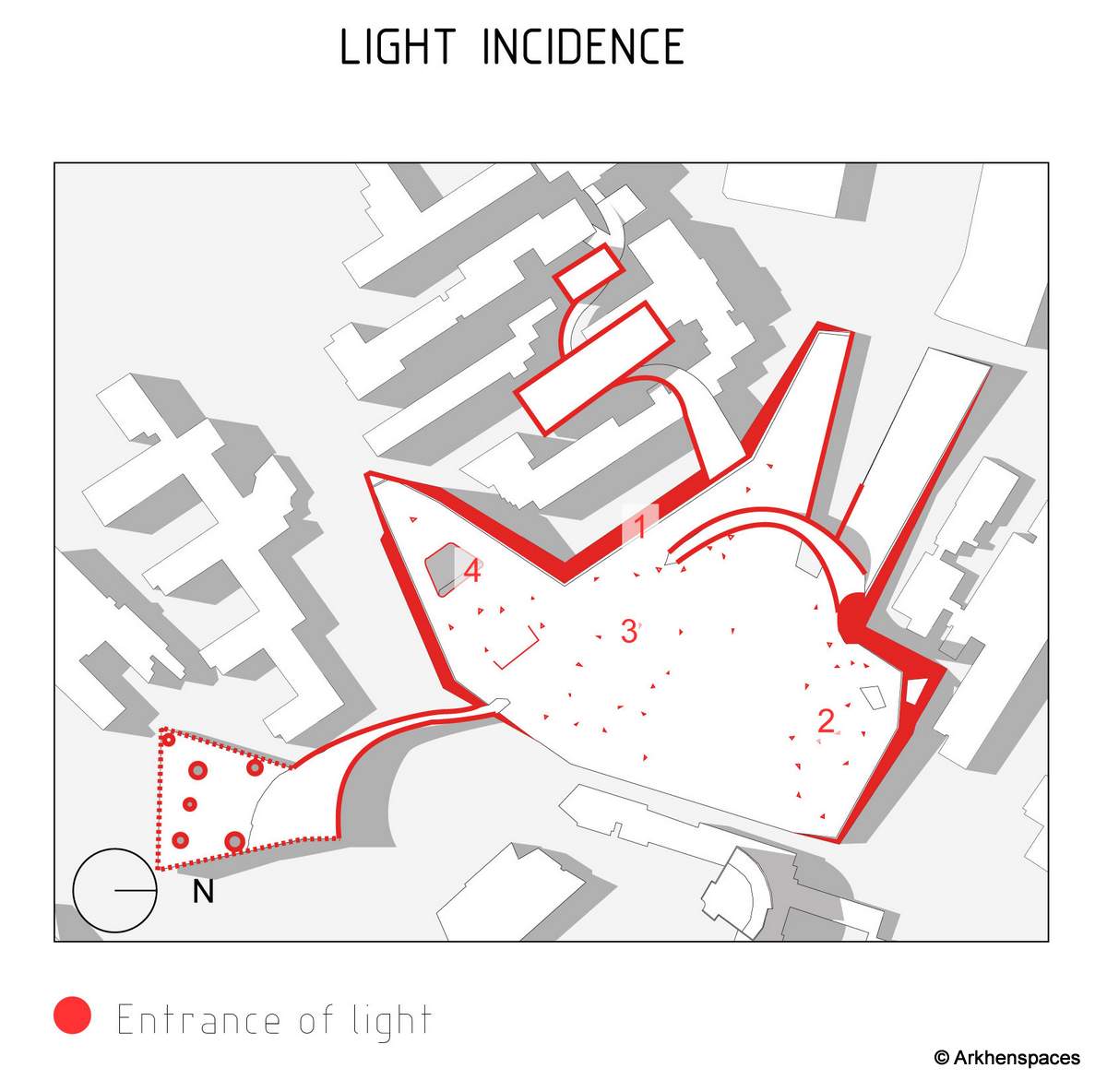
Its envelope plays a central role in this strategy. Composed of transparent and translucent surfaces, concrete floors punctuated by brick pathways and steel elements for accessible areas, it acts as an interface between the campus and its environment.
Playing with light, snow, wind and humidity, it continuously transforms the perception of the building throughout the seasons. The envelope is not static: it is reactive. Like a sensitive organism, Tilatn responds to changes in its environment and reveals different faces according to atmospheric conditions.
The Strips: Connecting Disciplines
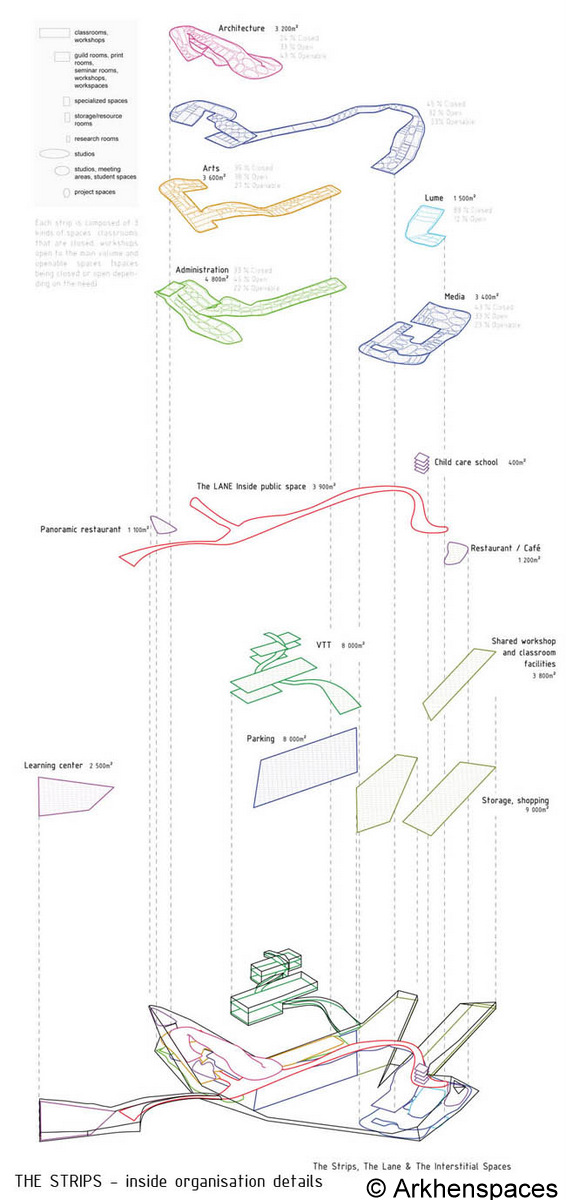
Beneath the public square, the different disciplines are organised into long built strips crossing several levels.
Each strip accommodates the spaces dedicated to a faculty while remaining permanently connected to the others.
The strips intertwine, intersect and interact in order to encourage exchanges between students from different fields.
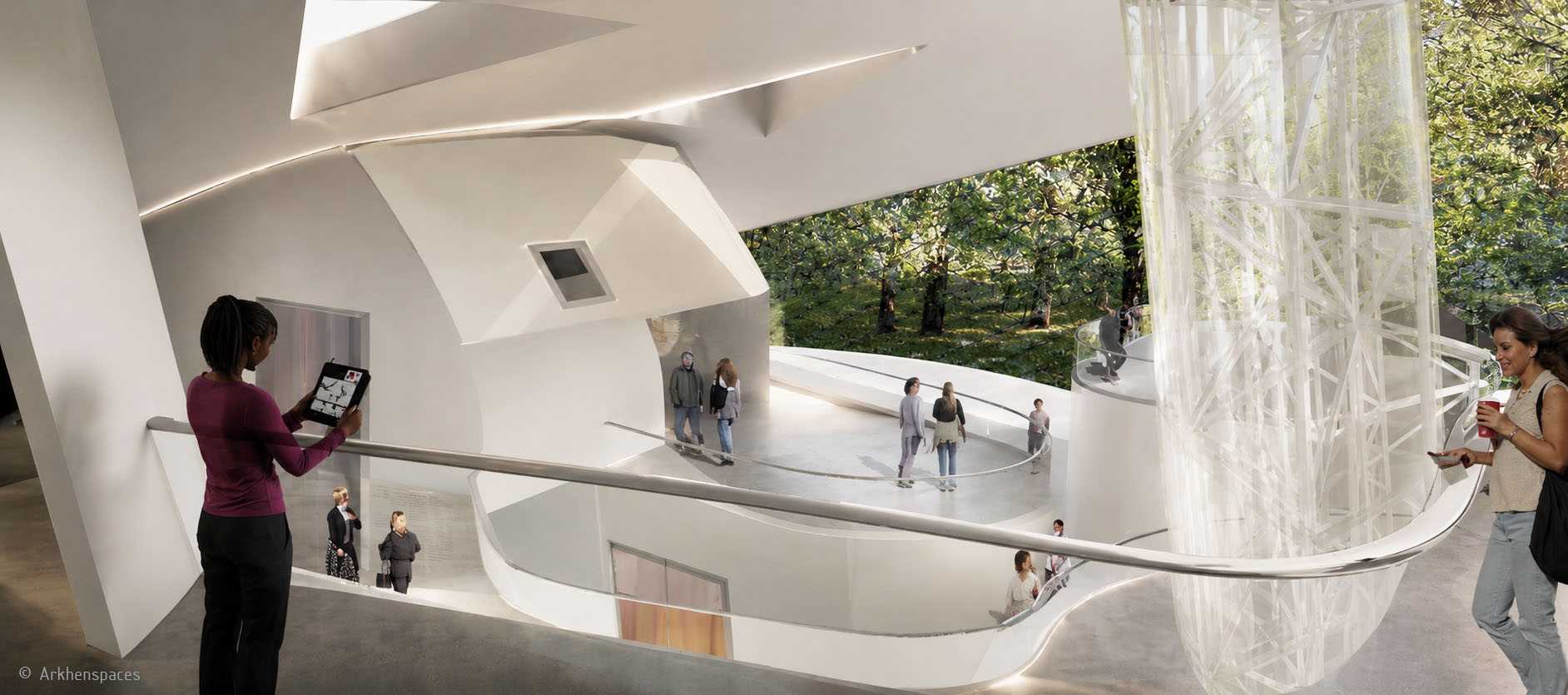
Between and around them emerge numerous interstitial spaces: stairways, bridges, patios, covered courtyards and informal resting areas.
These intermediate places become the true spaces of encounter and informal learning within the campus.
Each strip combines:
- enclosed classrooms;
- open workshops;
- flexible spaces that can be opened or closed depending on needs.
The Lane and the InstrumenTower
The Lane is an interior street, a public backbone running through the centre of the campus.
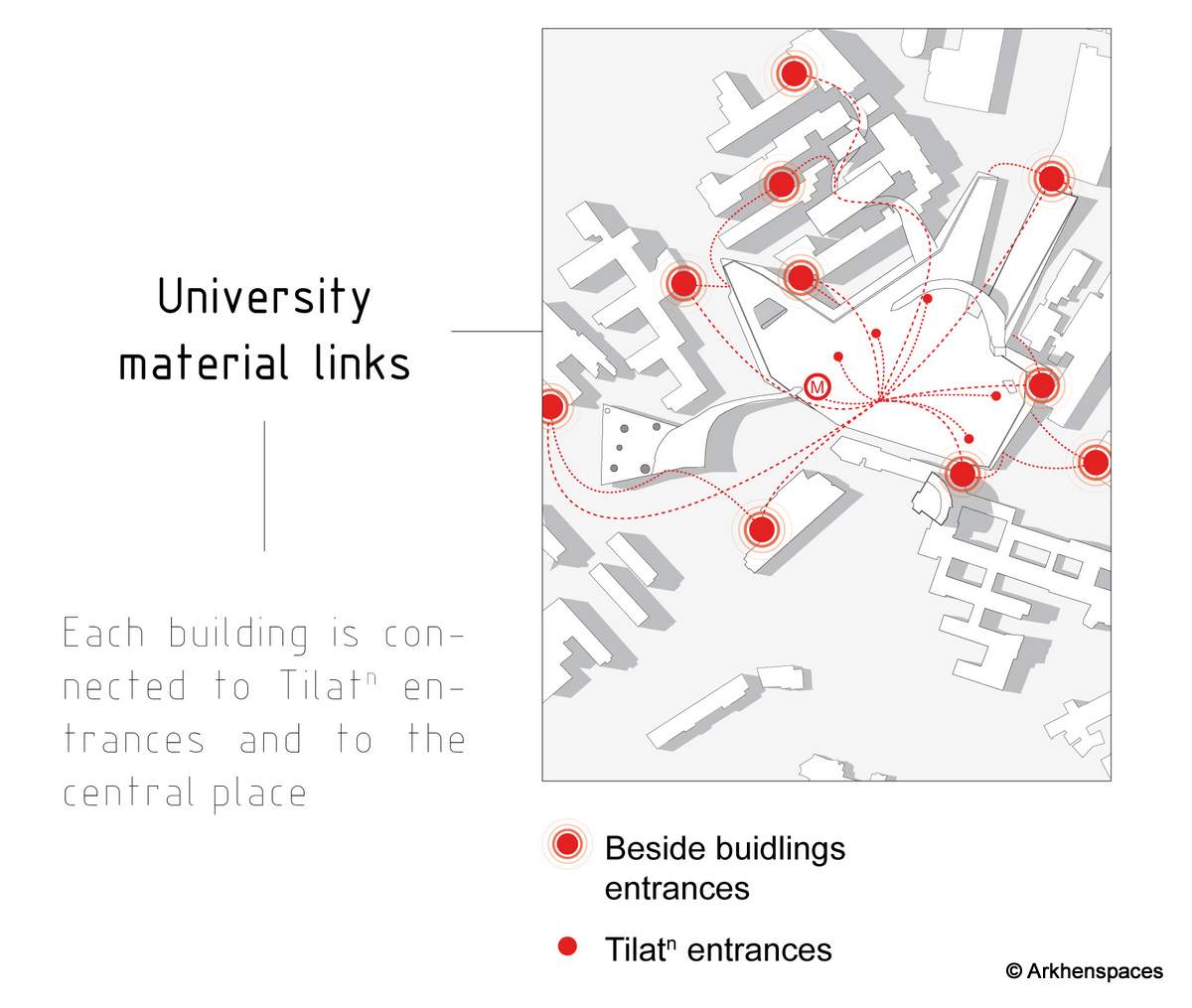
Open to everyone, it connects the metro station, parking areas, shops, restaurants and university facilities.
Its spatial sequence culminates in the InstrumenTower, an interactive visual instrument capable of reacting to campus activities.
Colours, light and variations reveal the rhythms of university life and make visible certain information related to the building’s use.
Architecture thus becomes a medium for expression, communication and creativity.
The Refuge: Learning in the Forest
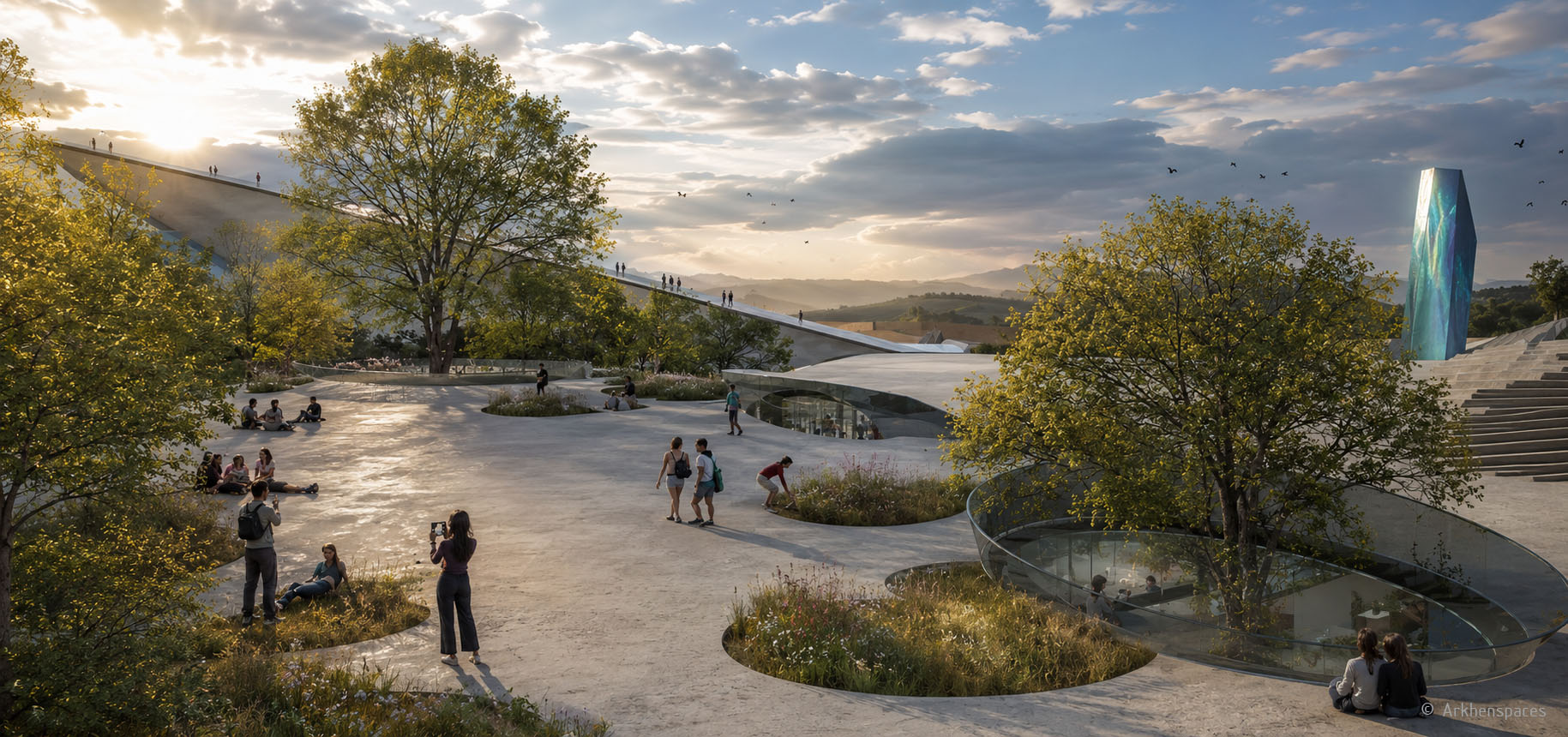
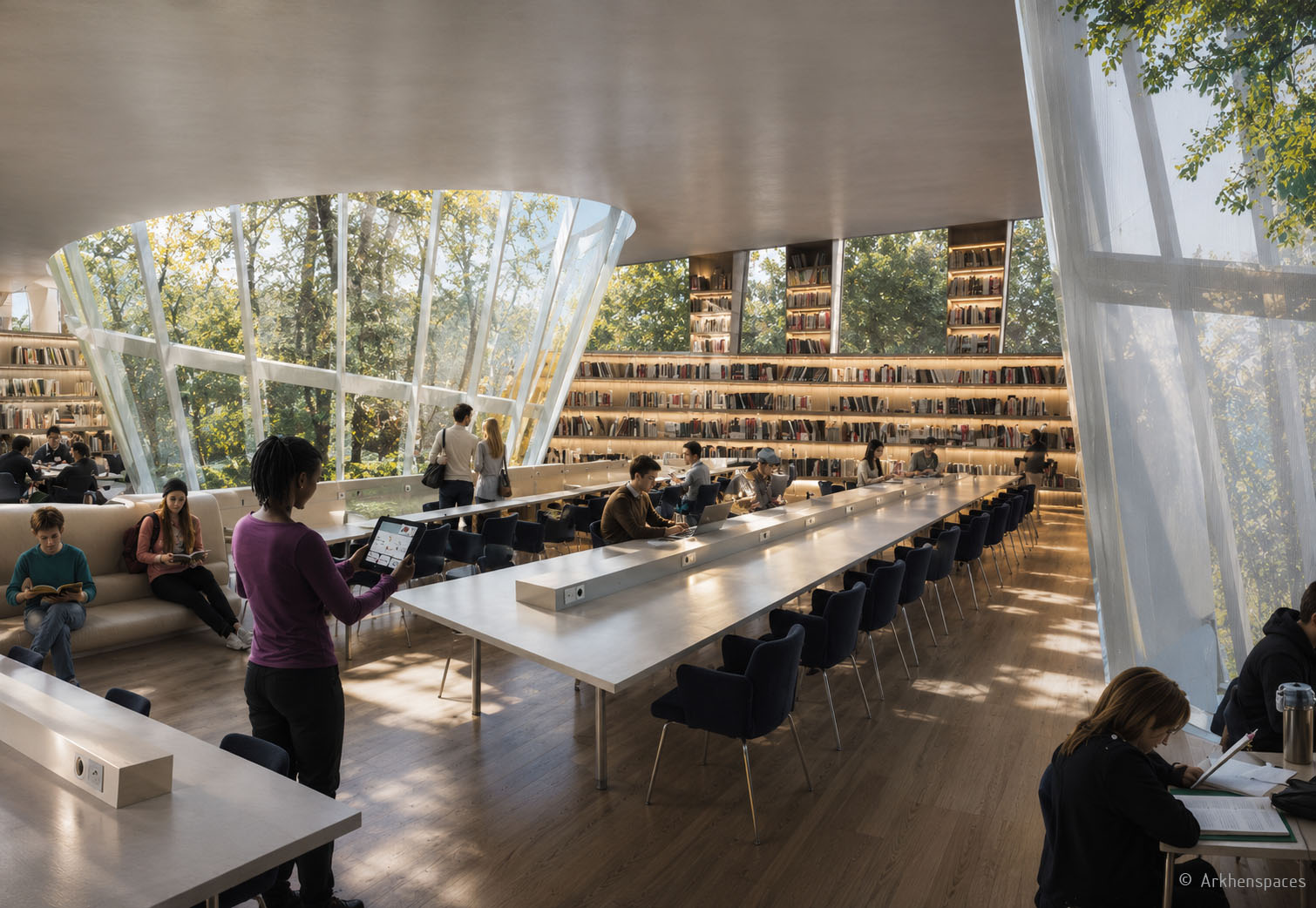
Away from the Agora, the learning centre is conceived as a refuge hidden within the forest.
Raised on stilts, the building evokes a treehouse suspended among the trees.
The reading room is crossed by vegetation while visitors perceive only trees, sky and books.
The library becomes a place of concentration and immersion.
Its roof garden extends this experience by offering students multiple outdoor reading spaces among vegetation, natural light and small amphitheatres opening onto patios.
An Augmented University Campus
Tilatn integrates a digital ecosystem designed to facilitate exchanges and access to knowledge.
Students can choose whether to be connected or disconnected according to their needs.
The system also contributes to the building’s energy management by optimising light, temperature and humidity.
The InstrumenTower becomes the visible expression of this invisible ecosystem, comparable to an artificial aurora borealis revealing the rhythms of campus life.
Technology is not intended to impose permanent connectivity but to offer greater freedom in the way people learn, work and interact.
An Architecture of Connections
Tilatn is both a physical construction and a relational environment.
It connects disciplines, spaces, individuals, landscapes and digital tools.
Every part of the project — the Agora, the Refuge, the Strips, the interstitial spaces and the Lane — contributes to the creation of an open, adaptable and forward-looking university.
The university becomes a landscape of knowledge where learning develops as much between disciplines as within them.
Knowledge grows between disciplines.