

Ecological urban service stations _ Netherlands
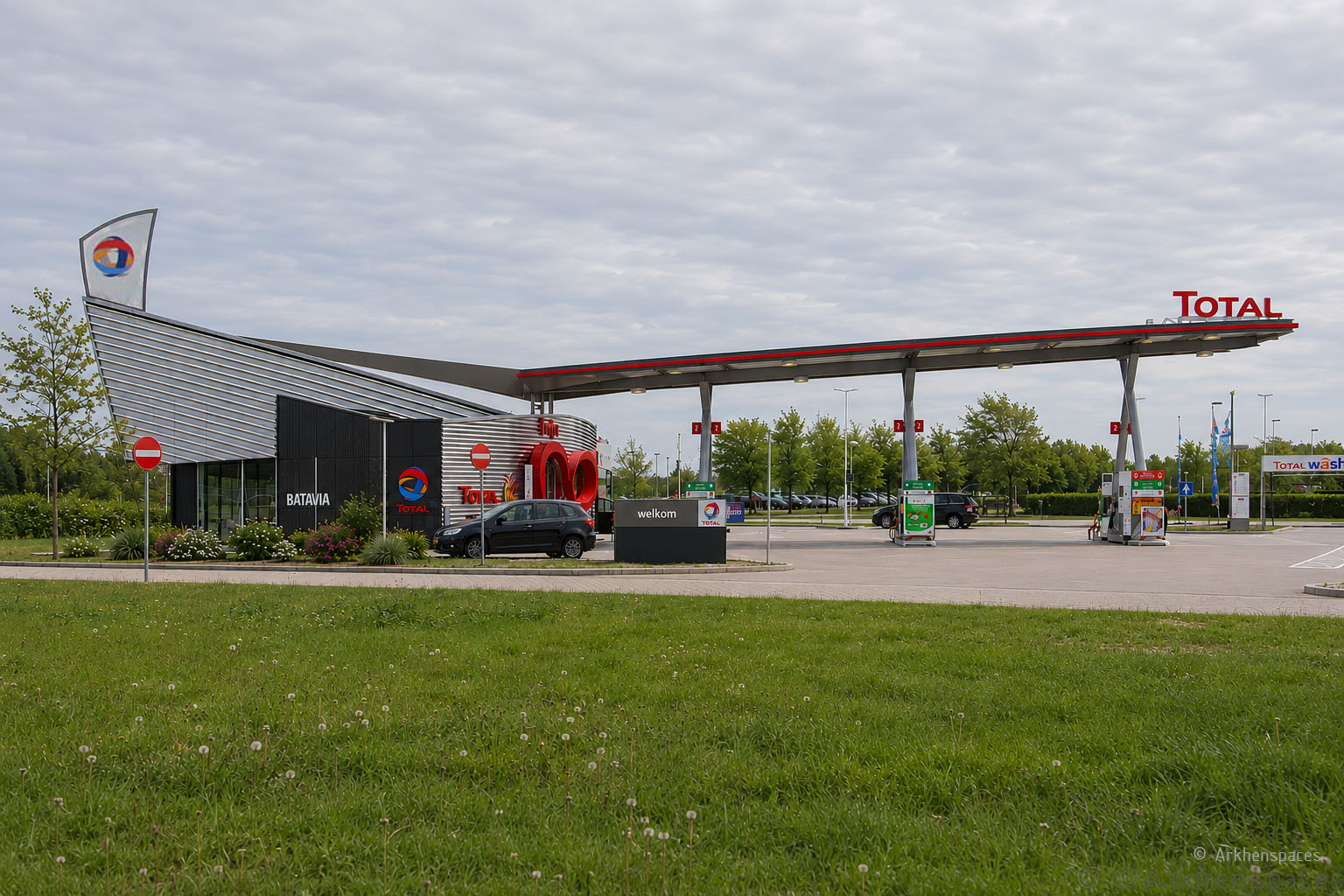

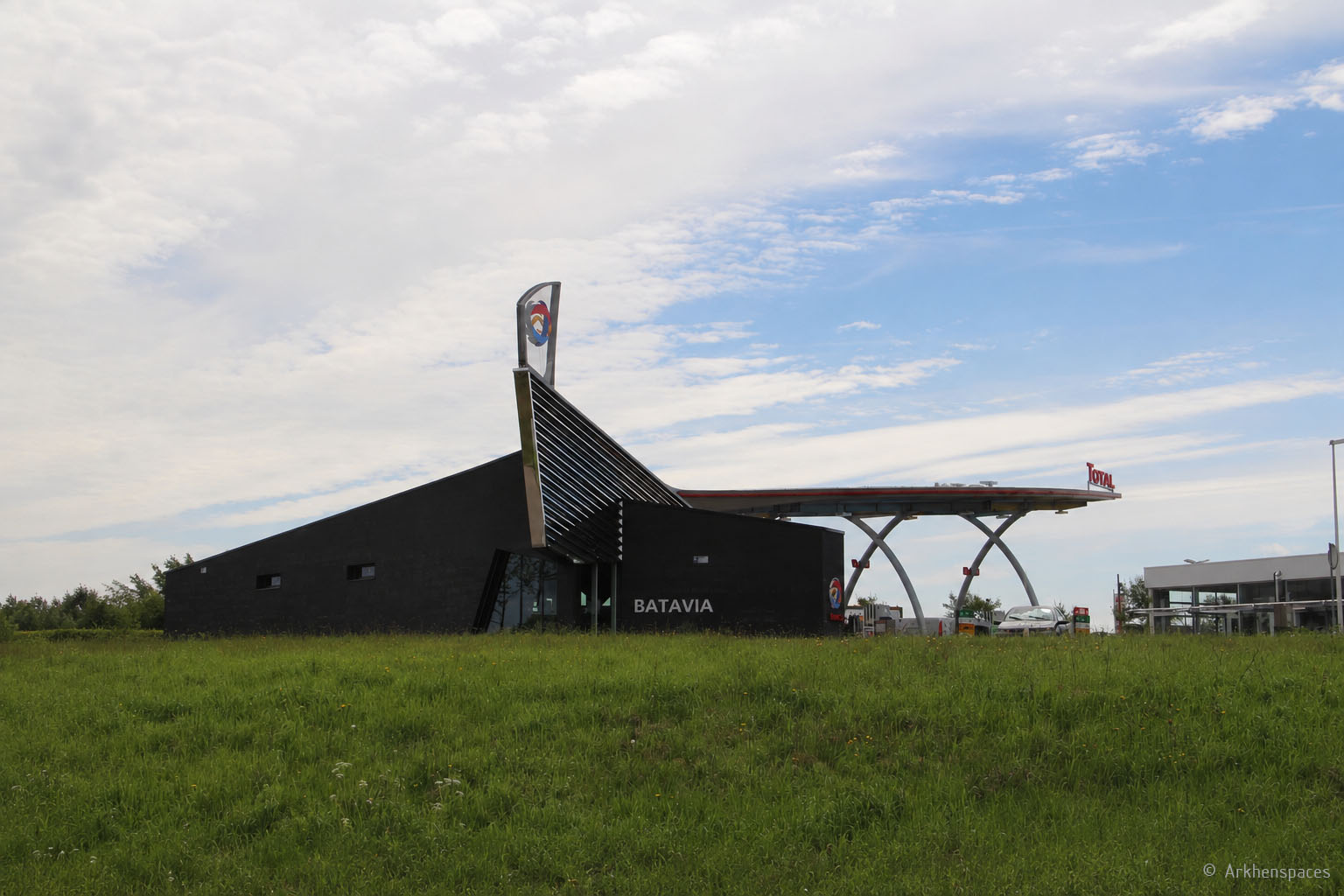
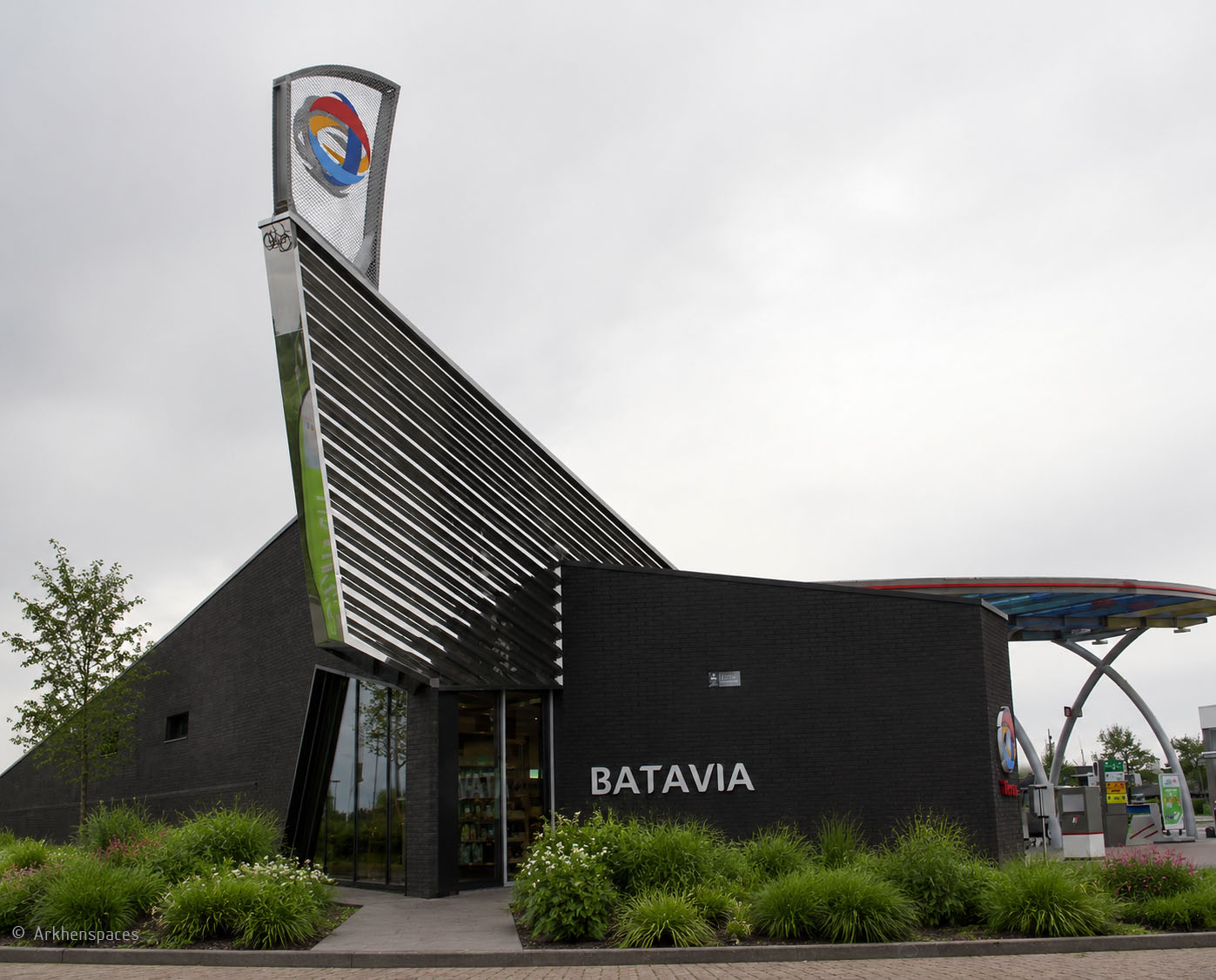
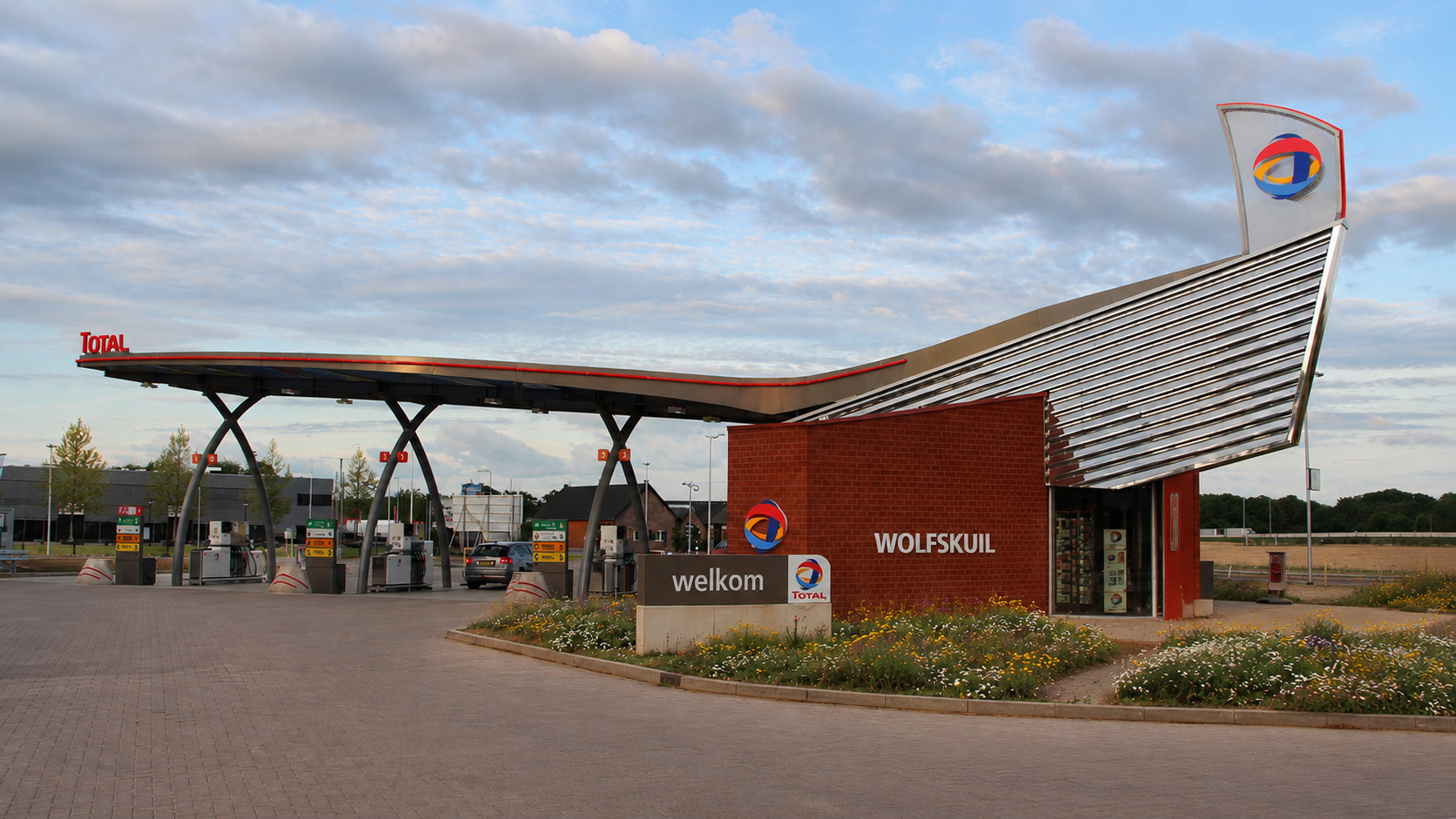
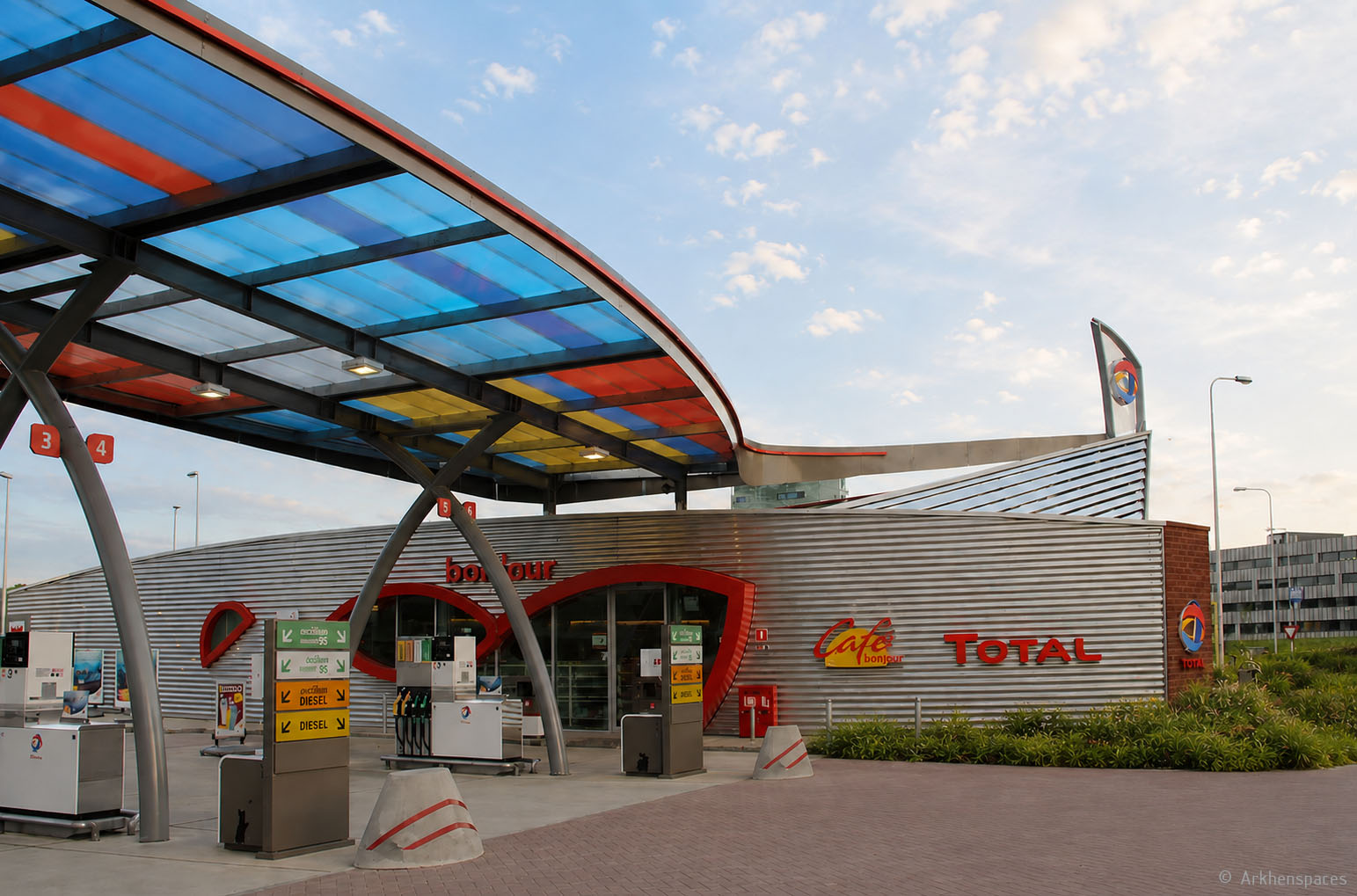
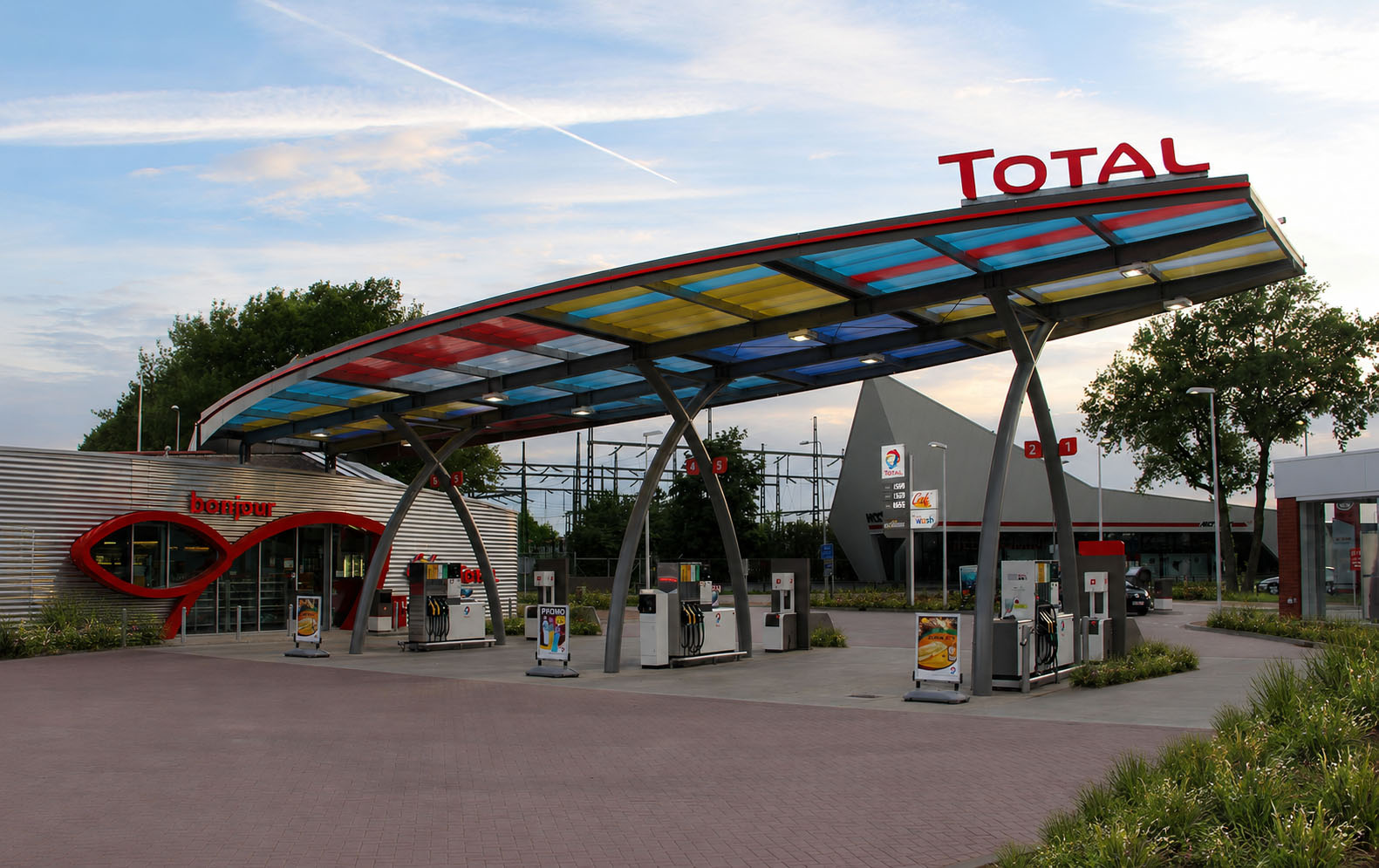

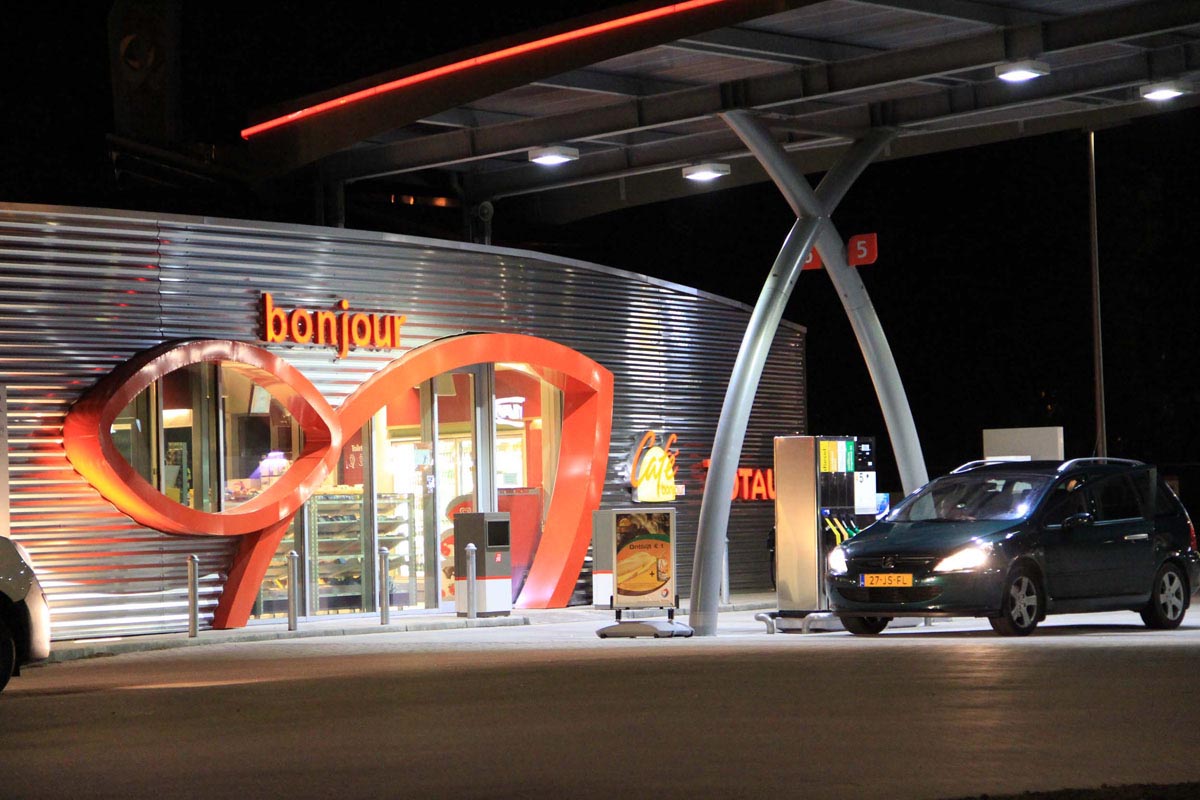
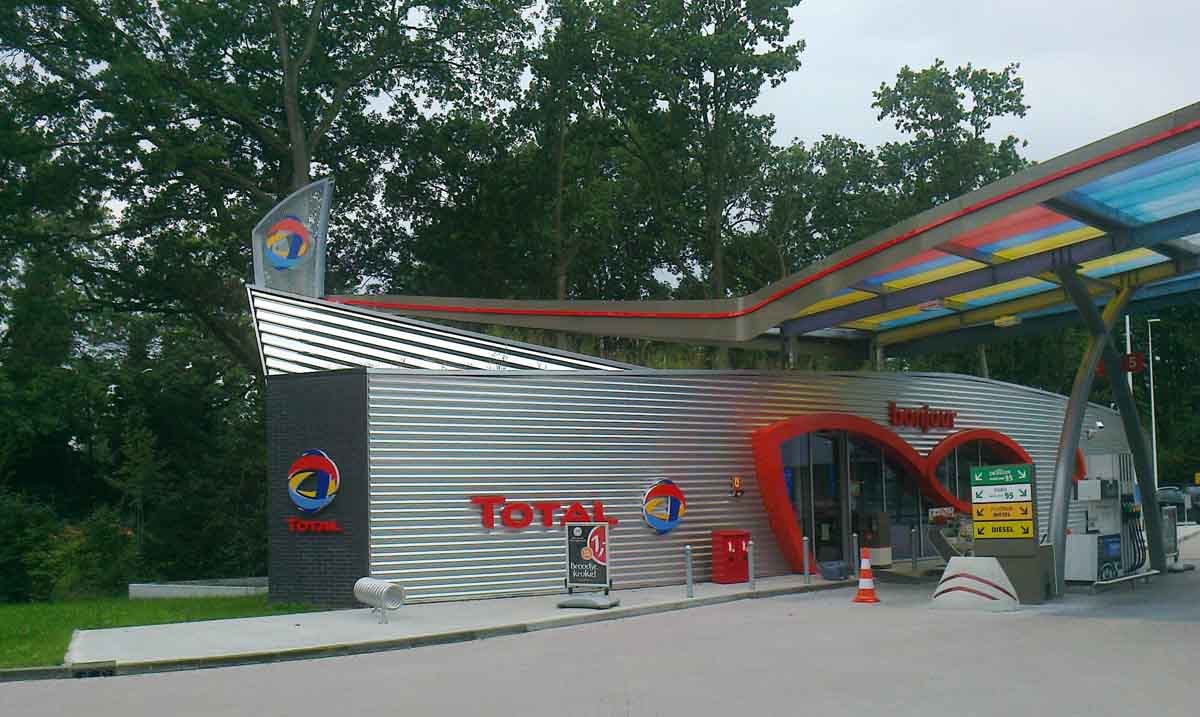


Program New concept for urban service stations: three constructions in the Netherlands
Surface 180 m²
Location Herten, Netherlands / Lelystad, Netherlands / Bilthoven, Netherlands
Team Éric Cassar, Yacine Touazi, Juvenal Rubinos, Céline Lecoute, Lucie Rieutord
Client Total (now TotalEnergies)
Schedule Herten: studies launched at the end of 2008, completed in 2013
Local architect Contrall
General principles
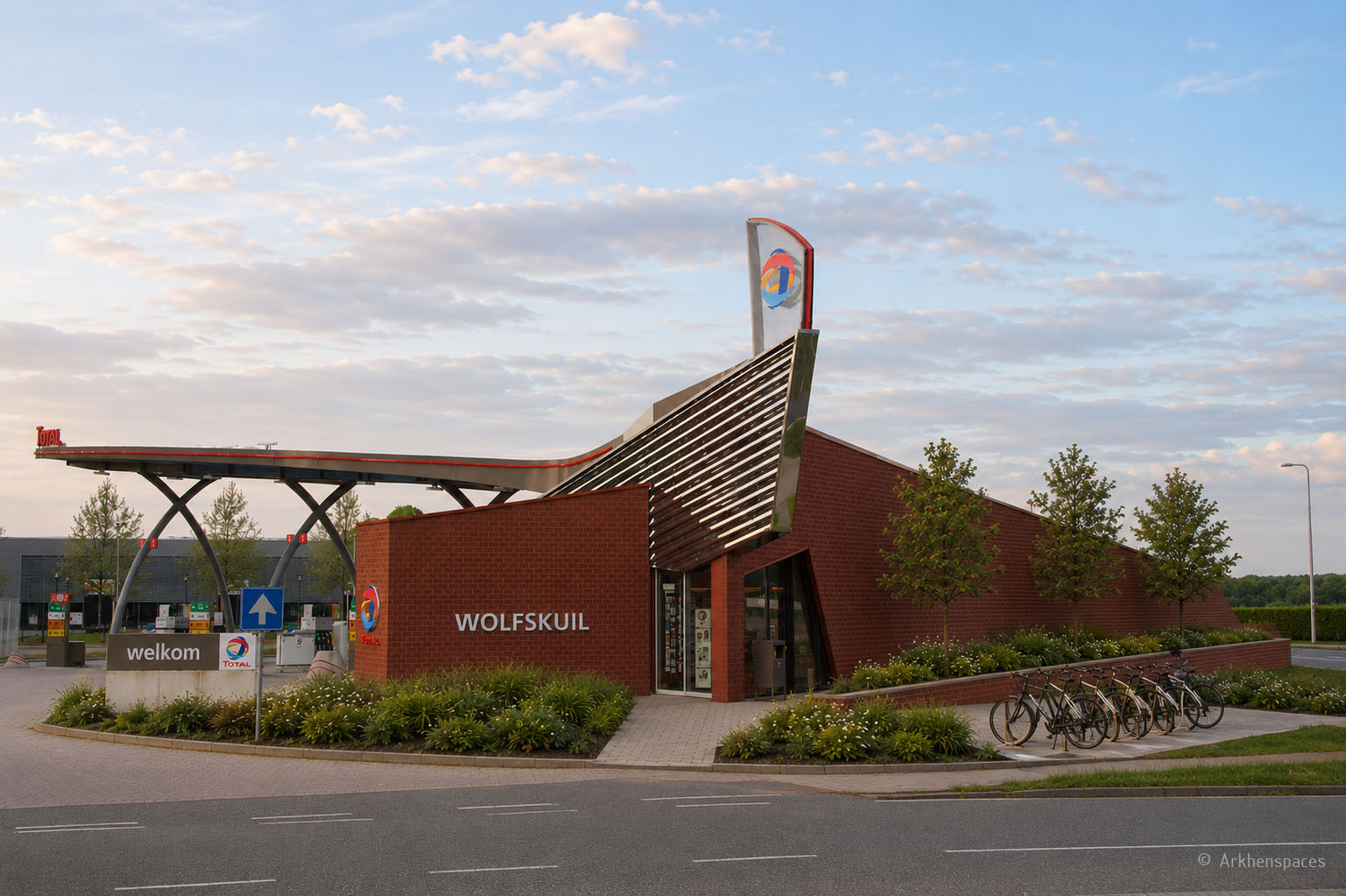
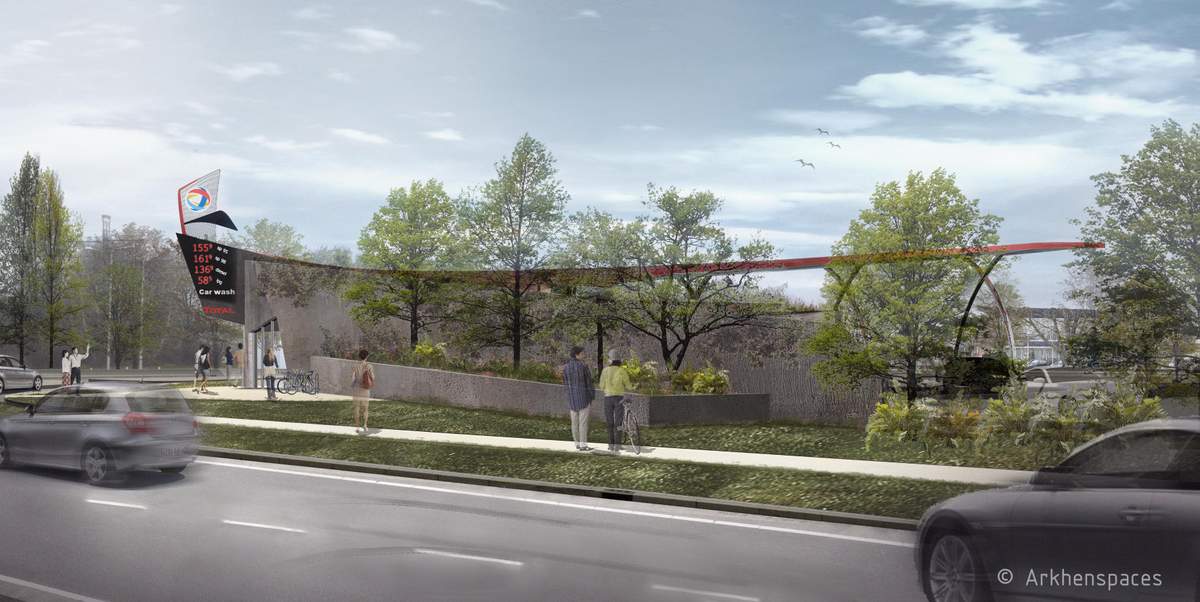
The project transforms the urban service station into a local facility open to the city. The shop is no longer intended solely for motorists but for all users: pedestrians, residents, cyclists and travelers.
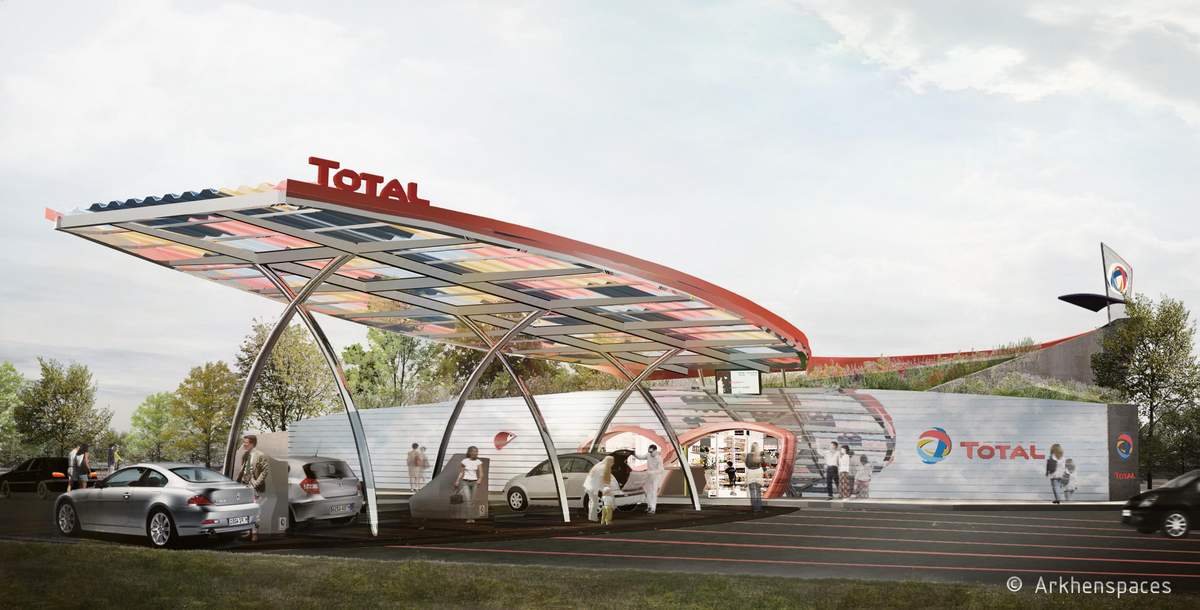
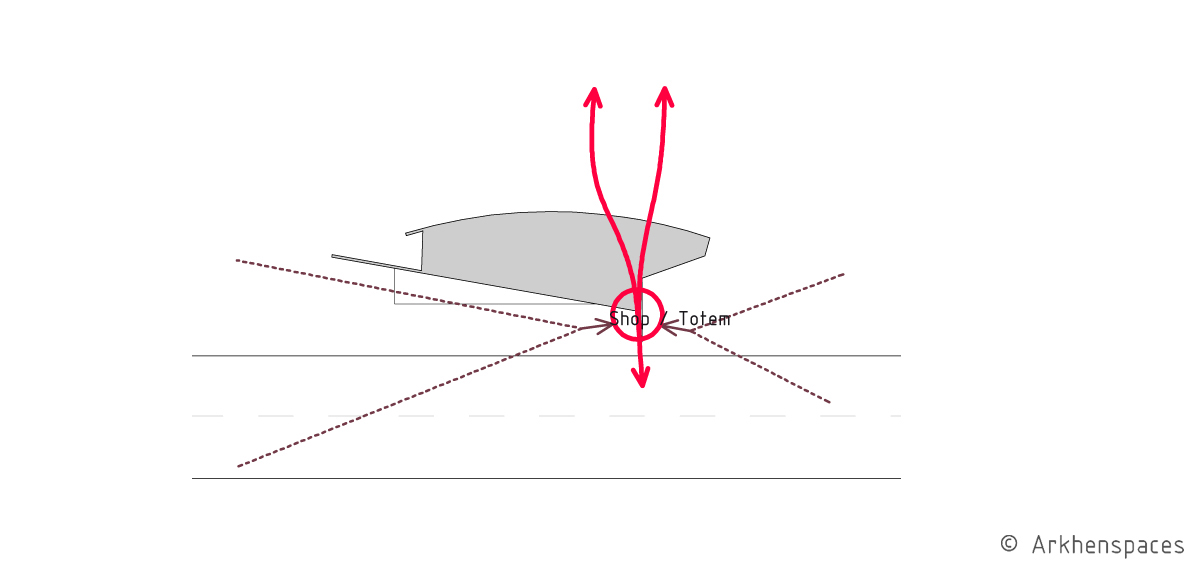
The architecture takes into account the movements and points of view of both pedestrians and motorists. The building therefore changes appearance depending on the viewing angle, awakening curiosity and naturally inviting people to discover the place.
The service station becomes an active fragment of the urban fabric, contributing to urban greening and the emergence of new uses.
Transforming the morphology of the service station
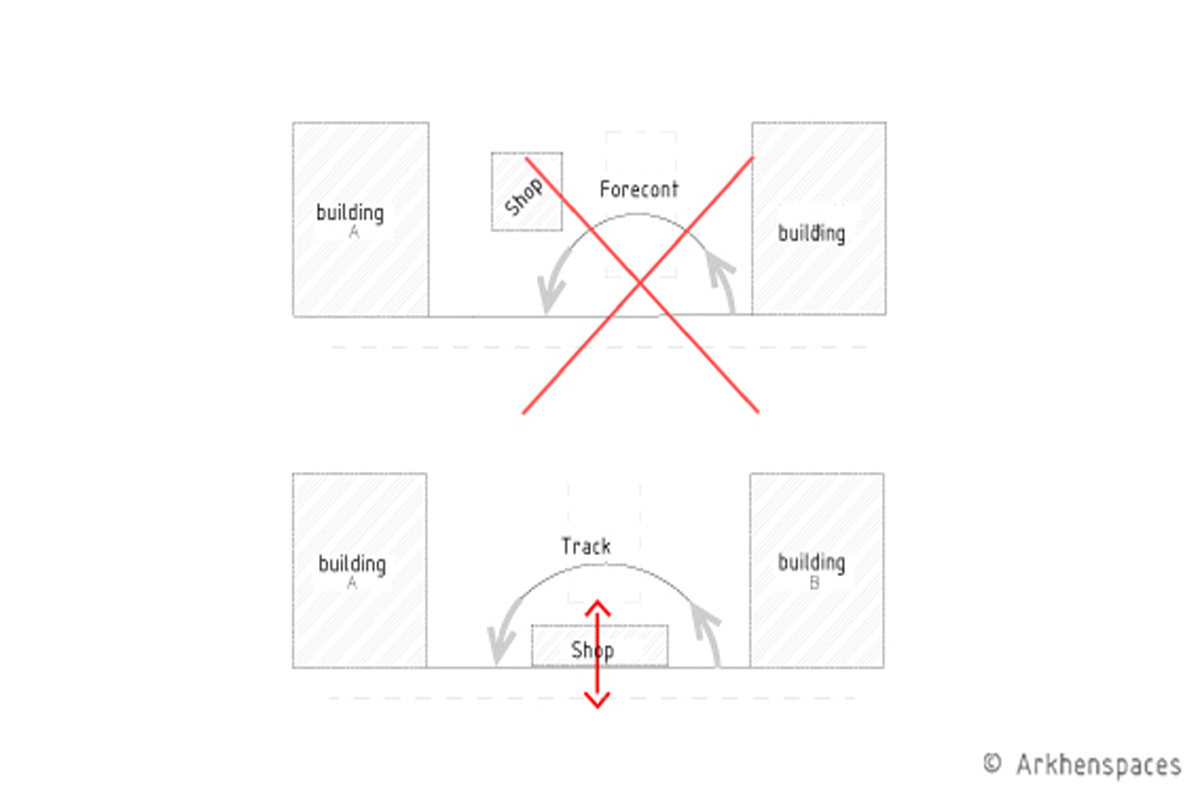
In its conventional configuration, the service station often creates a rupture within the urban space: the forecourt becomes a psychological barrier and the shop mainly serves motorists.
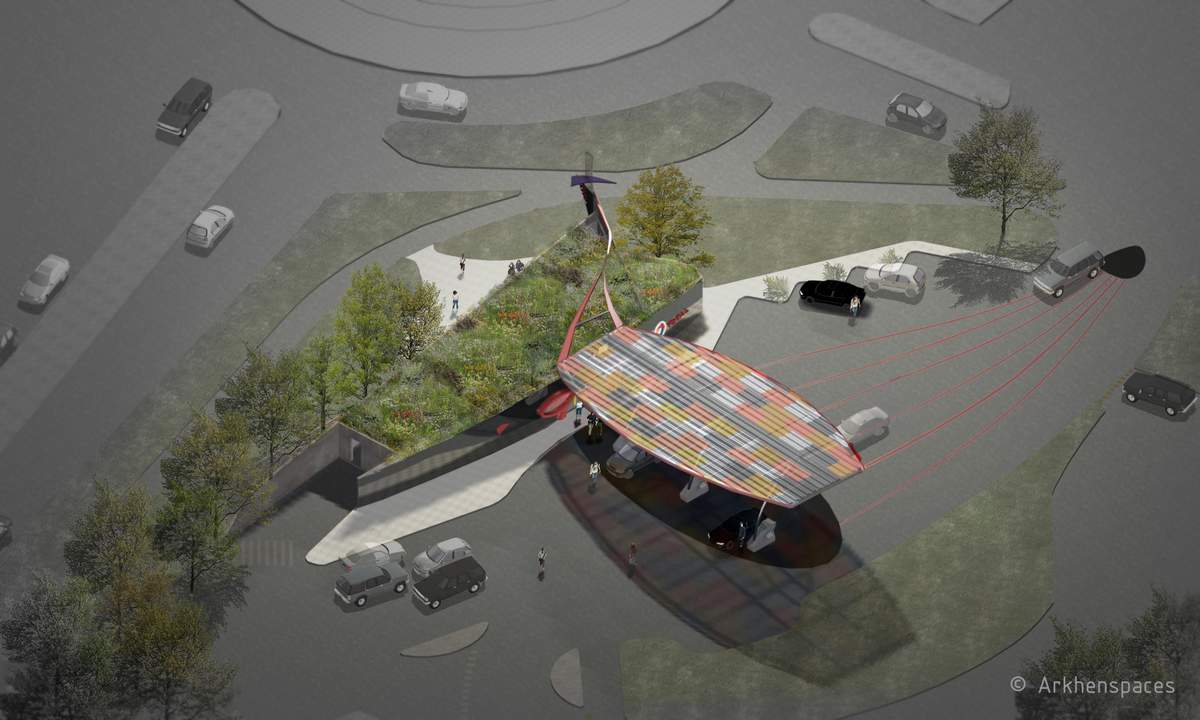
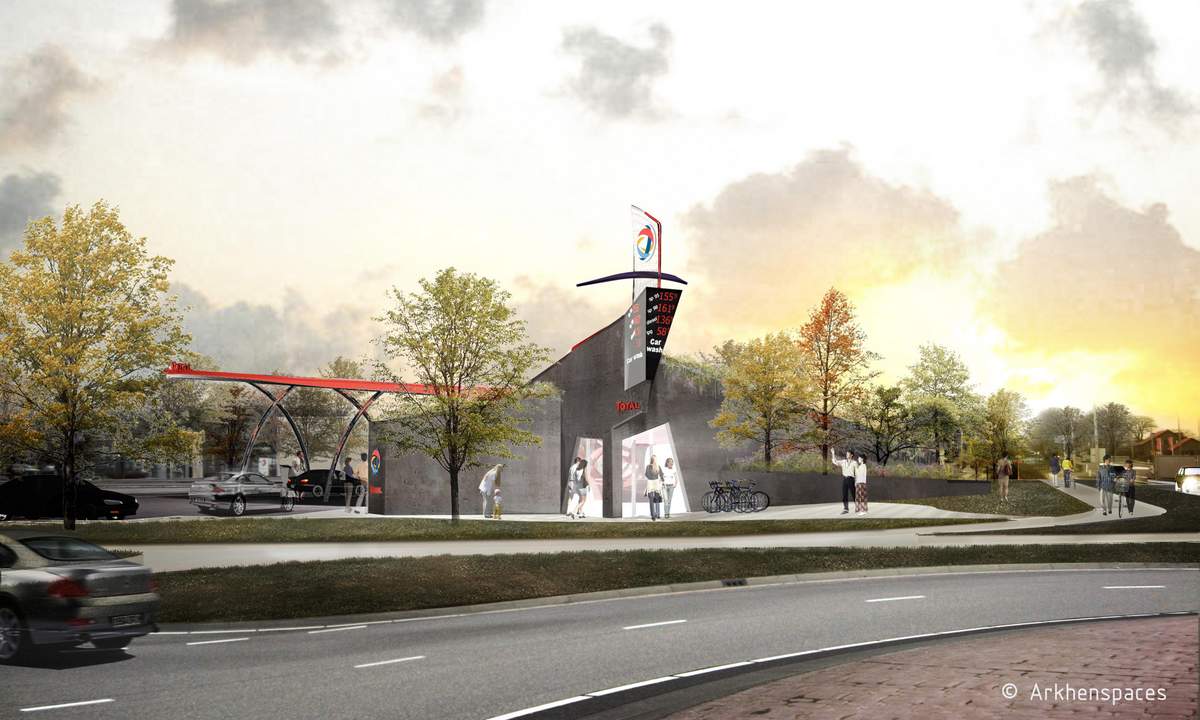
The project proposes a different morphology. Aligning the shop with the street opens the building toward the city and encourages its appropriation by all users.
The service station is no longer an autonomous object placed within the city, but a facility capable of adapting to its urban context.
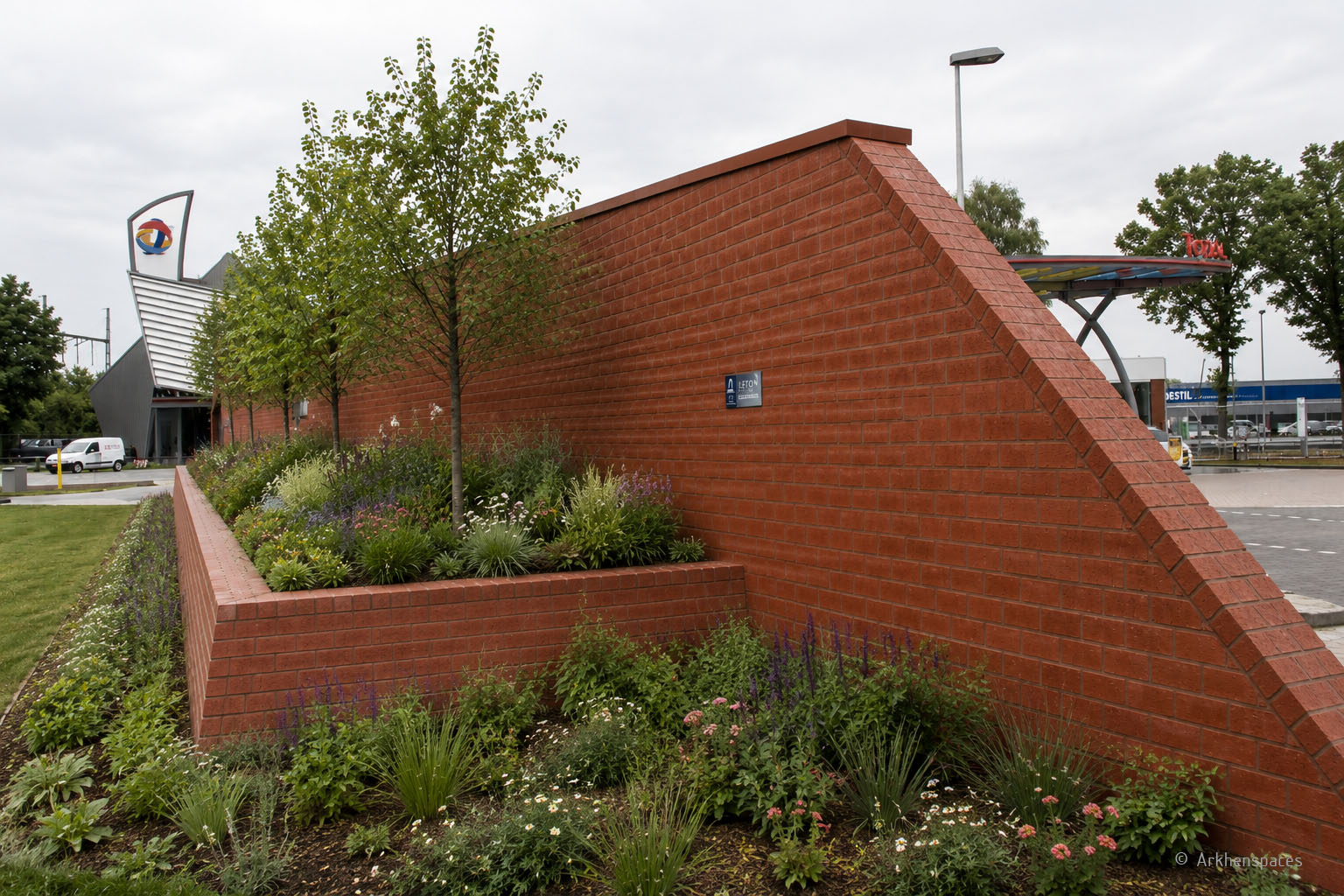
A green enclave within the city
Thanks to its new layout and the systematic integration of vegetation, the project transforms the station into a more welcoming and open place.
The building becomes a green enclave adapted to its environment through the use of materials connected to the local context: concrete, brick, timber and climate-adapted vegetation.
The project also integrates several environmental strategies:
- Photovoltaic energy
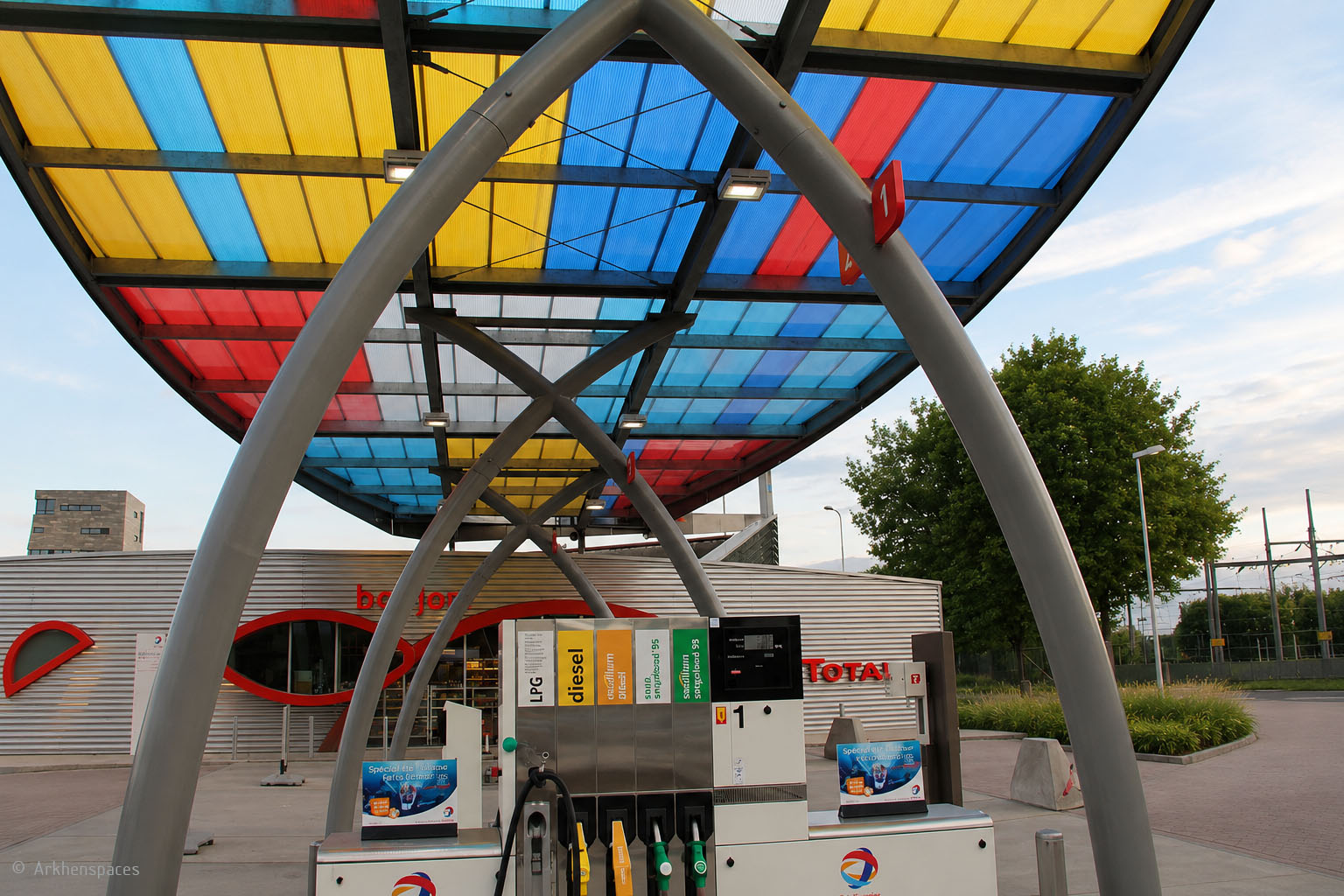
Photovoltaic panels integrated into the canopy create plays of shadow and light through their transparency. (This system was not implemented in the Netherlands.) - Water management
The sloping roofs allow complete rainwater collection. - Greening
The green roof improves thermal insulation and contributes to rainwater retention. The planting strategy follows the principle of the “garden in movement” developed by Gilles Clément in order to minimize maintenance.
Connections, visibility and perception
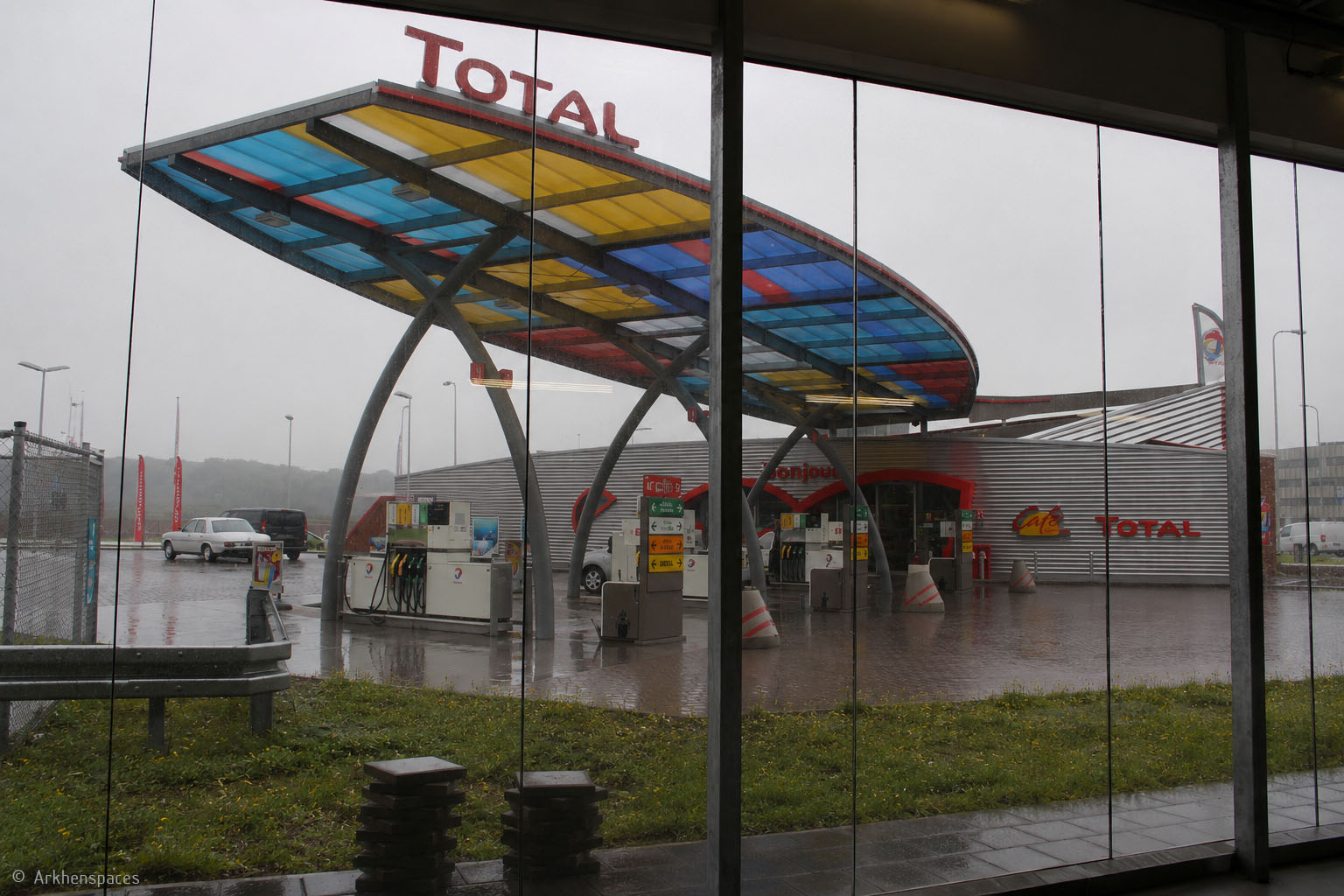
The double visual opening toward both the street and the forecourt improves natural light, visual comfort, commercial readability and the overall safety of the site.
Screens installed inside the shop and near the pumps broadcast cultural, sports and local information, transforming the station into a neighborhood relay and a support for local exchanges (n-spaces).
The encounter of the building’s horizontal lines gives rise to a vertical signal integrating the totem visible from the city.
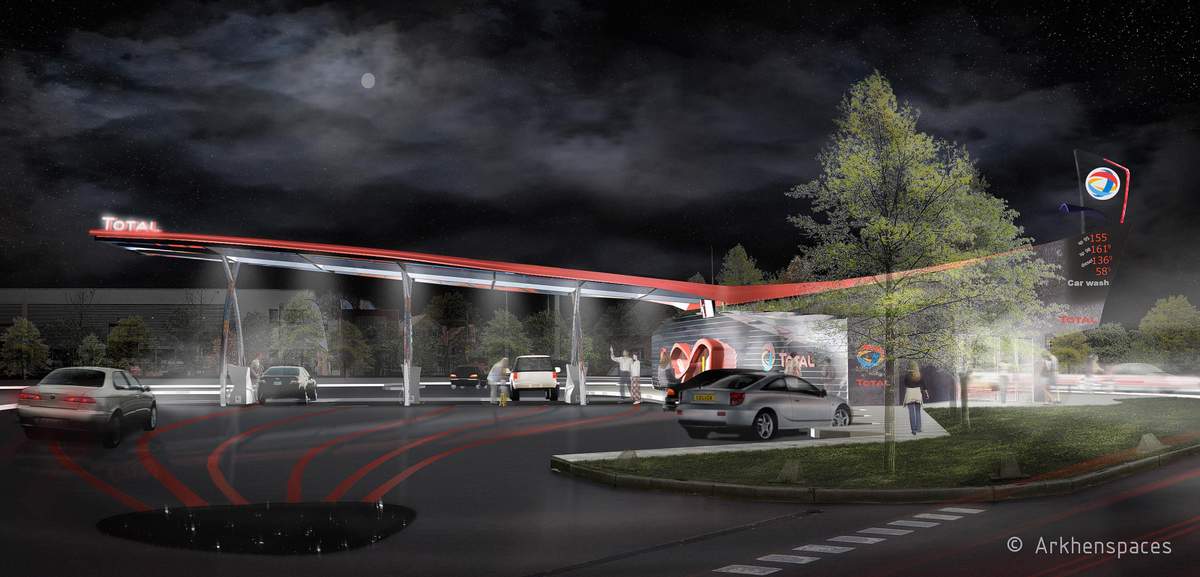
The architecture directs the gaze toward this central point combining shop and signal, while a red band ensures continuity between the street and the station.
At night, the lighting of the building, the totem and the red line transforms the station into an urban landmark visible from afar.
Even simple architecture should surprise.