

Villa D _ Viroflay France

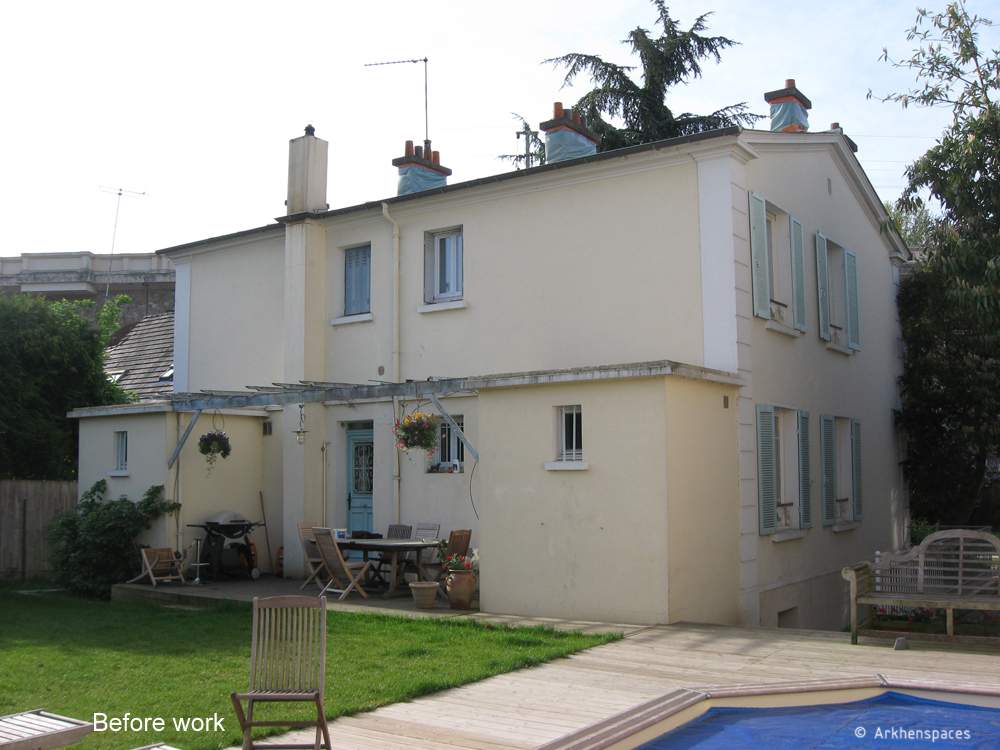


Program Roof extension and transformation of a house
Floor area 90 m² for the extension, 250 m² total
Location Viroflay, France
Schedule Studies 2010–2011 / Construction 2011–2012
Client Private
Team Eric Cassar, Juvenal Rubinos, Celine Lecoute, Nourredine Sehil
Engineering Timber structure: BET AFCB / Concrete: BET Buchet
Contractors Envelope: BYP / Masonry & finishing works: Ent. Fernantes / Electricity: Ent. Batista / Interior carpentry: Artanin / Glass canopy: Atelier FG
General principles
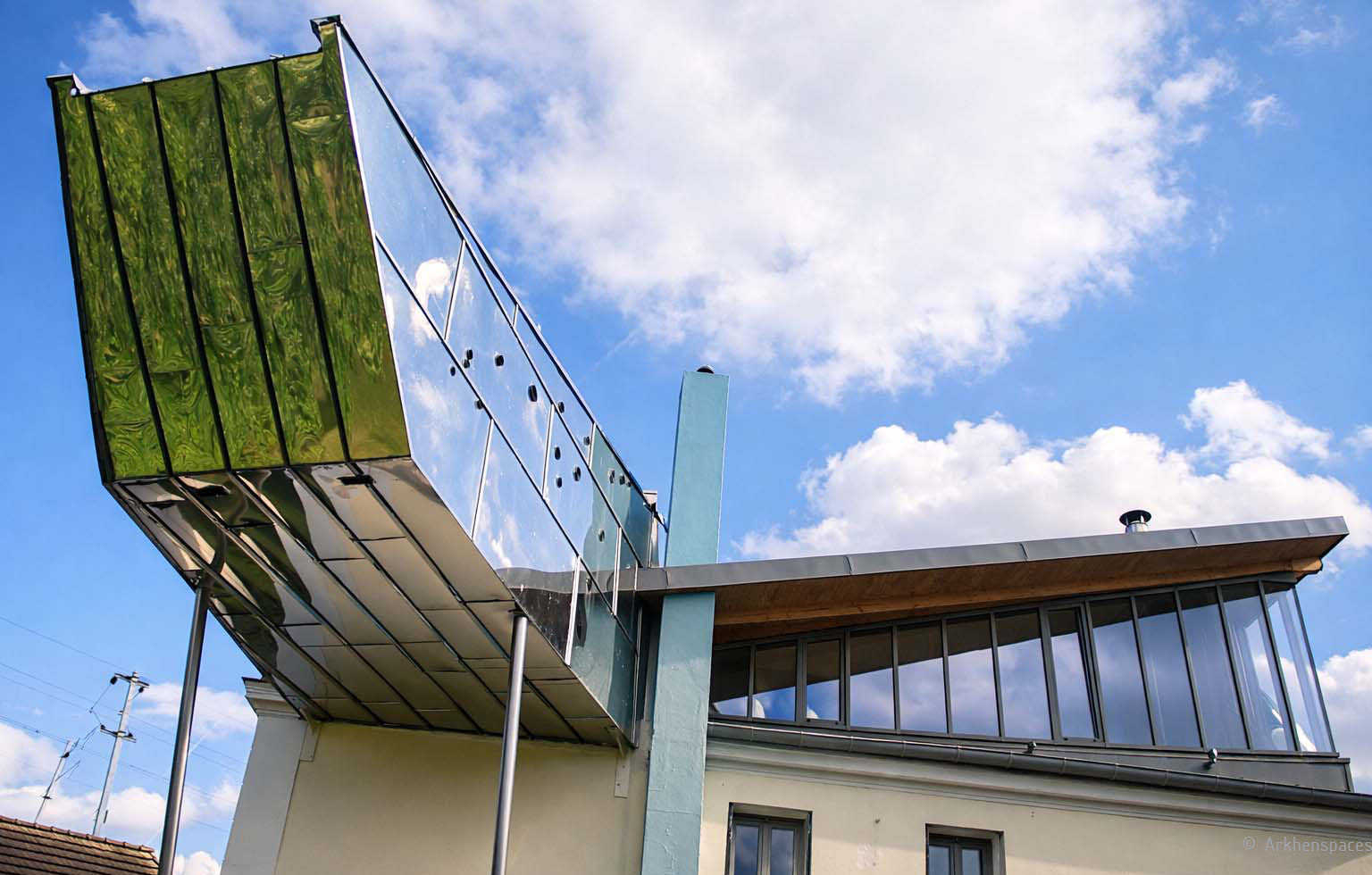
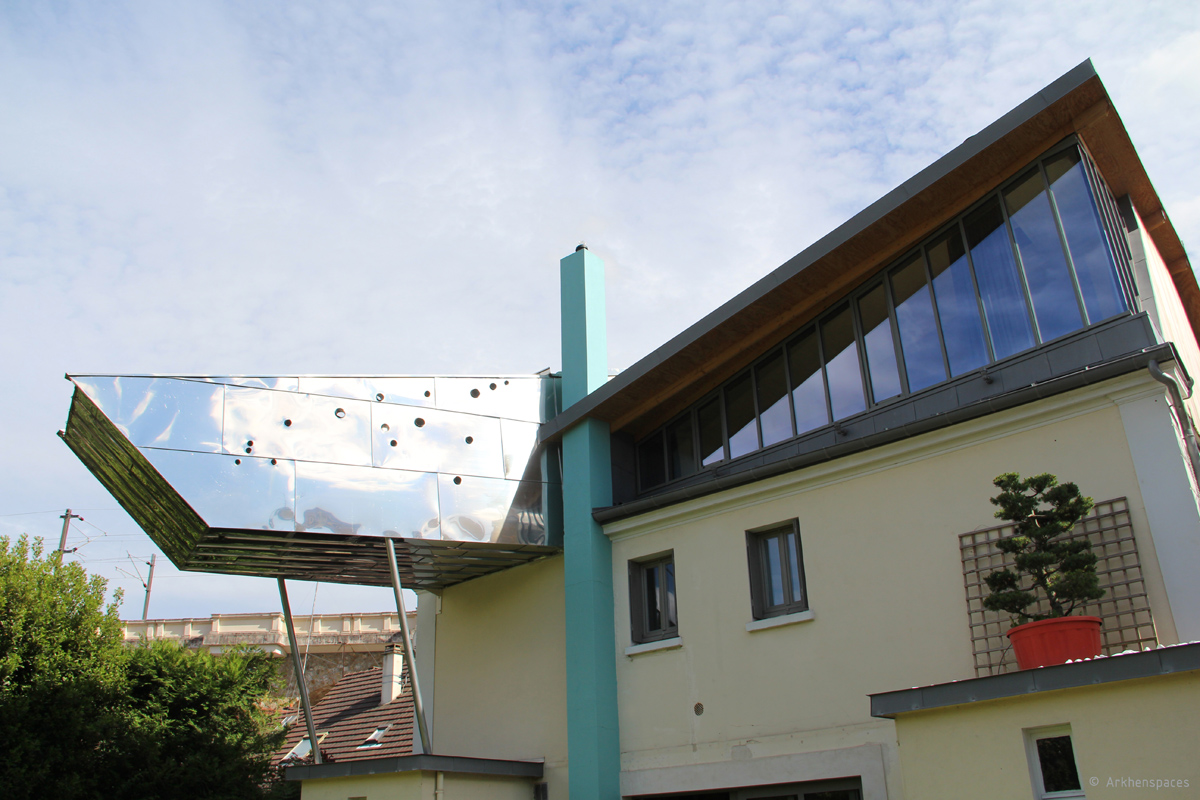
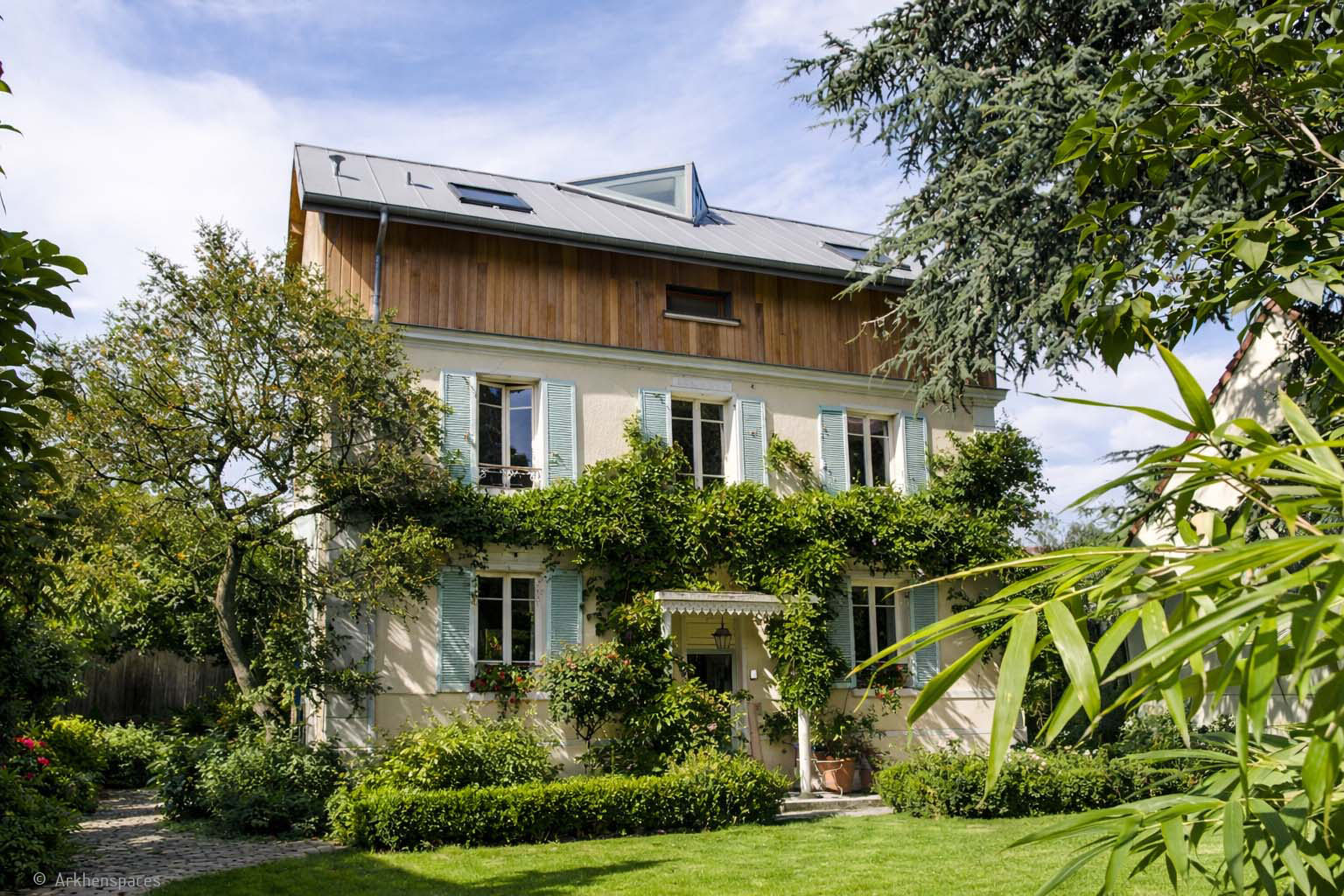
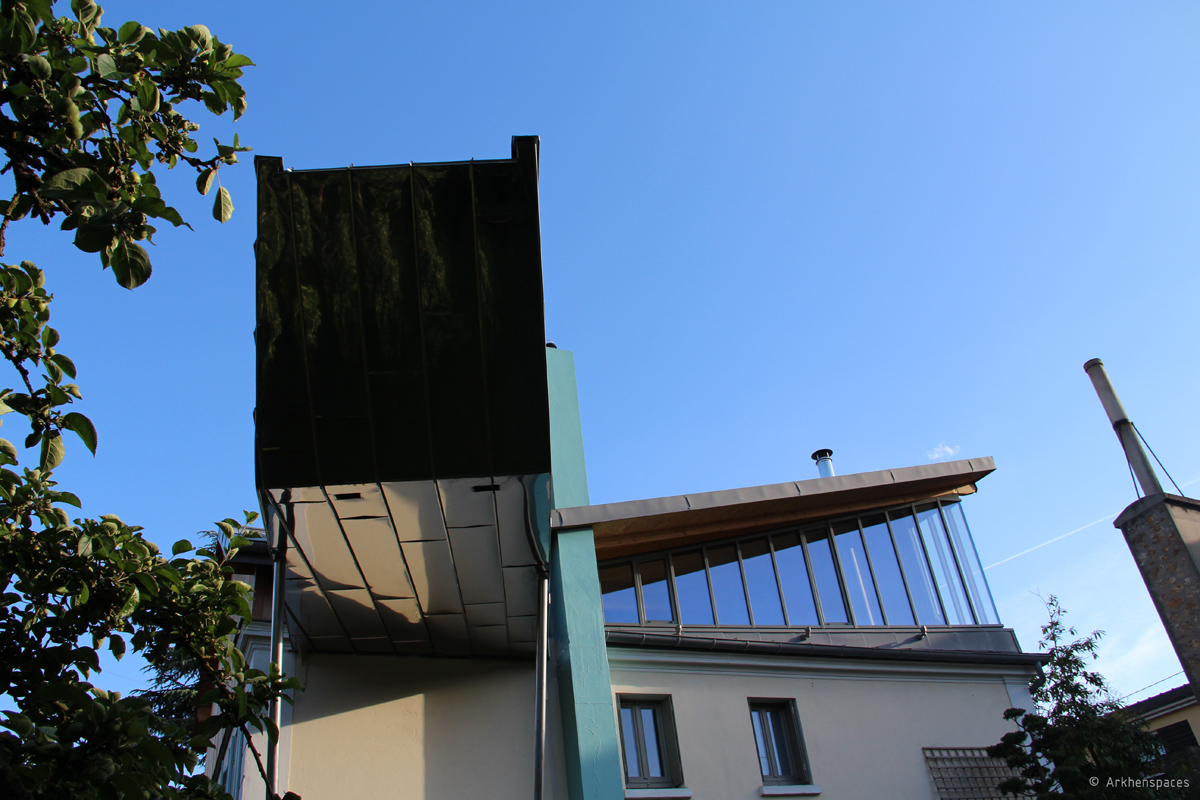
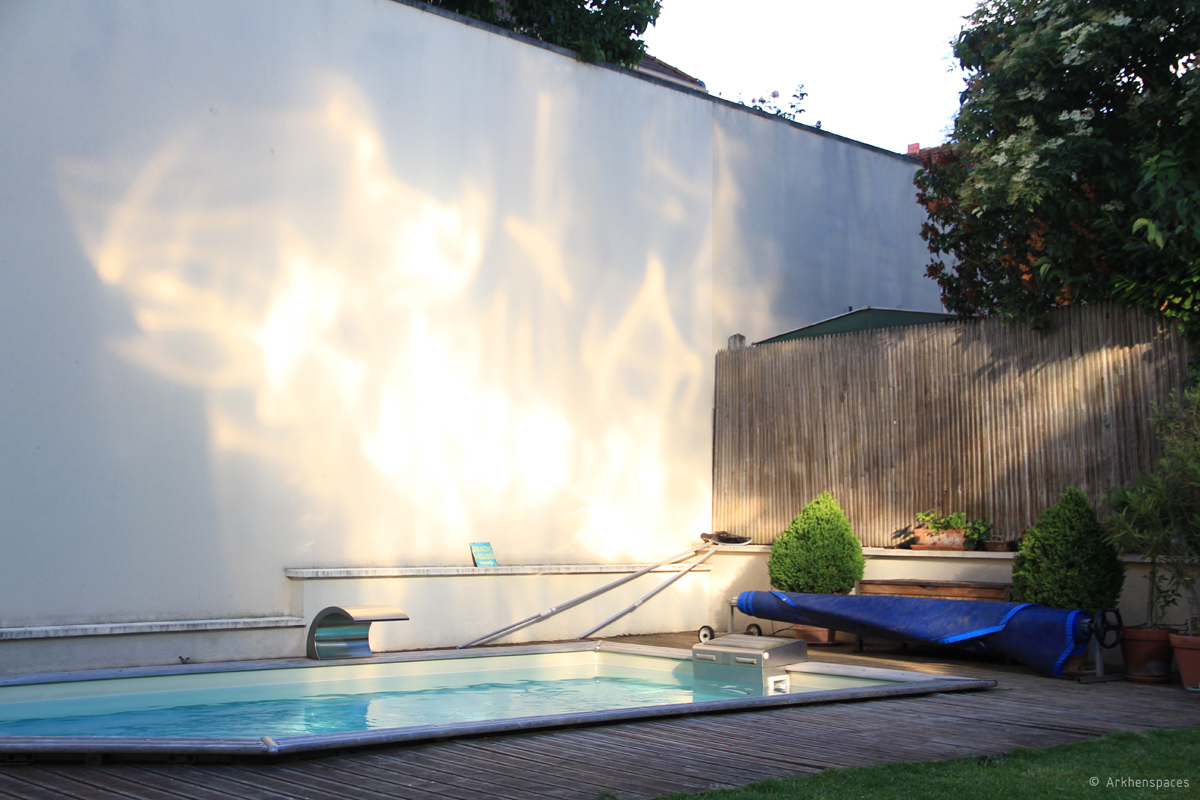
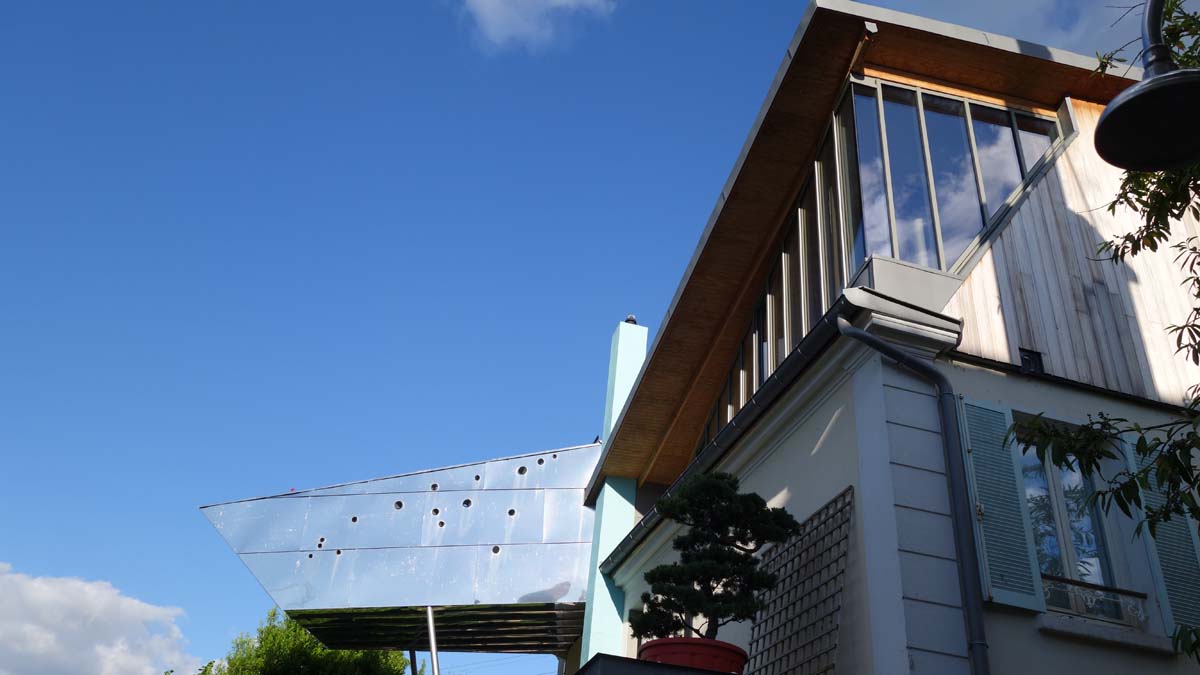
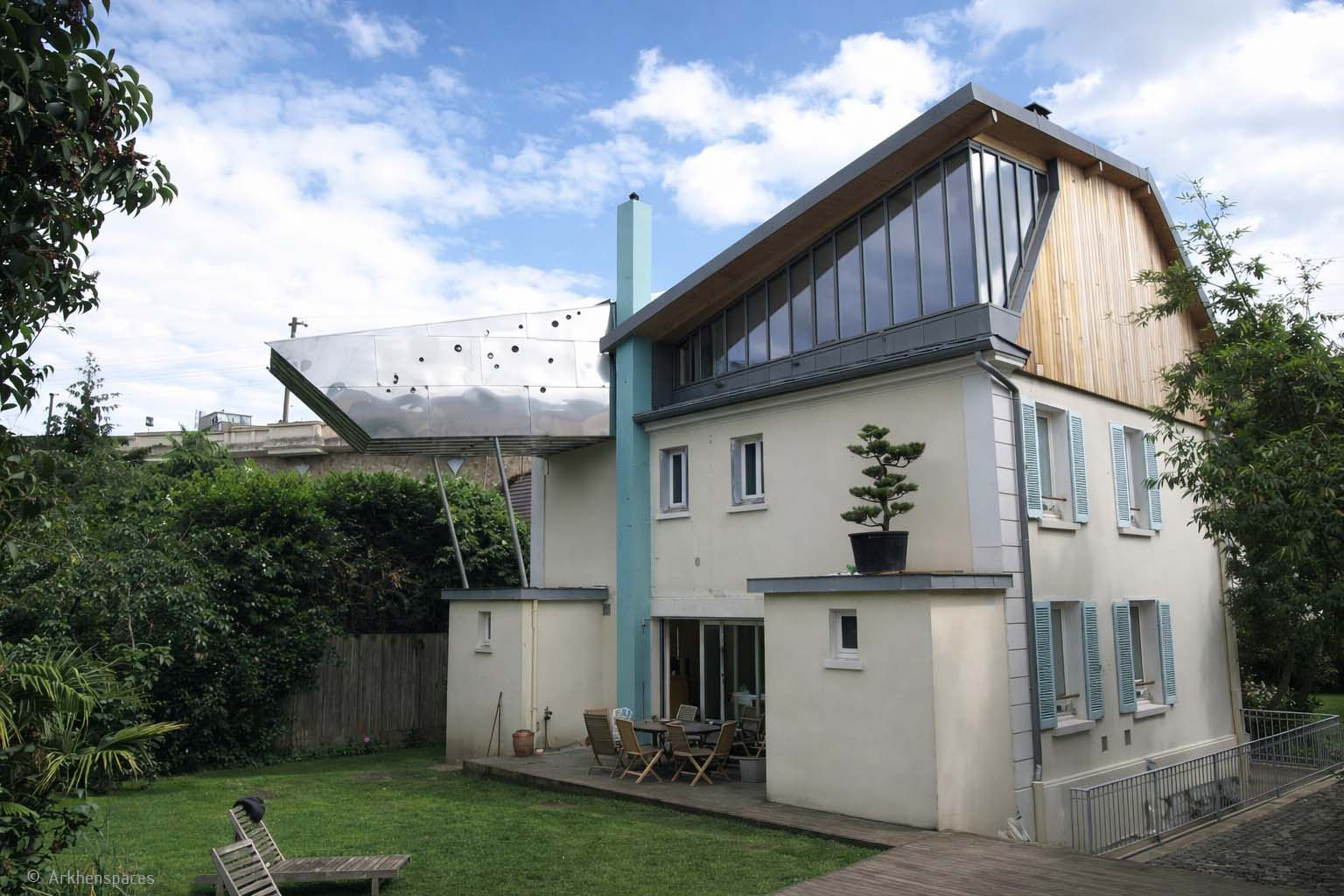
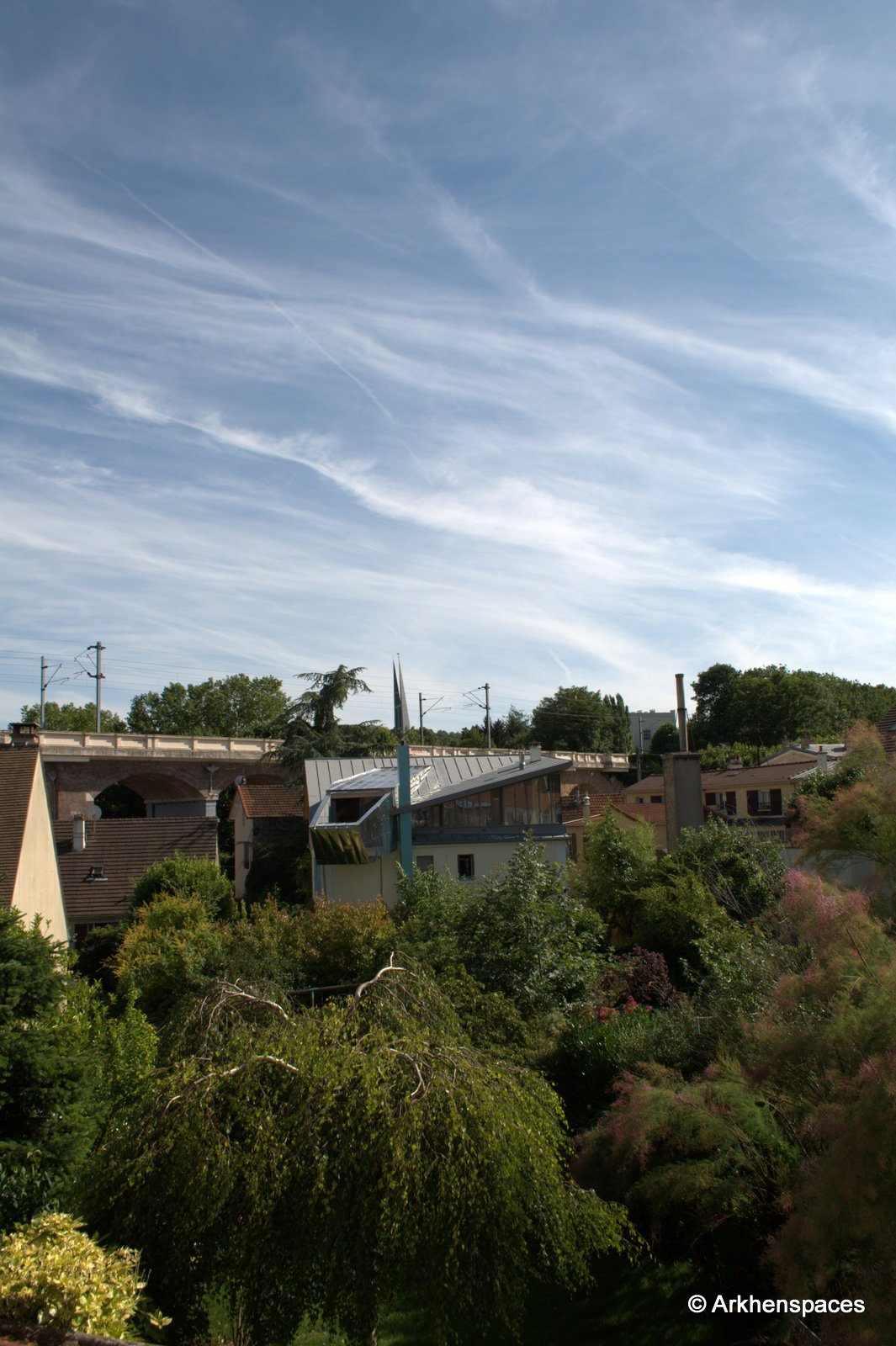
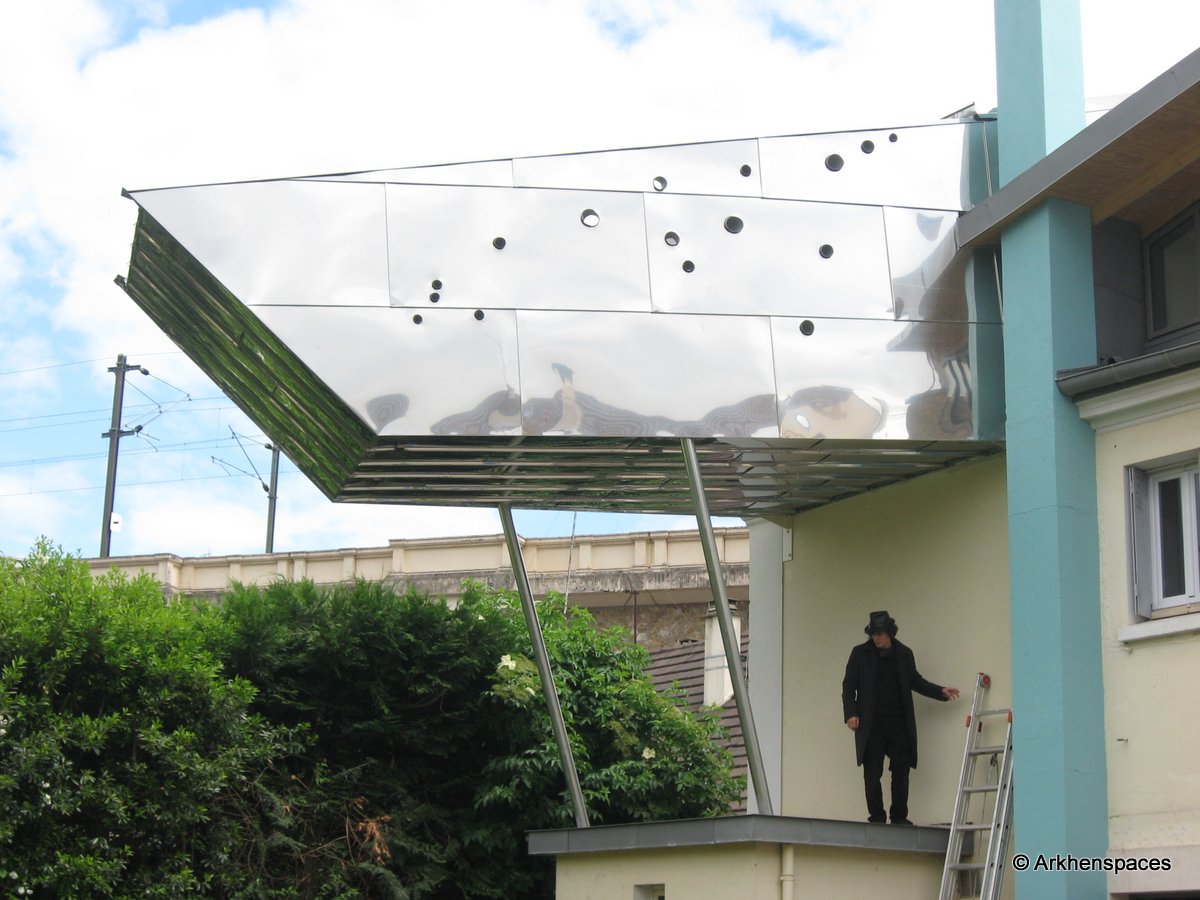
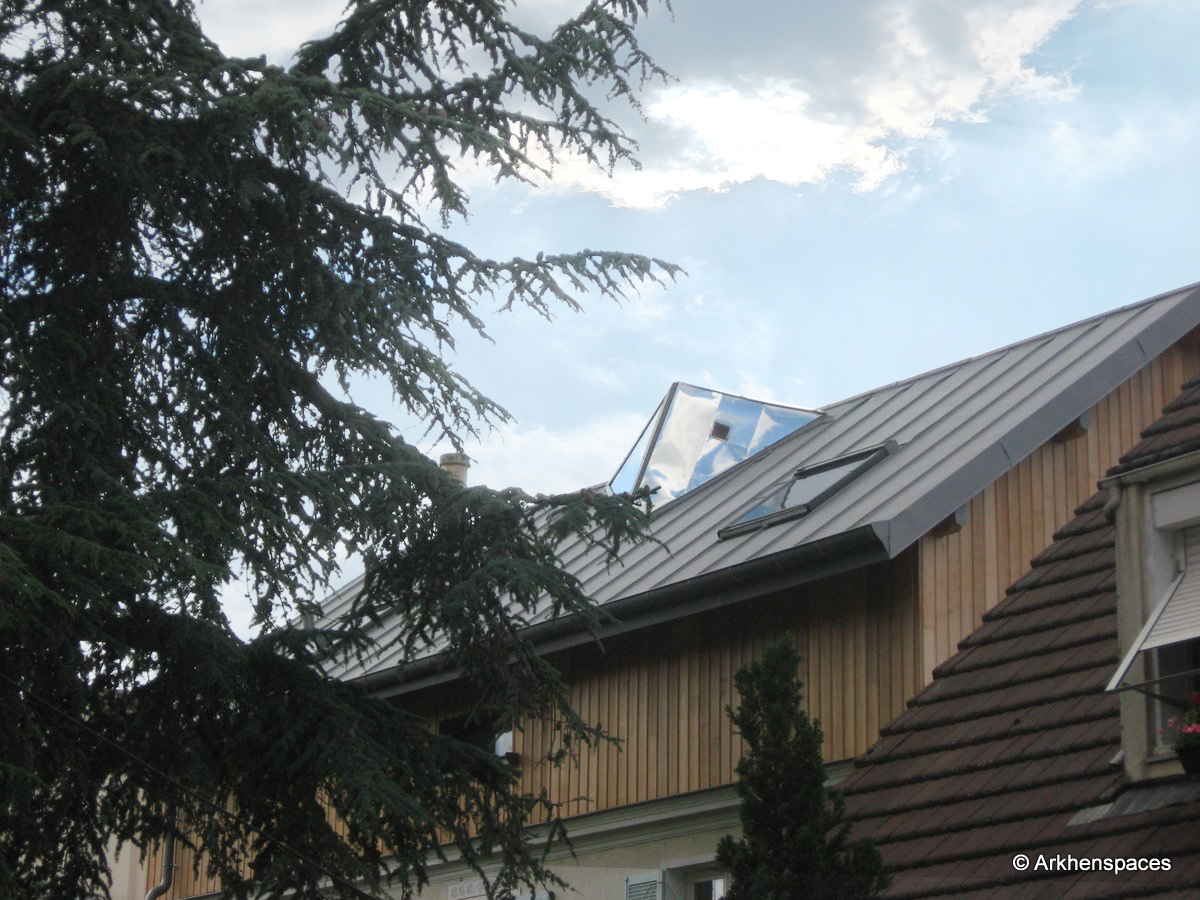
The roof extension is conceived as a deliberately identifiable addition, allowing the coexistence and reading of two different periods of time. A suspended terrace appears to challenge gravity: oriented toward the ground, it captures and reflects light. It illuminates the garden while establishing a dialogue with a glass canopy opening toward the sky.
An architecture between two periods
Built during the 1920s–1930s, the house was initially intended to accommodate several apartments before construction was interrupted after the first floor. The project proposes to continue this story by making the encounter between two periods visible.
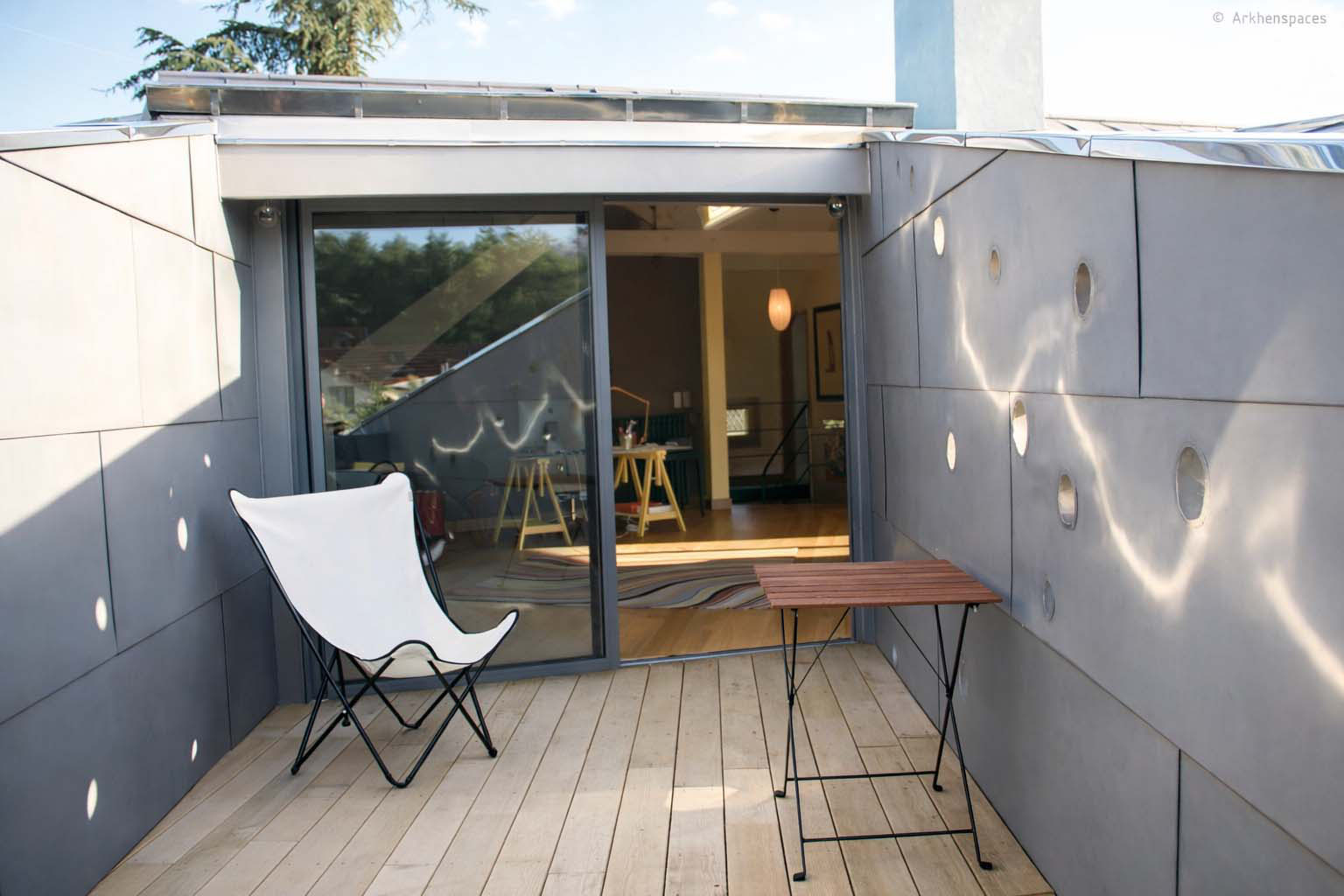
The roof extension was conceived as a lightweight timber intervention combining a terrace and a glass canopy evoking the atmosphere of an artist’s studio. On the street side, the intervention remains discreet and respects the symmetry and flatness of the existing façade.
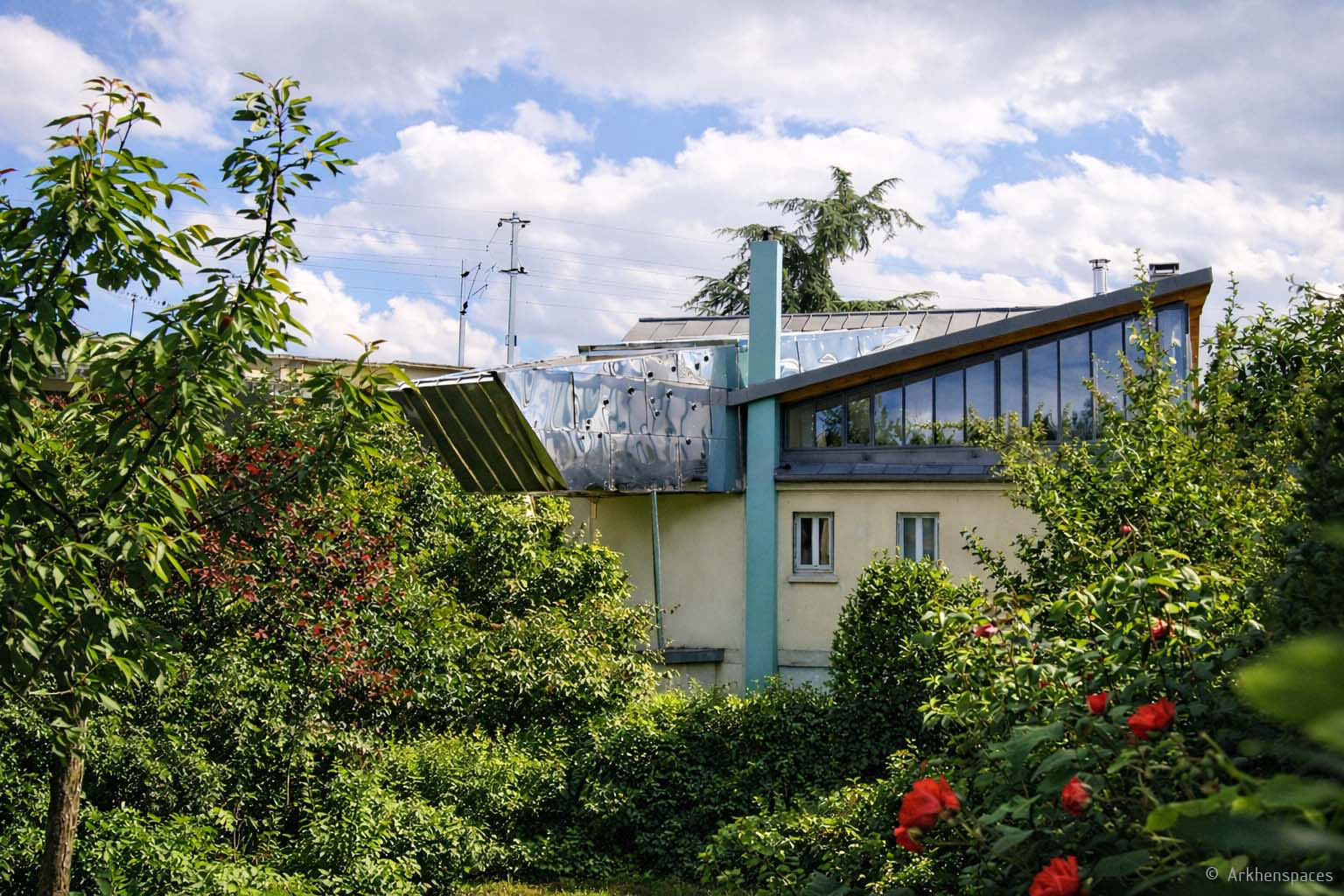
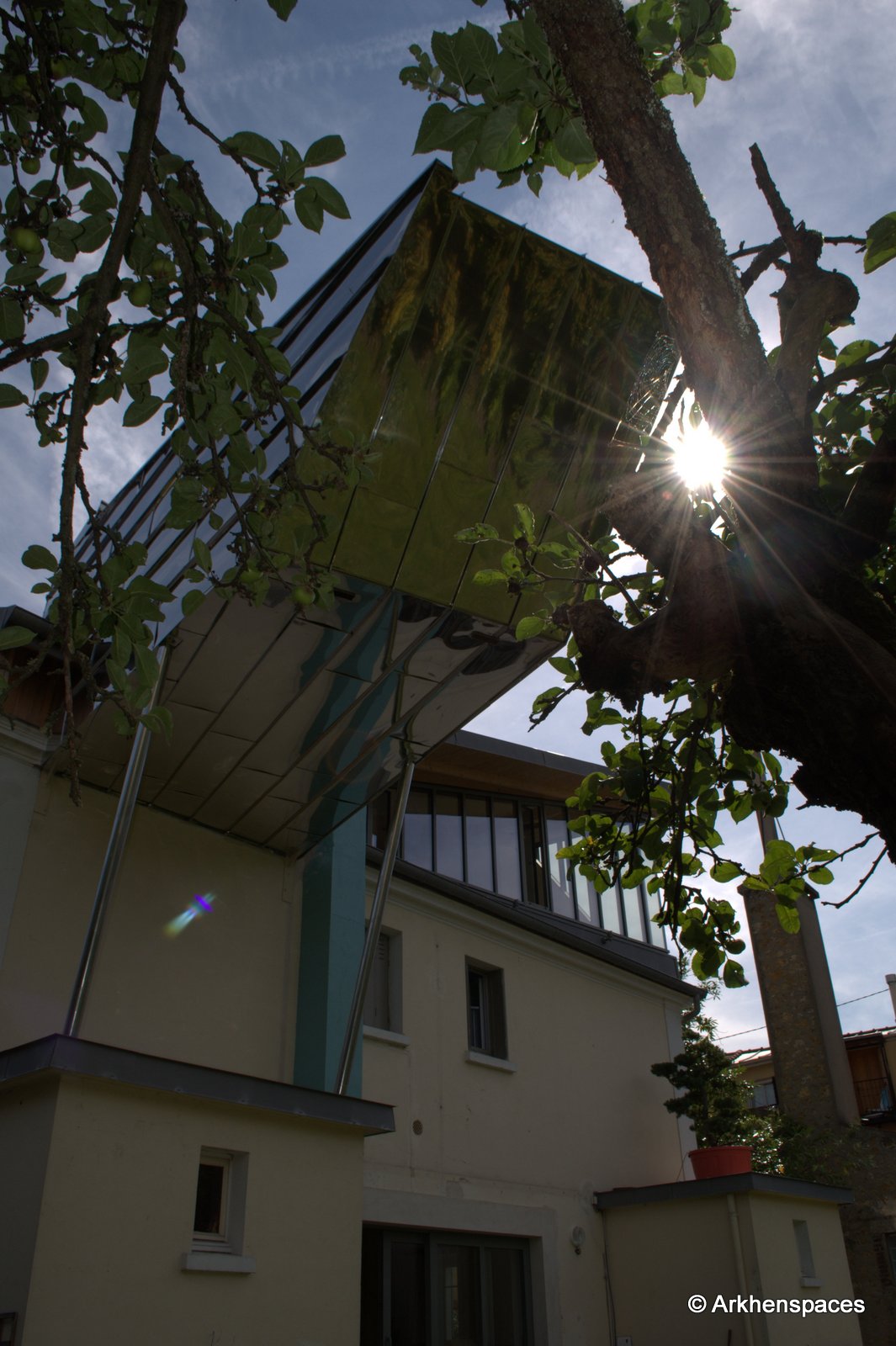
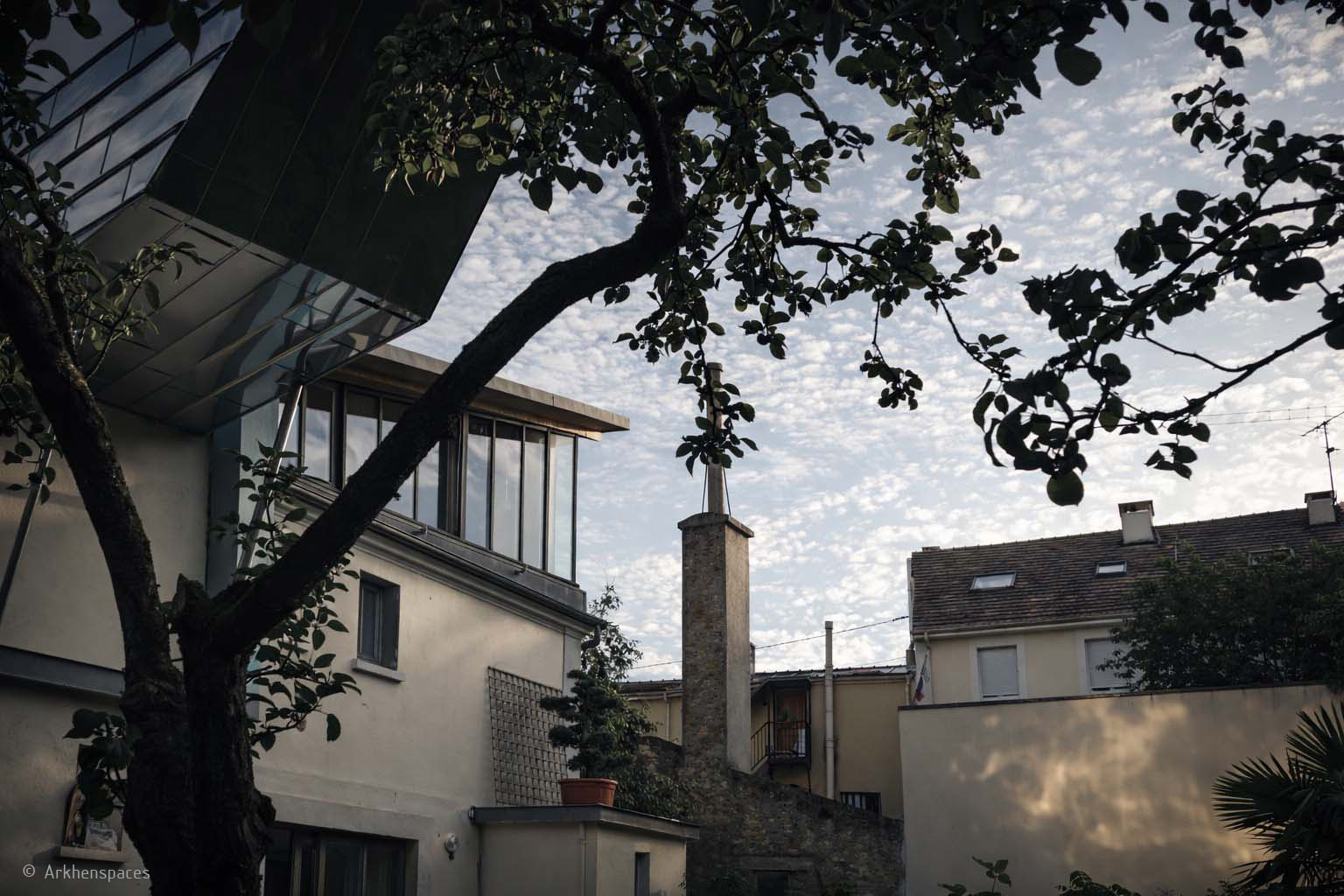
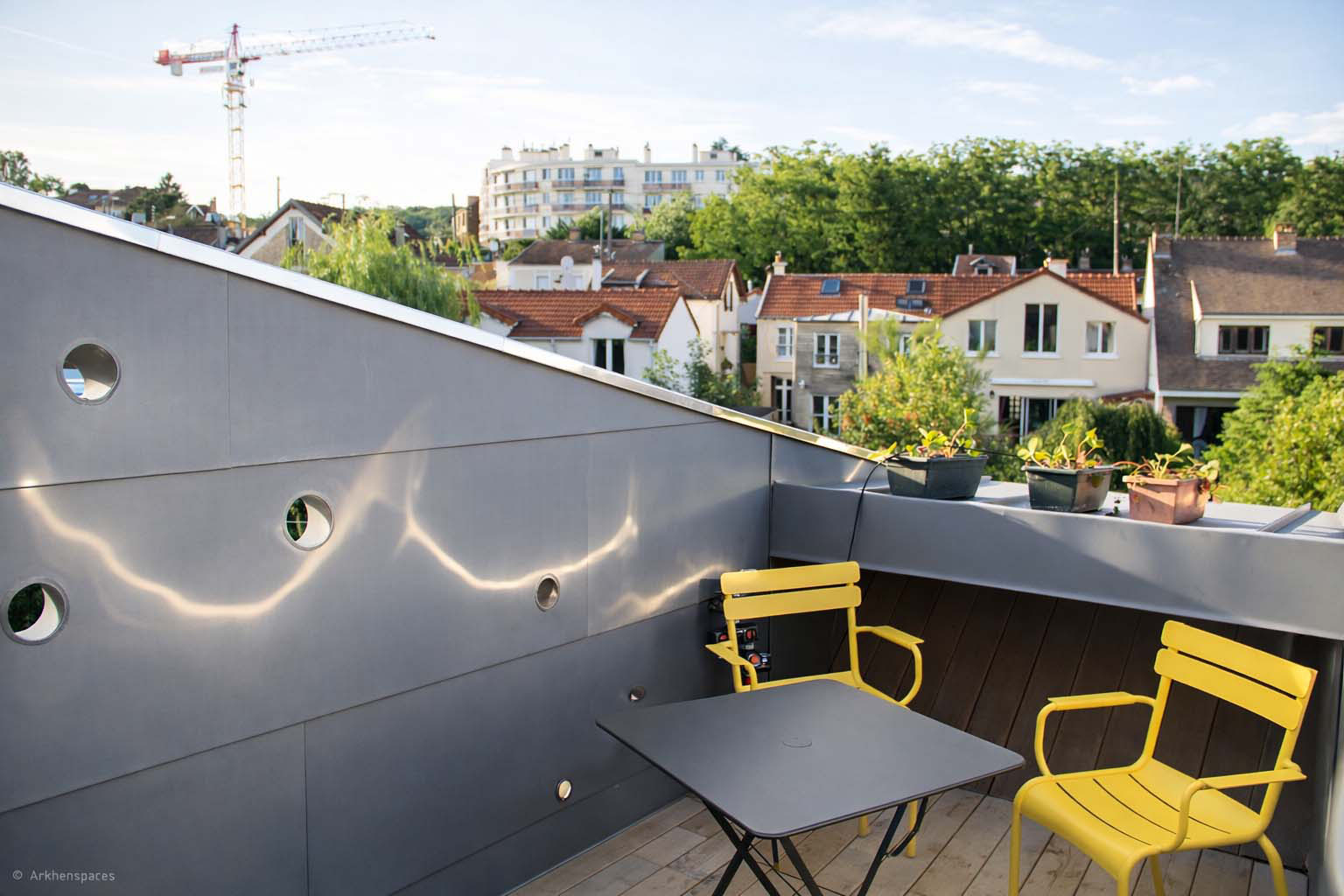
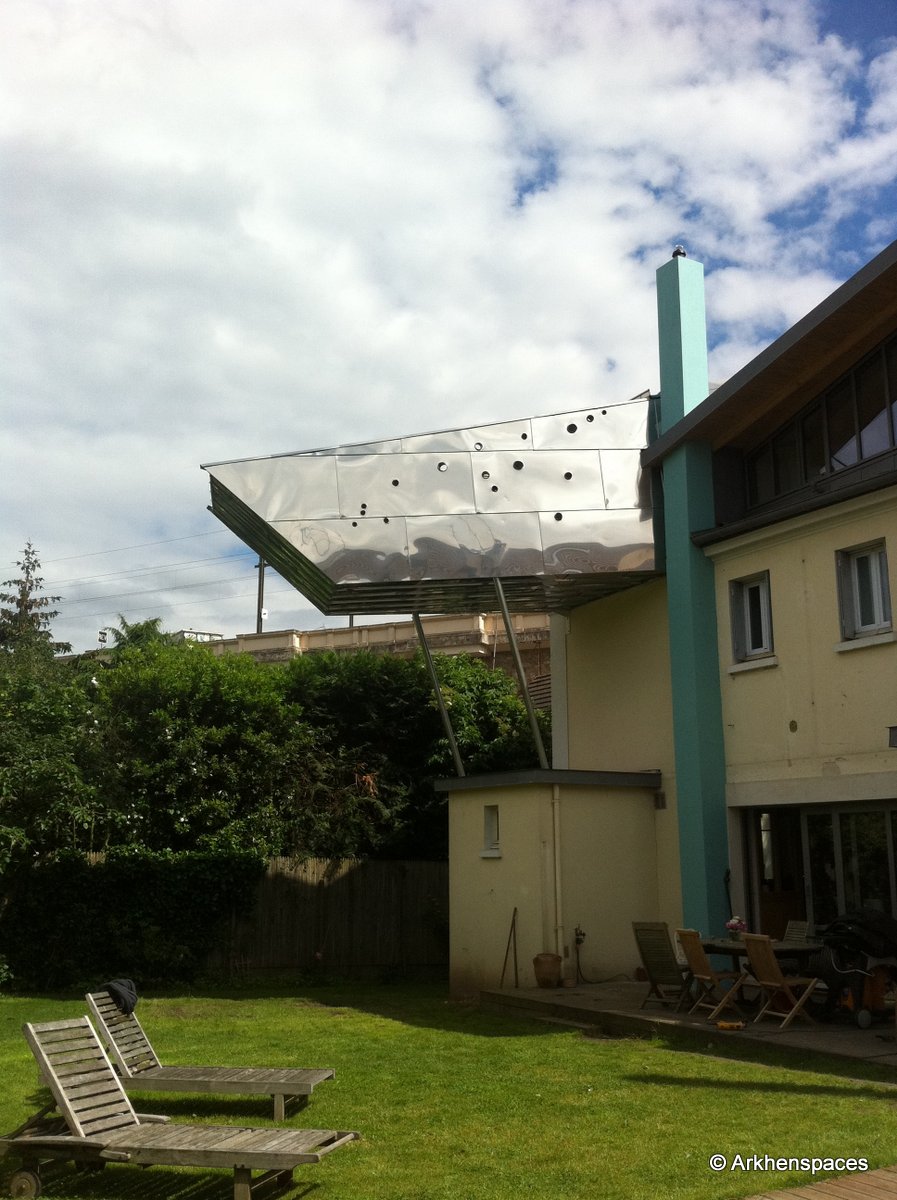
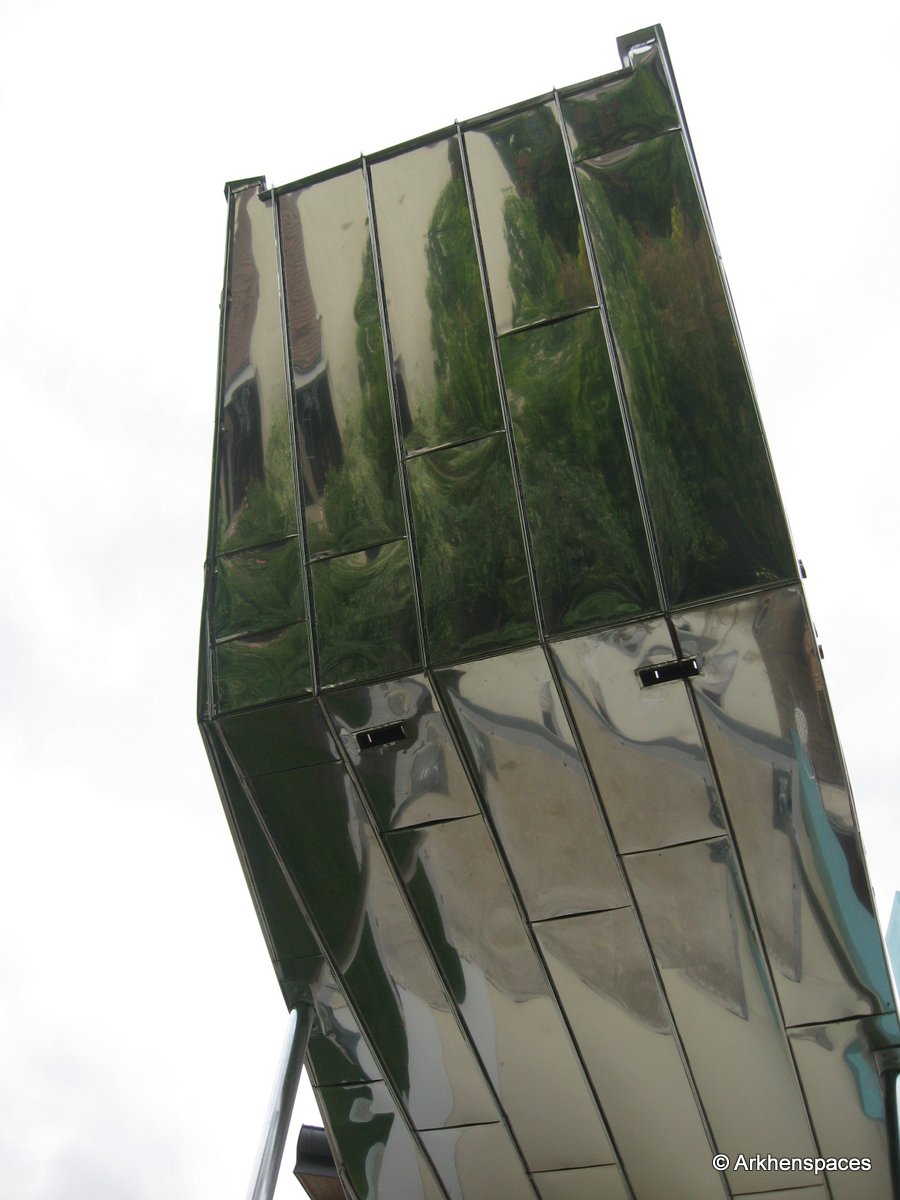
At the rear, a more contemporary architectural language emerges: an inaccessible terrace becomes a support for vegetation and enters into dialogue with an inclined metallic volume that seems to escape from the building.
A terrace as an instrument of environments
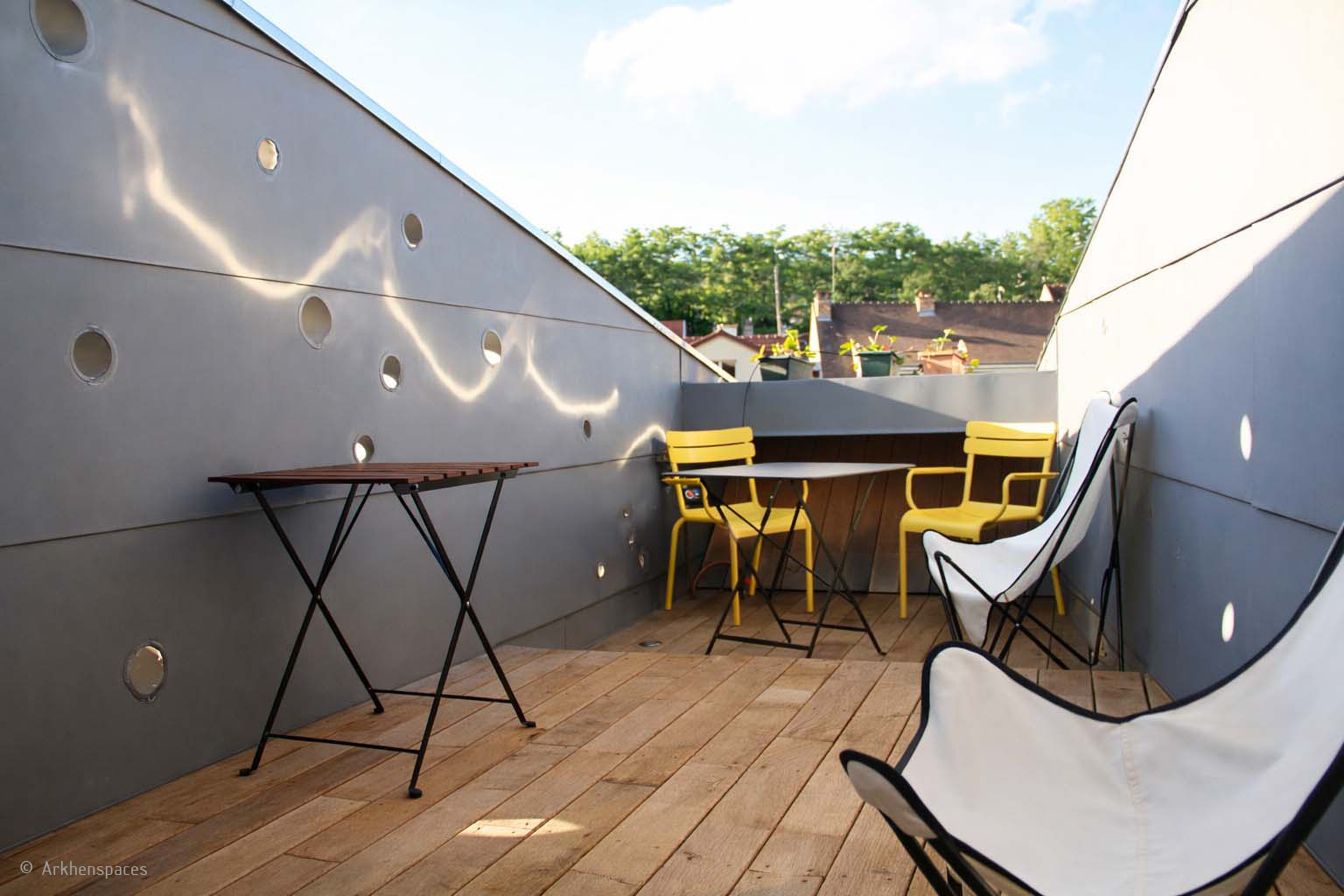
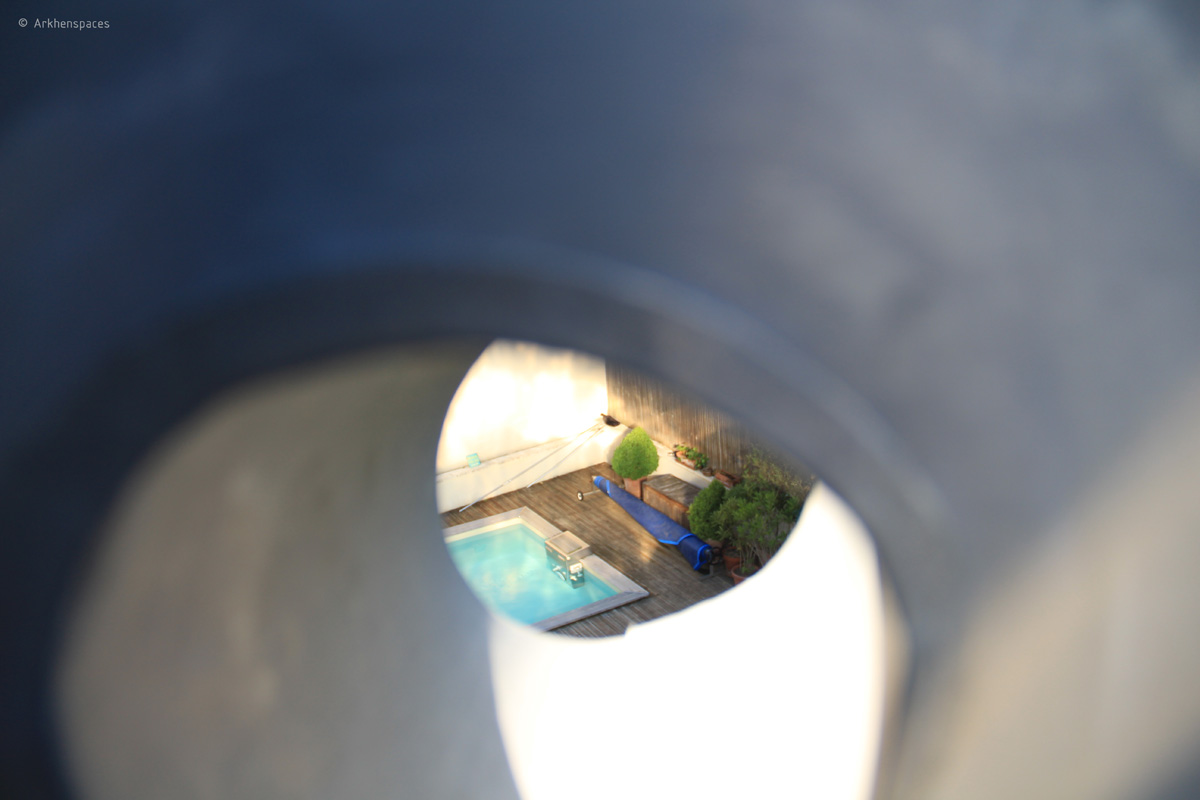
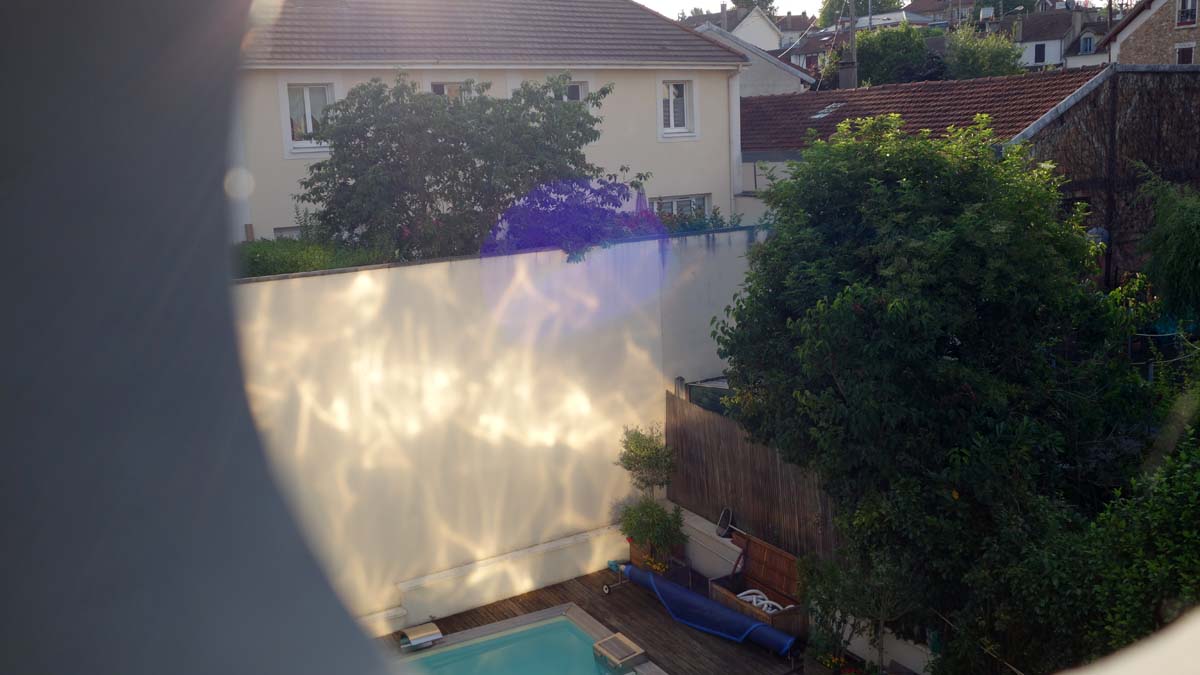
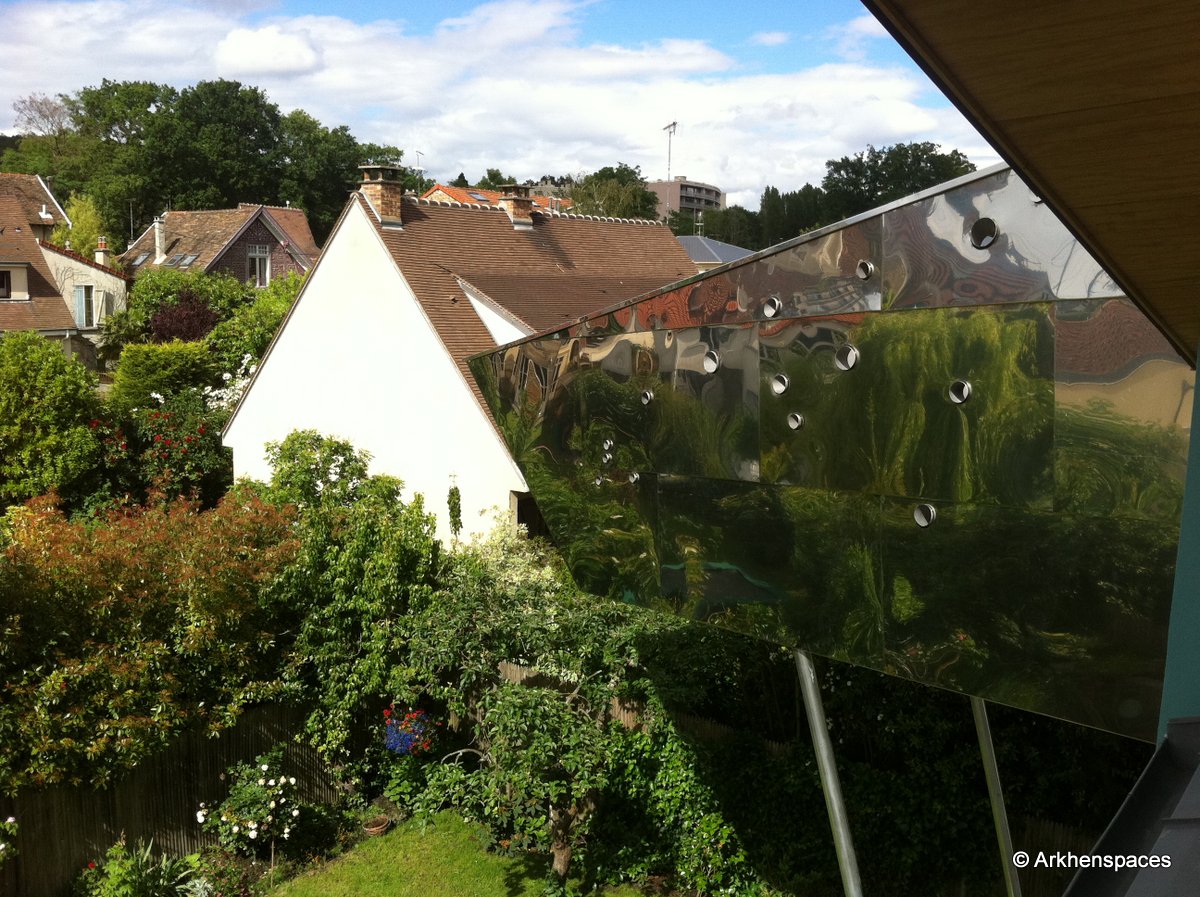
The suspended metallic volume seems to challenge gravity. It acts as a light collector: reflecting the sky and sunlight into a garden often immersed in shadow.
Light then begins to move across walls, around the swimming pool and through the surrounding landscape. The terrace also acts on rainwater, collecting it before releasing it through two micro-waterfalls.
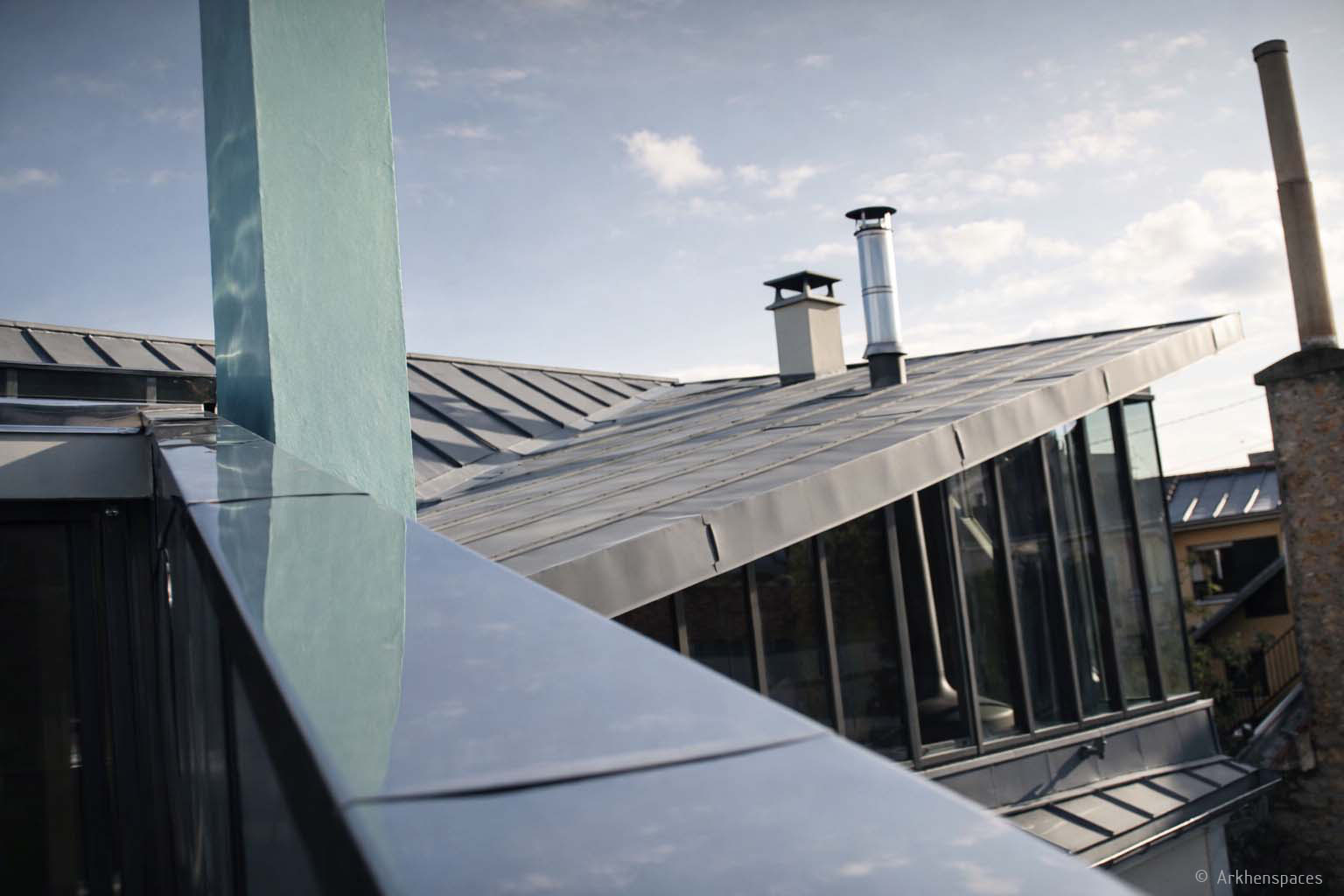
The existing chimney becomes a vertical element linking old and new, earth and sky, reinforcing the reading of the various oblique geometries of the project.
A dynamic spatiality
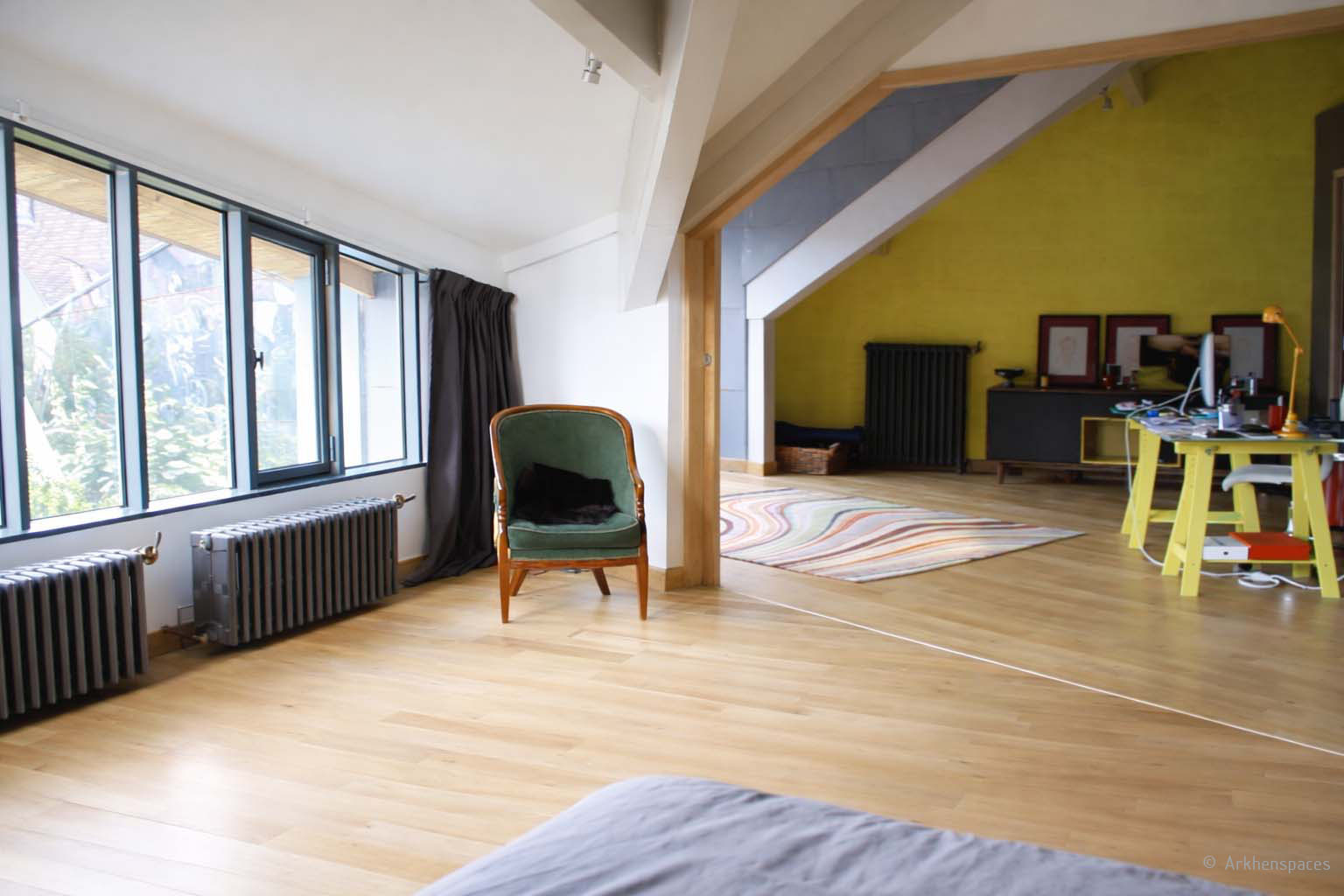
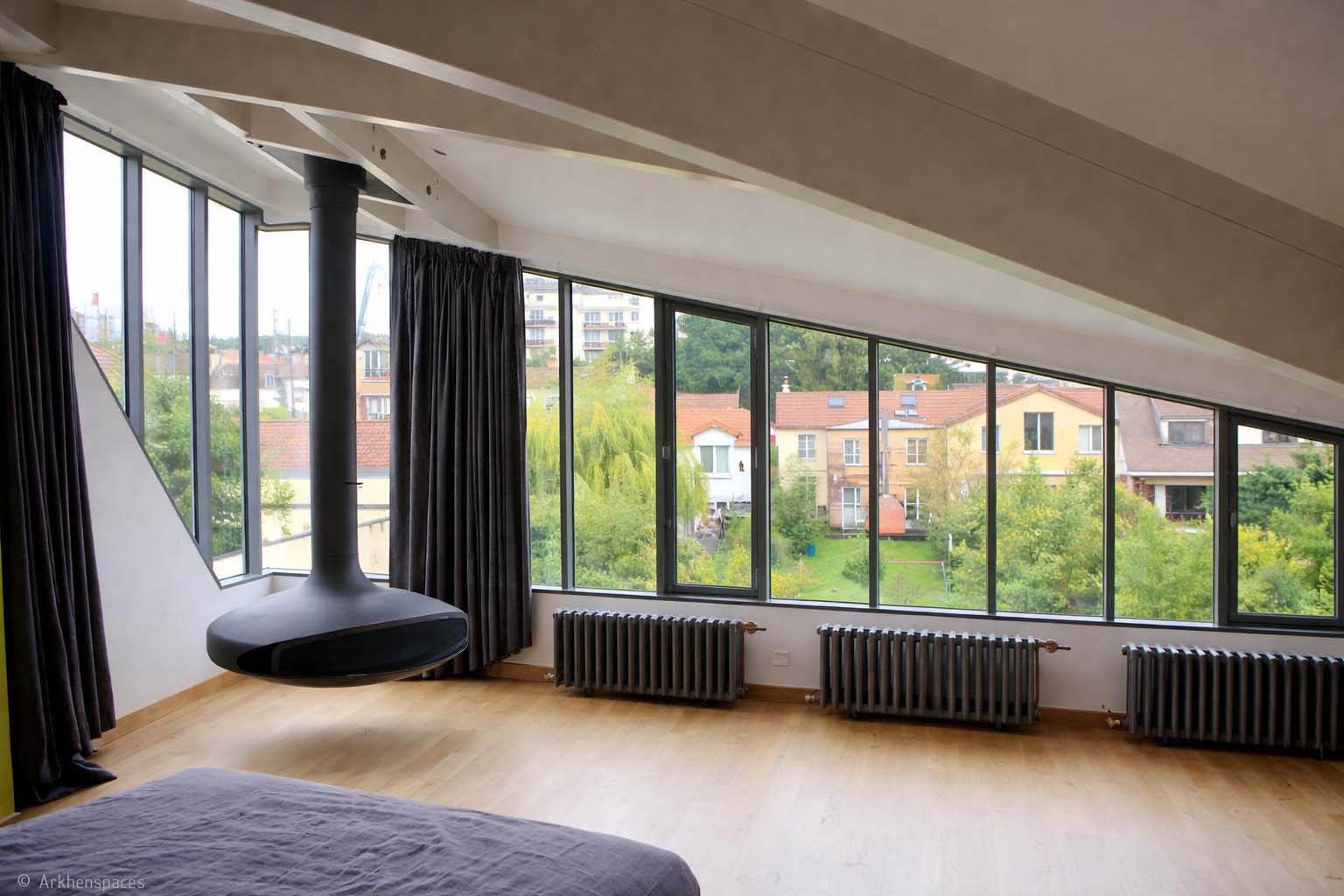
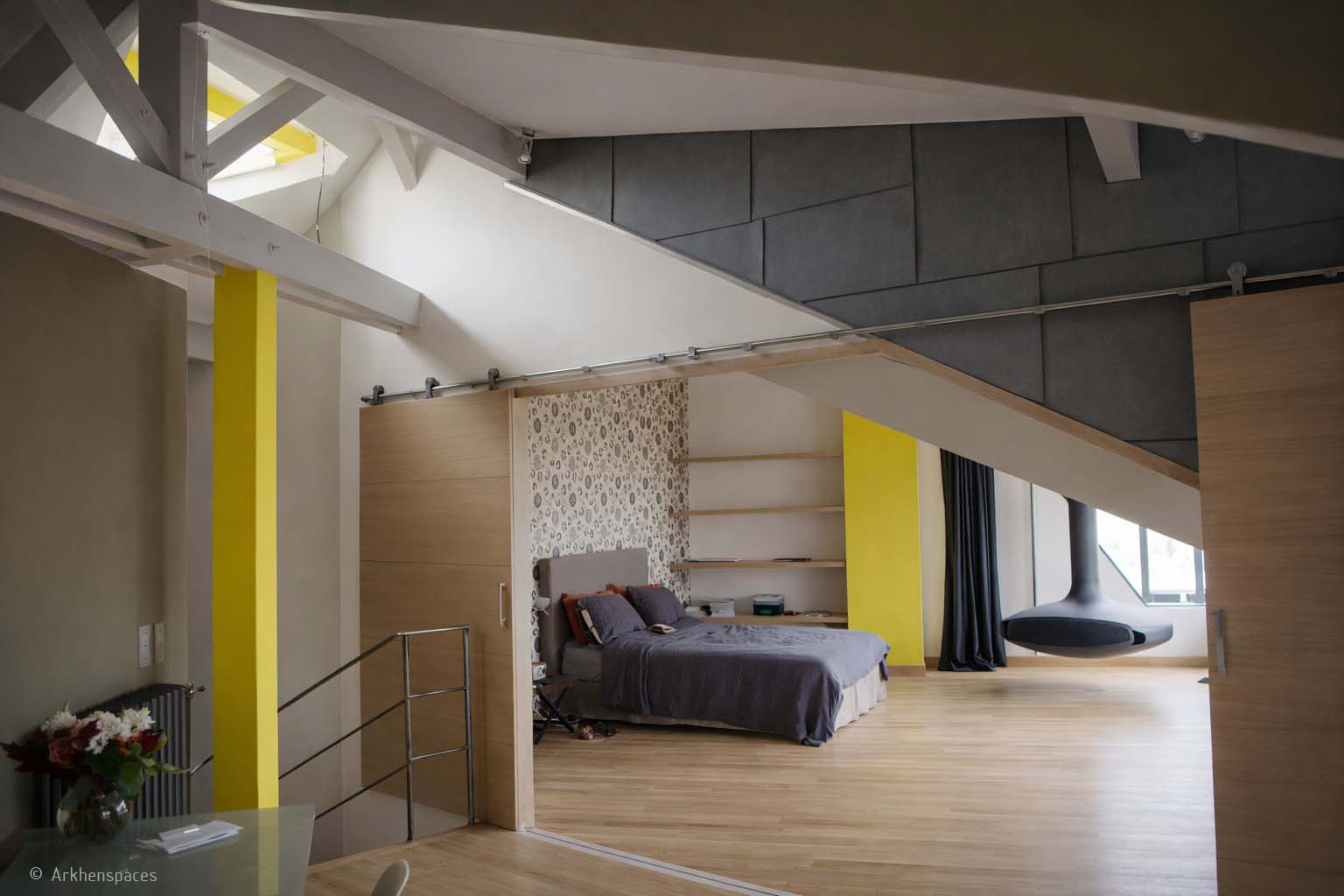
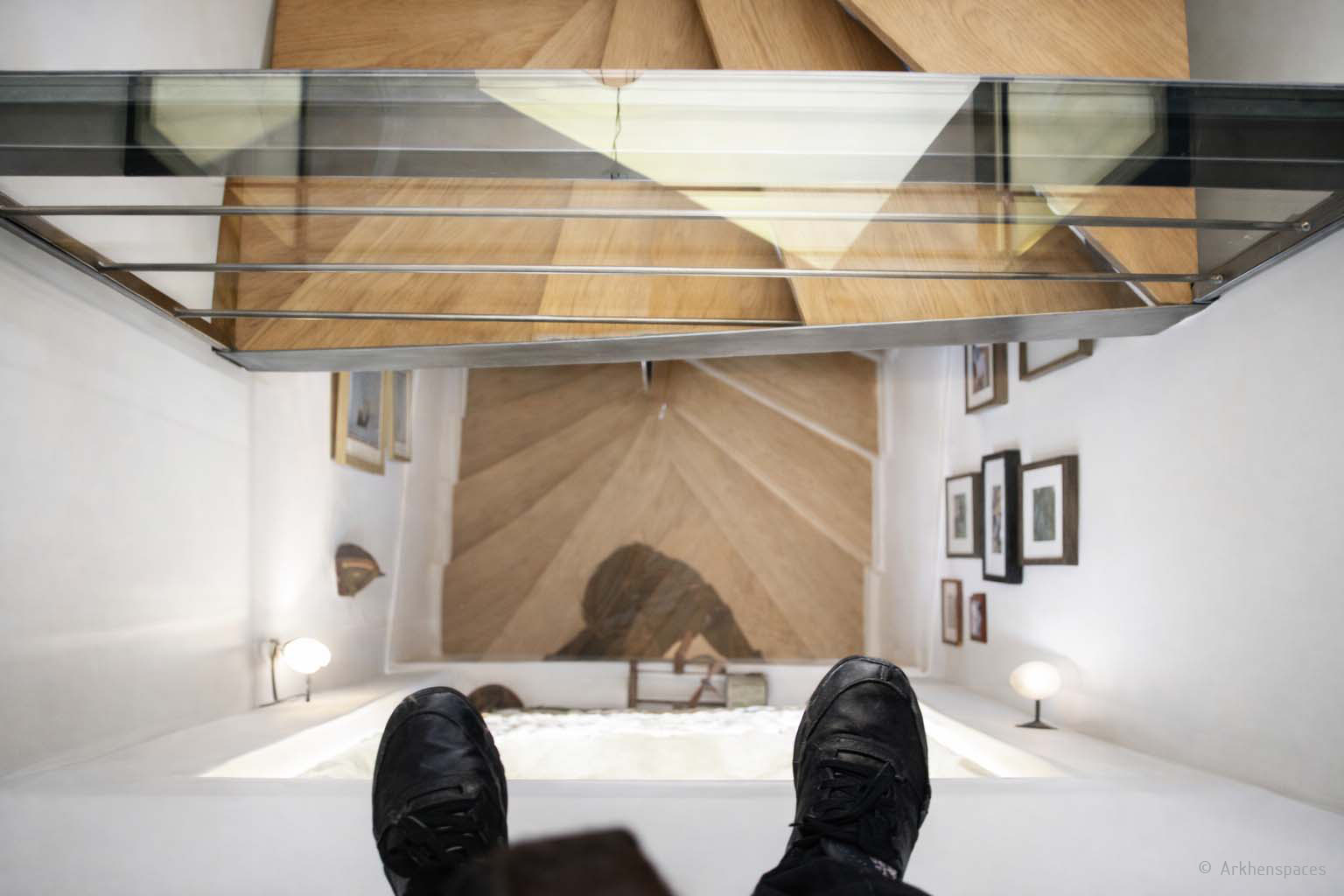
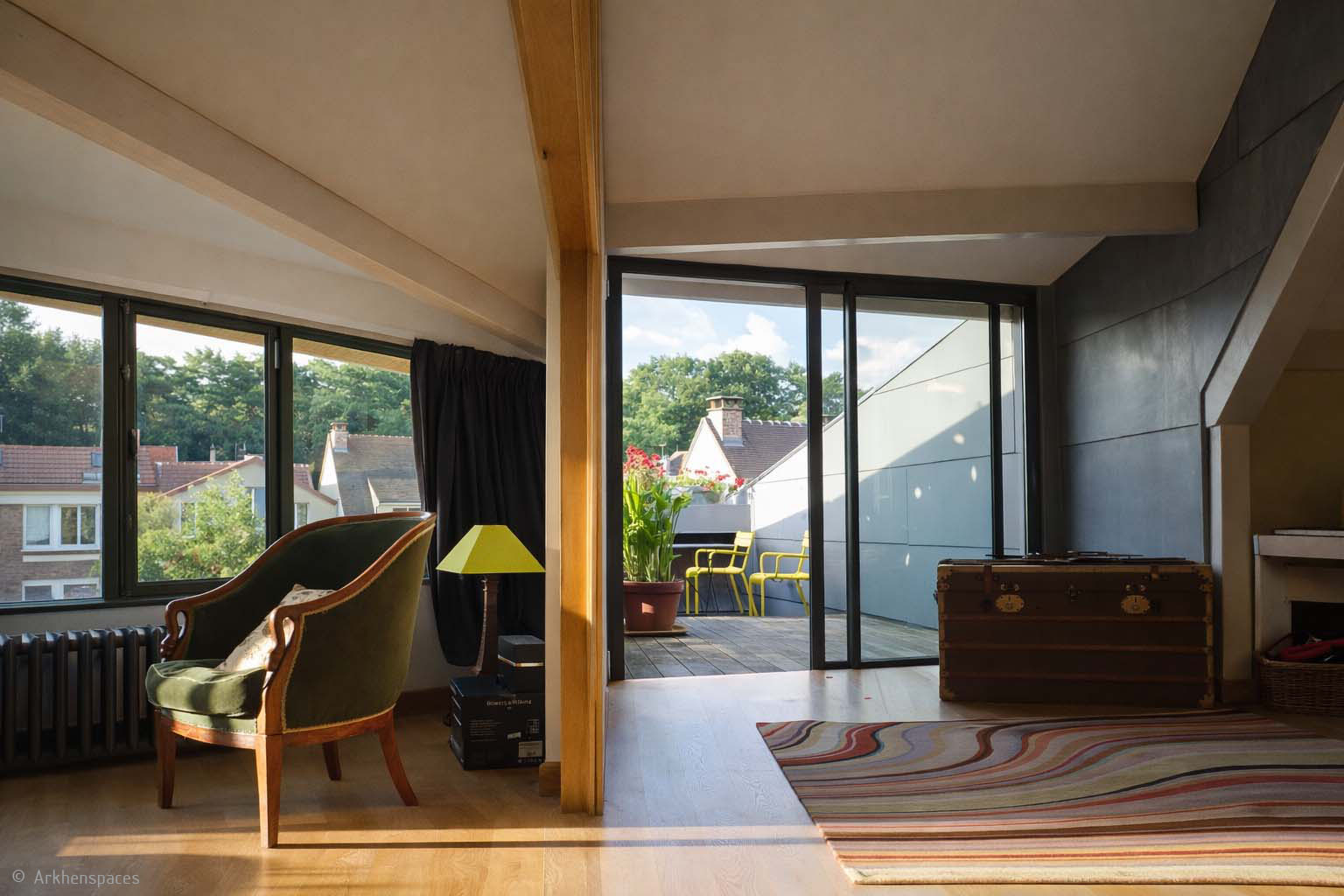
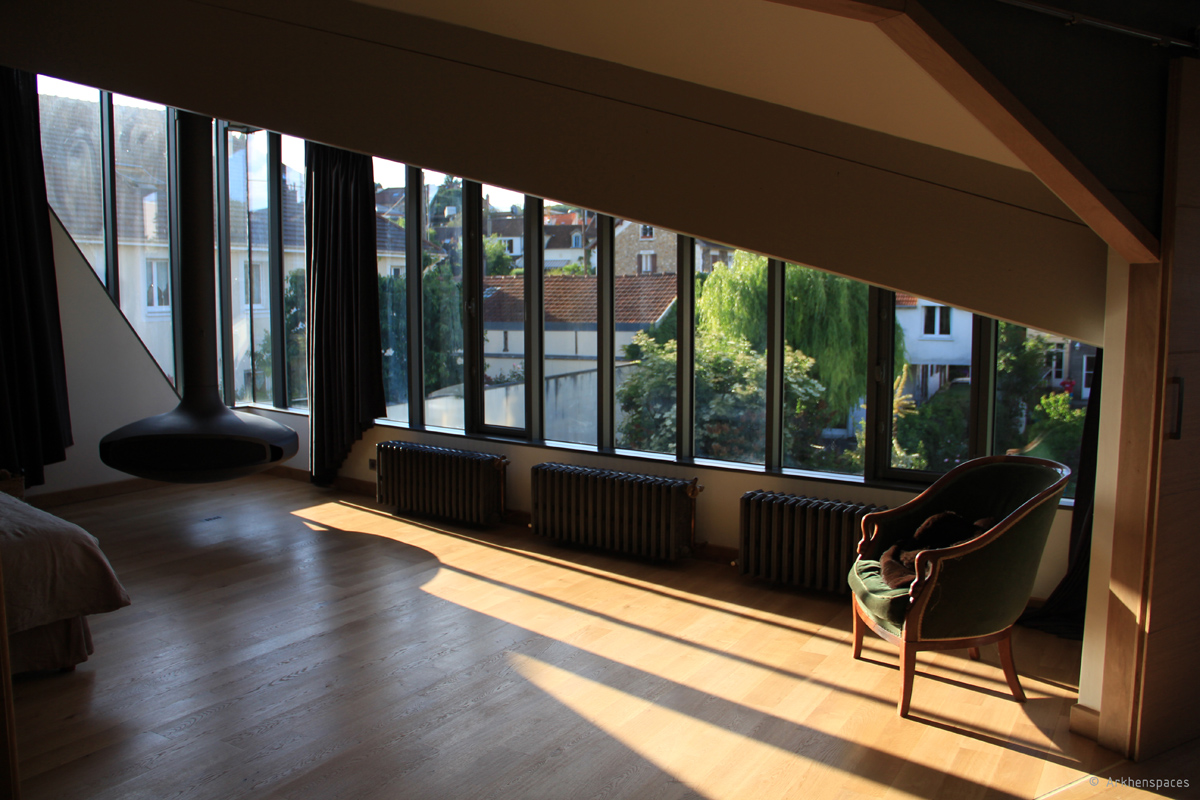
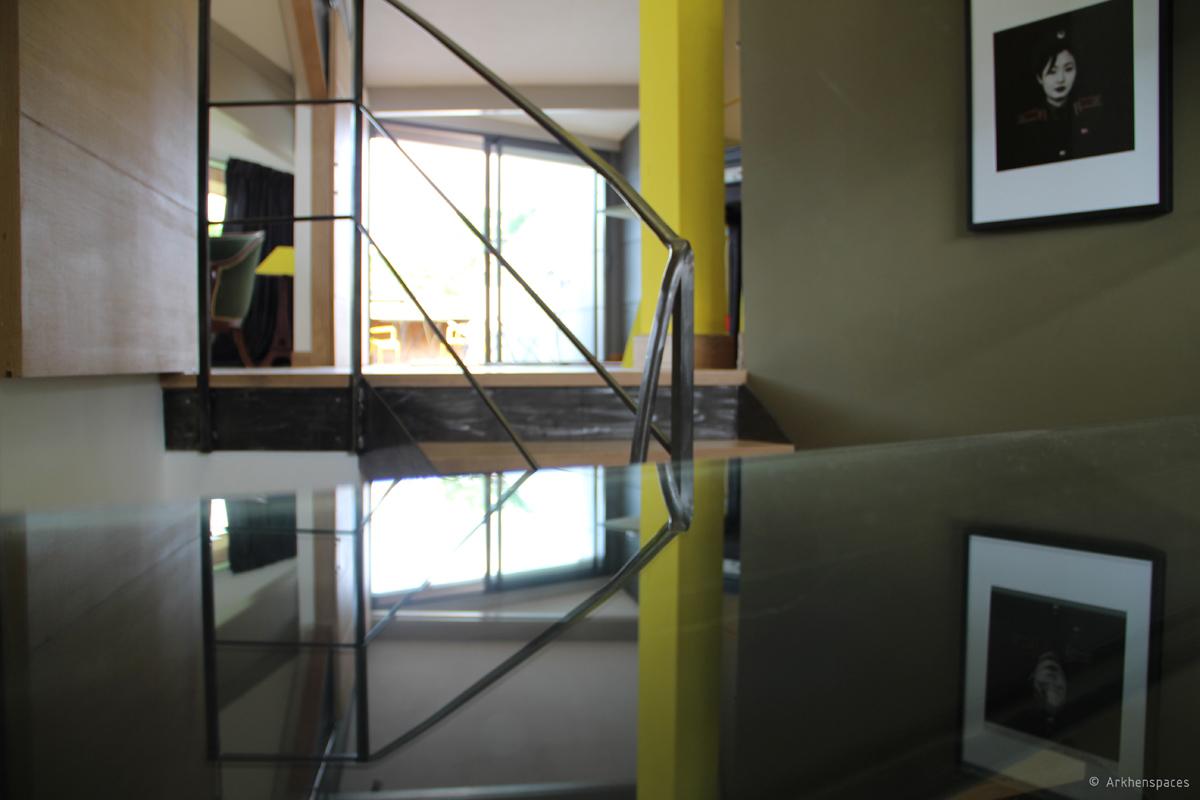
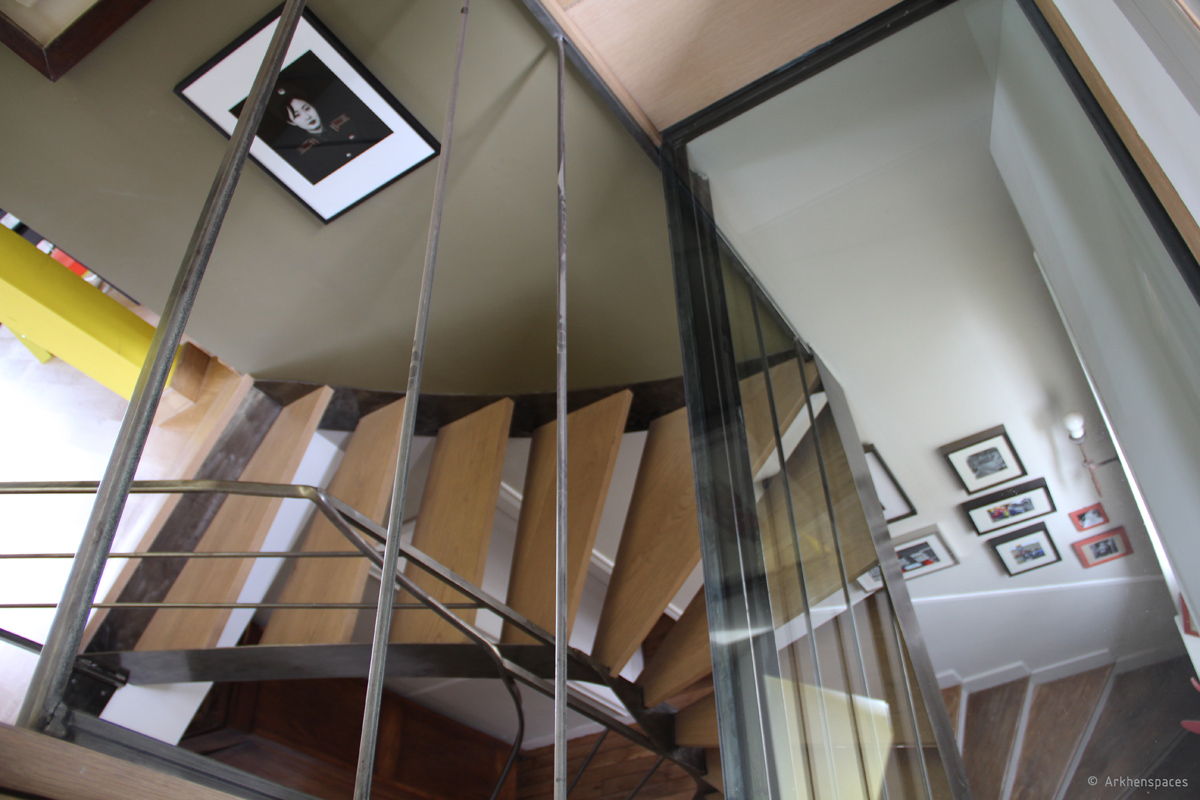
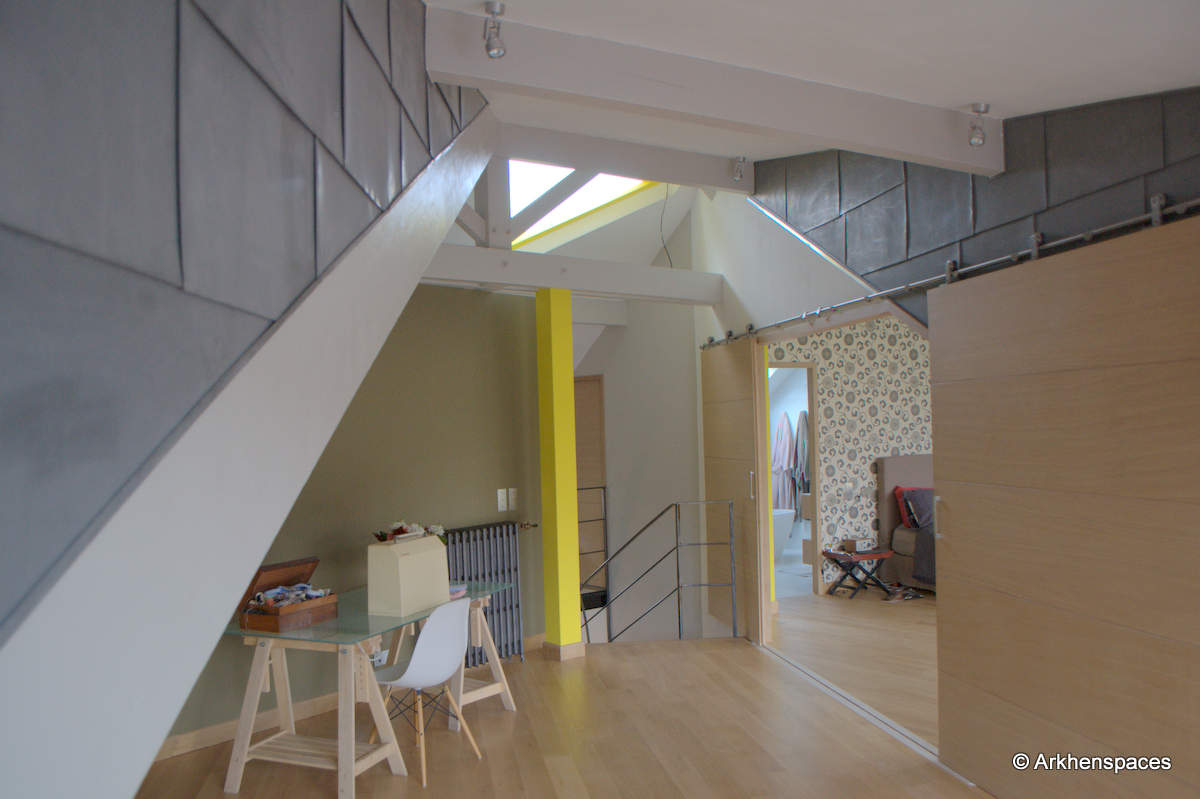
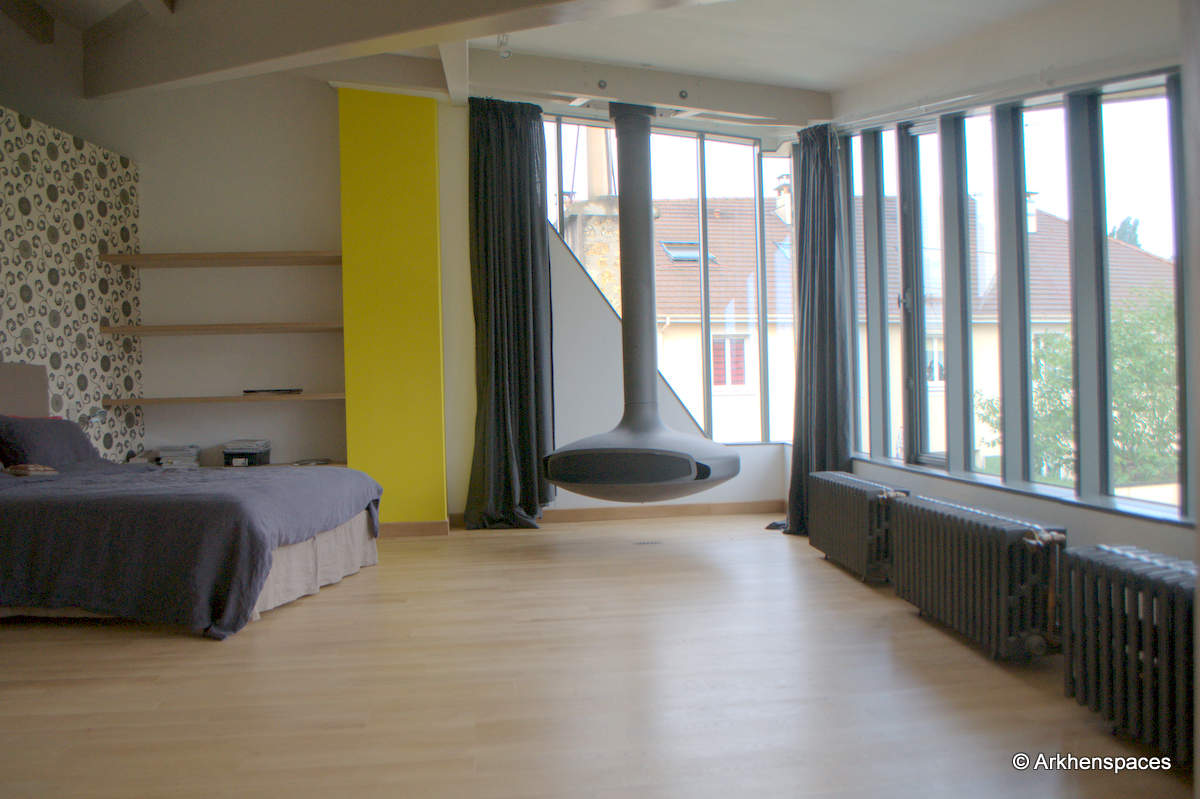
Inside, the space explores an architecture in motion: corner glass canopy, glass bridge, suspended fireplace, zinc walls and variations of oblique geometries compose an environment whose perception evolves through movement.
The terrace volume reflects its surroundings and changes according to the sky, light and the observer’s position thanks to the composition of its stainless steel panels.
Perforations filter light and isolate or connect views in a manner similar to mashrabiyas. Materials — wood, metal, zinc, glass and concrete — stimulate the senses and reveal relationships between matter, environment and perception.
Architecture is both a support, a subject, an effect and an object.