

Wind/Wing : Taichung City Cultural Center _ Taichung Taïwan




Project Taichung City Cultural Centre
Program Contemporary Art Museum and Public Library
Floor area 70,000 m²
Location Taichung – Taiwan
Date 2013
Team Eric Cassar, Lamia Nekaa, Mark Shtanov, Mourad Bencheikh, Andrea Sender, Luiza Canuto
Client Competition: Taichung City
General principles
Conceived as a cultural and environmental infrastructure, the Taichung City Cultural Center combines a public library, a contemporary art museum and open public spaces within a vast urban park. The project seeks to reconnect visitors with art, knowledge and nature through a poetic, sustainable and interactive approach.
The project is based on three main devices: an architecture as an instrument of environments producing energy, flexible spaces capable of transforming over time, and the use of sustainable and natural materials.
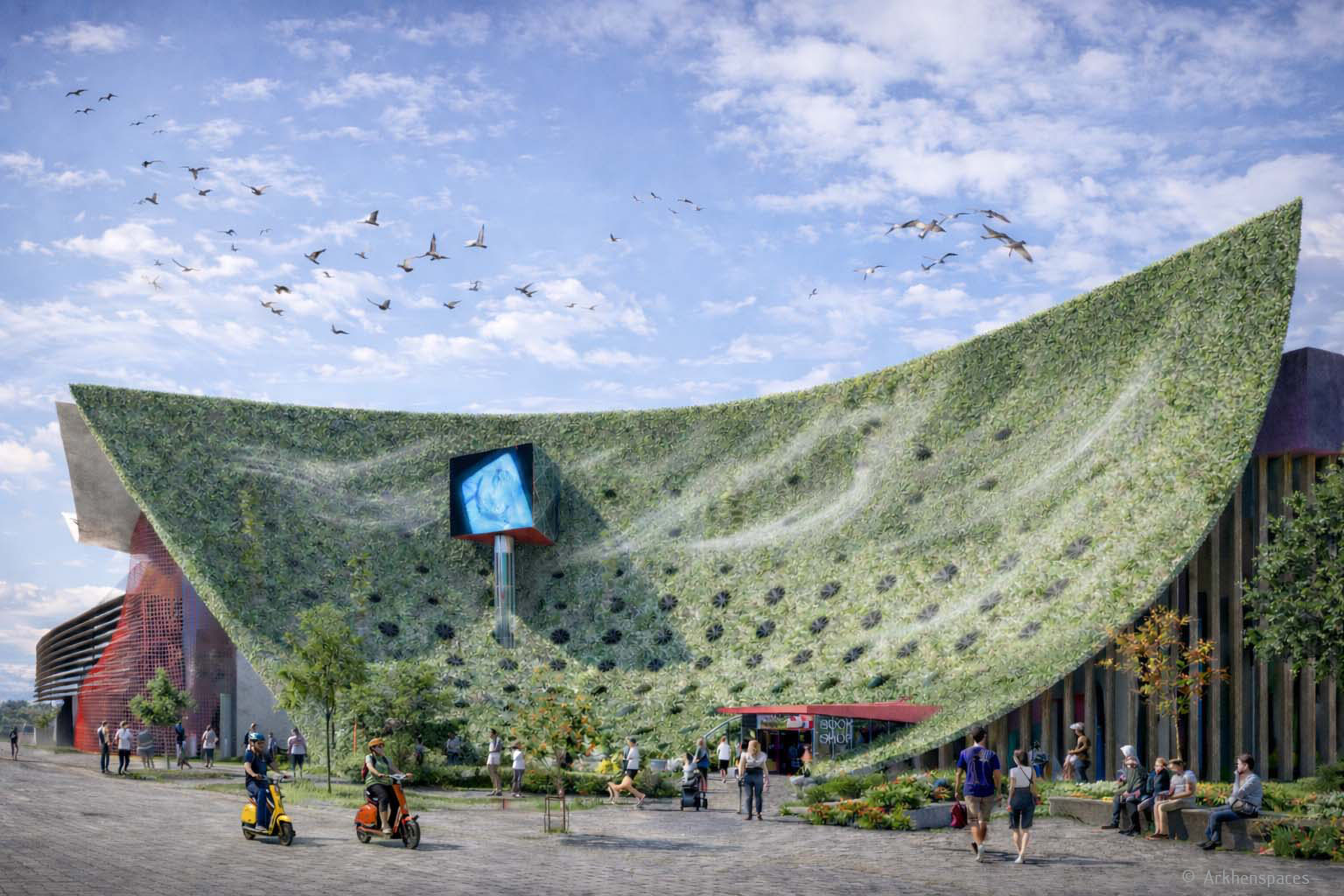
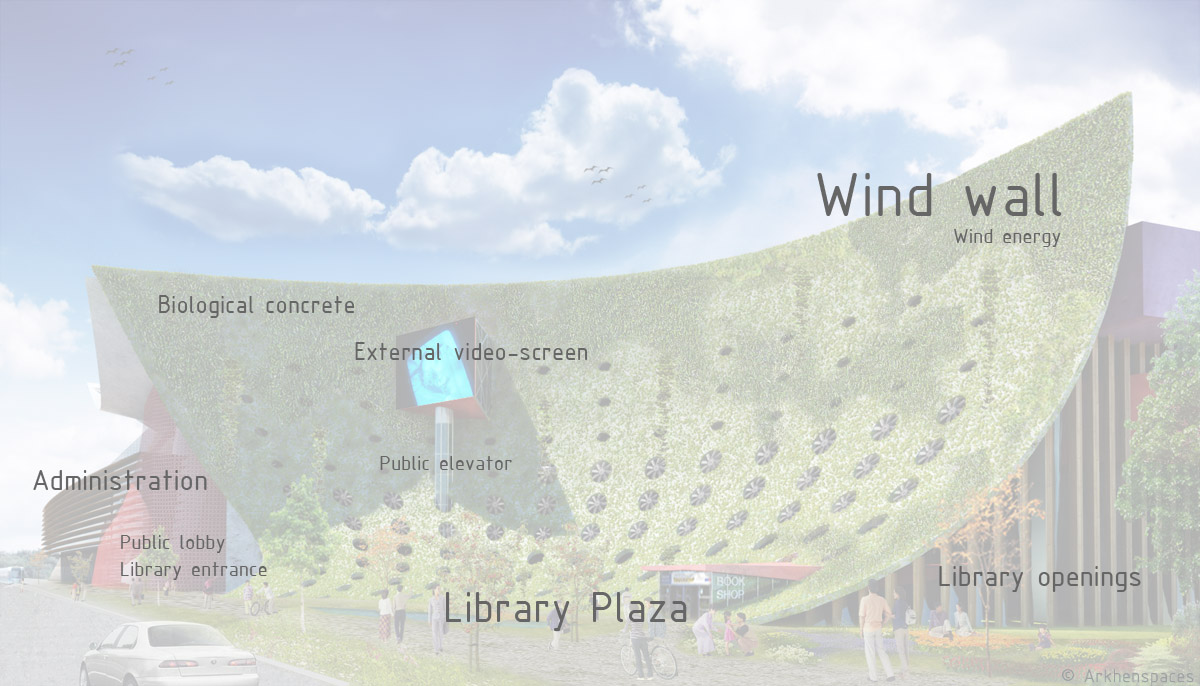
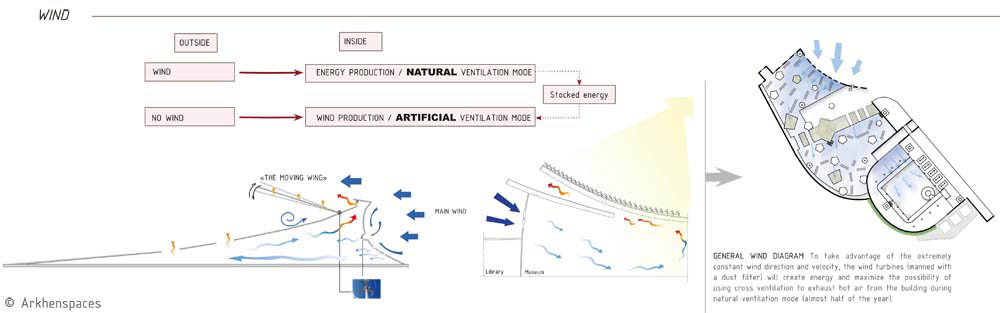
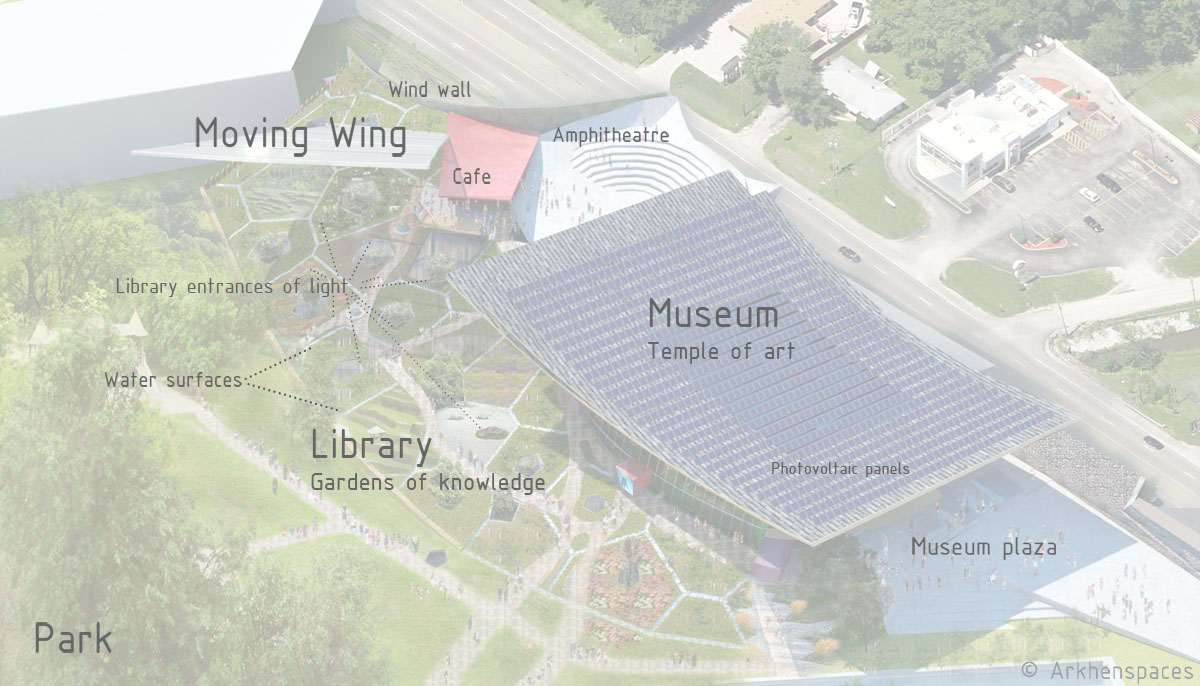
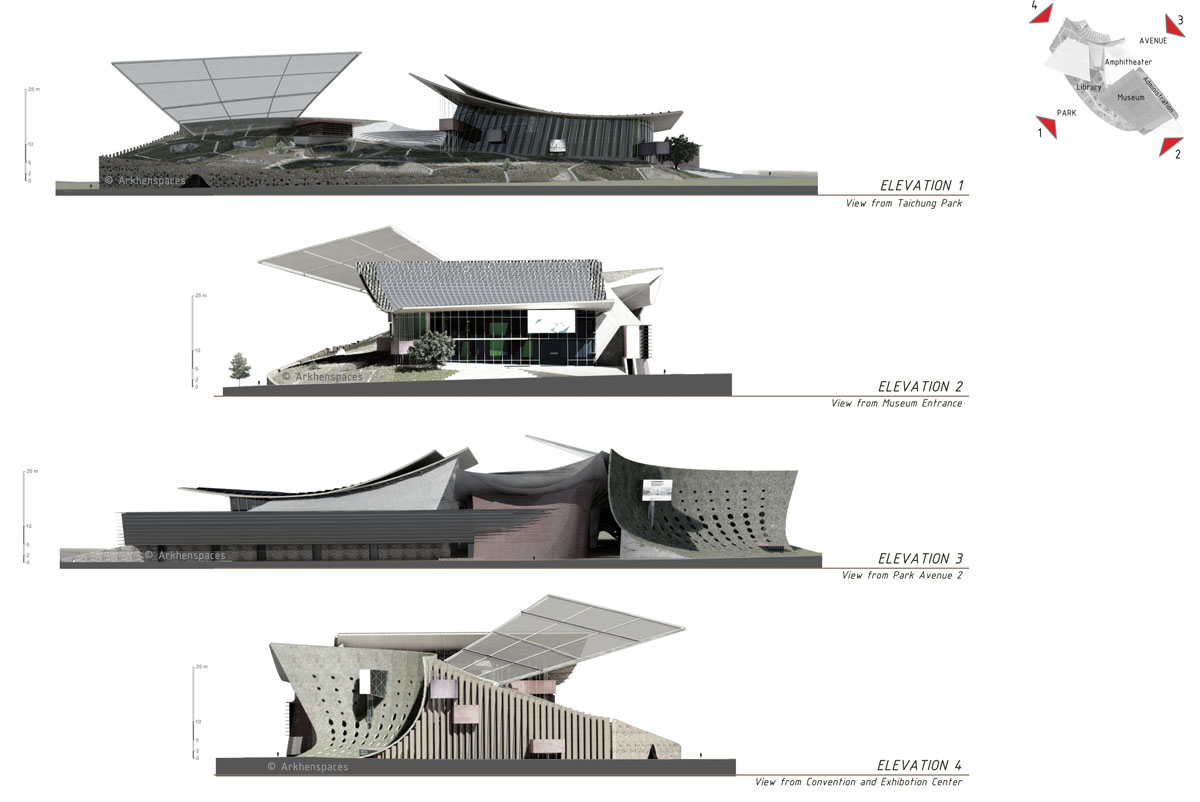
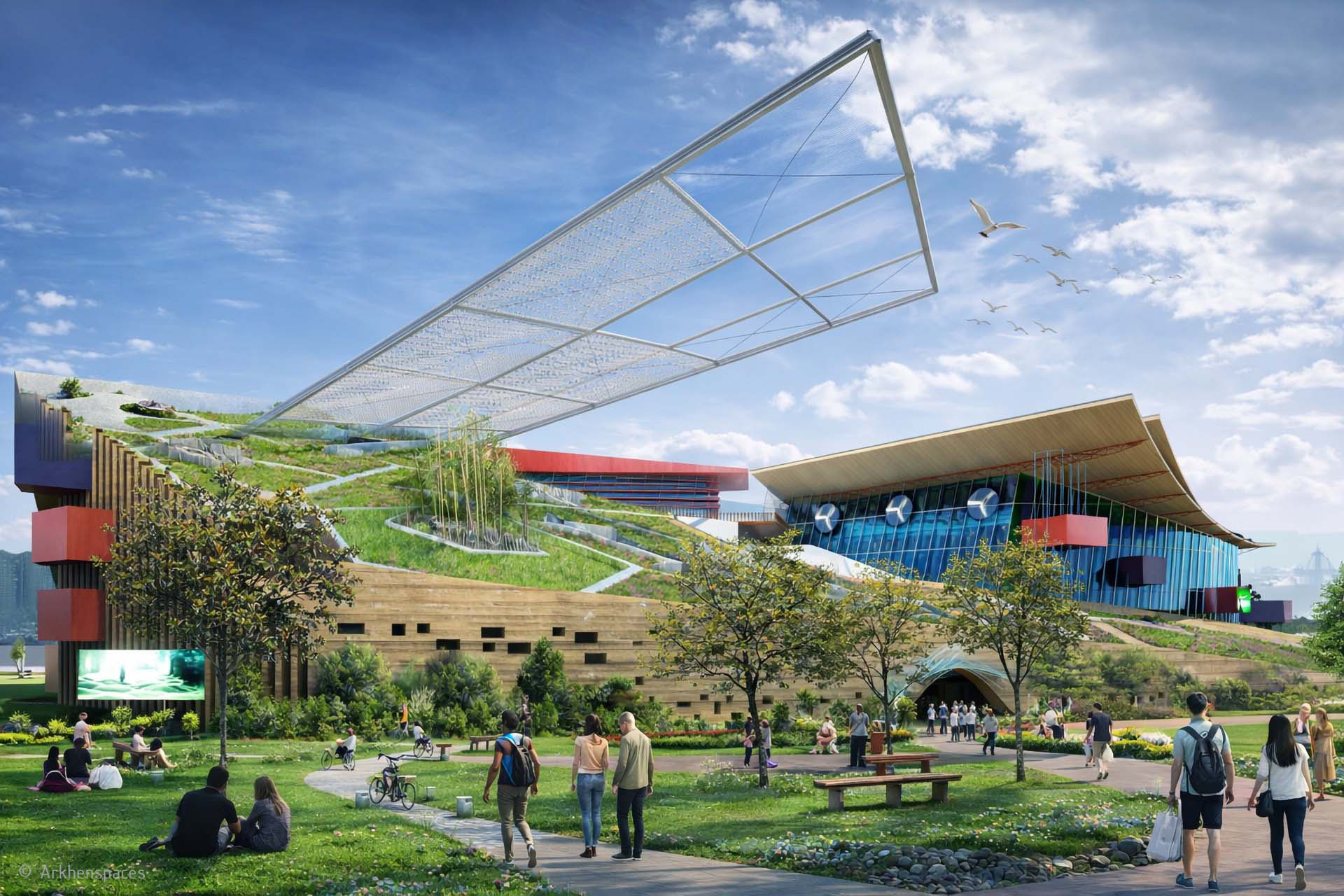
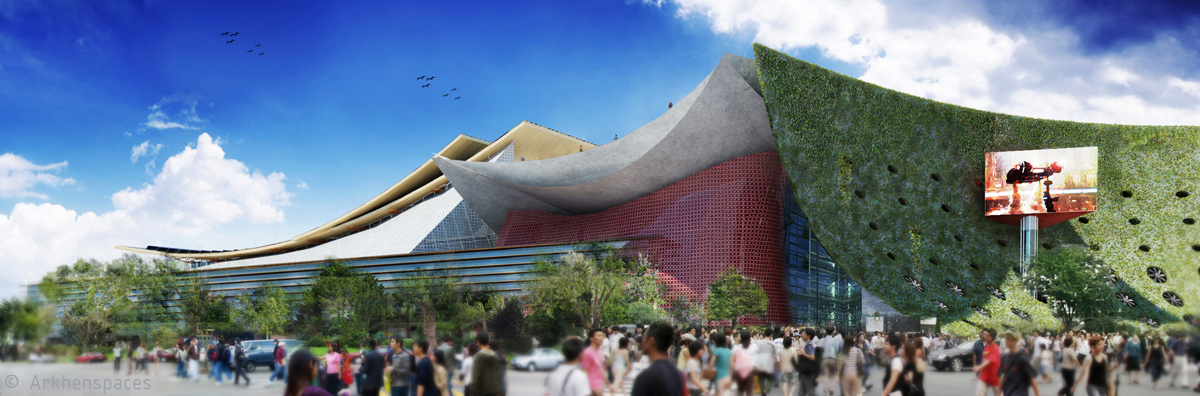
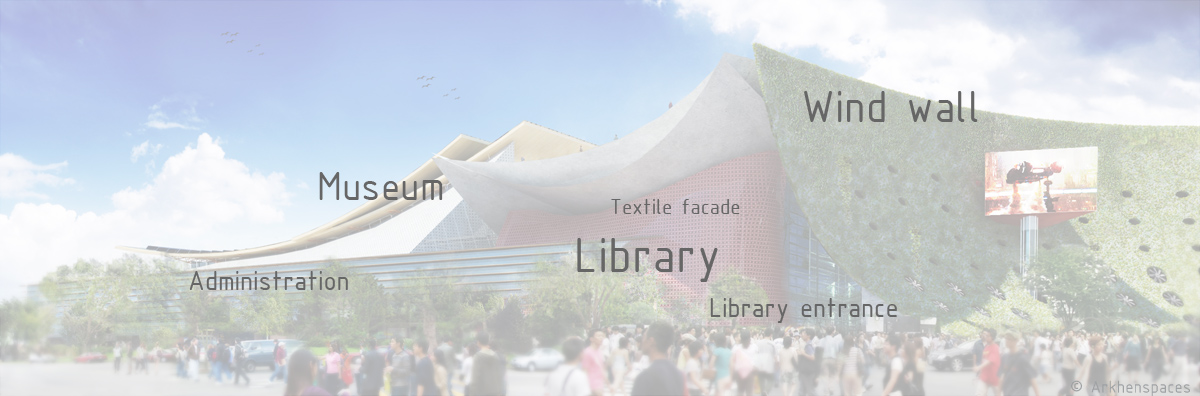
1 — The “Wind Wall”, forming the north façade of the library, is made of biological concrete. It absorbs CO2 and creates a living envelope evolving over time. Its wind turbines, positioned along the prevailing wind axis, generate energy while naturally ventilating the building.
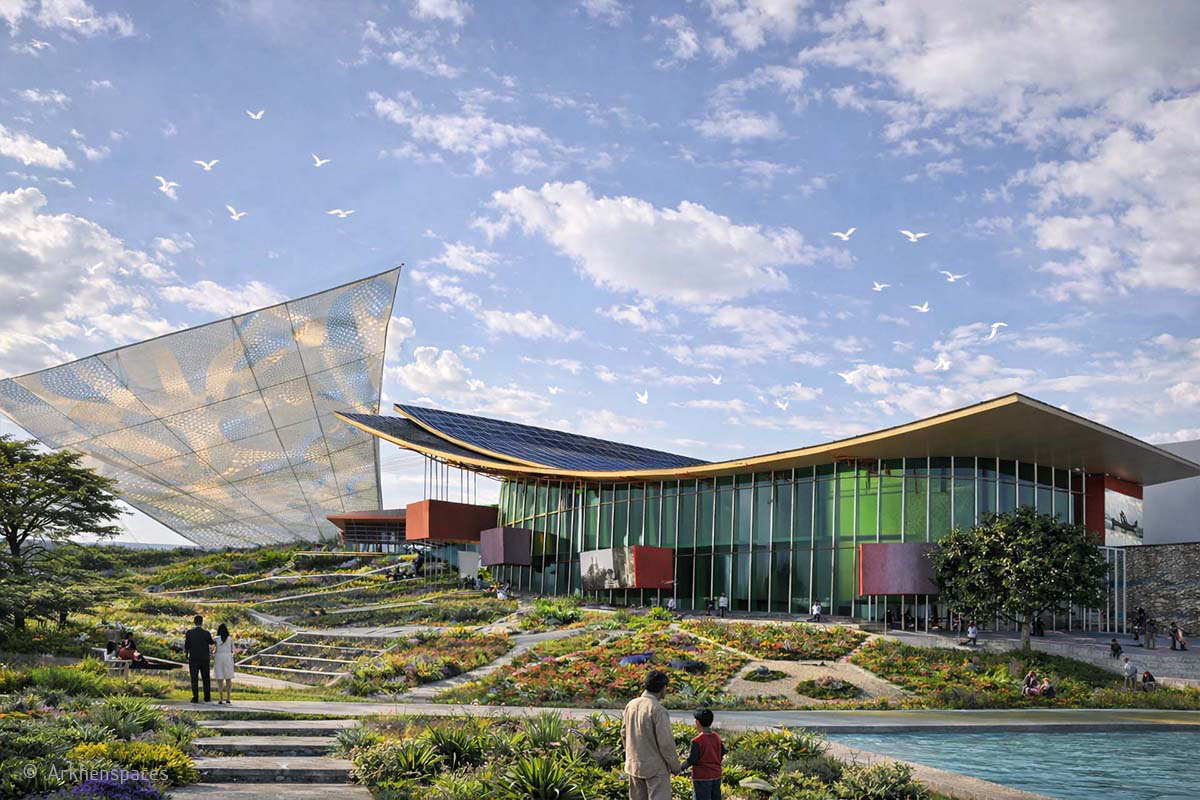
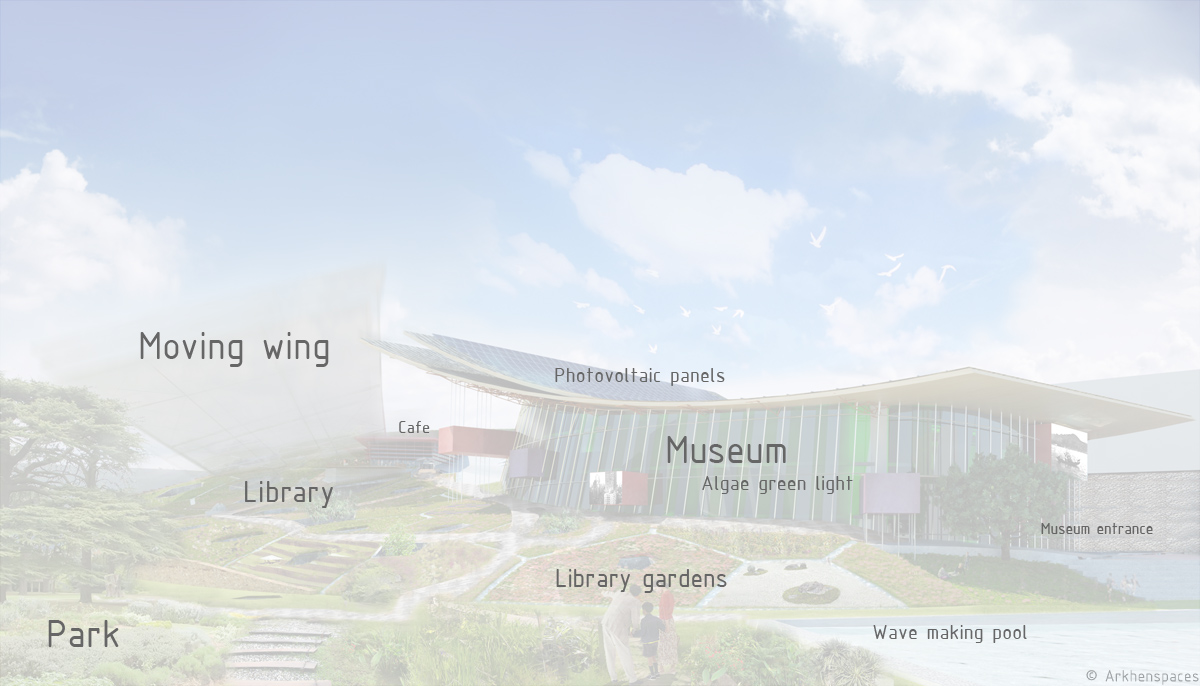
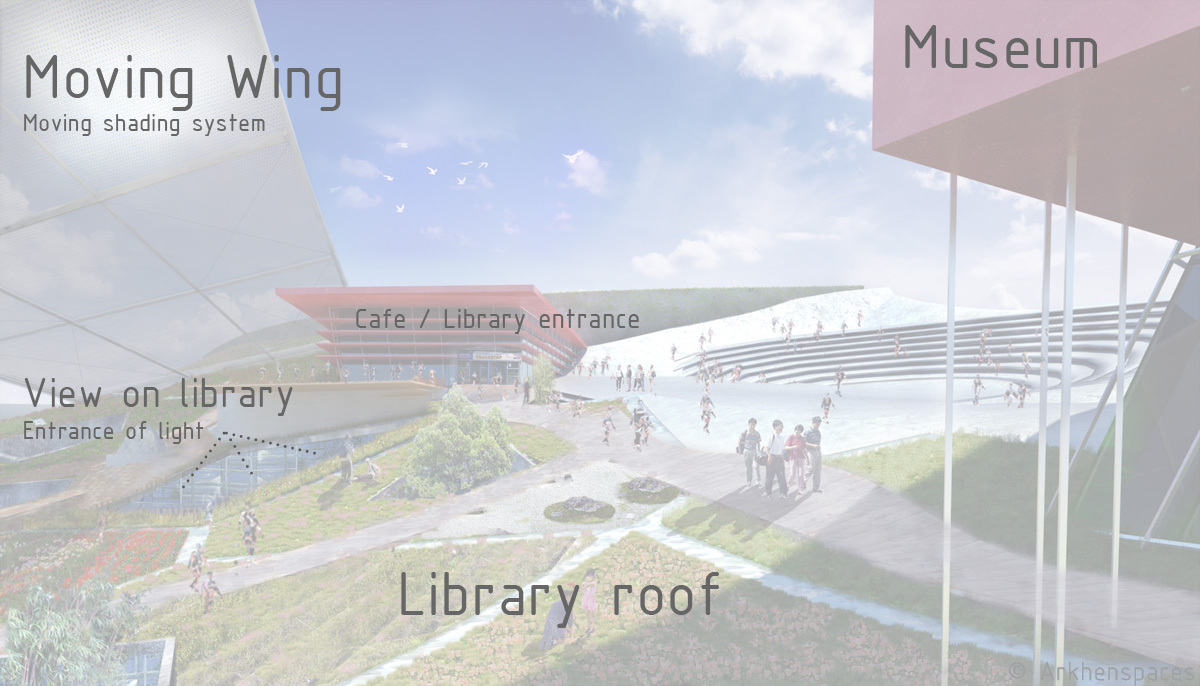
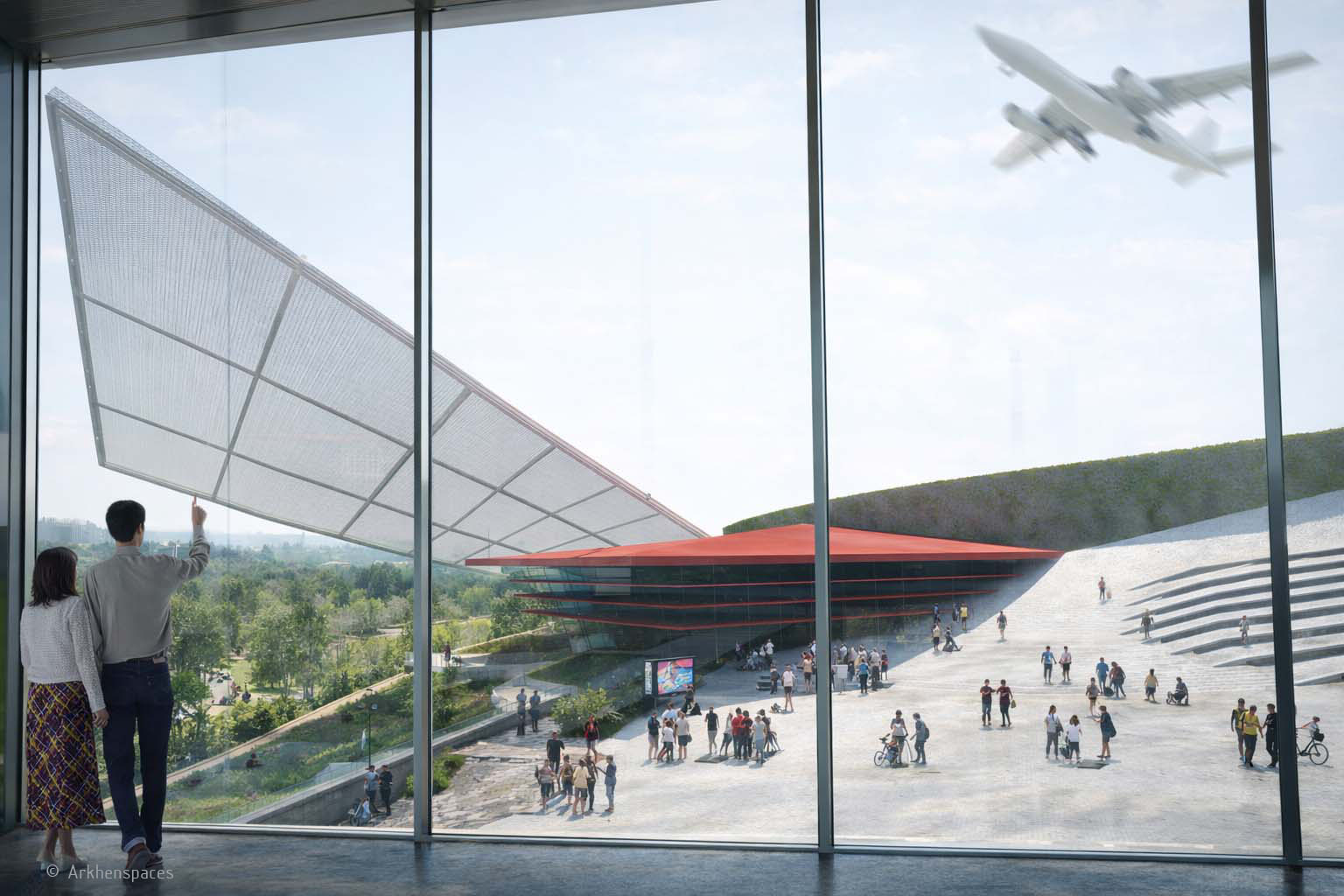
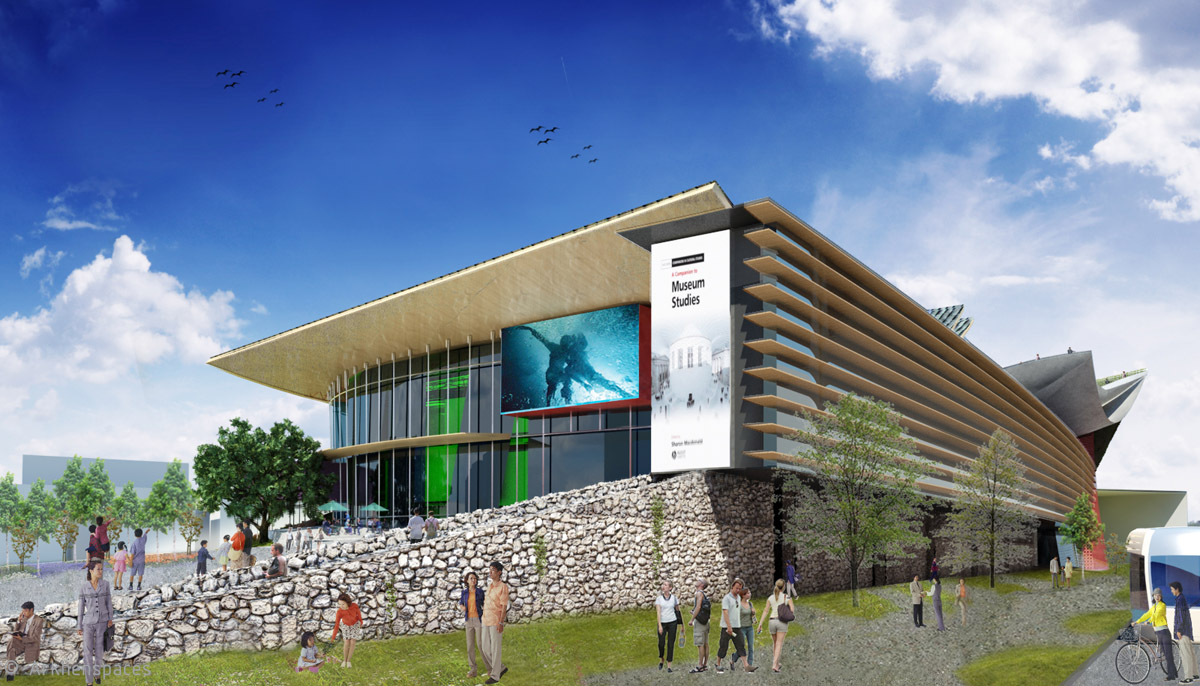
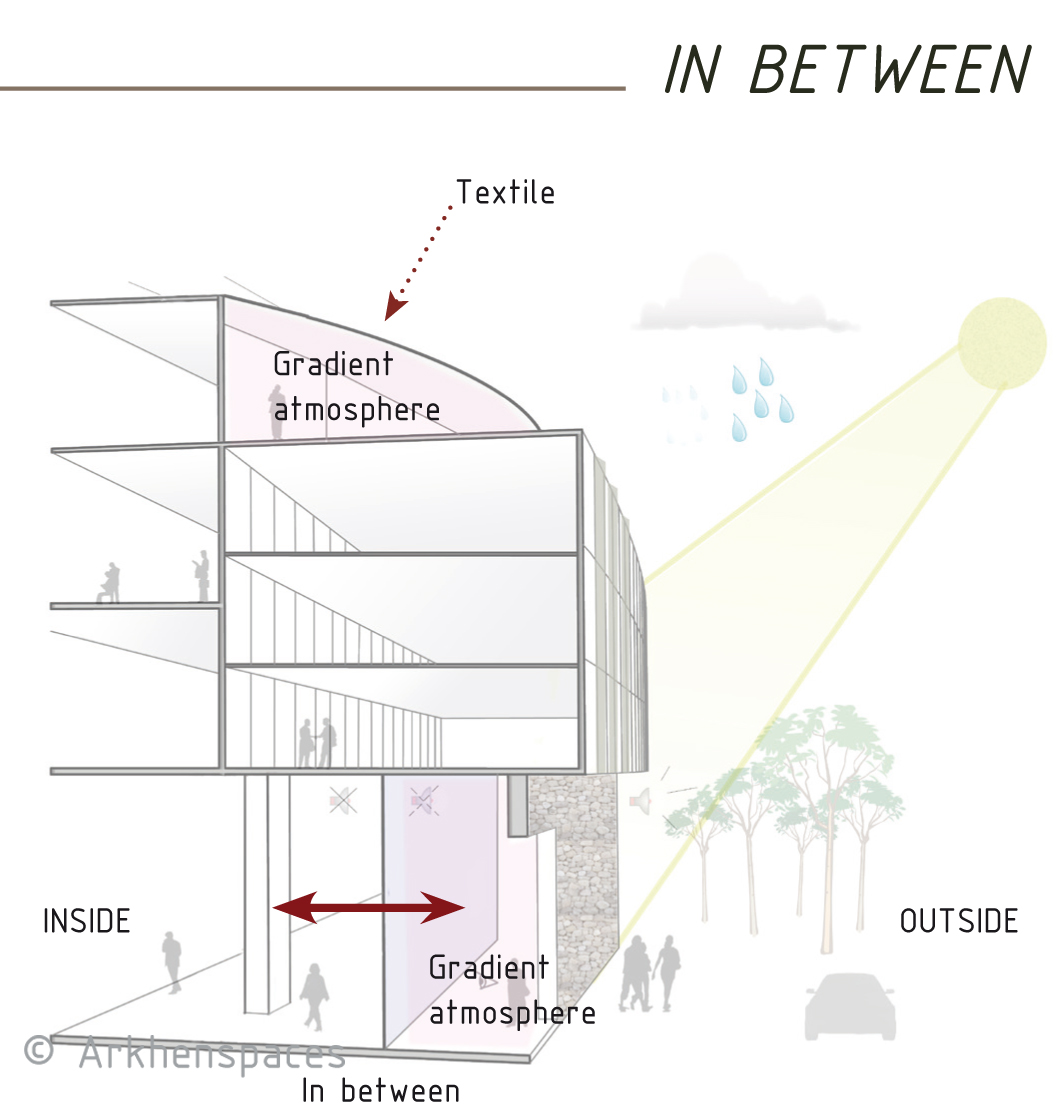
2 — Like the sail of a boat, “The Moving Wing” features an automatic system capable of rolling and unrolling a textile membrane over a metallic structure. It generates different atmospheres and interacts with natural phenomena such as rain and sunlight. Possessing its own movement and positioned along the prevailing wind axis, it transforms both the appearance of the building and the environments it generates according to climatic conditions.
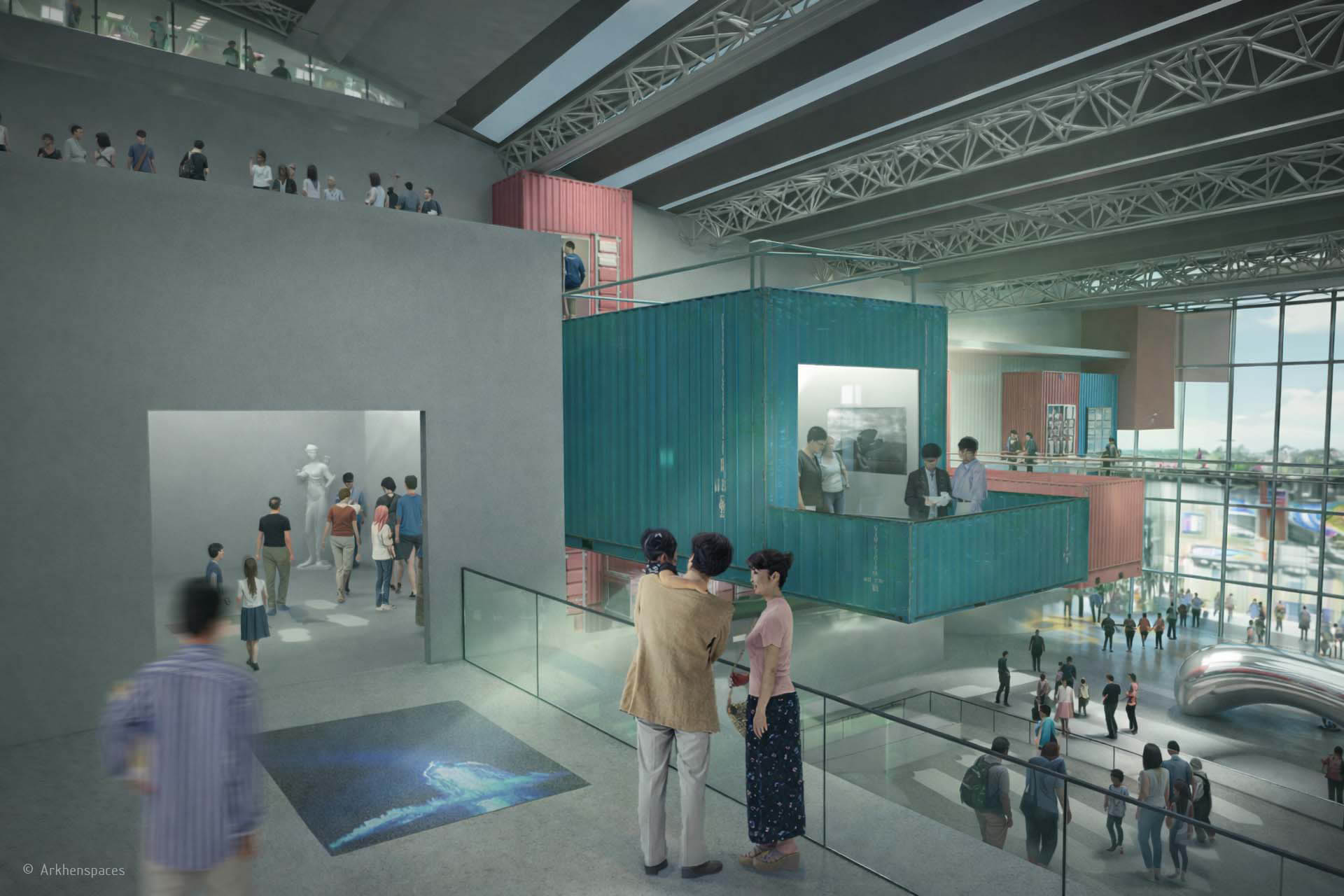
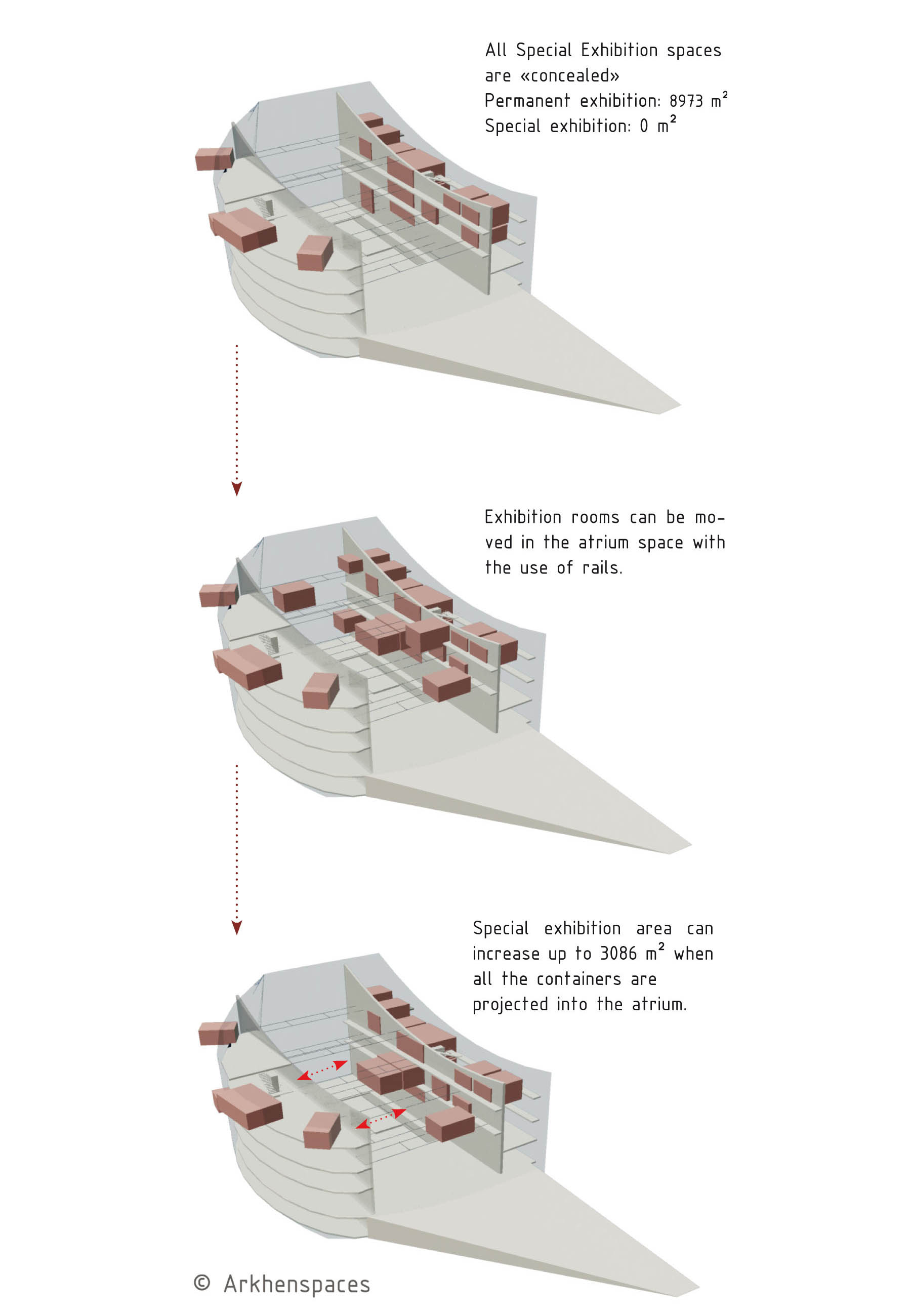
3 — The museum is composed of “Movable Boxes” made from recycled shipping containers facilitating the creation of specific exhibitions. Easily movable, they allow a wide variety of spatial configurations while offering precise control of the internal atmosphere.
A cultural infrastructure within the park
Integrated into the master plan of a new district in Taichung, the Cultural Center (Public Library and Contemporary Art Museum) is located within a park developed on the site of a former airport.
The project aims to reveal Taiwan’s innovative potential and its ambition to reduce its carbon footprint.
The program was designed through the exploration of interior spaces as well as exterior spaces, their relationships with the surrounding district and their capacity to encourage social interaction.
Although the museum and the library are conceived as two independent and flexible entities, they operate through a complementary logic.
The Library: Gardens of Knowledge
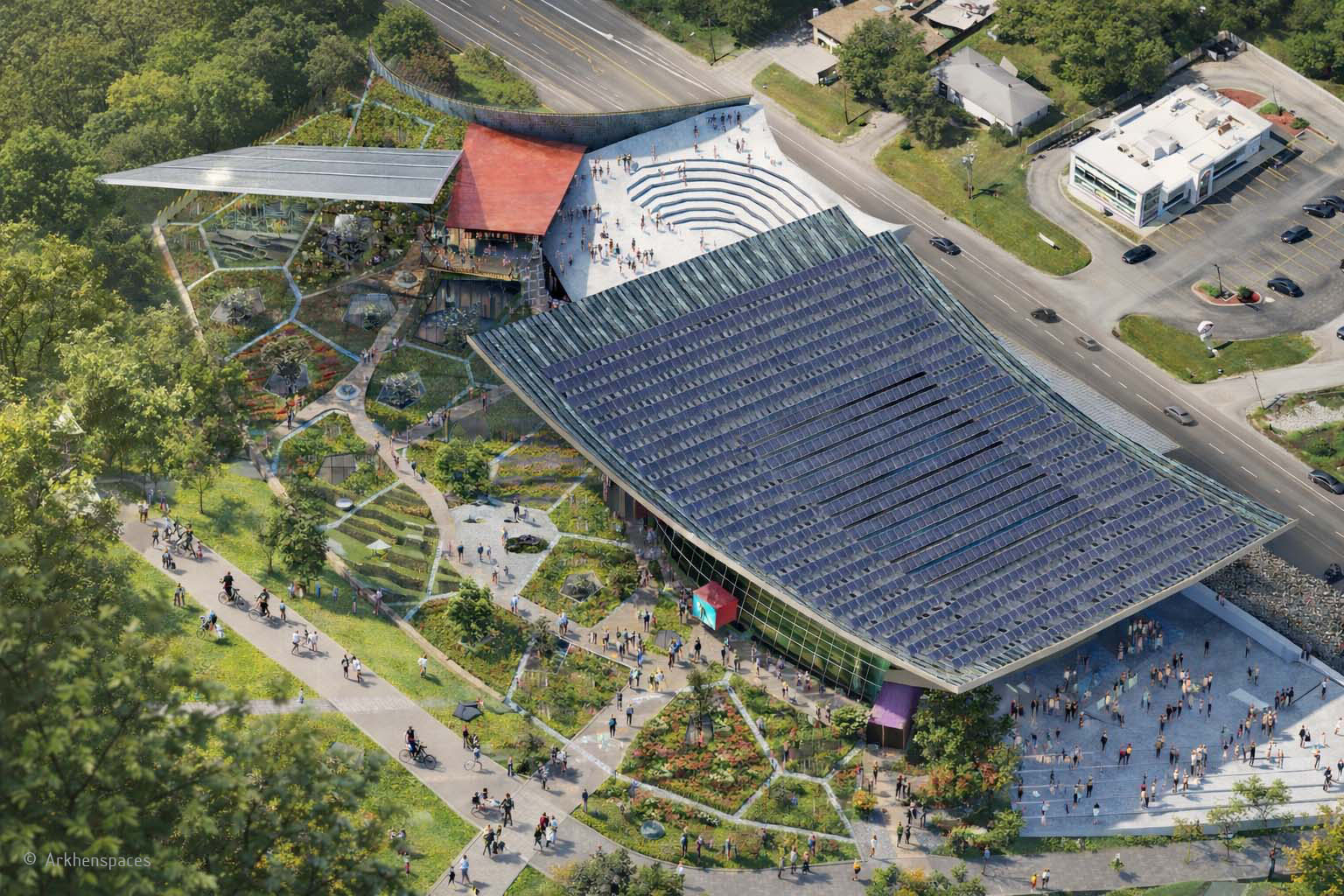
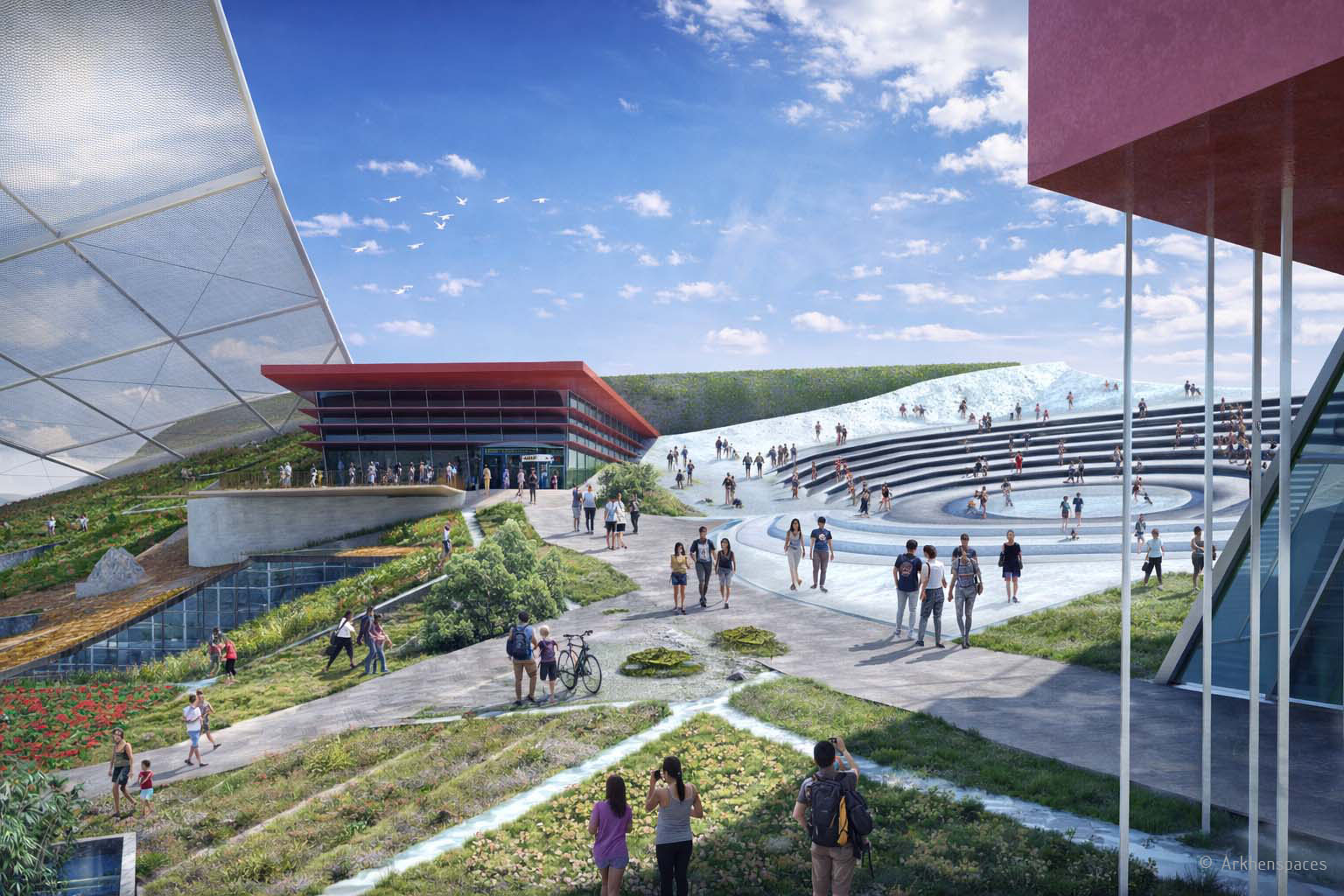
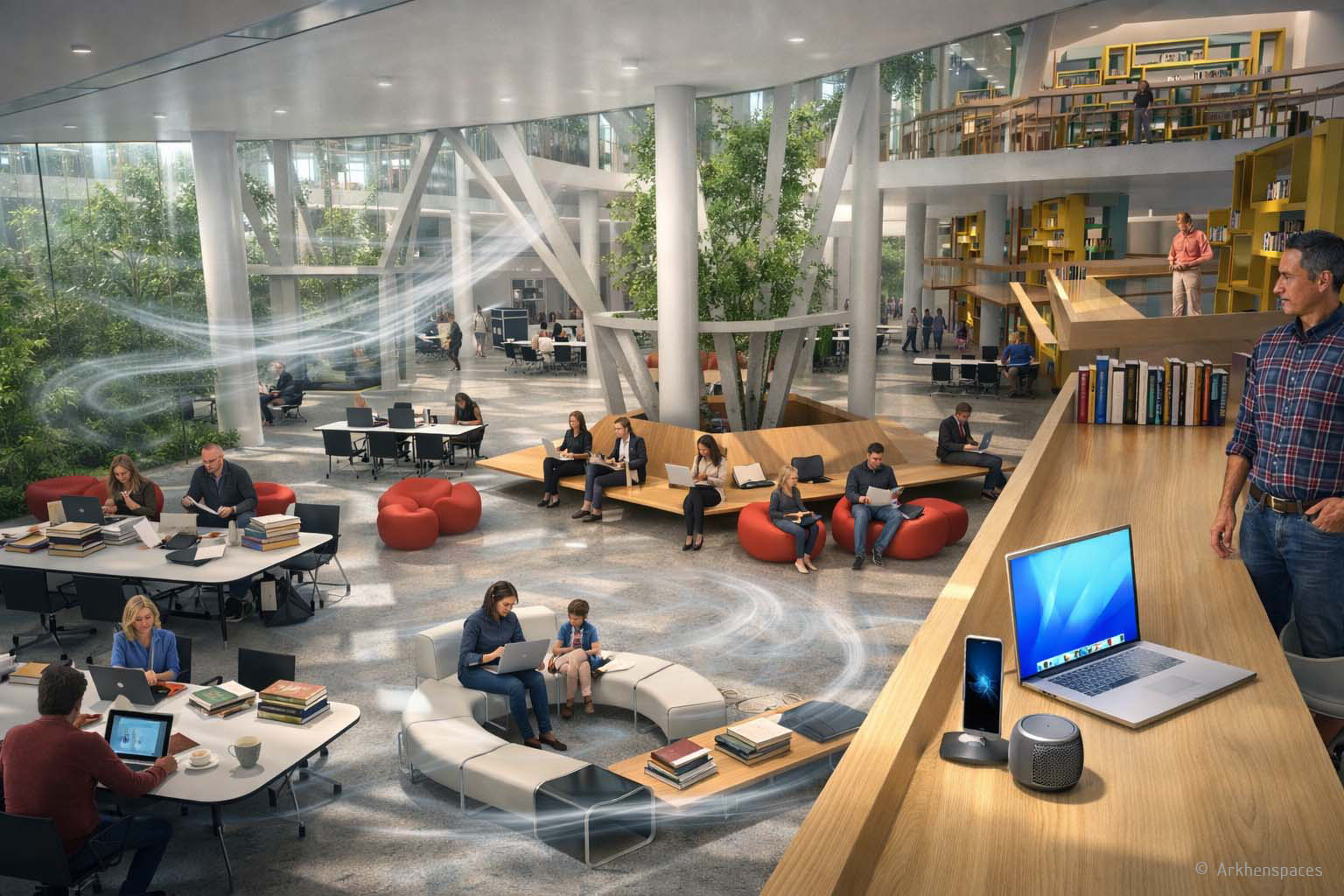
Its vegetated roof is composed of gardens with different themes. Its architecture offers a diversity of spaces with distinct atmospheres, allowing everyone to choose an environment adapted to their needs, activities or desires.
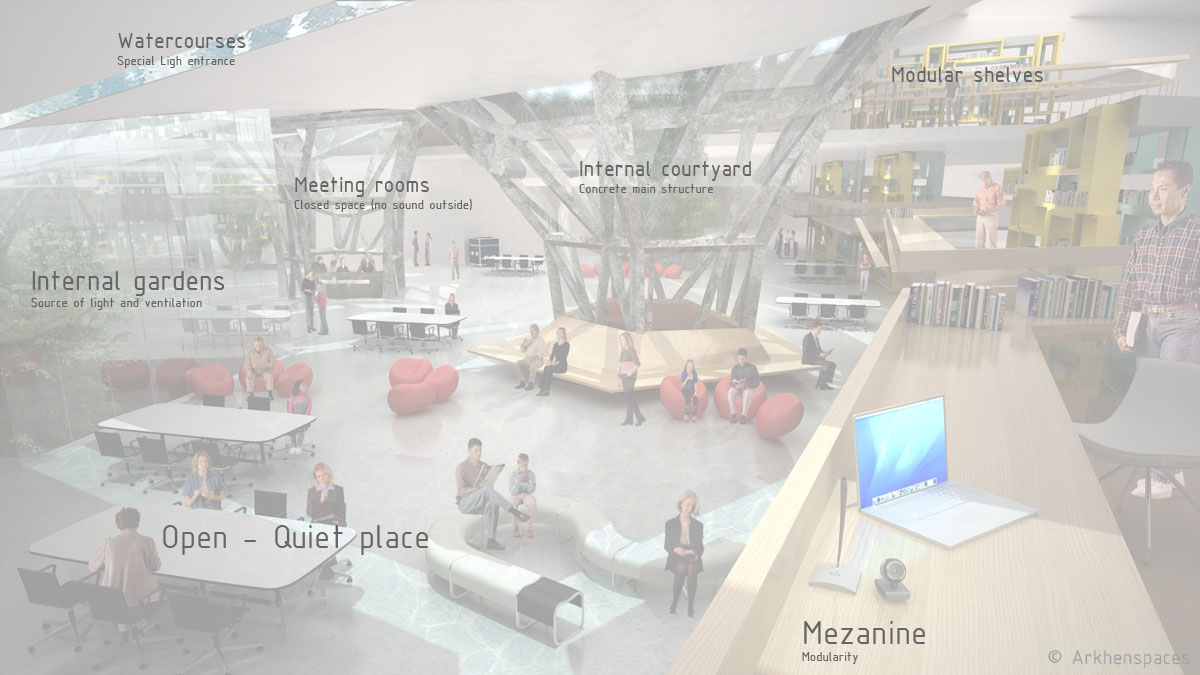
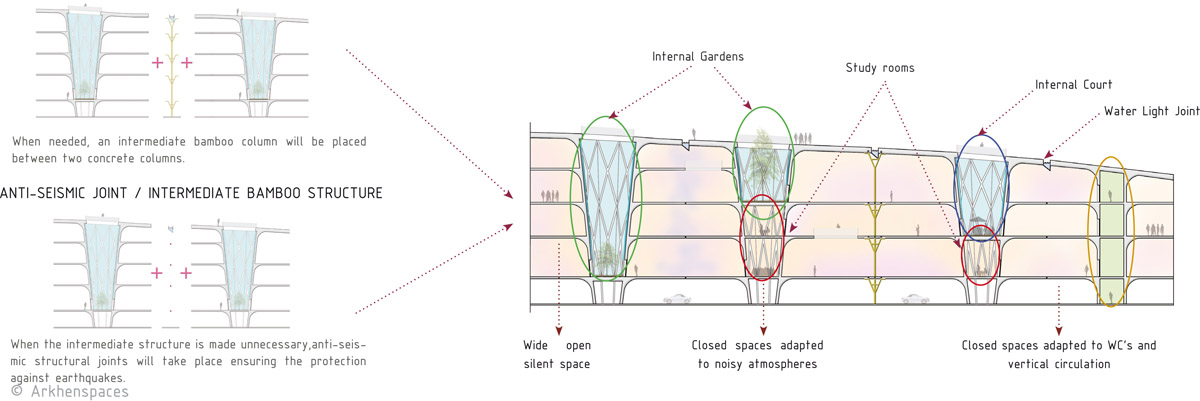
Through movable bookshelves, large open spaces and a diversity of enclosed spaces varying in size, light conditions, sound atmosphere, views and temperature, visitors can choose the place that best suits them.
The Museum: A Temple of Art
The museum reinterprets the idea of the Confucian temple through a contemporary vision combining sustainable strategies and innovative construction methods.
The museum is organised around a vast atrium whose space can continuously evolve through a series of movable rooms: the “Movable Boxes”, built from recycled shipping containers.
These elements allow the transformation of interior spaces according to exhibitions and events.
Open Public Spaces: “In Between”
The building is conceived as a landmark visible from a distance, establishing relationships with both the city and the park through the public spaces it generates.
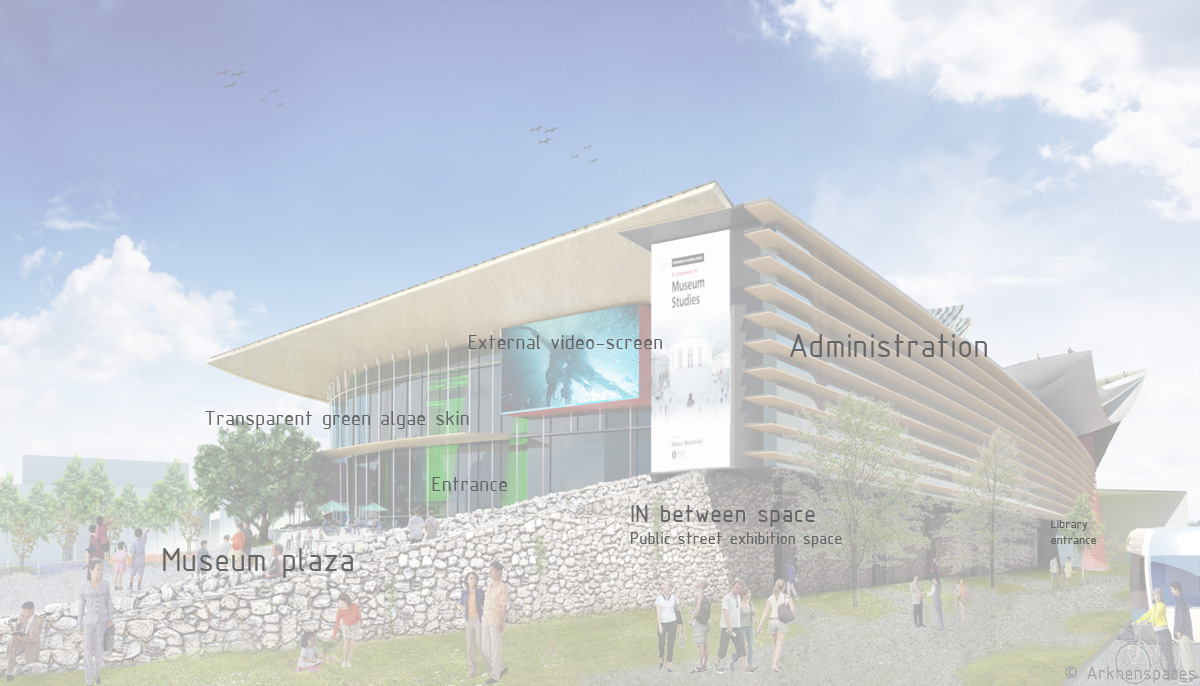
To enter the building, visitors move through a sequence of intermediary spaces that progressively transition them from the urban environment toward spaces dedicated to art and knowledge.
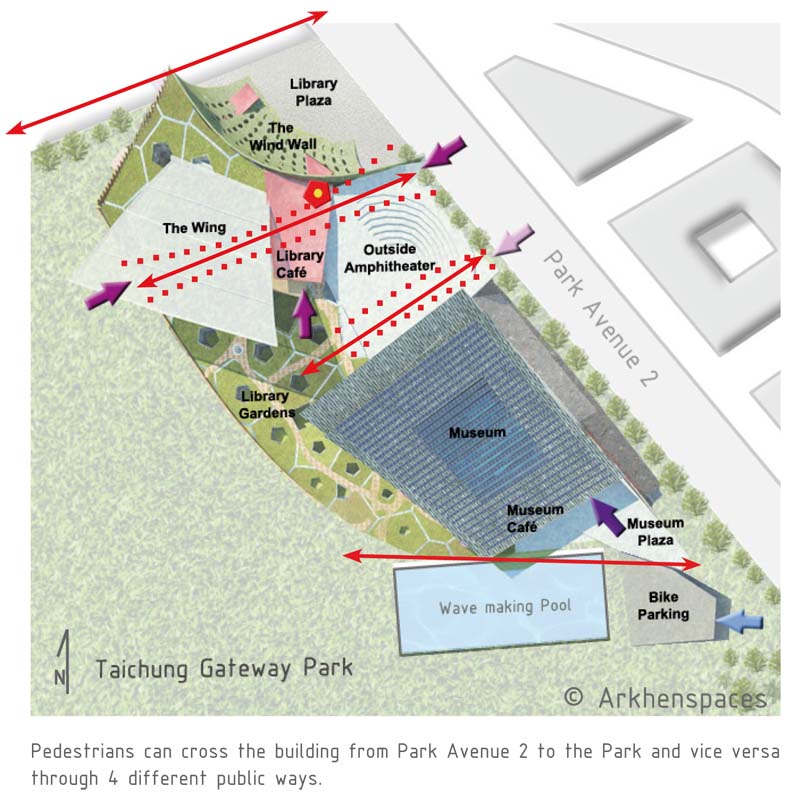
The gardens, the library café and the amphitheatre remain entirely open to the public and directly connected to the park.
On the opposite side of the site, a large porous wall revealing exhibitions, together with the museum café and museum plaza, connects the complex to the main avenue and invites visitors to explore the place.
Playing with natural phenomena and creating flexible spaces
The building is designed to be flexible not only in order to accommodate different uses but also to adapt itself to natural phenomena.
These natural elements, combined or not with new technologies, contribute to energy production while reducing the use of artificial systems controlling interior comfort.
Beyond their technical role, they also create poetic effects through water, rain, wind, solar heat and natural daylight.
Within the library gardens, rainwater is collected through large glass channels creating unique lighting effects inside while offering diffracted views of the sky.
On the museum’s south façade, algae panels — also acting as an energy source — possess an aesthetic quality through their evolving colors, generating different lighting atmospheres both inside and outside the building.
An architecture connected to its environment
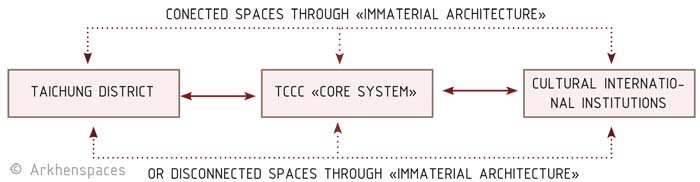
Assisted by “The Core”, an advanced technological system, the TCCC operates as an intelligent building connected to the surrounding district.
Fully autonomous, the complex functions as a carbon filter.
As an energy producer through photovoltaic panels, algae panels and wind turbines, it can redistribute excess energy to surrounding networks.
The system also enables water reuse and optimized management of natural resources.
“The Core” automatically regulates artificial systems (air conditioning, lighting, etc.) according to climatic conditions and building occupancy in order to optimize energy consumption.
Connected Spaces: N-spaces
The TCCC is connected to libraries, museums and cultural institutions throughout the world, offering visitors the possibility to explore not only its physical spaces but also a network of connected physical and virtual environments.