

Helsinki [sun] museum _ Helsinki Finland
Project Art Museum in Helsinki (Guggenheim Competition)
Surface 12,000 m²
Place Helsinki, Finland
Date 2022
Team Eric Cassar, Fadia Ajili, Leopold Bouat, Emily de Oliveira, Gong He, Sami El Khattabi, Elena Varela
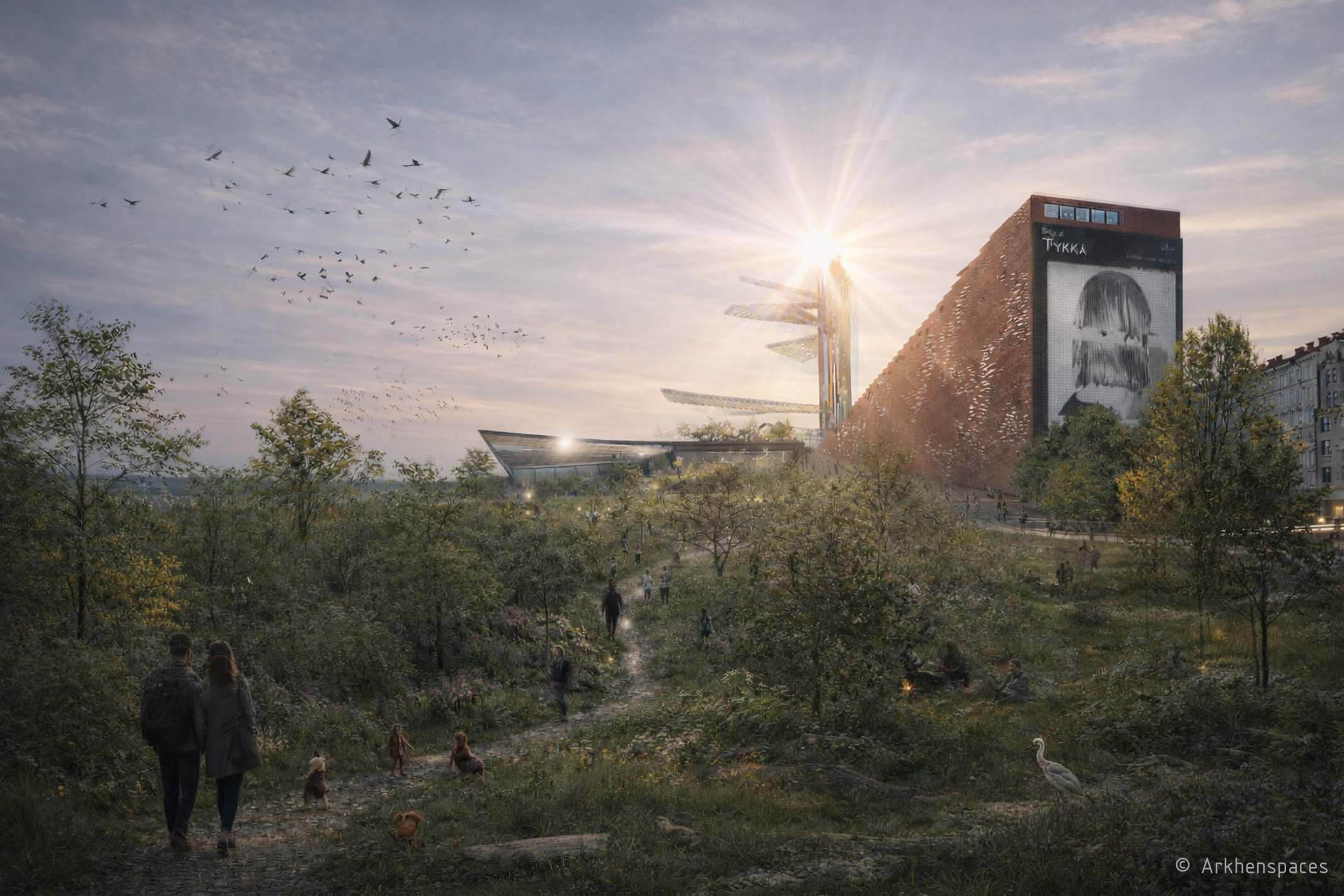
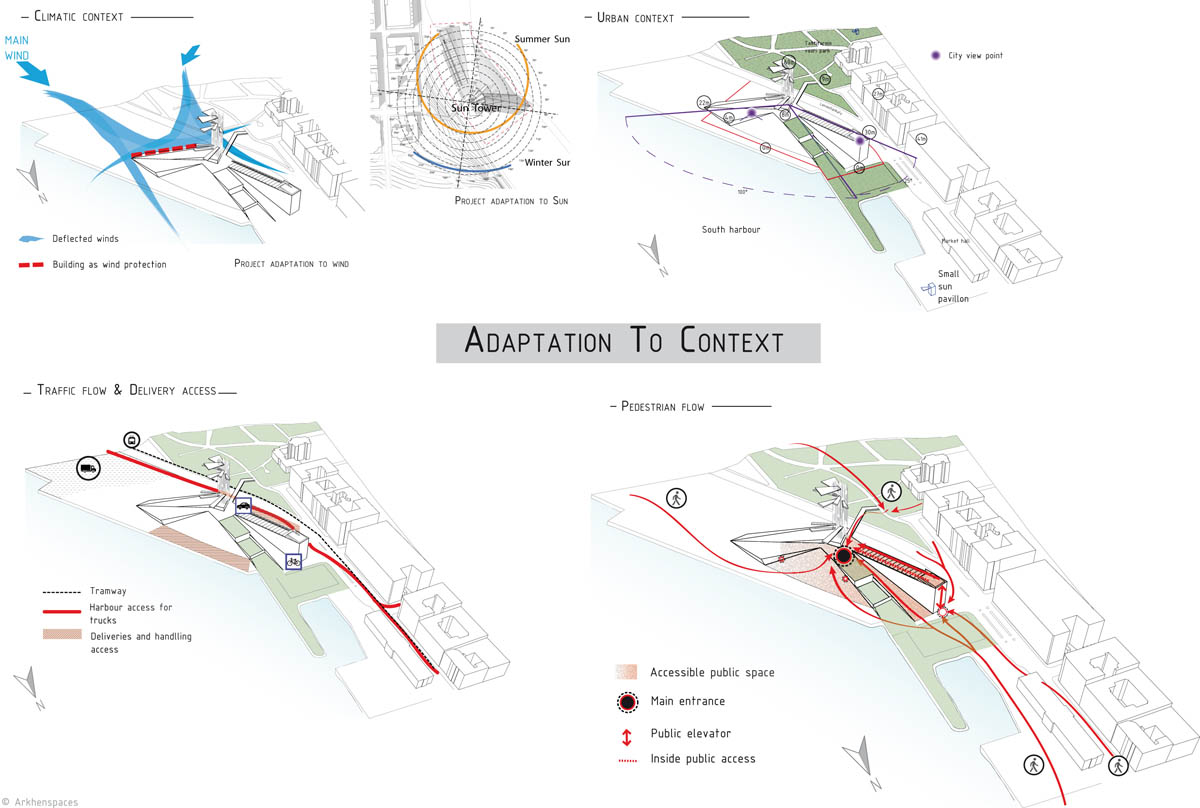
General principles Art museum conceived as an urban, climatic and cultural system combining a main building, a network of pavilions distributed throughout the city and public spaces. The project explores an active architecture where light, climate, movement and art become design materials. The architecture of the [SUN] Museum is simultaneously support, subject, connections, movement and effects.
[SUN] MUSEUM — A museum radiating throughout the city
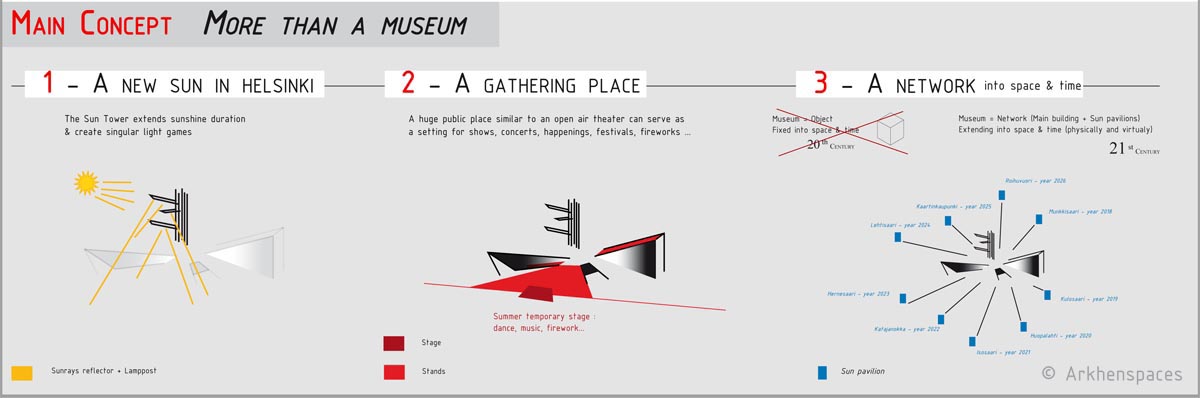
The [SUN] Museum is not limited to a building designed to host artworks. It extends the duration of sunlight across a vast public plaza, creating a symphony of climatic effects. Virtually connected to its satellites, it radiates art throughout Helsinki and generates new urban, climatic and sensory experiences.
More than an isolated object, the museum becomes a cultural infrastructure where architecture, public space and natural phenomena meet to create a new relationship between art and the city.
The [SUN] Pavilions spread art throughout the city
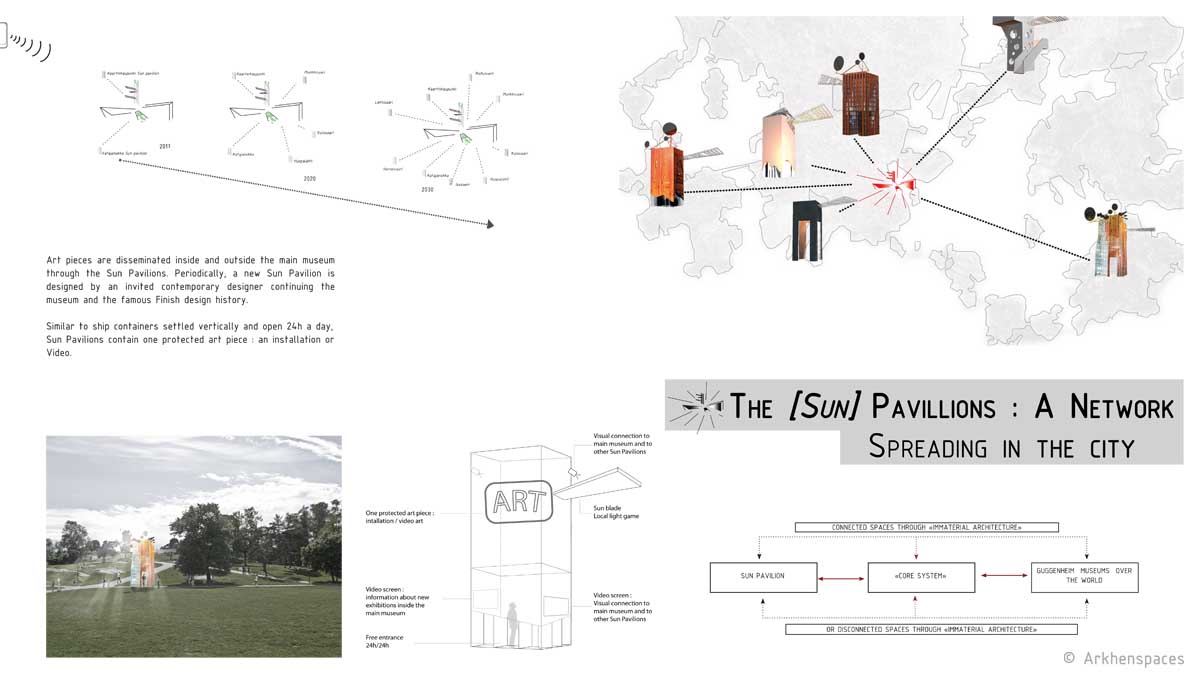
The [SUN] Museum is conceived as a physical and virtual network composed of a main building and a series of connected satellites: the [SUN] Pavilions. Artworks are therefore not confined to a single place but disseminated throughout the city, inviting visitors to discover Helsinki and residents to encounter new exhibitions.
Open 24 hours a day, these pavilions host protected artworks and extend the museum through space and time. Similar to vertically positioned containers, each pavilion contains a single artwork, installation or video piece. Periodically, a new [SUN] Pavilion is designed by an invited contemporary designer, extending both the museum and Finland’s rich design tradition.
Architecture as an instrument of environments
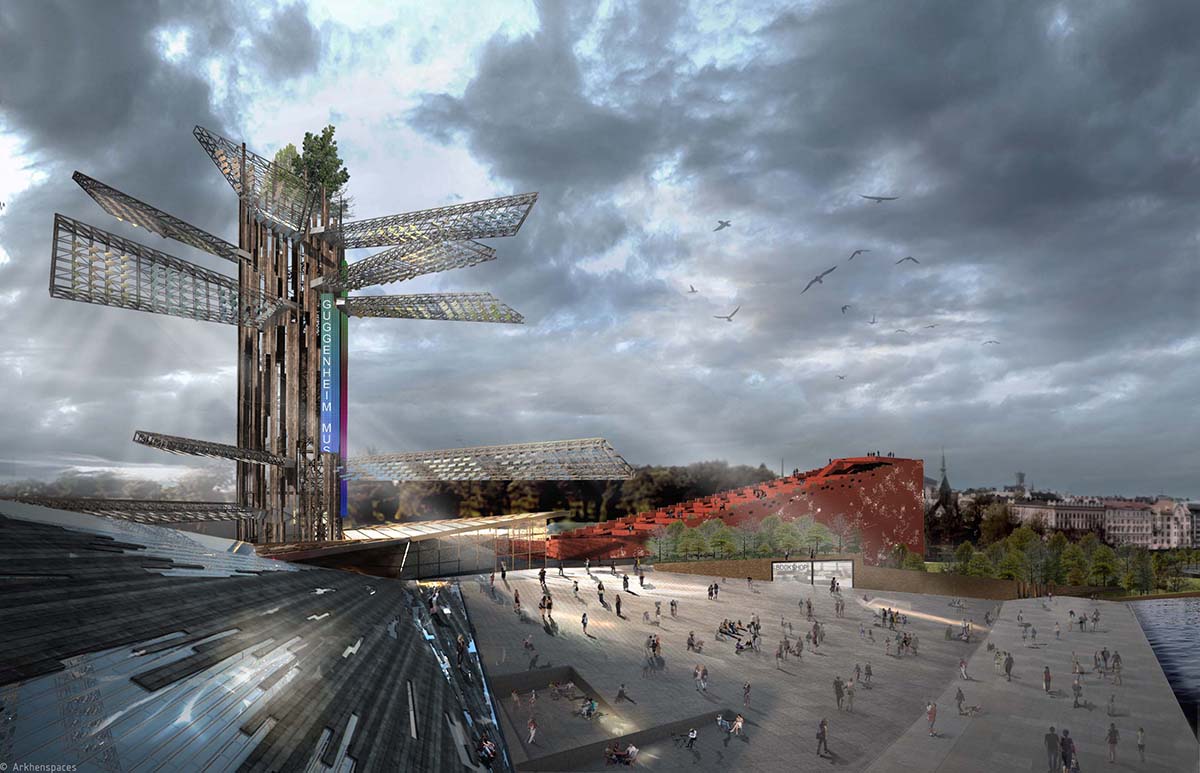
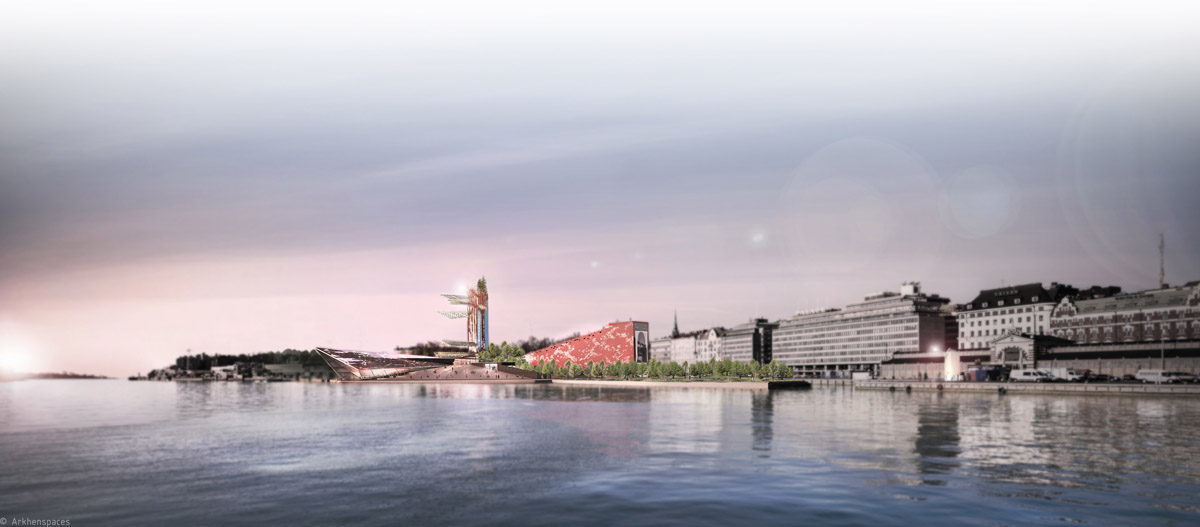
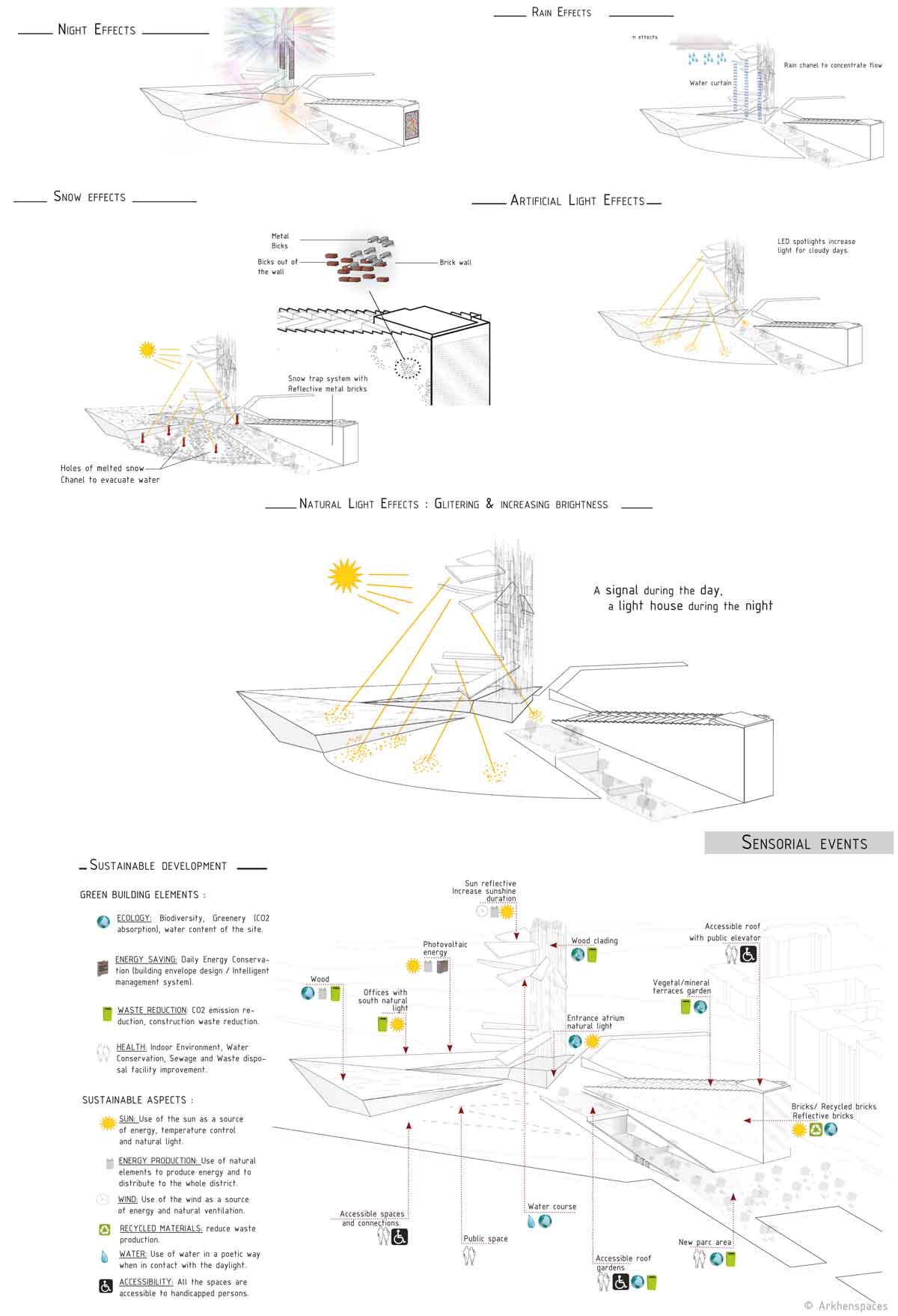
Connected to its pavilions, the main building combines a vast public plaza from which three volumes and a tower emerge. A giant screen facing the city displays information about current and upcoming exhibitions. At the heart of the project, the [SUN] Tower marks the museum entrance. Intelligent and interactive, this tower acts as an active climatic device: an instrument of environments. Built as a porous timber structure, it integrates large blades equipped with rotating mirrors that reflect and redistribute natural light across the site.
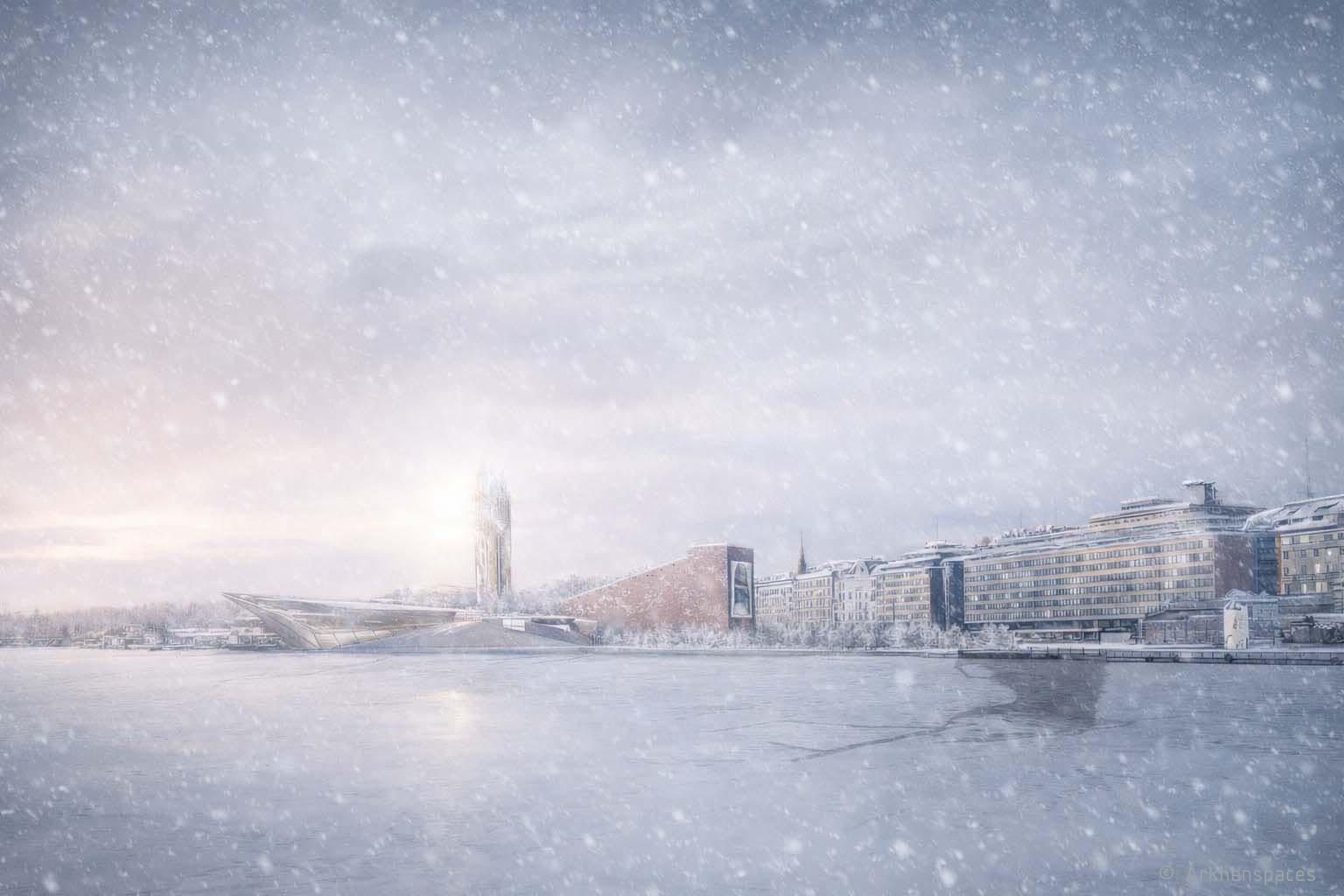
More than a simple urban landmark, the tower transforms natural phenomena into sensory events: extending sunlight across the plaza, generating light effects by day and night, interacting with snow conditions and creating changing atmospheres throughout the seasons.
A public plaza as an open-air theatre
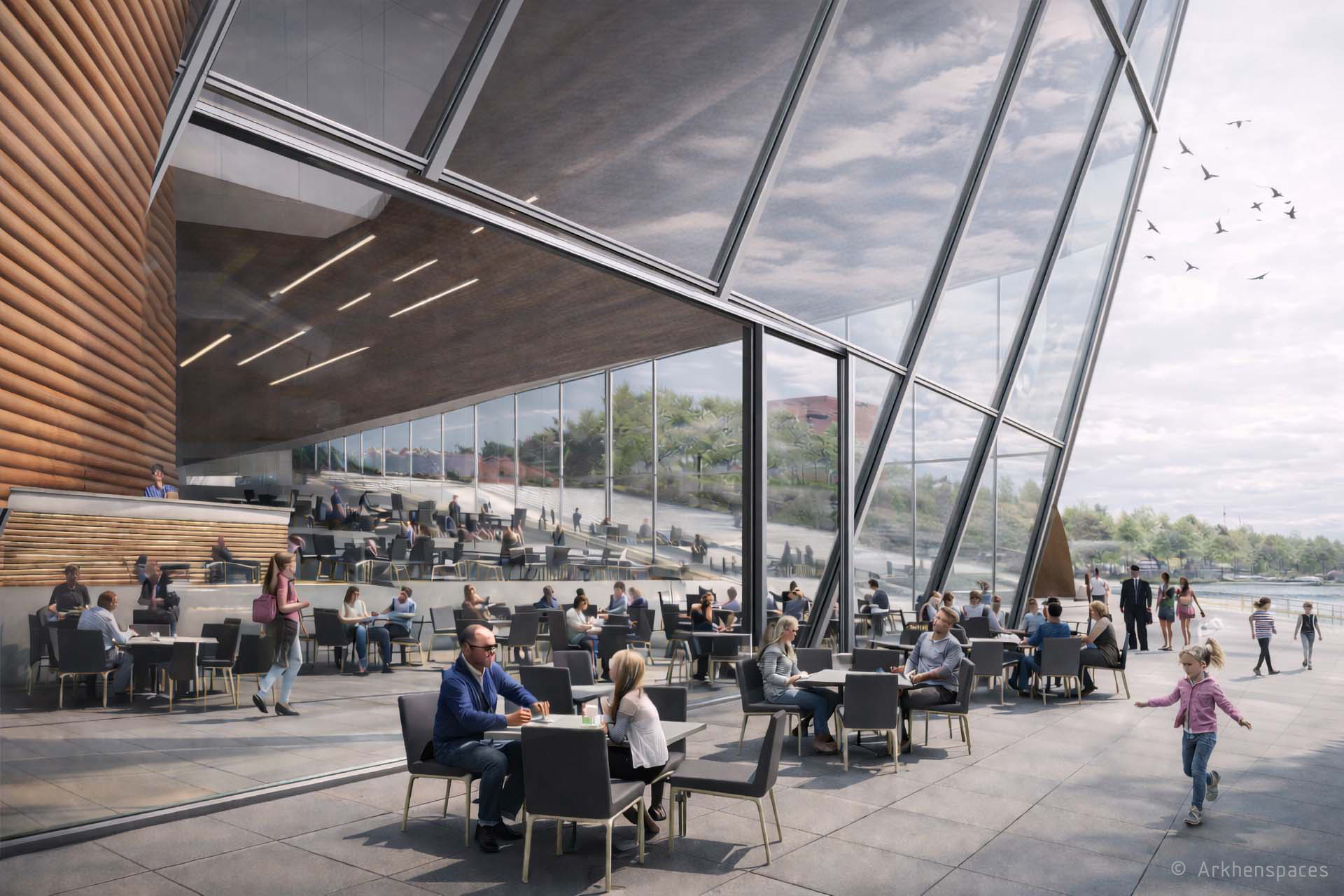
Protected from the wind and opening toward the sea, the immense public space becomes an open-air urban theatre. Its gentle slope naturally invites visitors to sit, gather and observe the life of the place.
Concerts, screenings, happenings, encounters and cultural events can unfold within this space.
Three exhibition experiences
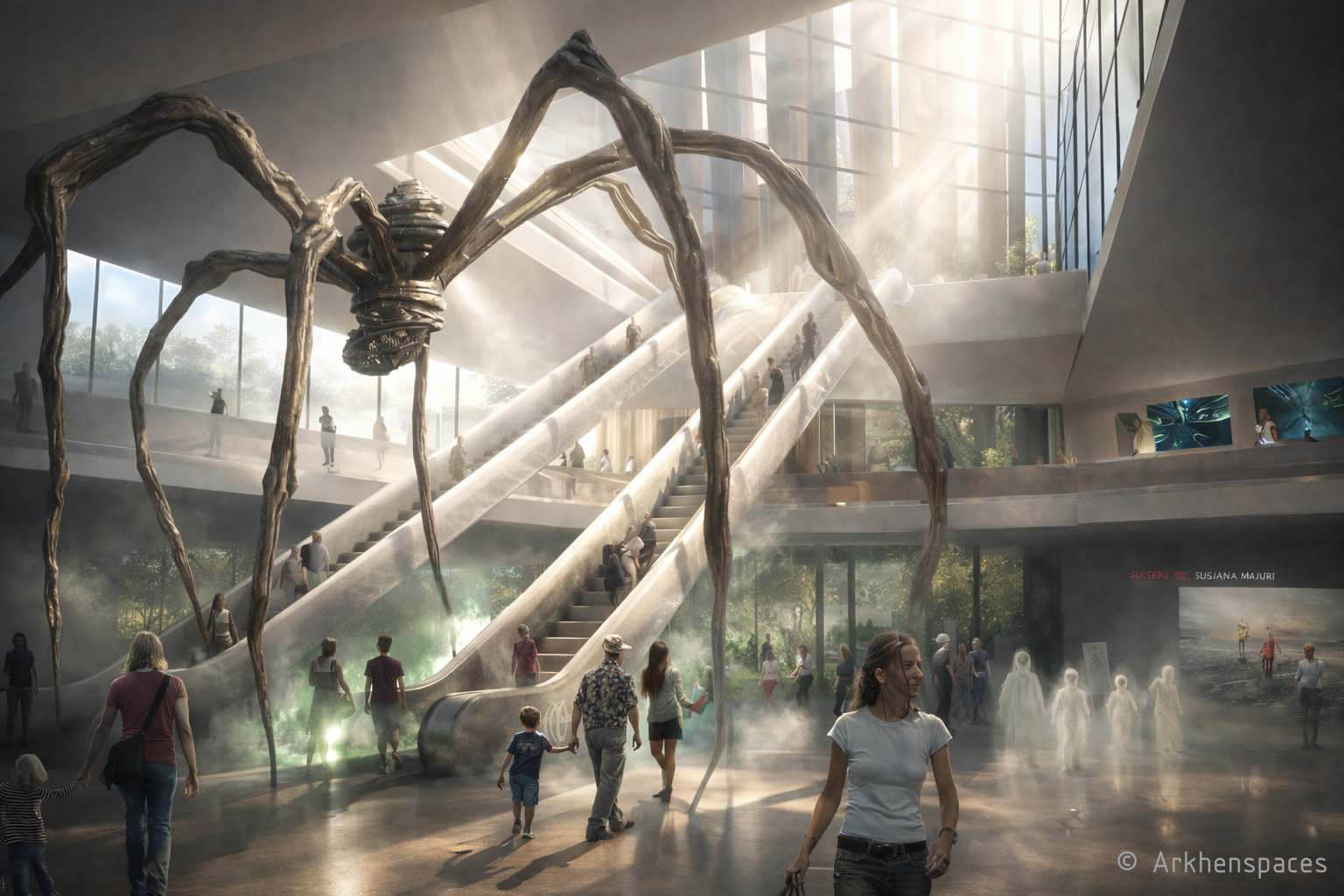
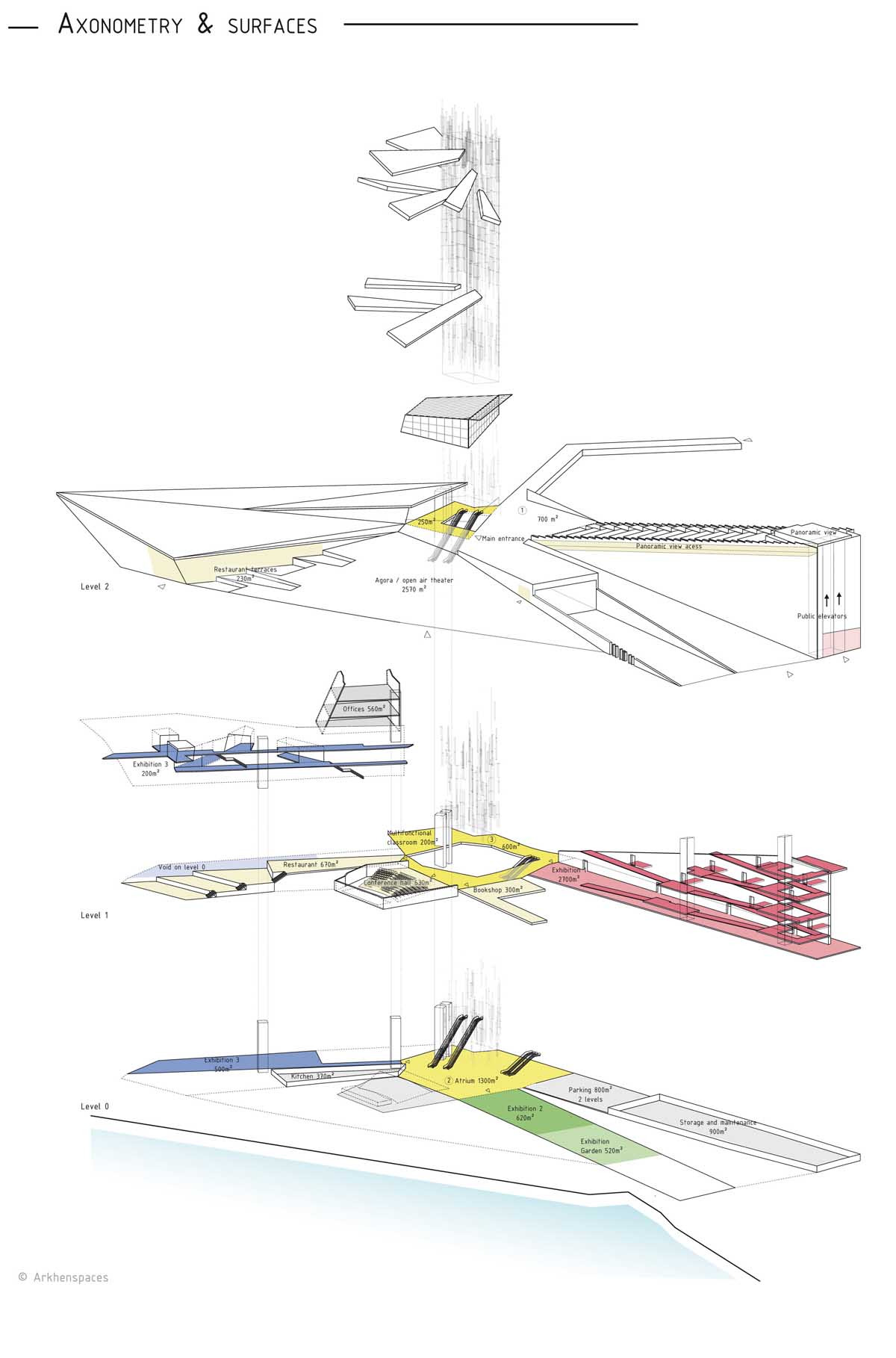
Visitors enter the museum by moving beneath the tower into a vast interior public space flooded with natural light. This atrium connects the different elements of the program organised around three accessible volumes offering various indoor and outdoor spatial typologies. Exhibition spaces explore three themes: walls, weightlessness and connectivity.
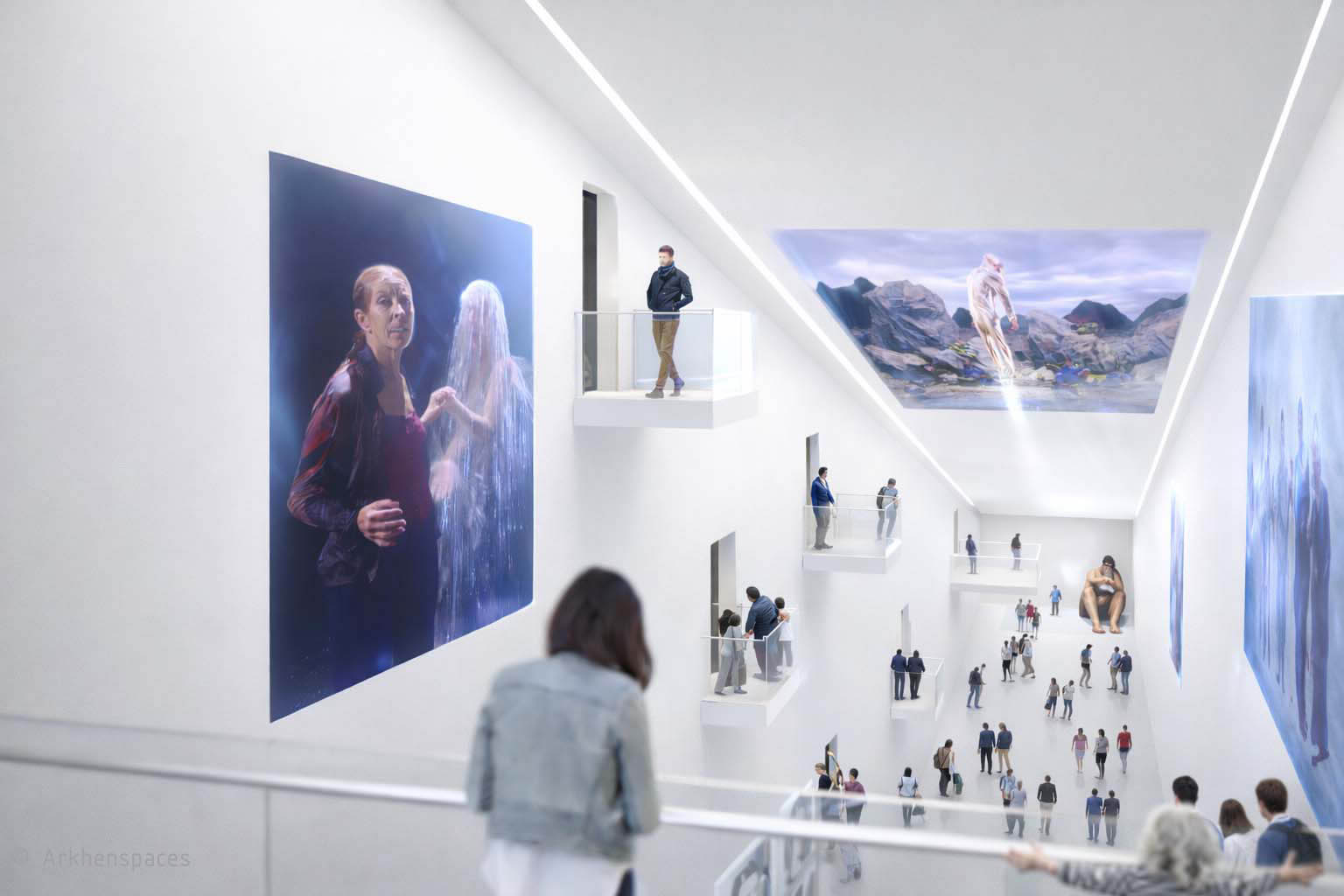
Connected to both the sky and the city, the first volume takes the form of a large staircase. It combines mineral and planted terraces and culminates in a panoramic platform overlooking Helsinki. Inside, exhibition rooms are organised along a sloping path leading to balconies overlooking the void of a high gallery and facing a monumental exhibition wall.
Connected to the new park through wild vegetation, the second volume opens onto an exhibition garden and engages with a more natural landscape. Inside, a system of movable walls multiplies possible spatial configurations.
Facing the sea, the third volume operates as an inhabited pier. Inside, the space is divided by a series of walls defining the restaurant, offices and the third exhibition area where suspended boxes seem to float within space. These floating boxes are both content and container: they accommodate small exhibition spaces while also acting as supports for artworks visible from the main gallery.
The project ultimately seeks to transform the museum into an experience: an architecture where visitors discover not only artworks but also phenomena, landscapes and unexpected situations.
Architecture is an instrument of environments.