

Hermès Pavilion: Moving Pavilion 2
Program Pavilion M: an art pavilion designed for Hermès
Floor area 890 m²
Date 2014
Team Eric Cassar, Venetta Vladimirova
Initial project team Arkhenspaces: Eric Cassar, Shenglin Yang, Christophe Grange, Mourad Bencheikn + Nicolas Moulin architect + ARUP (structural and general engineering) + WT Partnership HK (cost consultant) + Leigh & Orange (local architect)
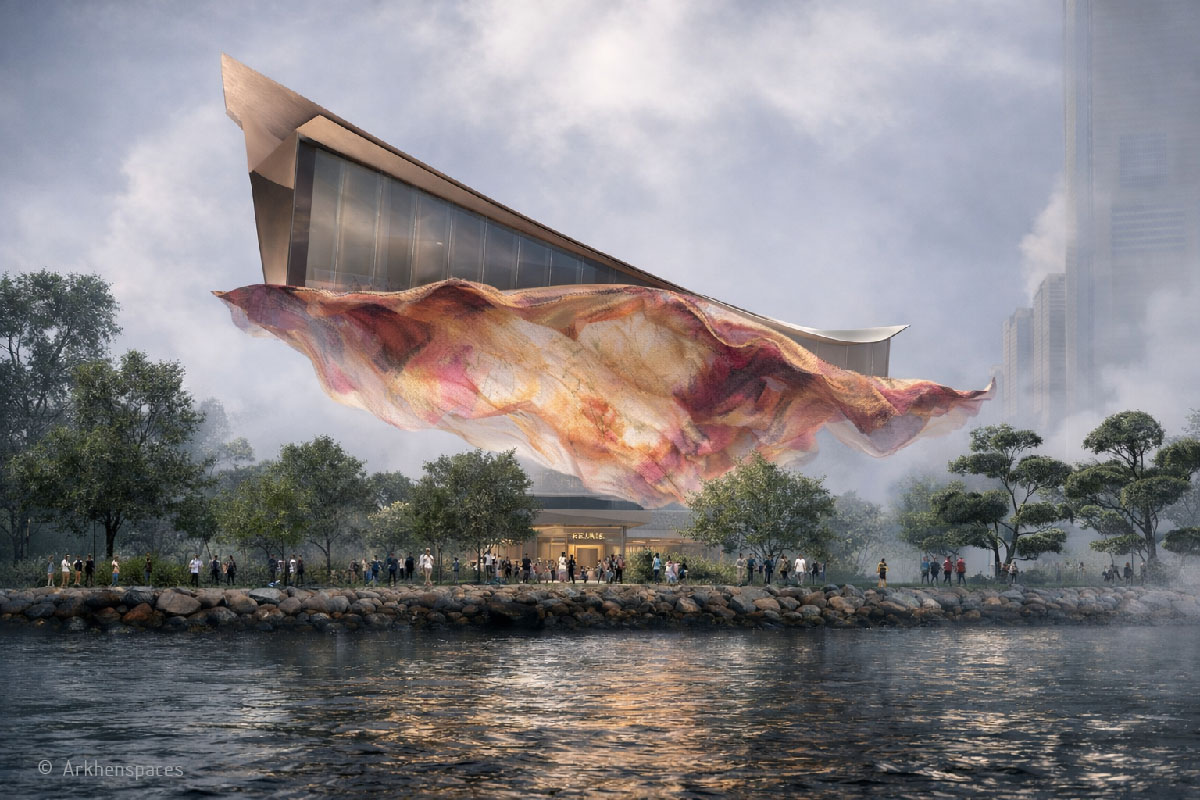
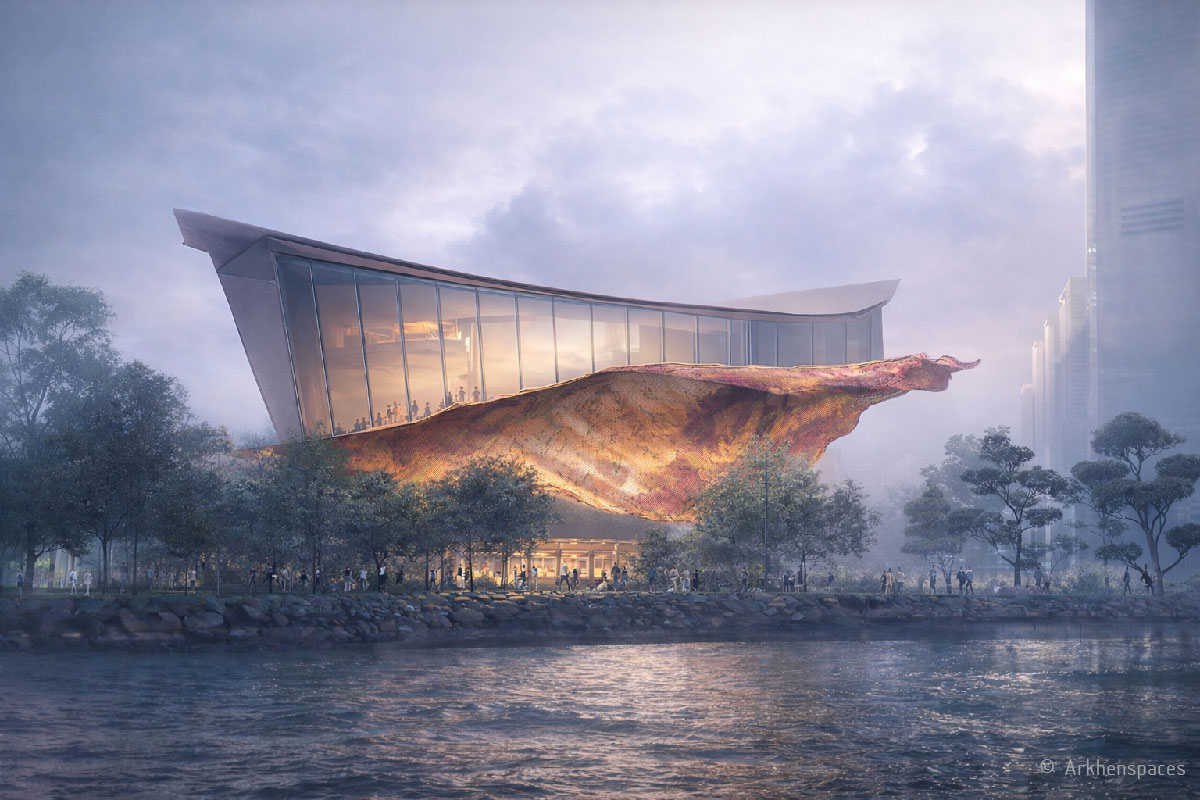
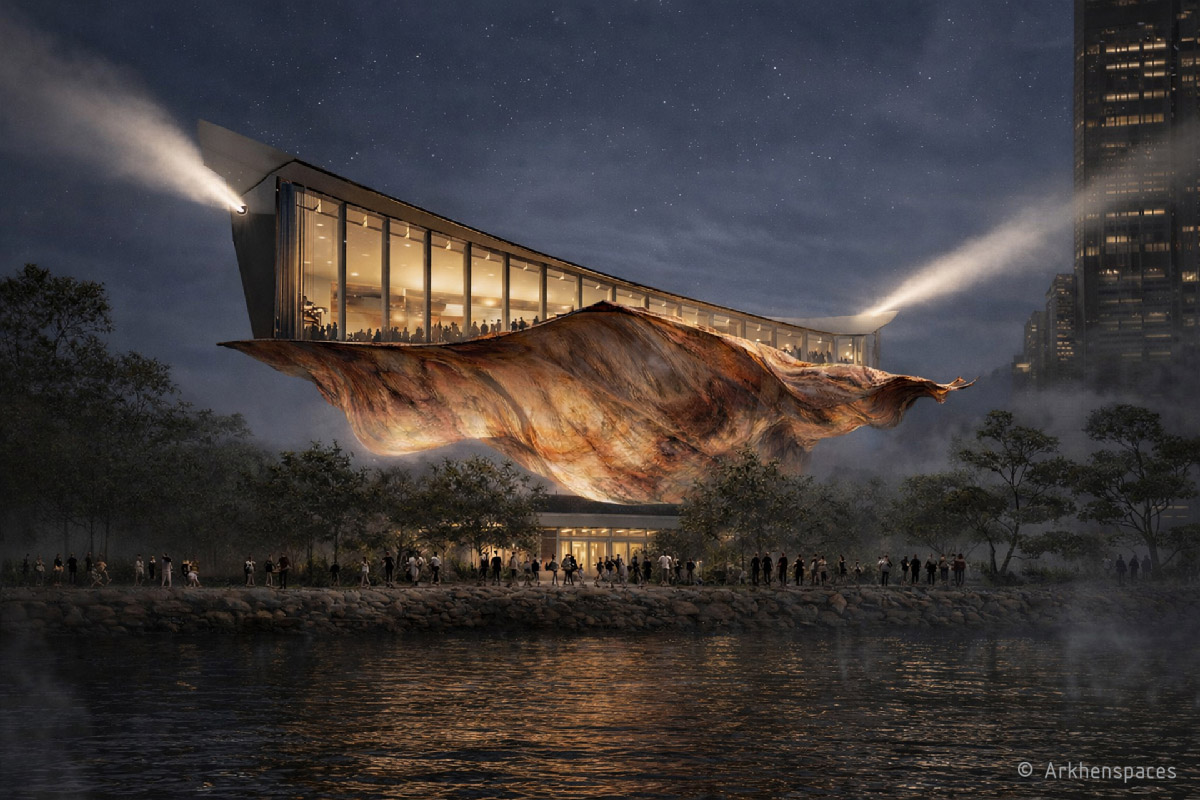
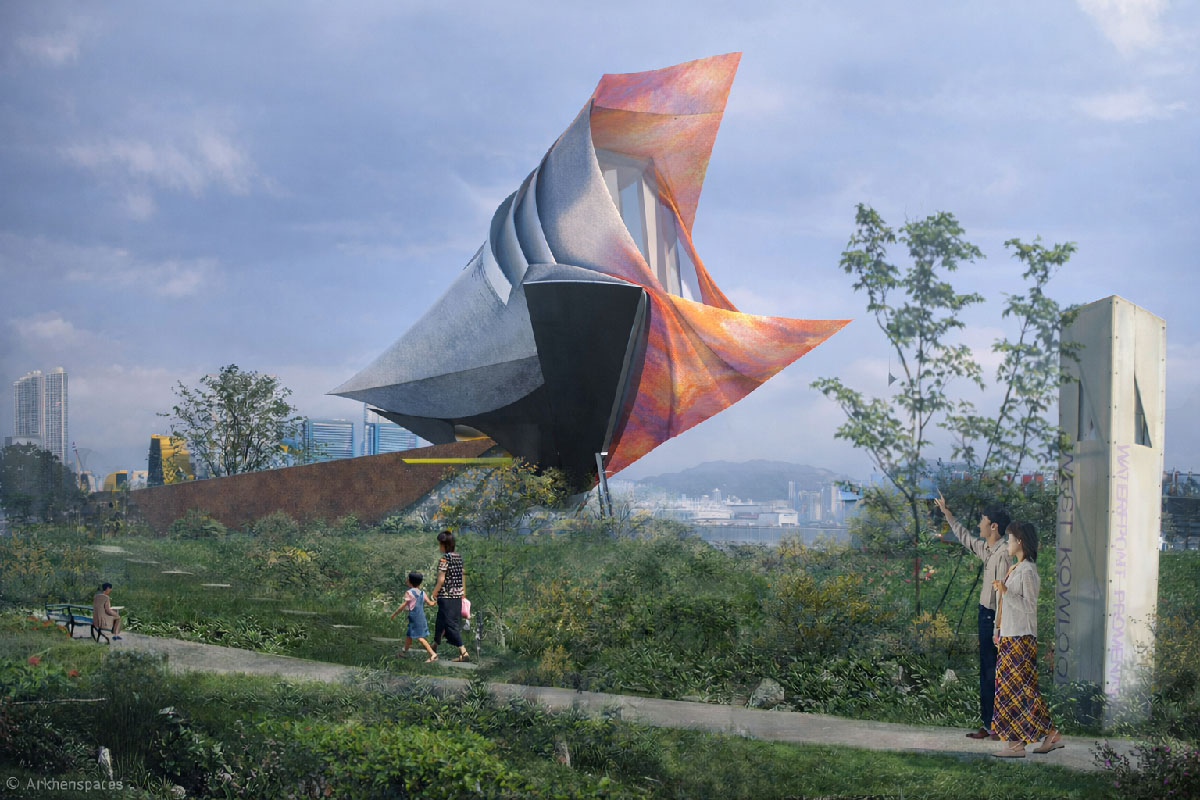
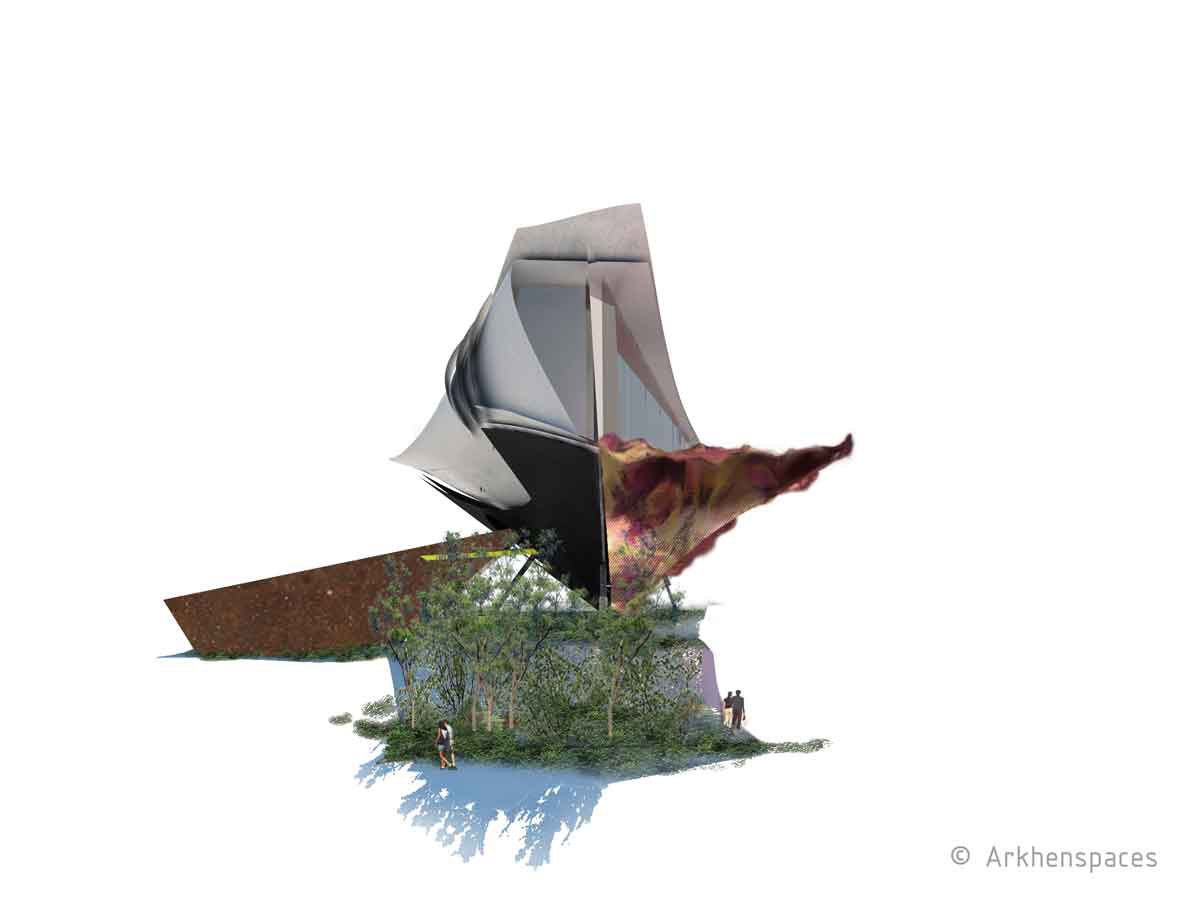
General principles This pavilion rotating around an axis appears to float above the trees. It seems to levitate on a veil evoking the famous Hermès “Carré” silk scarf waving through the air. It proposes different environments interacting with natural phenomena. Similar to a cocoon, the pavilion invites visitors to discover exhibitions while being immersed in the sky. By night, the space transforms itself to host various events. Through new technologies, the pavilion also offers virtual connections with the surrounding district and with other locations of the foundation and the Hermès group (shops, exhibition spaces…).
Program elements
THE BASE, covered with vegetation, includes technical facilities and a café.
THE ENTRANCE, conceived as a tunnel, centralizes service spaces and prepares access to the exhibitions.
THE PAVILION, a transformable exhibition space.
A mobile architecture
1 — The interior space adapts itself according to the exhibitions presented.
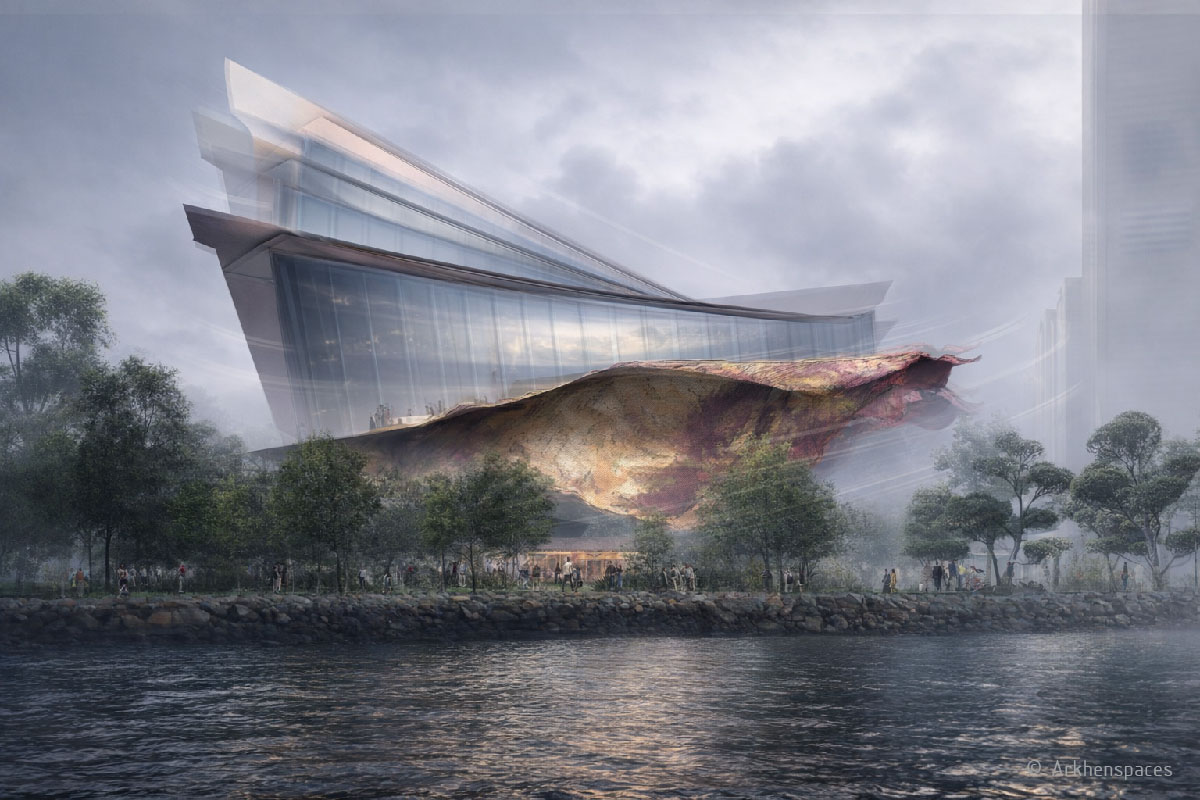
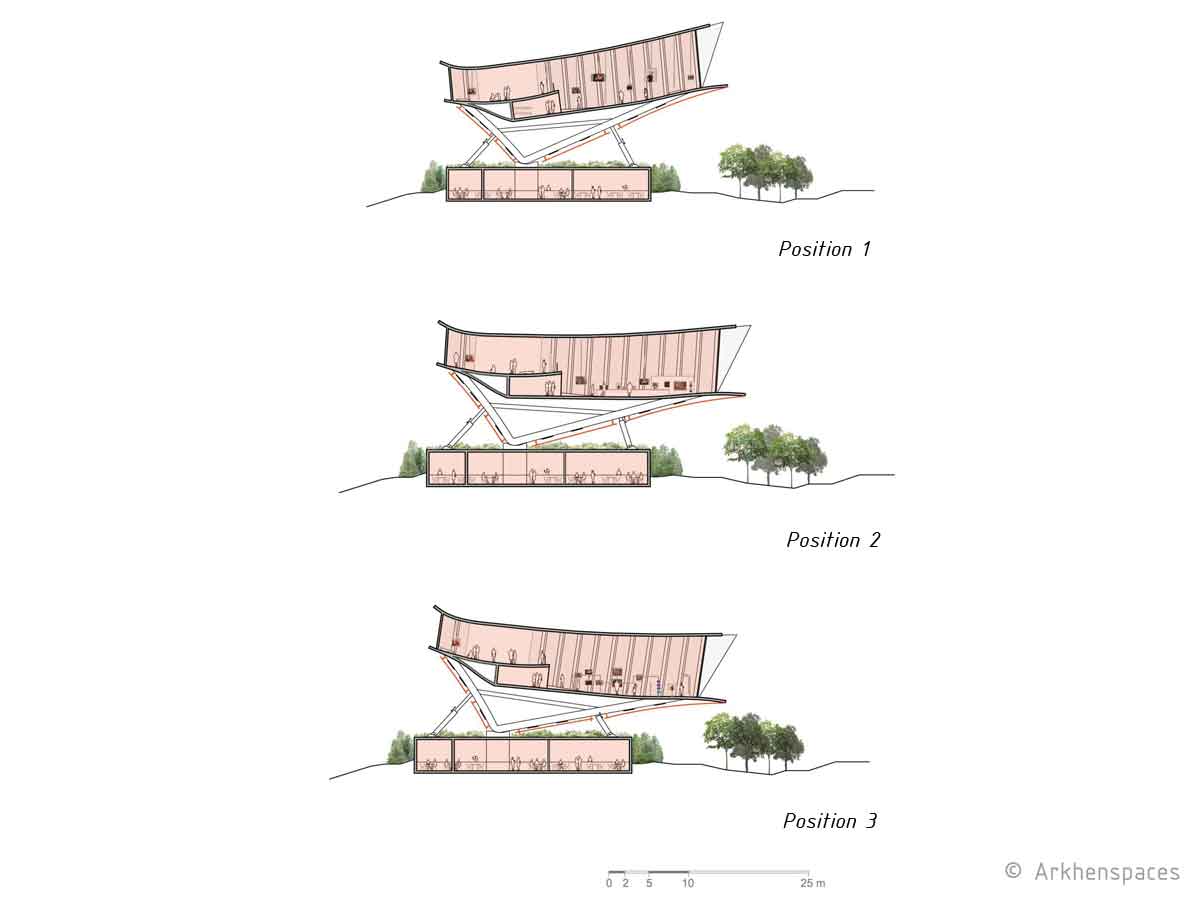
2 — The pavilion changes position several times a year. It continuously reinvents itself and invites visitors to rediscover its environment.
Movement occurs along two directions: primarily along the north-south axis where a 15° rotation transforms the perception and configuration of the pavilion both from the inside and the outside. A secondary movement along the east-west axis helps regulate natural light and temperature according to the seasons.
An icon
From a distance, the pavilion floats upon a piece of fabric interacting with the surrounding wild vegetation. Depending on its position, the building turns either toward the sky or toward the ground. Its changing appearance within the landscape is extended at night through a beam of light.
The interior environment
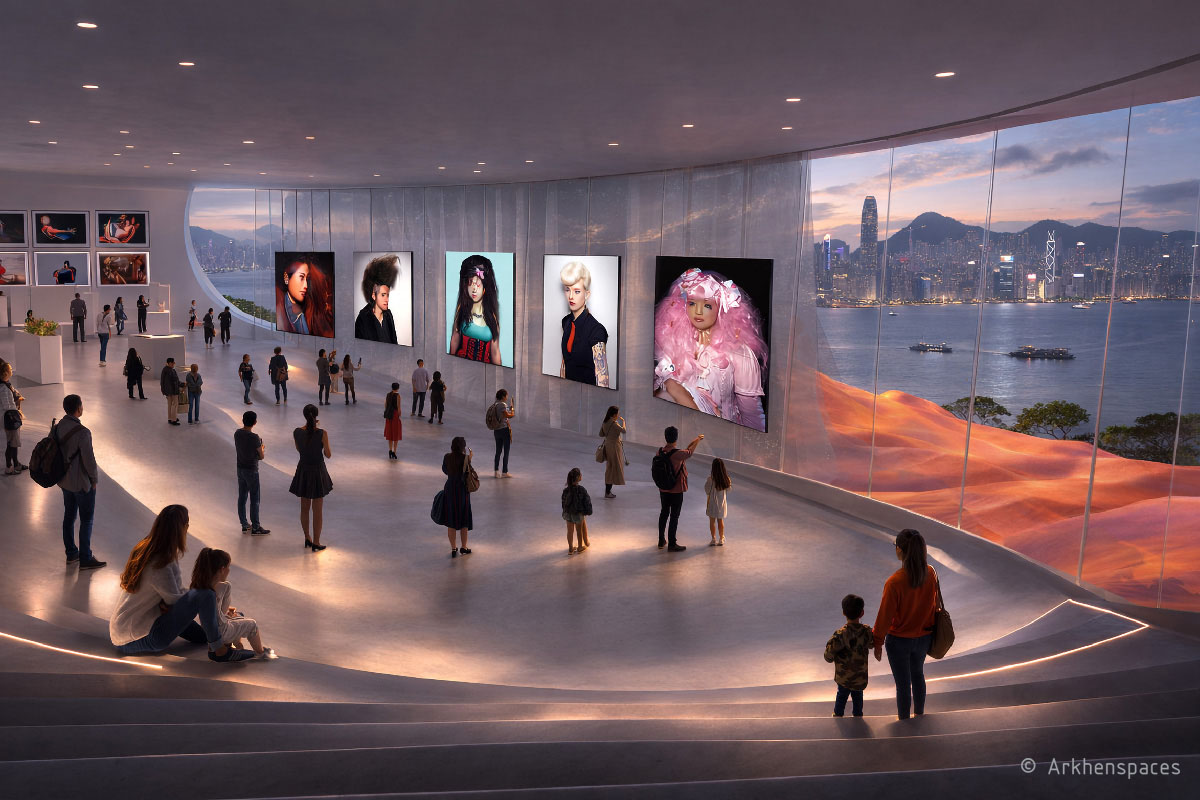
The white space and interior atmosphere of the Pavilion are transformable. The floor is not conceived as a horizontal surface but as a curved and sloping topography inviting visitors to sit, move and discover the space.
Its curved envelope is intersected by a multilayer glass façade. This façade is composed of two layers of glazing enclosing a structure covered with reflective stainless-steel panels. Acting like an inverted visor, the fabric frames exterior views from below.
This façade creates complex interactions of light and reflections. Perception results from the superposition of several layers of reality: reflections from the interior through the glazing, direct views incorporating reflections from the fabric, and fragmented views of the bay produced by reflections of the landscape on the stainless-steel surfaces.
Perception changes according to the visitor’s position. An interior veil regulates light intensity. Depending on the nature of the exhibitions, they may either be presented within an enclosed volume or immersed within the surrounding landscape.
The café
To the south, the piece of fabric progressively folds from a vertical to a horizontal position, creating a shaded area protecting the terrace below. The Hermès Café becomes a place for encounters and exchange: a social space located beneath the pavilion.
Architecture, endlessly renewed.