

Descartes Ecocity _ Champs-sur-Marne France
Video with English subtitles


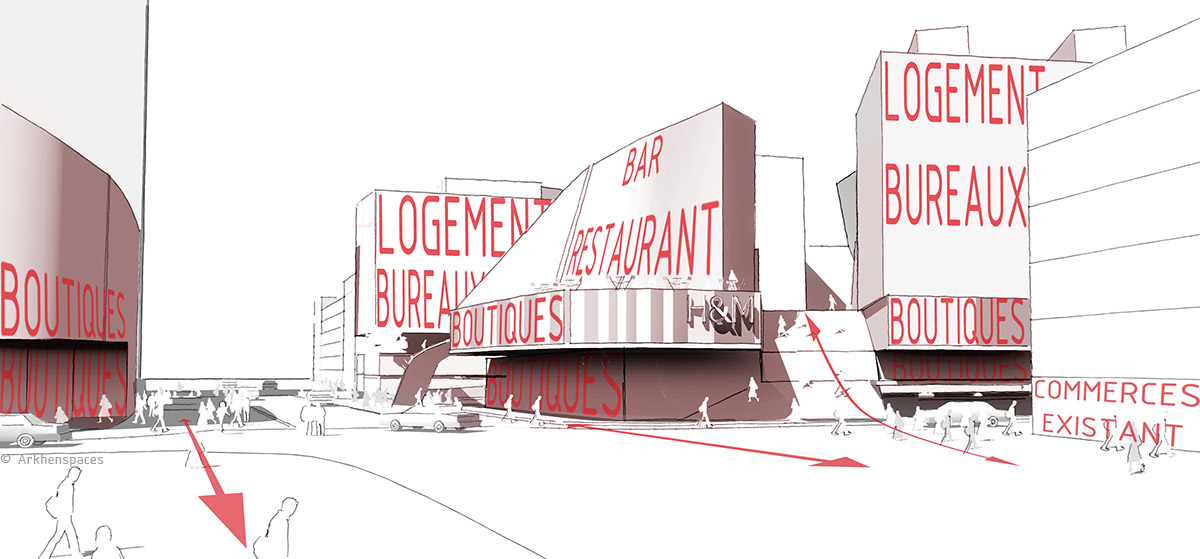
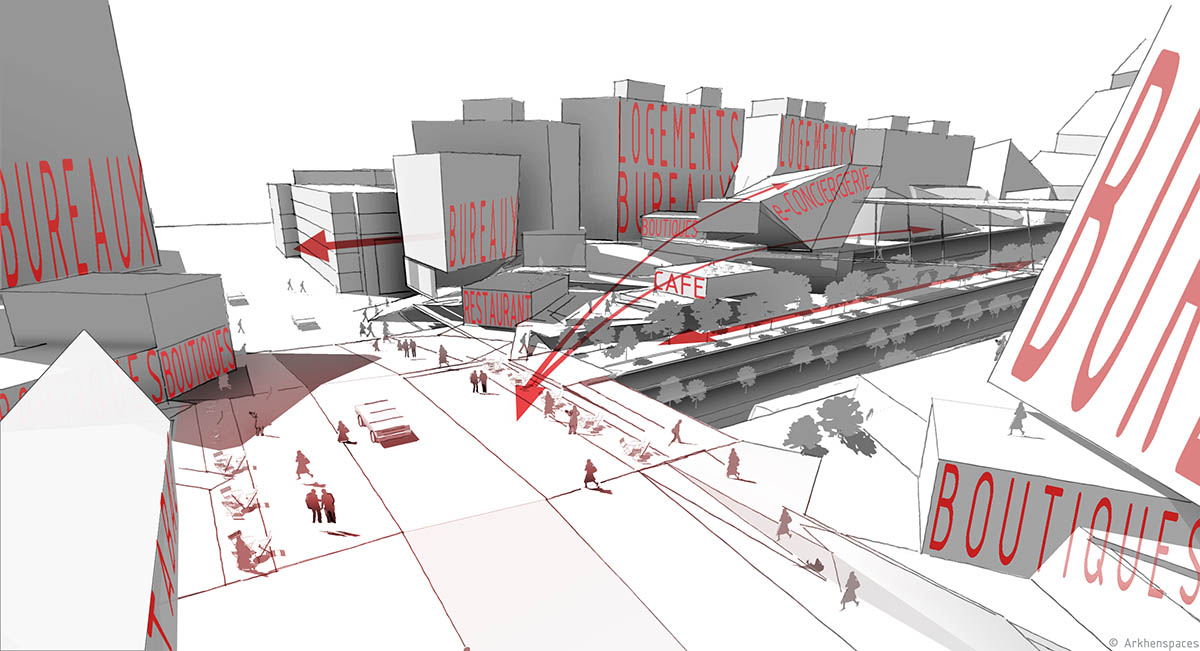

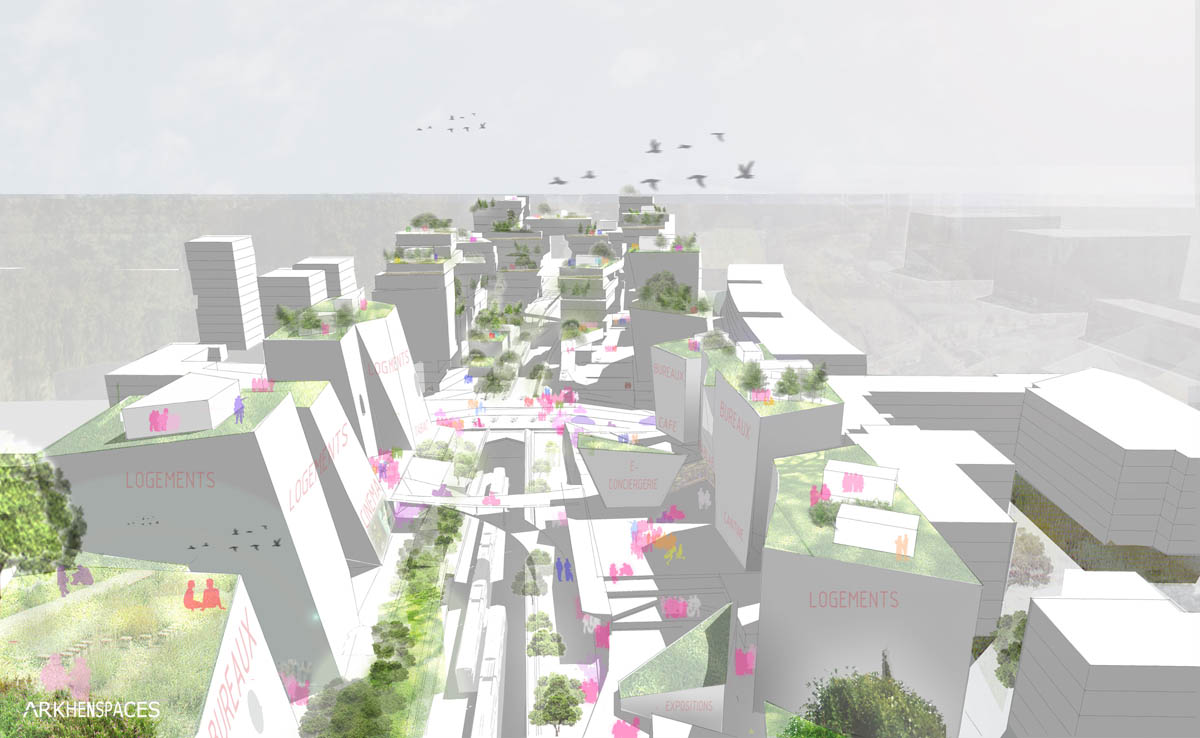
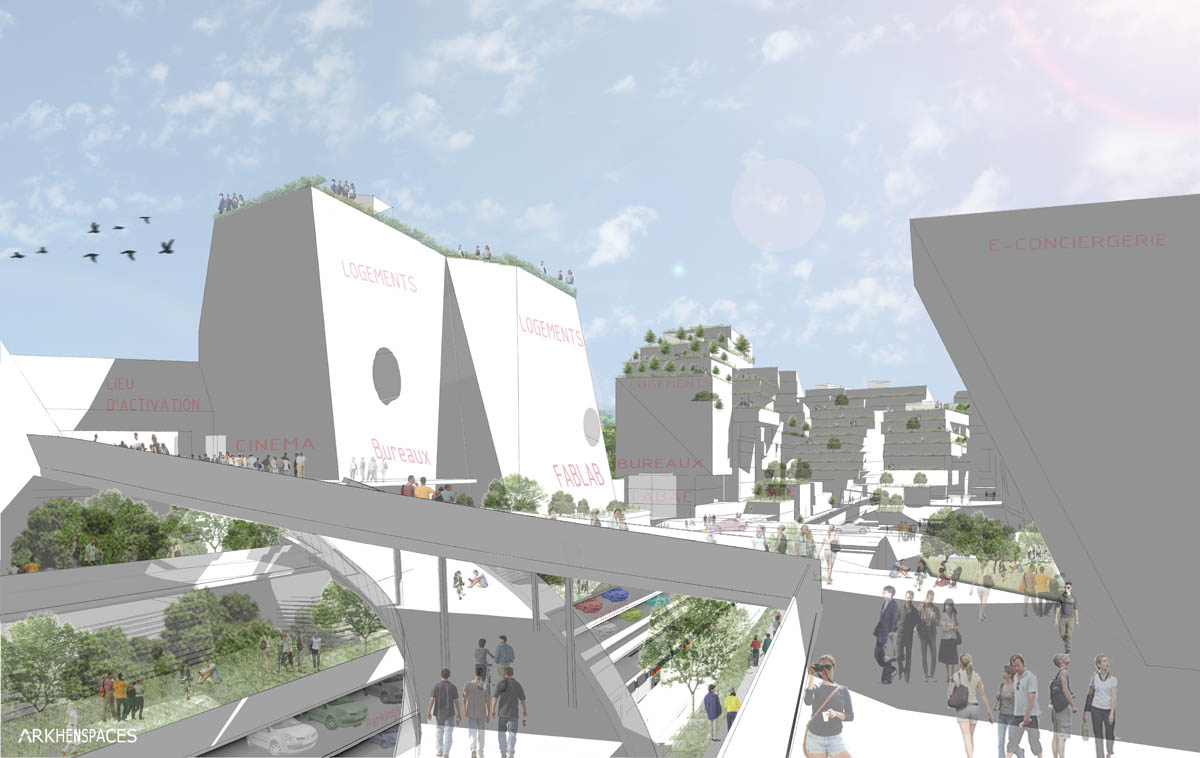
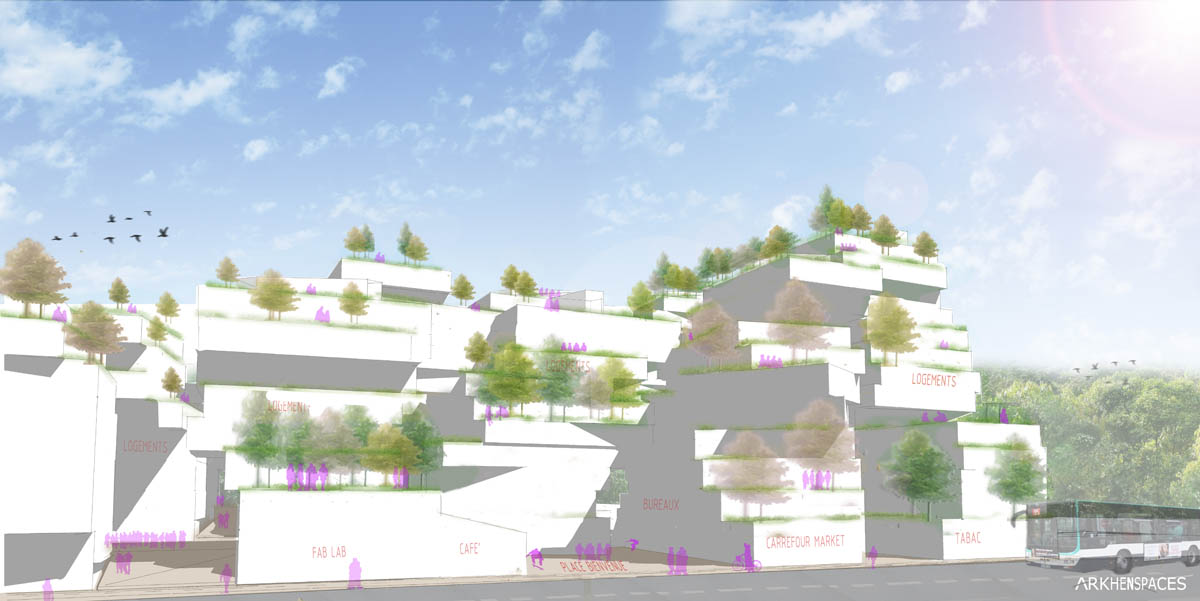

Program Ecocity: housing, offices, retail, activities, e-concierge services and parking facilities
Location Champs-sur-Marne, France
Timeline Urban pre-design 2015 / studies 2016
Client EPA Marne — Winning project of the « Ville de Demain – Ecocité 2″ competition (Caisse des Dépôts)
Team Éric Cassar, Ousama Abou Samra, Yakoub Nasri, Marisa Benedetti, Thibault Chevilliet
Engineering / Partners Elithis, Urban Practices, Linkcity (Sodéarif)
General principles
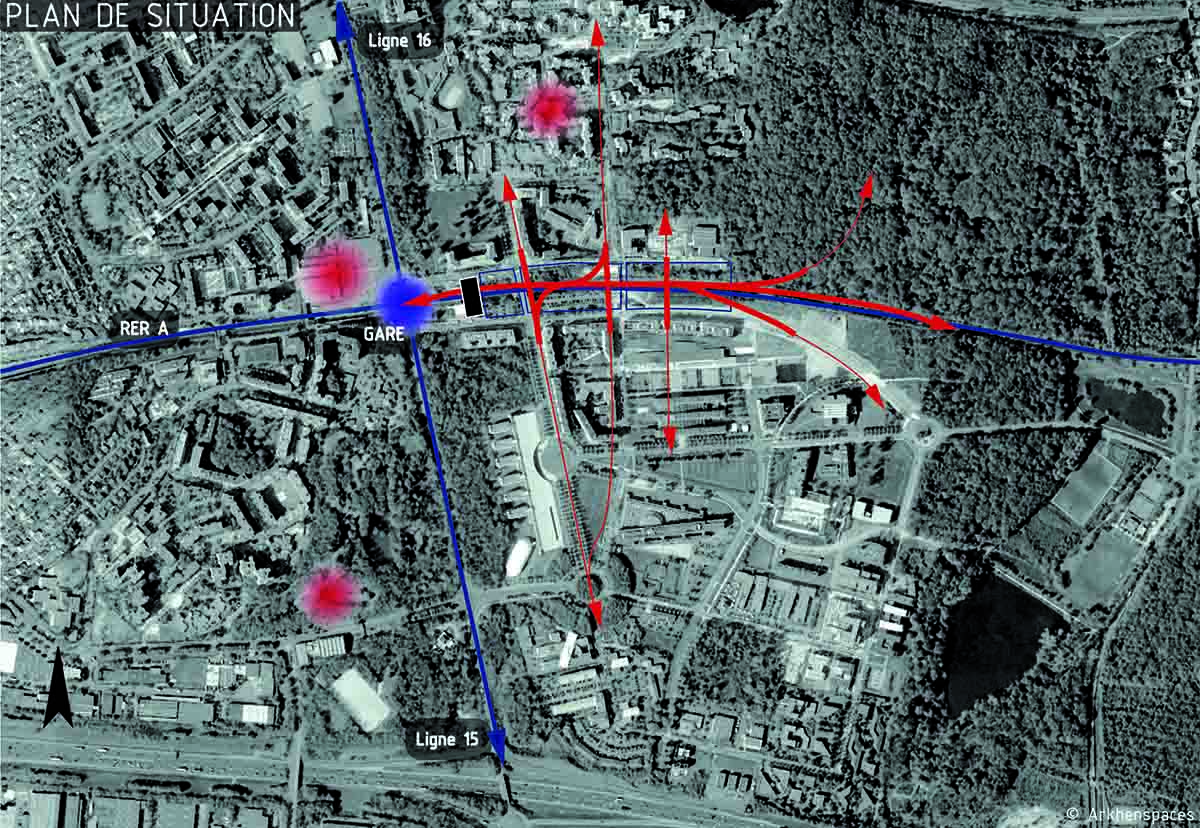
Descartes Ecocity is located on three urban blocks extending from the Noisy-Champs RER station, adjacent to the future Grand Paris station.
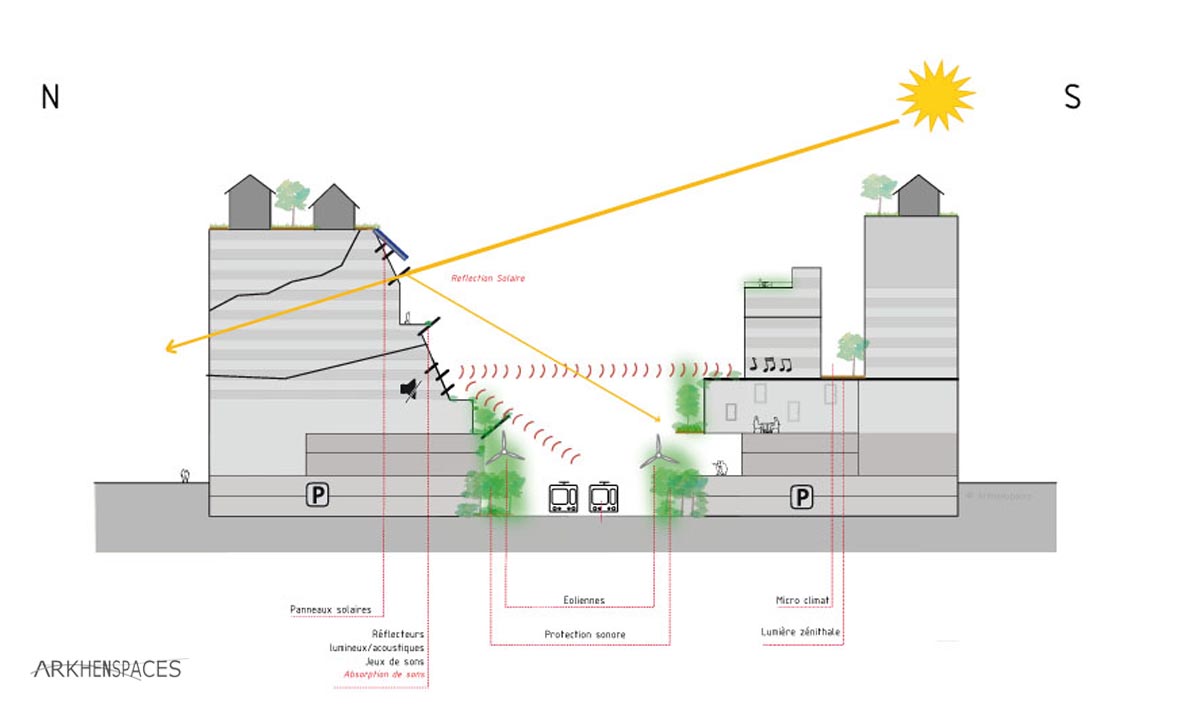
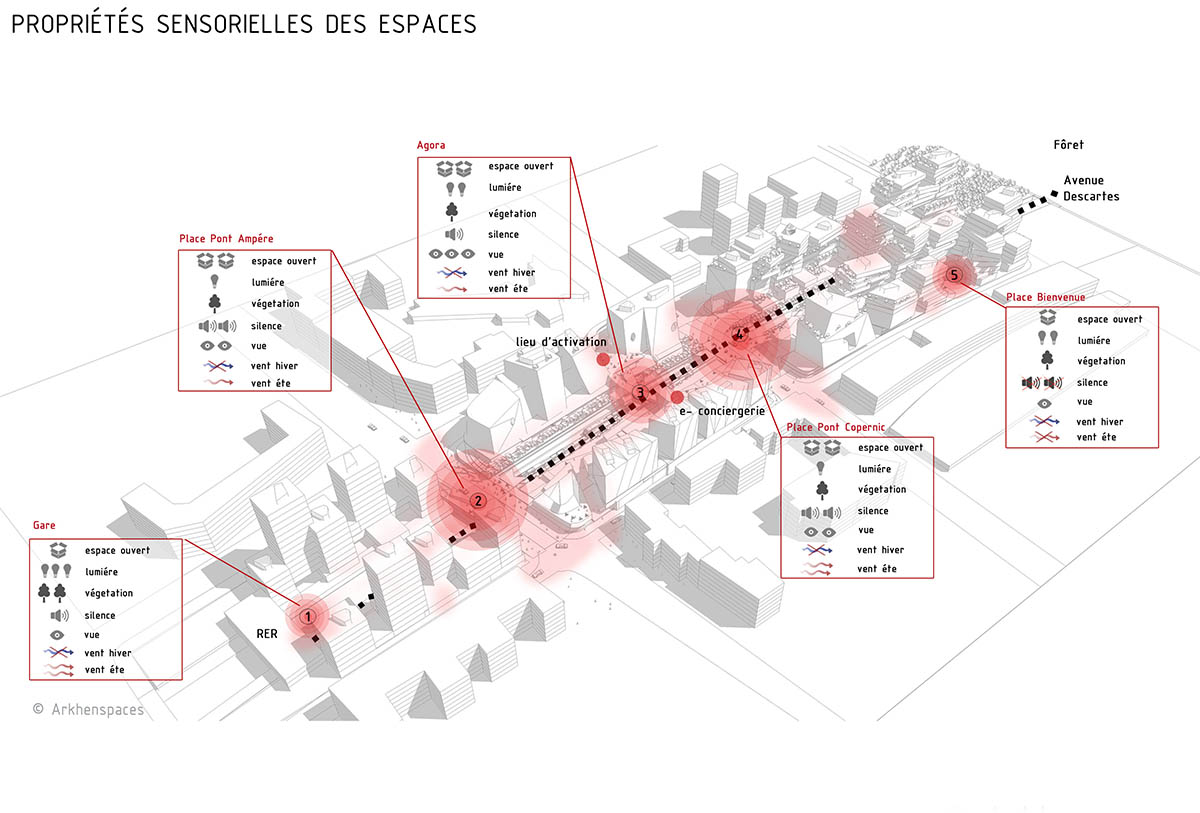
The project seeks to transform an urban constraint into a resource. Where railway infrastructures usually create a physical and psychological divide, they become here a unifying element for the district.
From urban barrier to urban voice, the railway becomes a place of encounter and a new urban centrality.
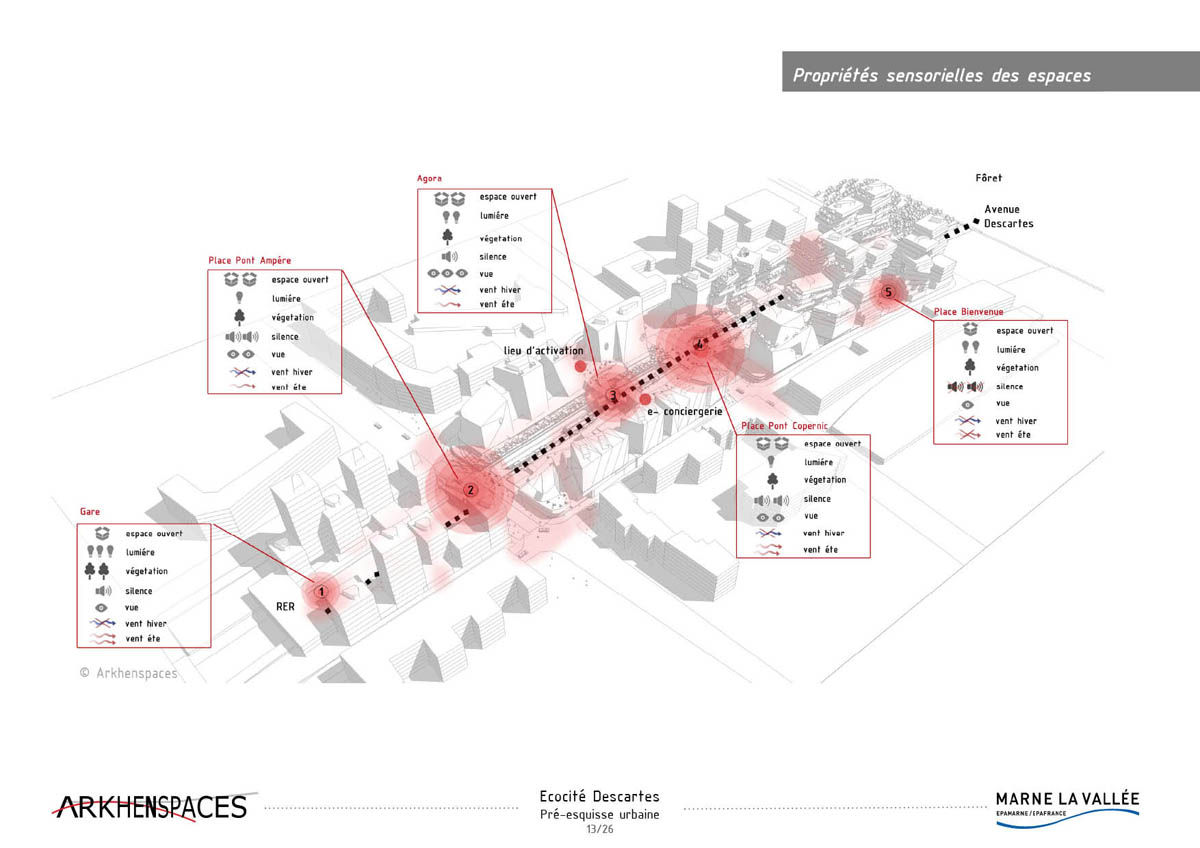
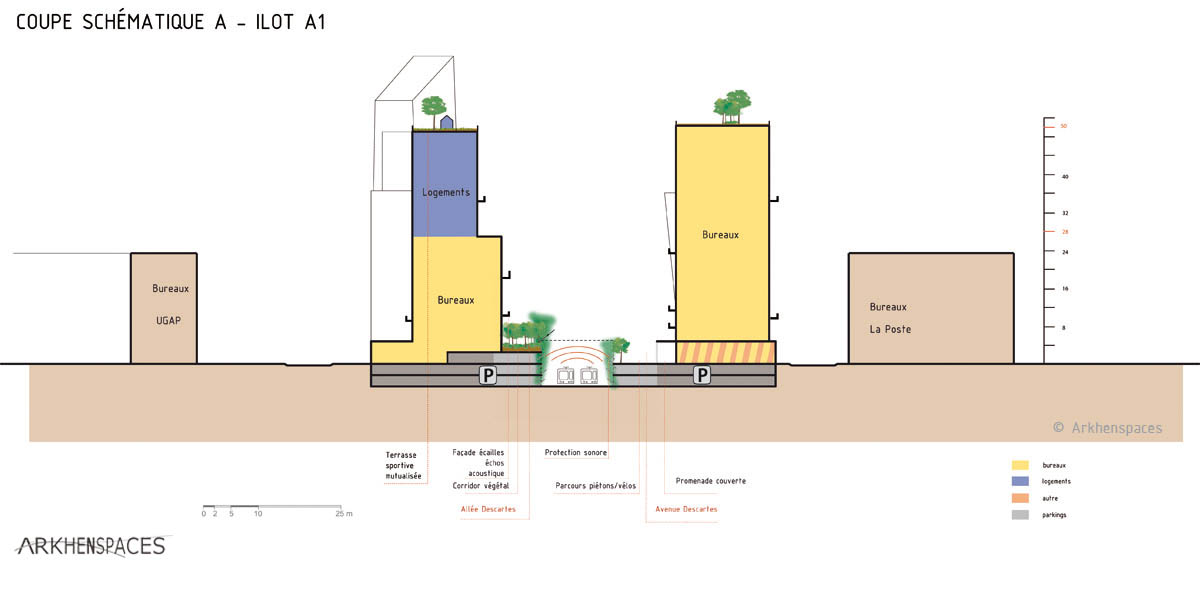
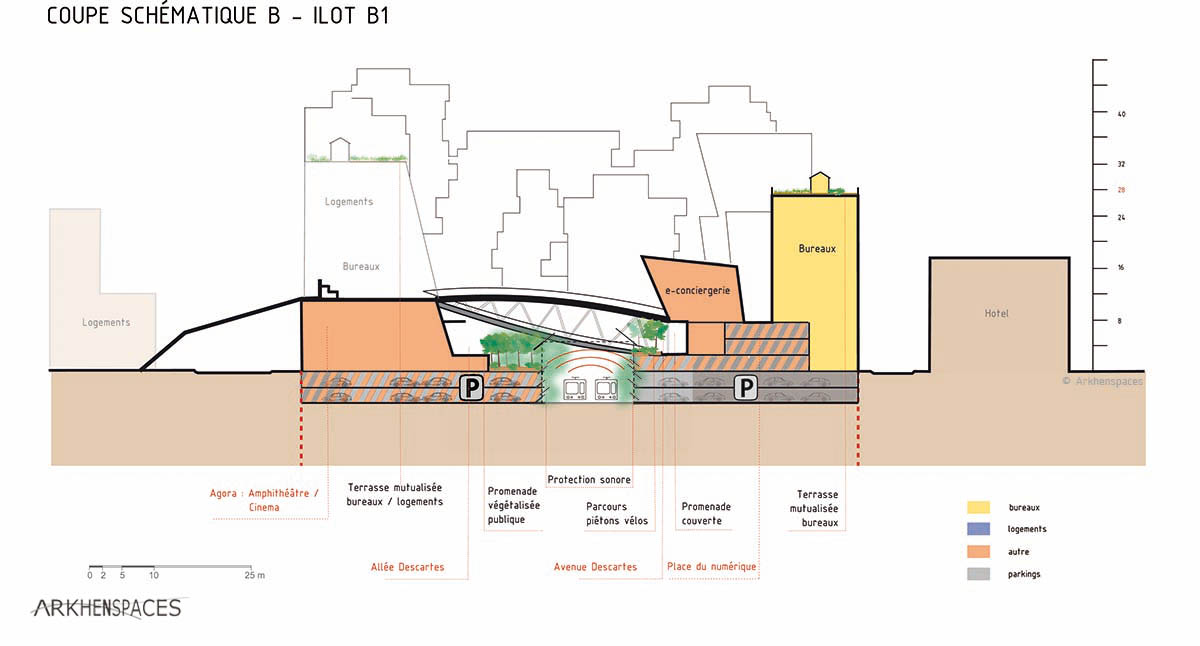
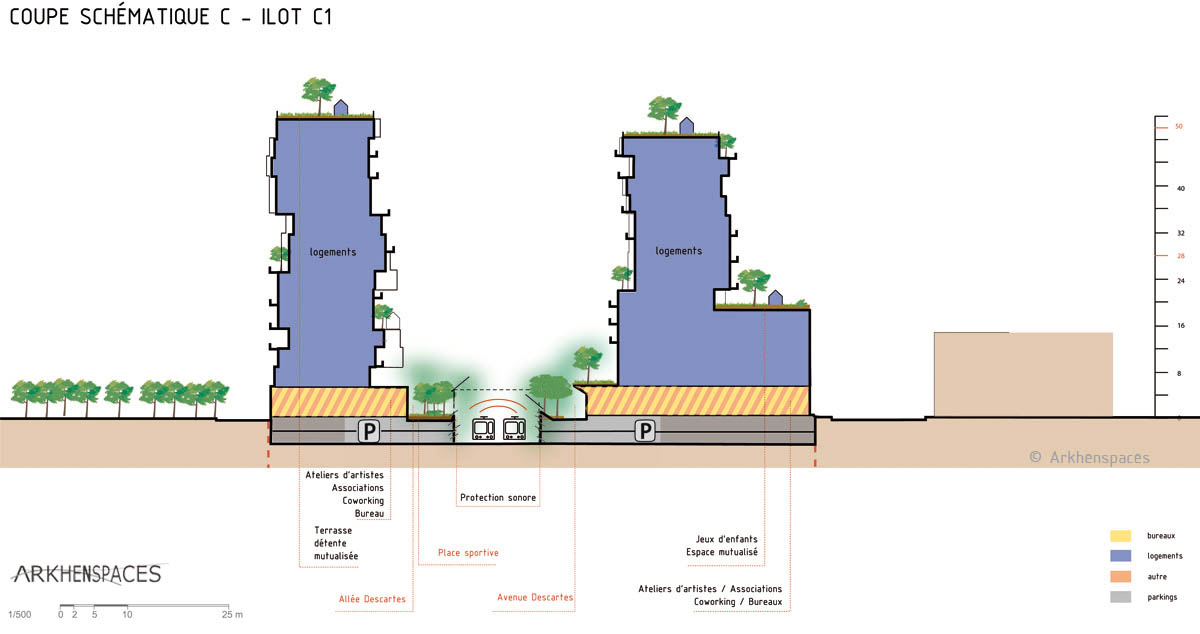
The bridges connecting the northern and southern neighbourhoods are transformed into public squares, while the blocks open themselves towards the railway and develop an urban morphology capable of protecting, filtering and orchestrating sound environments.
The Ecocity therefore aims to create an adaptable and shared city capable of transforming constraints into qualities.
Transforming a barrier into a centrality
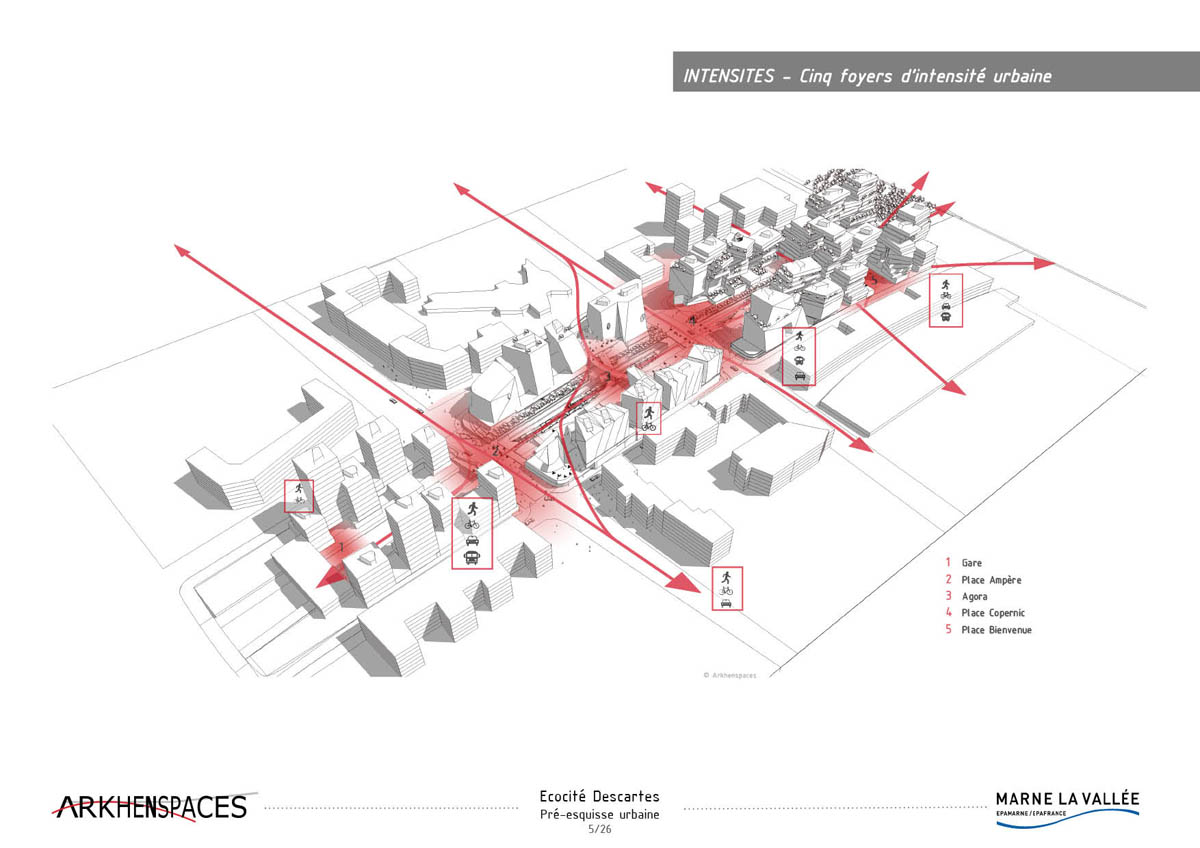
The district is organised around a simple principle: opening rather than bypassing.
Railway infrastructures are no longer considered obstacles but become supports for urban life. Public spaces, connections and programmes are organised around this presence to create new centres of activity and strengthen links between neighbourhoods.
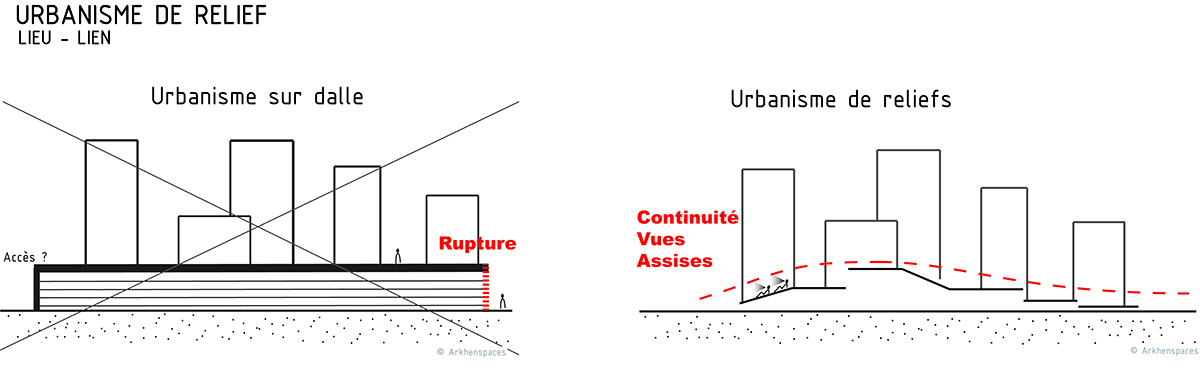
The urban design also works with topography, views, sounds and movement in order to offer diverse experiences for both pedestrians and cyclists.
A shared and adaptable city
The Ecocity is based on the mutualisation of spaces, facilities and services.
The district distributes urban intensities across space and time in order to encourage mixed uses and diverse communities. This diversity becomes the condition for a more efficient use of resources.
Buildings, public spaces and services are designed to evolve over both short and long periods of time. Rather than a fixed composition, the district is conceived as an adaptable structure capable of responding to changing needs and lifestyles.
A productive and wooded ecocity
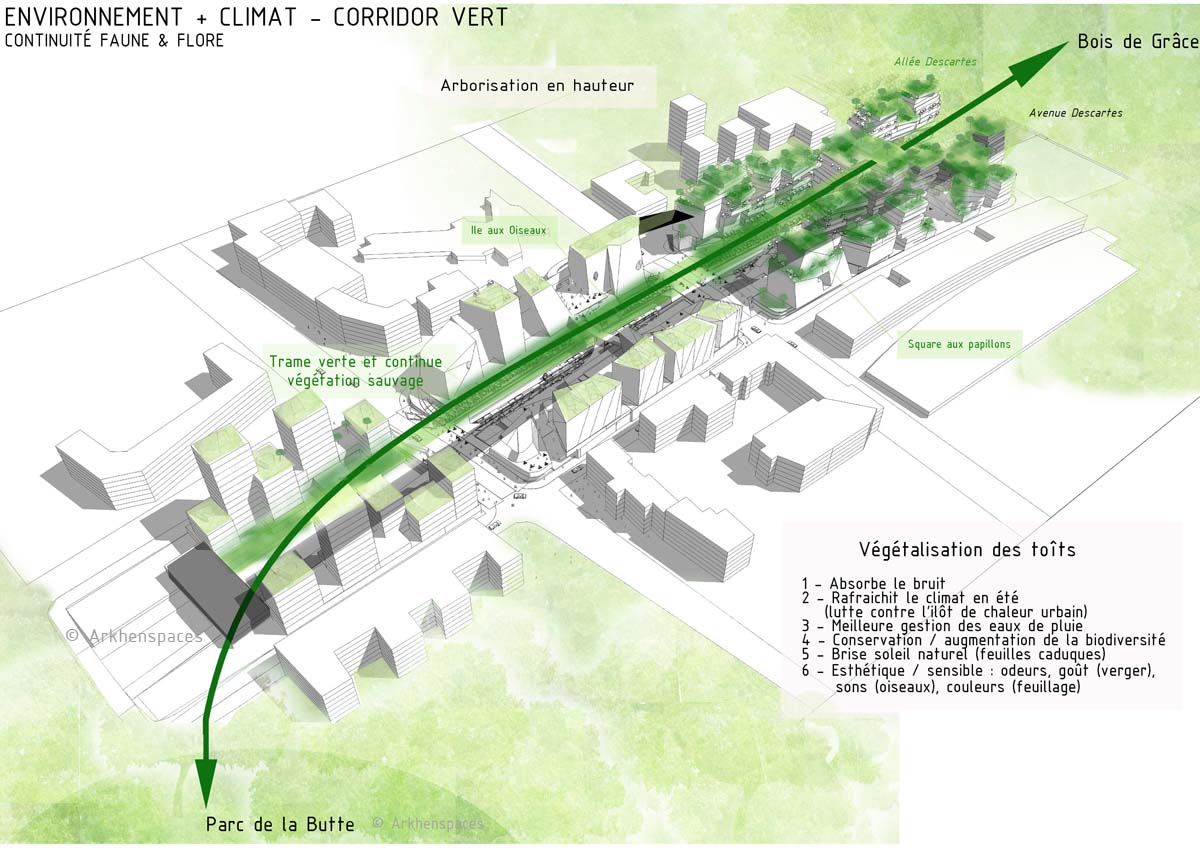
The project develops an ecological continuity between the Bois de Grâce and the Butte Verte Park through vegetation integrated at multiple levels of the built environment.
This approach reinforces biodiversity while improving the district’s climatic comfort.
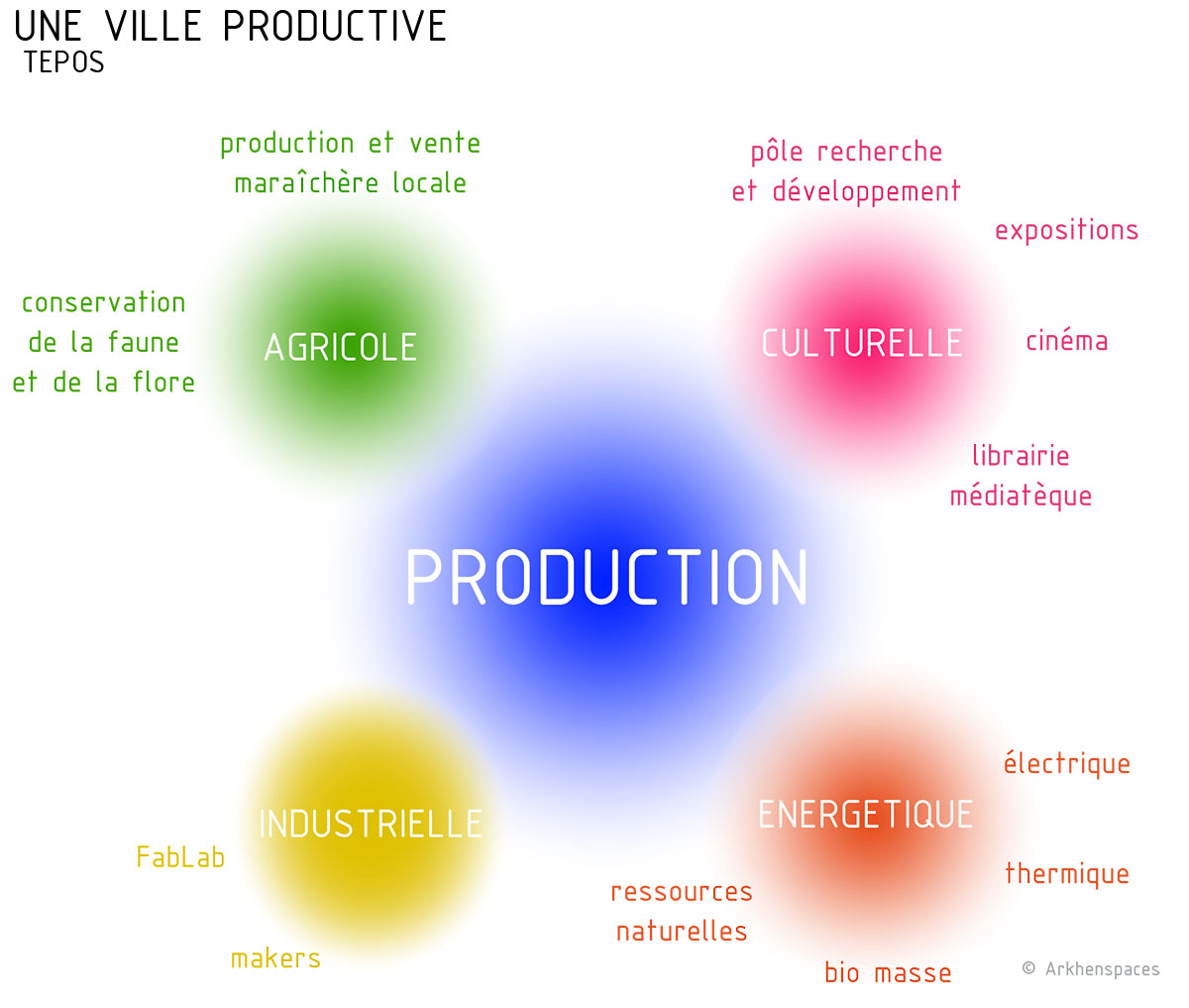
The Ecocity is also conceived as a positive-energy territory: both efficient and productive. It connects with the neighbouring resources of Seine-et-Marne, including agriculture, cultural production, digital fabrication, makerspaces and new forms of local production and exchange.
Seven principles for the city of tomorrow
- The Shared City
Mutualising spaces, services and temporalities in order to optimise urban resources. - The Diverse City
Encouraging diversity of uses, populations and urban rhythms. - The Poetic City
Introducing surprise, serendipity and sensitive experiences into public space. - The Agile City
Creating spaces capable of evolving over both short and long timescales. - The Wooded City
Developing an ecological corridor that supports biodiversity and climatic comfort. - The Resourceful City
Adapting environments to real needs rather than standardised models. - The Productive City
Building a positive-energy territory connected to local resources.
A smart city serving people
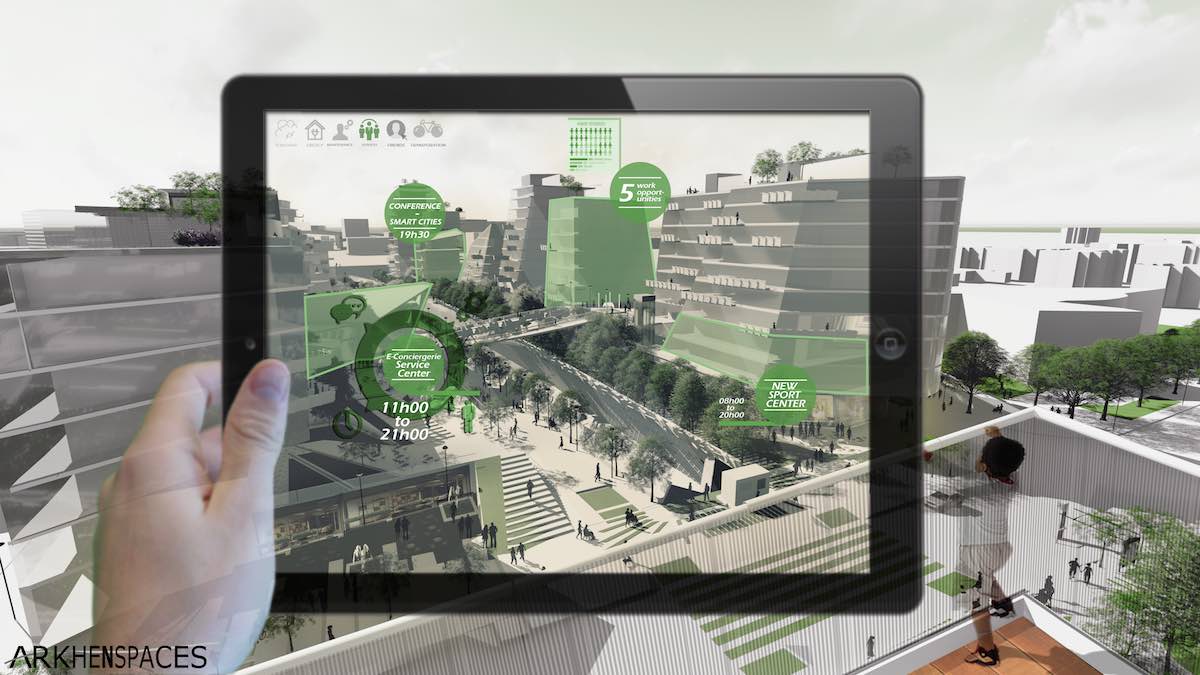
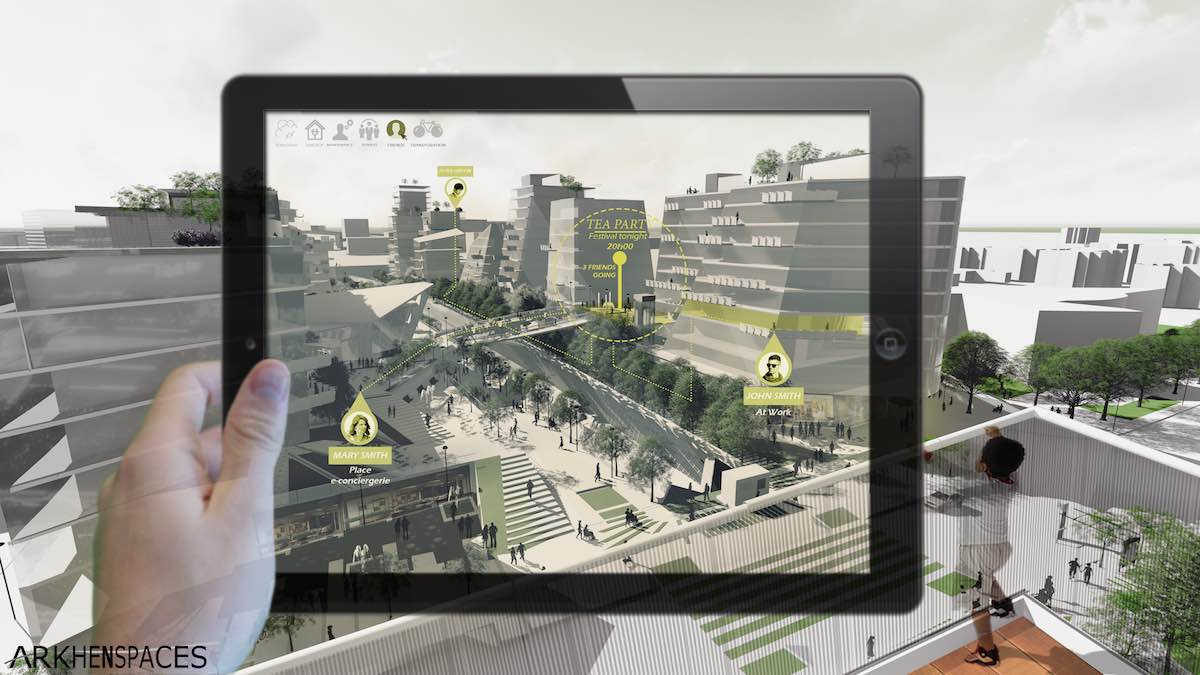
Digital technology is not considered an end in itself but a tool serving both place and people.
Exchange networks, shared services, energy optimisation, local information and poetic digital experiences contribute to a more human-centred vision of the smart city.
The ambition of the project is to create a complex, diverse and evolving city capable of learning from its uses and offering environments adapted to real needs rather than standardised comfort.
Transforming constraints into resources.