

The active block _ Principle
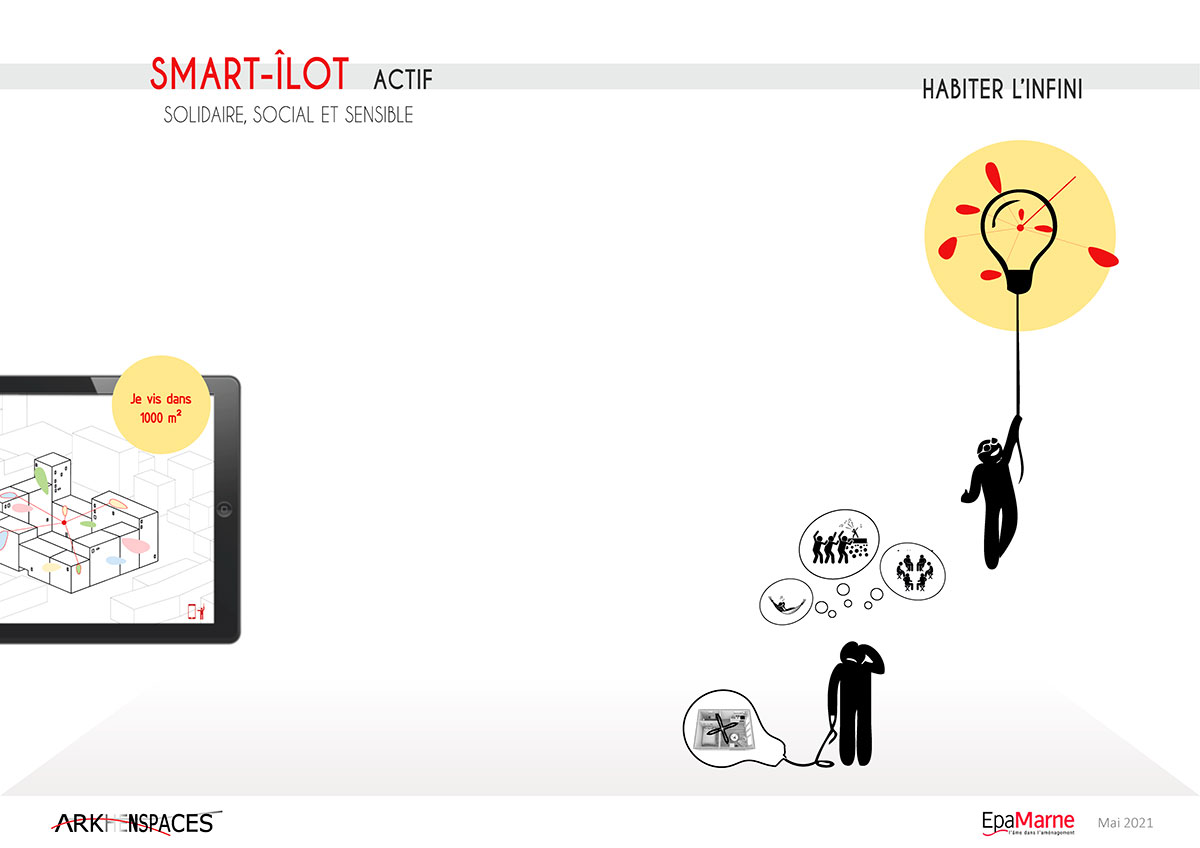
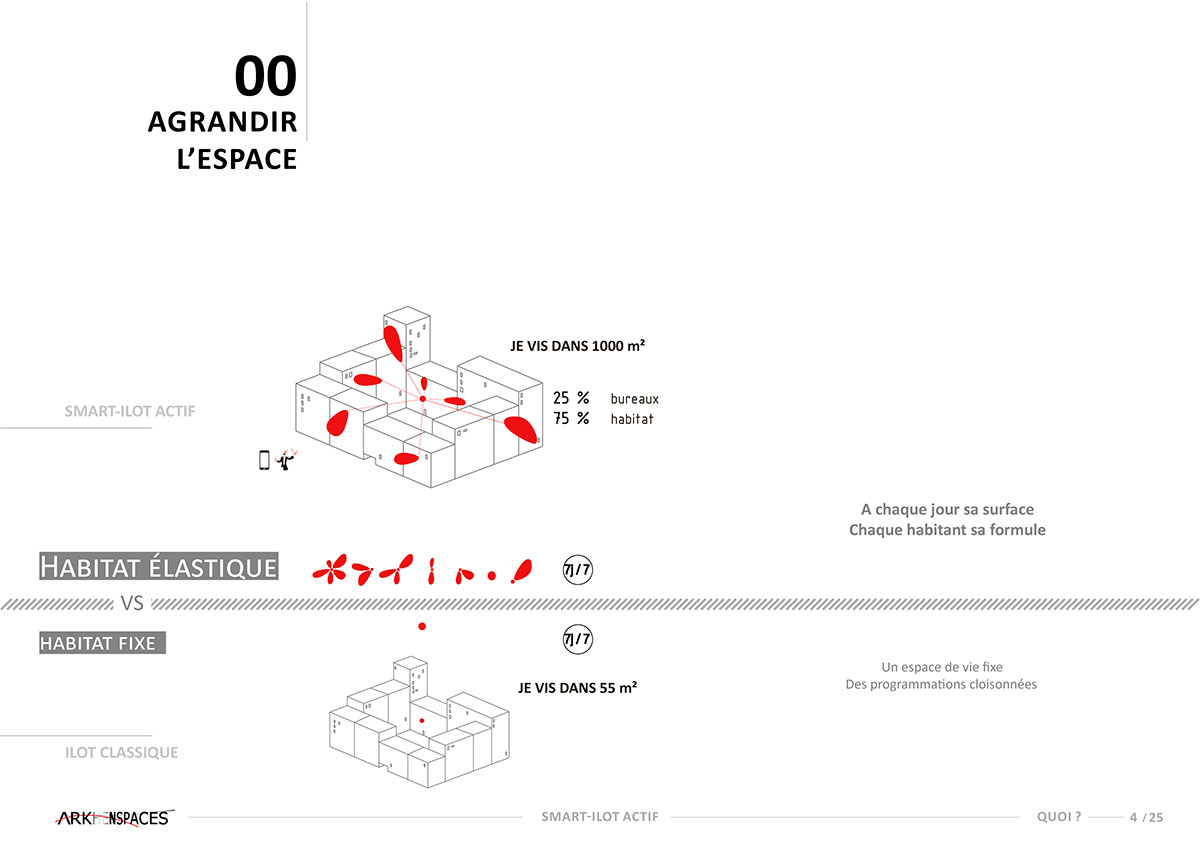
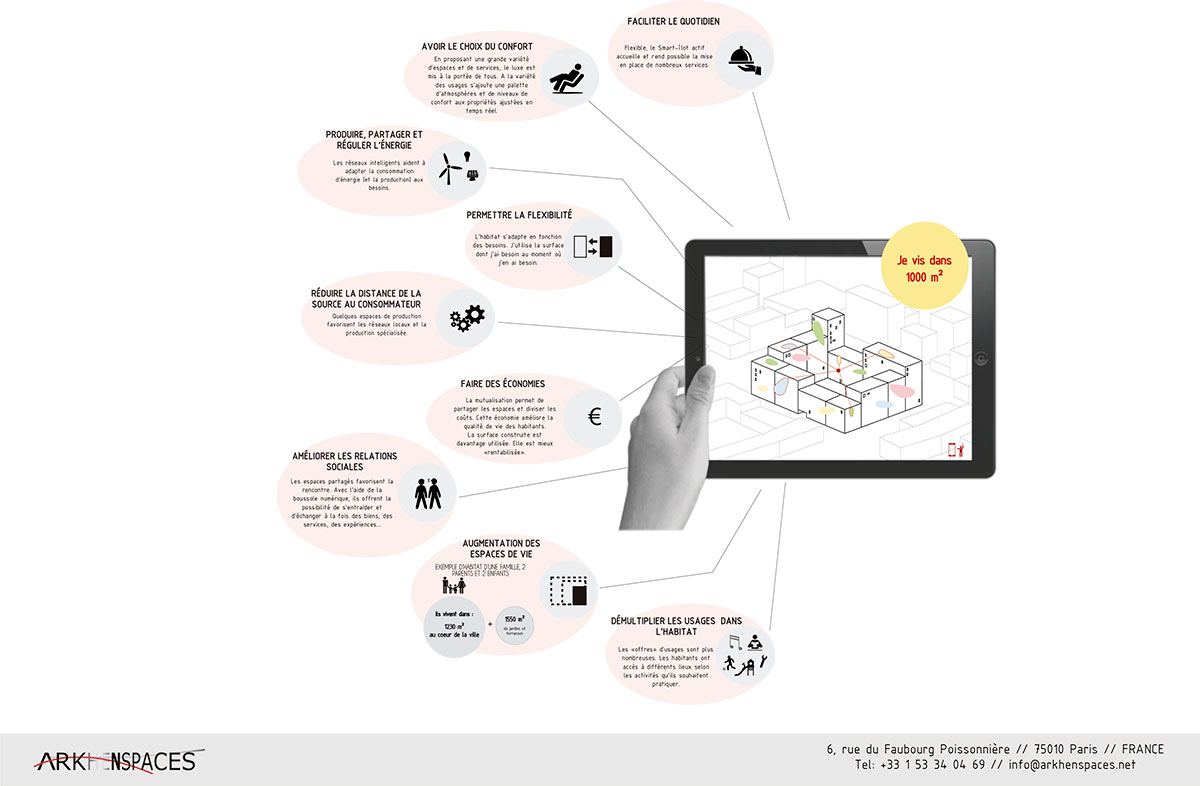
Living in 1000 m² in the heart of the city
Program Ecological mixed-use block: housing, workspaces and shared environments designed through n-spaces
Surface 12 to 20,000 m²
Location -
Year Since 2021
Client Arkhenspaces (supported by EPA Marne & CDC Habitat)
Team Eric Cassar, Maïalen Barrainkua, Rim Ben Attia, Zeïd Abdou, Mustafa Sercan Bulut, Ihssan Khammal, Oussama Taik, Marina Florent, Rim Boumessaoudi, Dorcas Mabanza-Kuma and Nicolas Moulin (NMA)
General principles
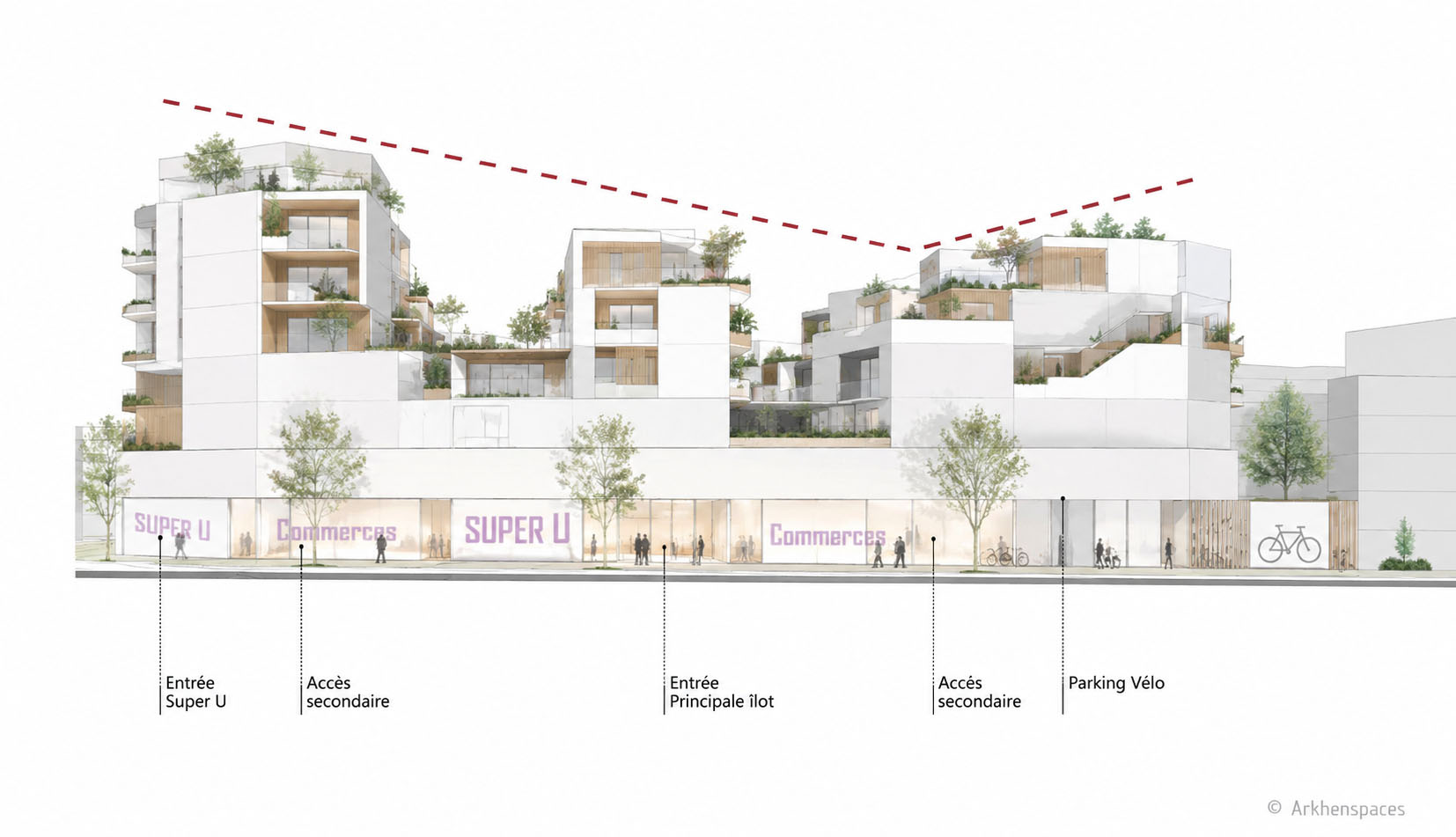
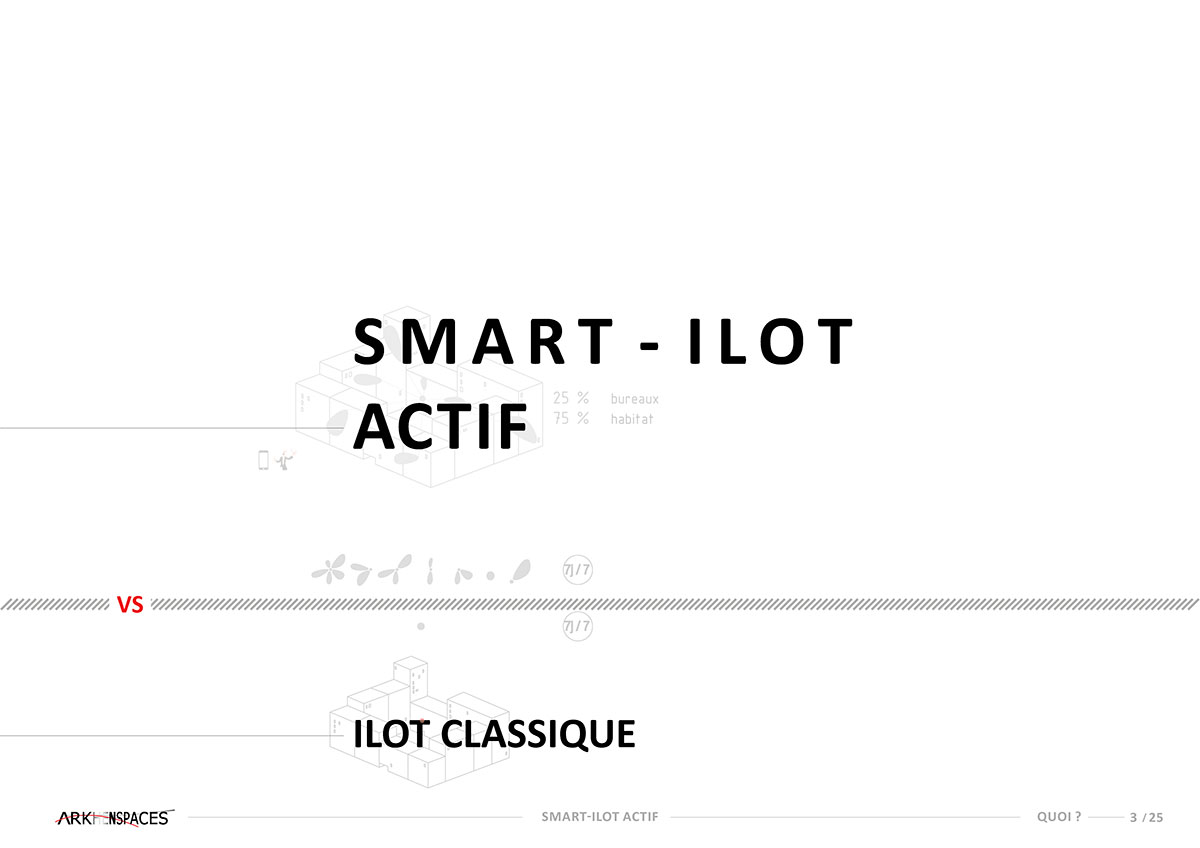
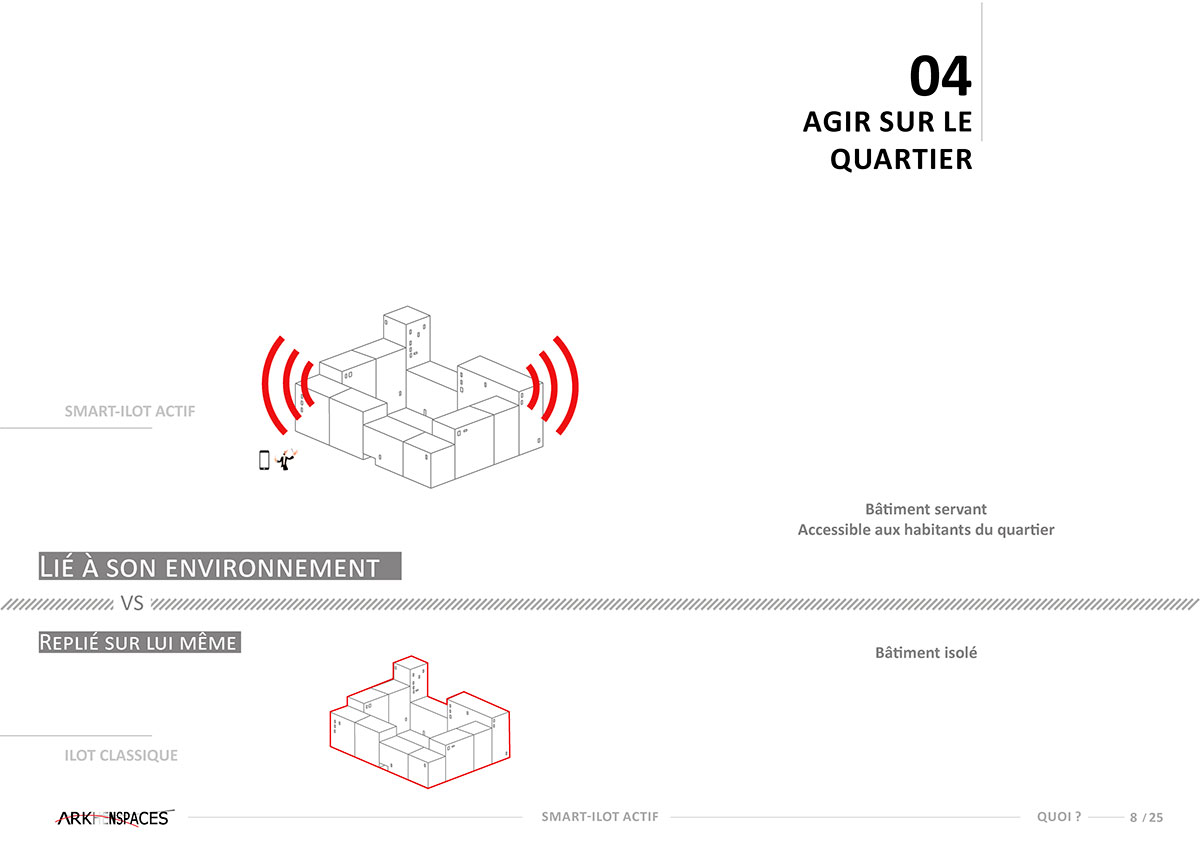
The Active Block is a new type of ecological mixed-use urban block designed for city centers. Conceived through n-spaces, it is described as “active” because it generates external resources capable of reducing operational and housing costs.
It continues and combines our research on new work environments (Working with h(e)ar(t)mony) and new ways of inhabiting (Infinity Home) in the digital age.
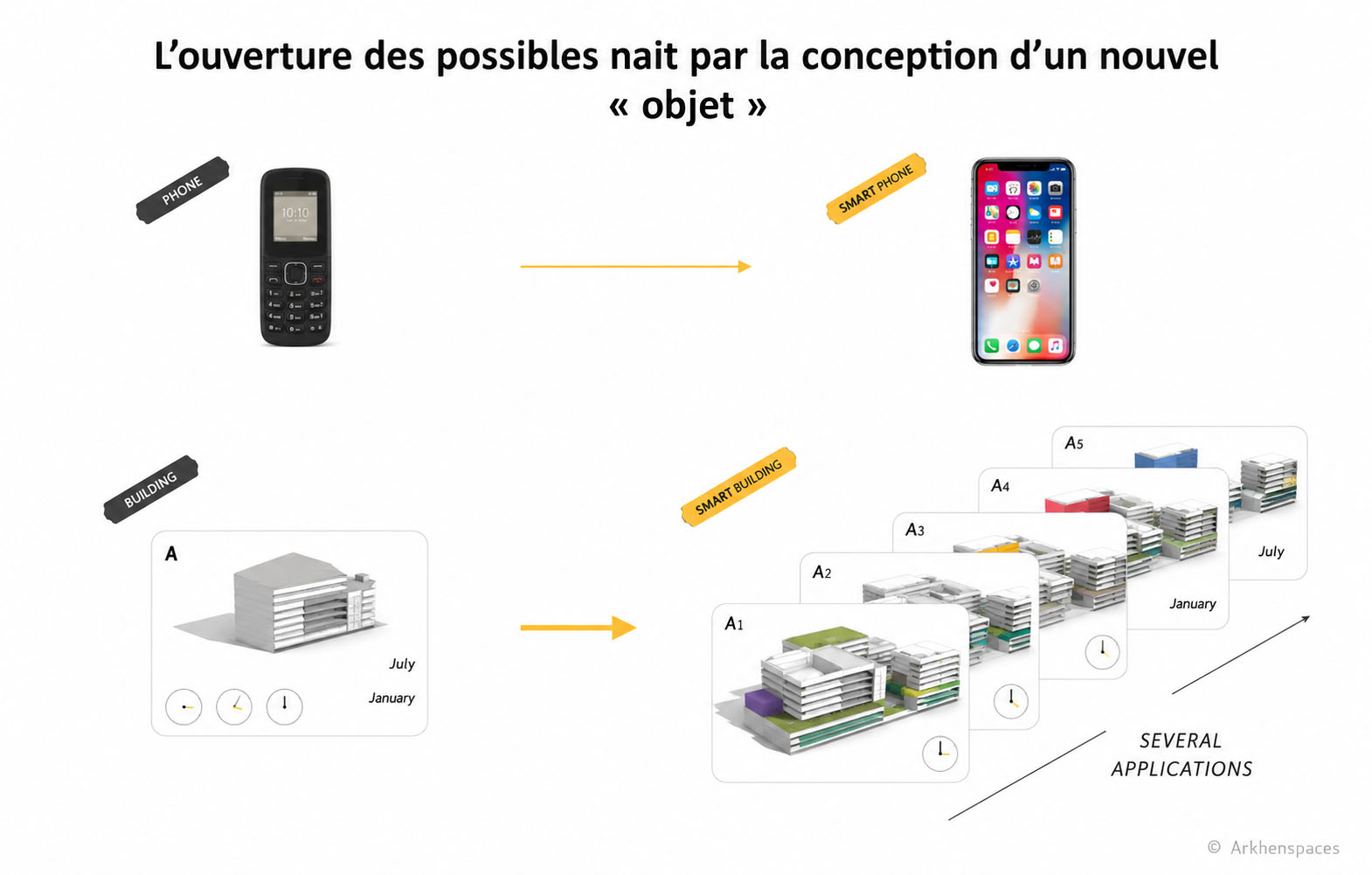
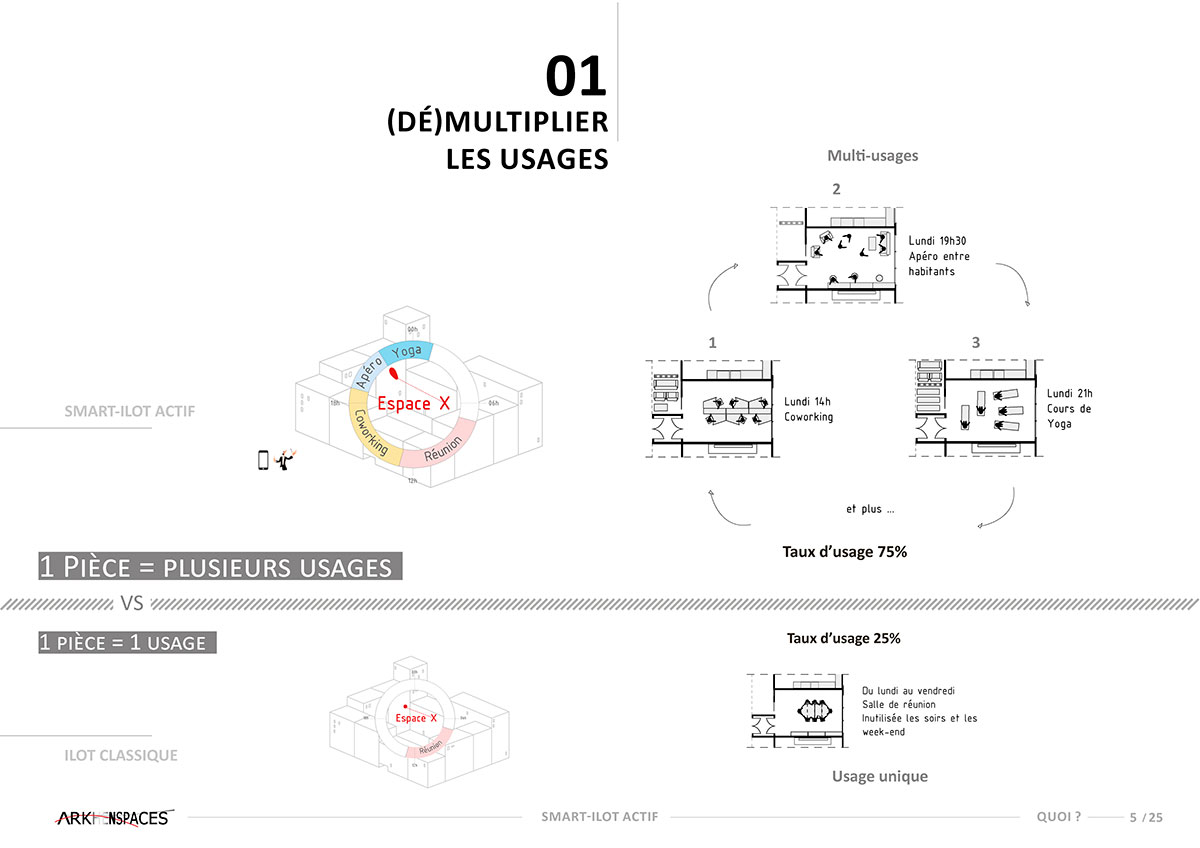
The project improves the use of built volumes over time by combining multiple functions. It considerably expands living and working environments while reducing its carbon footprint regardless of the construction system.
Making everyday life easier
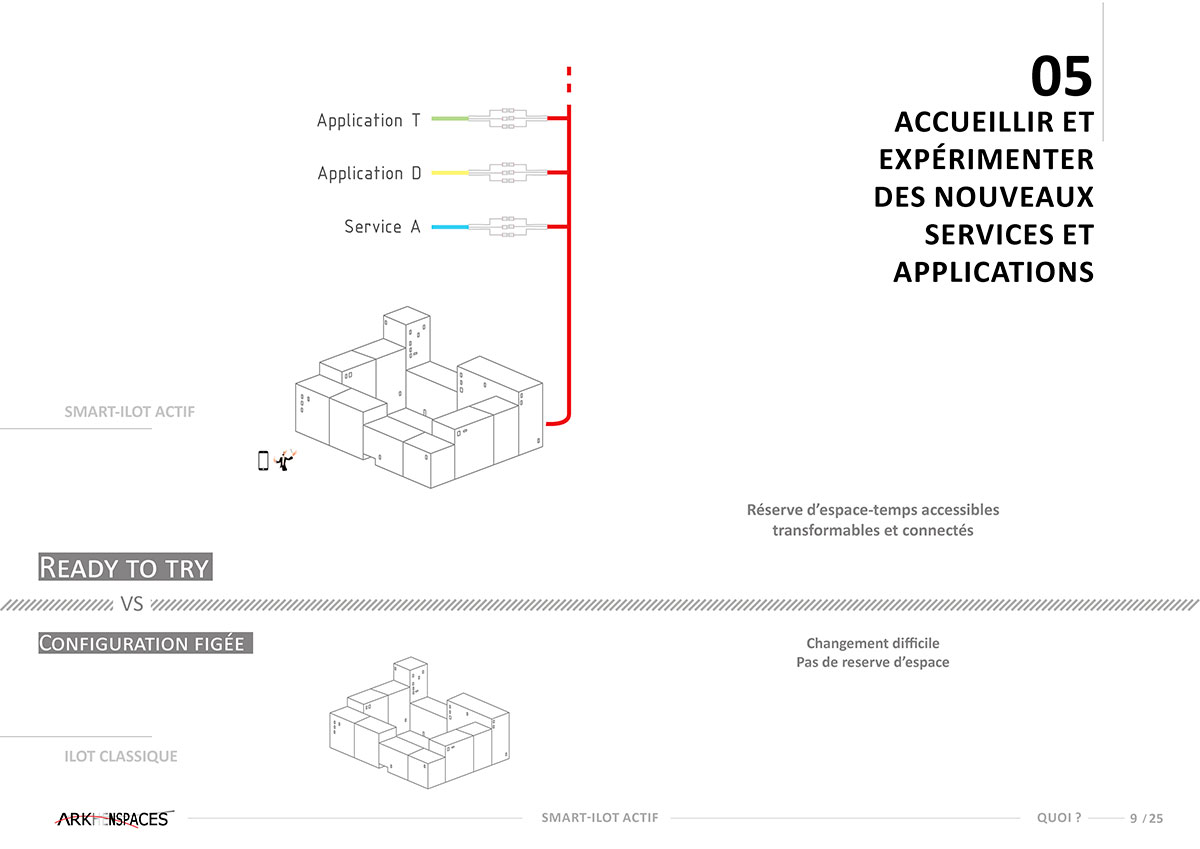
Flexible, the Smart Active Block accommodates and facilitates the implementation of numerous services.
Offering multiple levels of comfort
Thanks to a wide diversity of spaces and services, comfort becomes accessible to a larger number of people. A broad range of atmospheres and comfort levels can be adjusted in real time according to uses and needs.
Producing, sharing and regulating energy
Smart grids help adapt energy consumption and production to actual needs.
Increasing flexibility
Elastic by nature, the habitat evolves according to changing needs. I use the surface I need when I need it.
Reducing the distance between production and consumption
Productive spaces encourage local networks, short supply chains and specialized forms of production.
Reducing costs
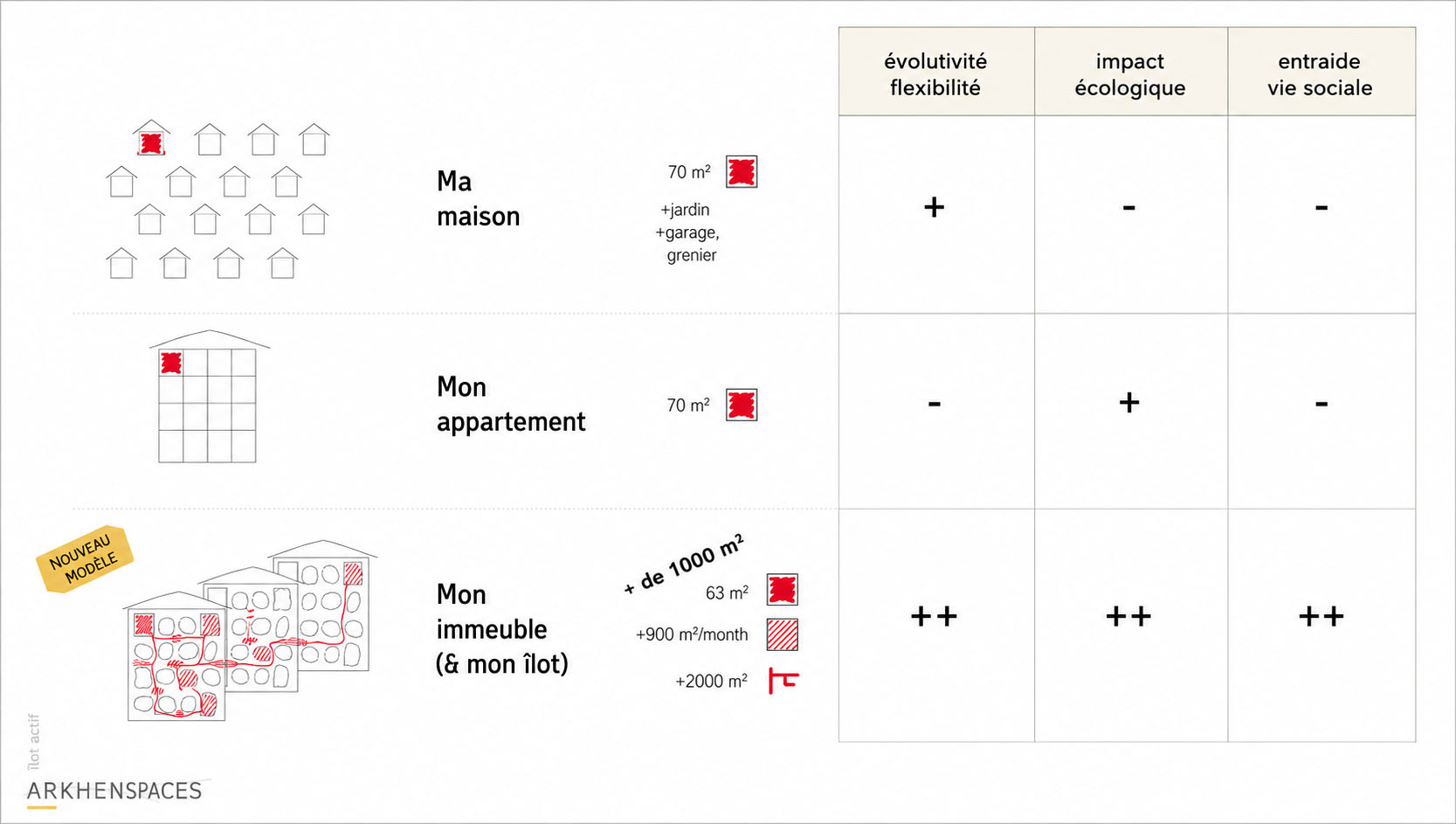
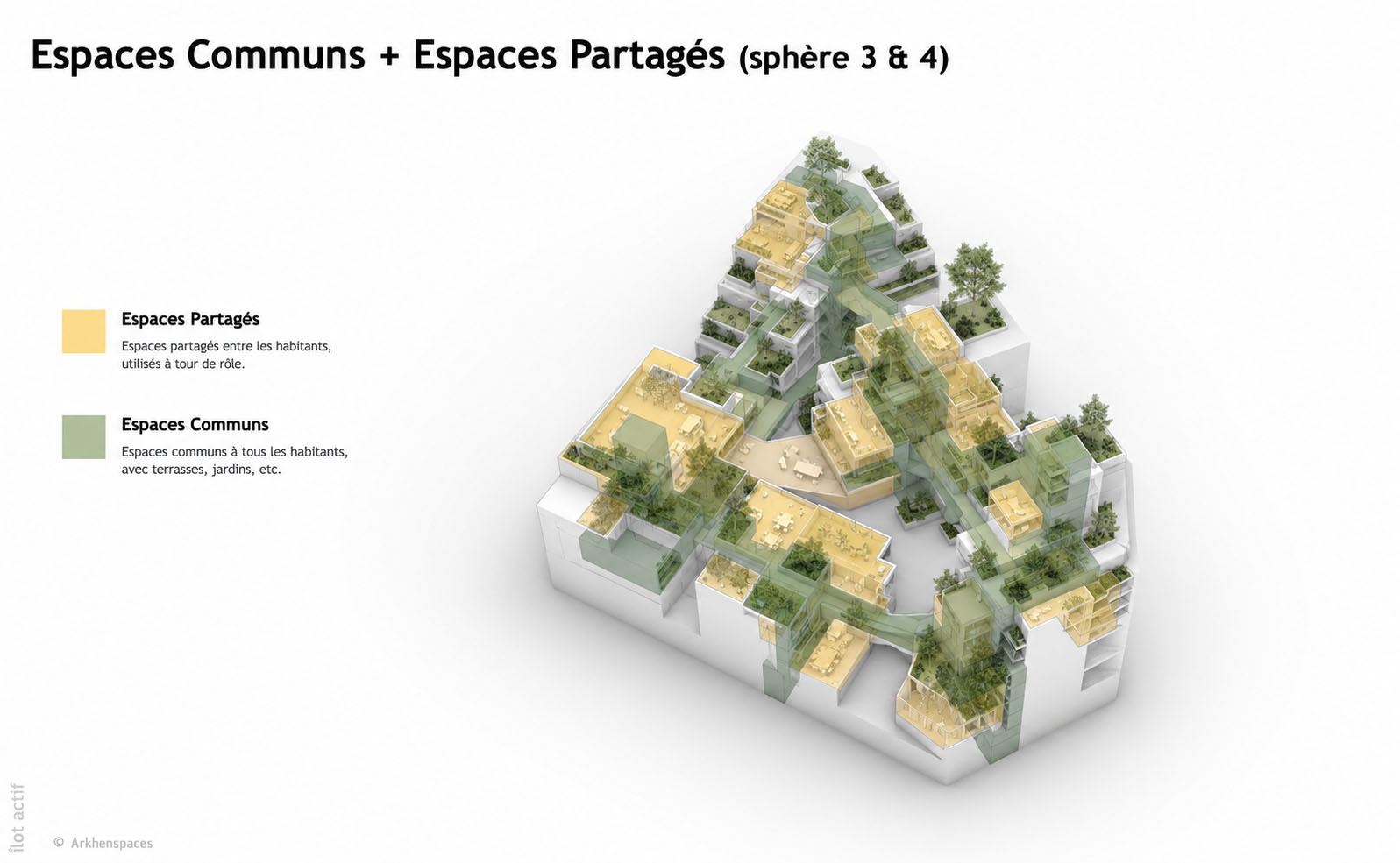
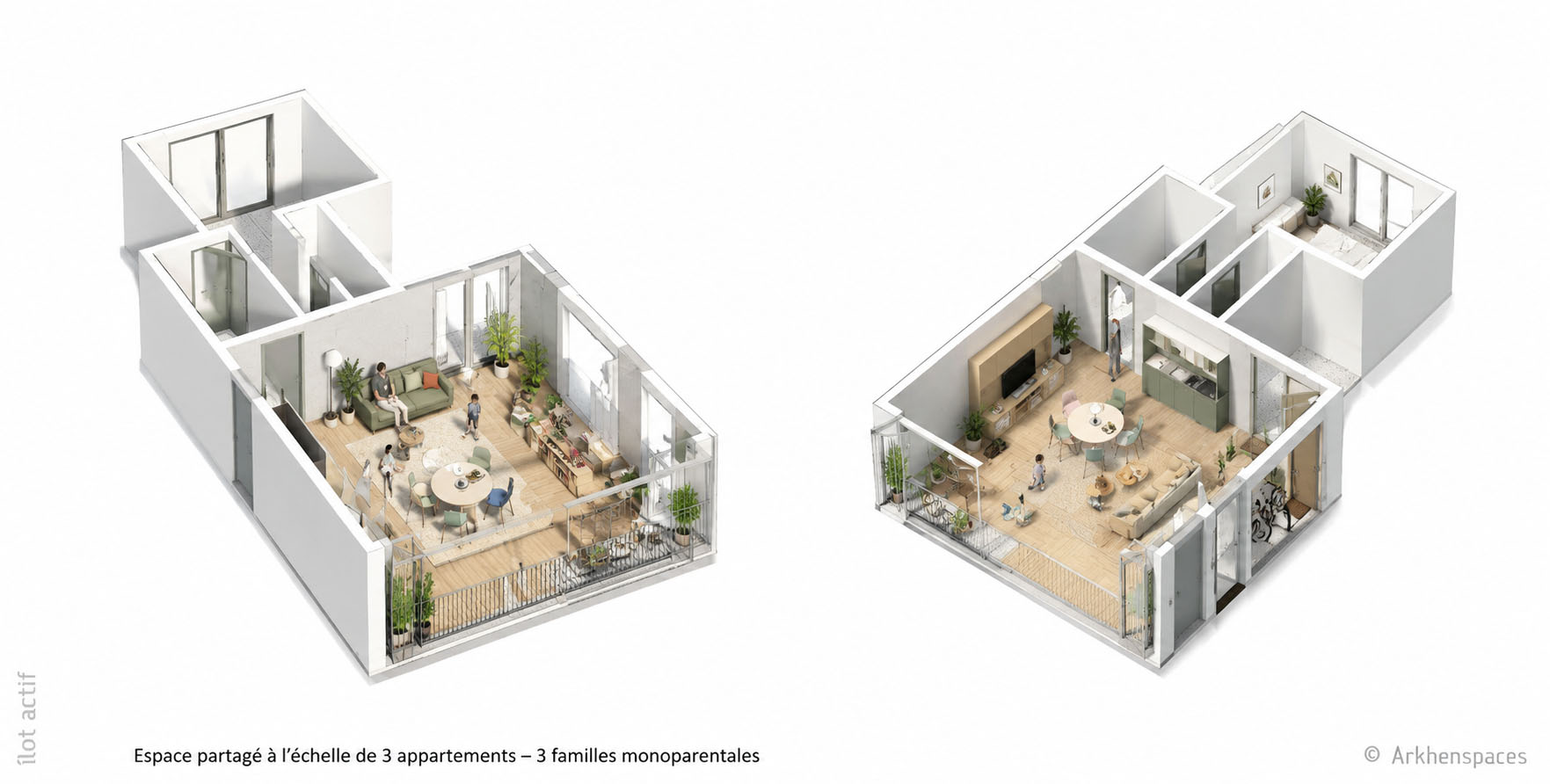
Shared spaces reduce costs through mutualization. This economy improves inhabitants’ quality of life while allowing built surfaces to be used more efficiently and more intensively.
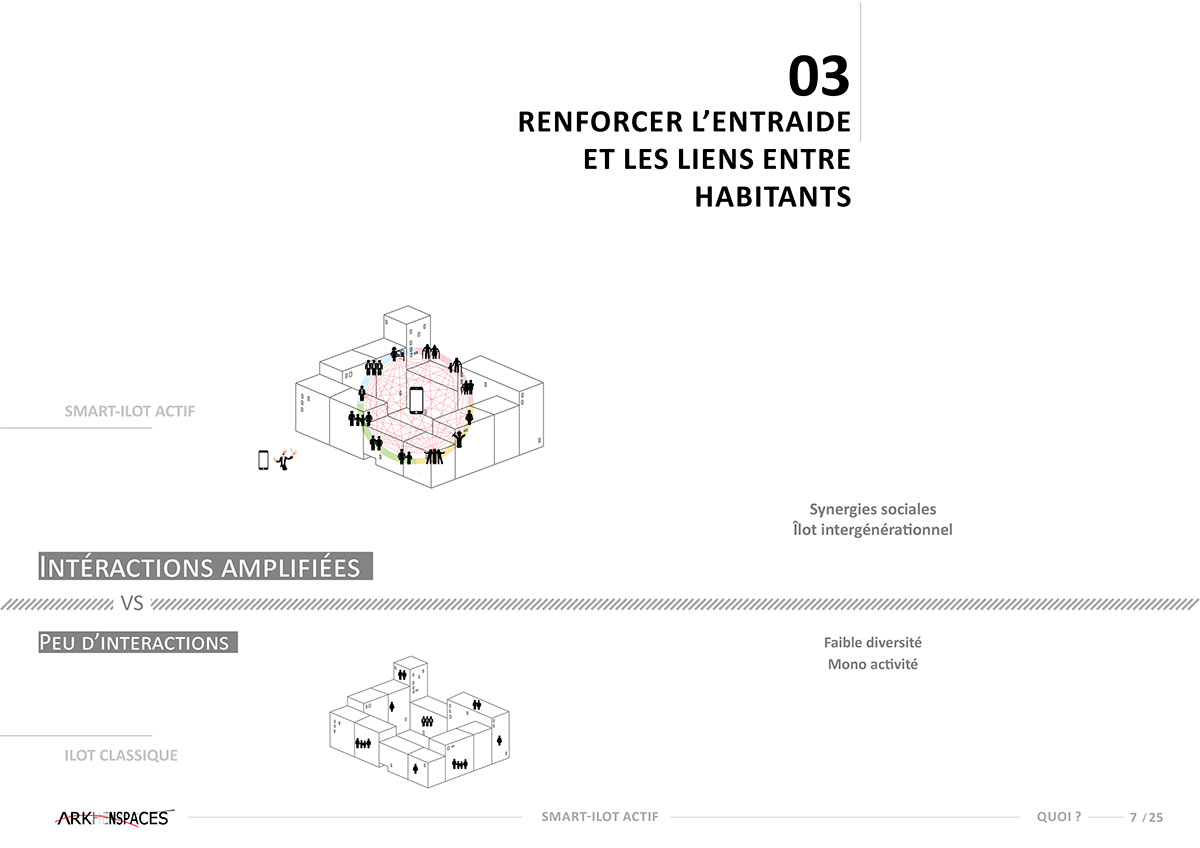
Improving social relationships
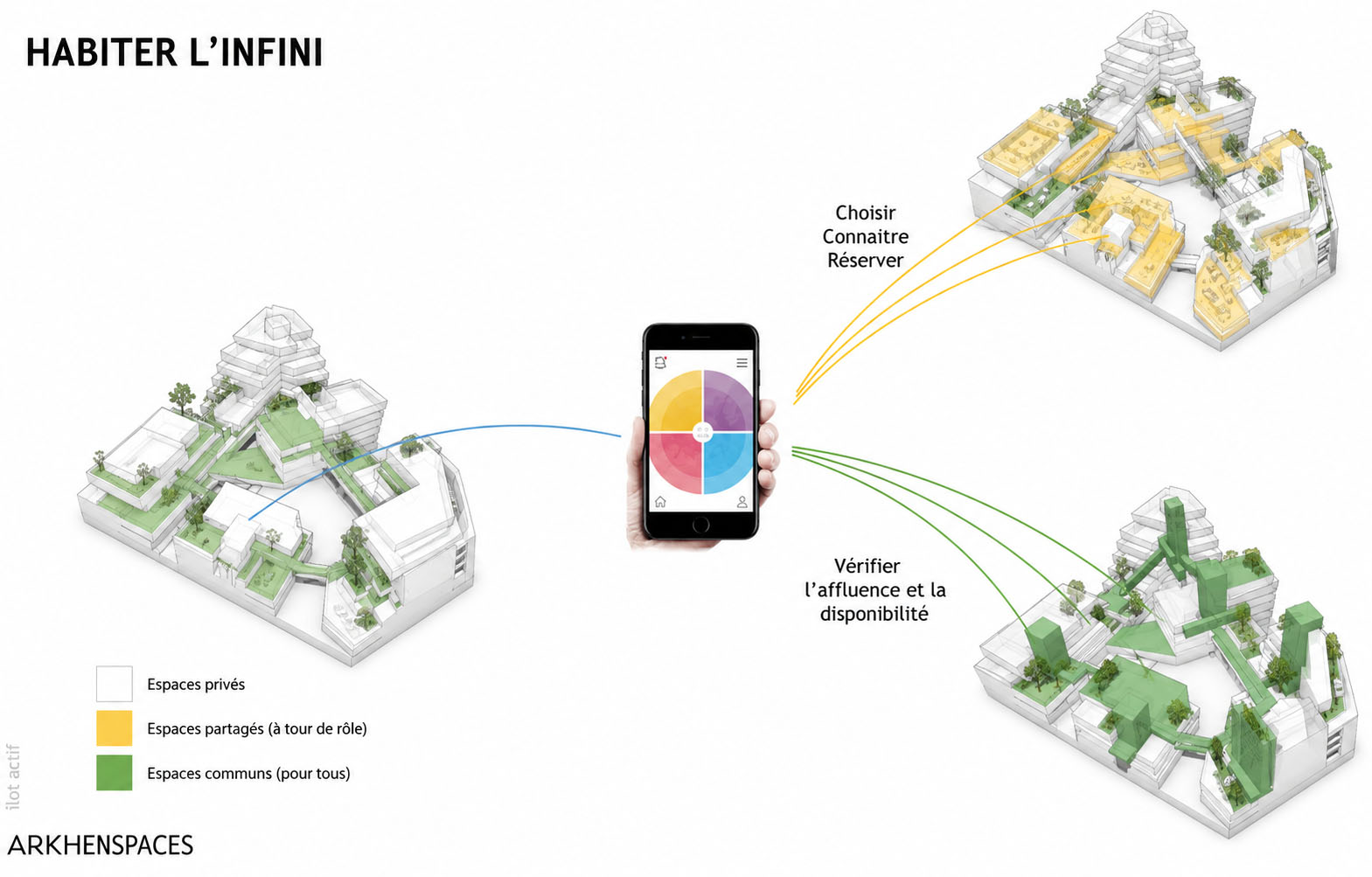
Shared environments encourage encounters and exchanges. With the help of the Digital Compass, inhabitants can support one another and exchange goods, services and experiences.
Expanding ways of inhabiting
Example of a family composed of two parents and two children: they can access nearly 1200 m² of shared living environments in addition to approximately 1500 m² of gardens and terraces in the heart of the city.
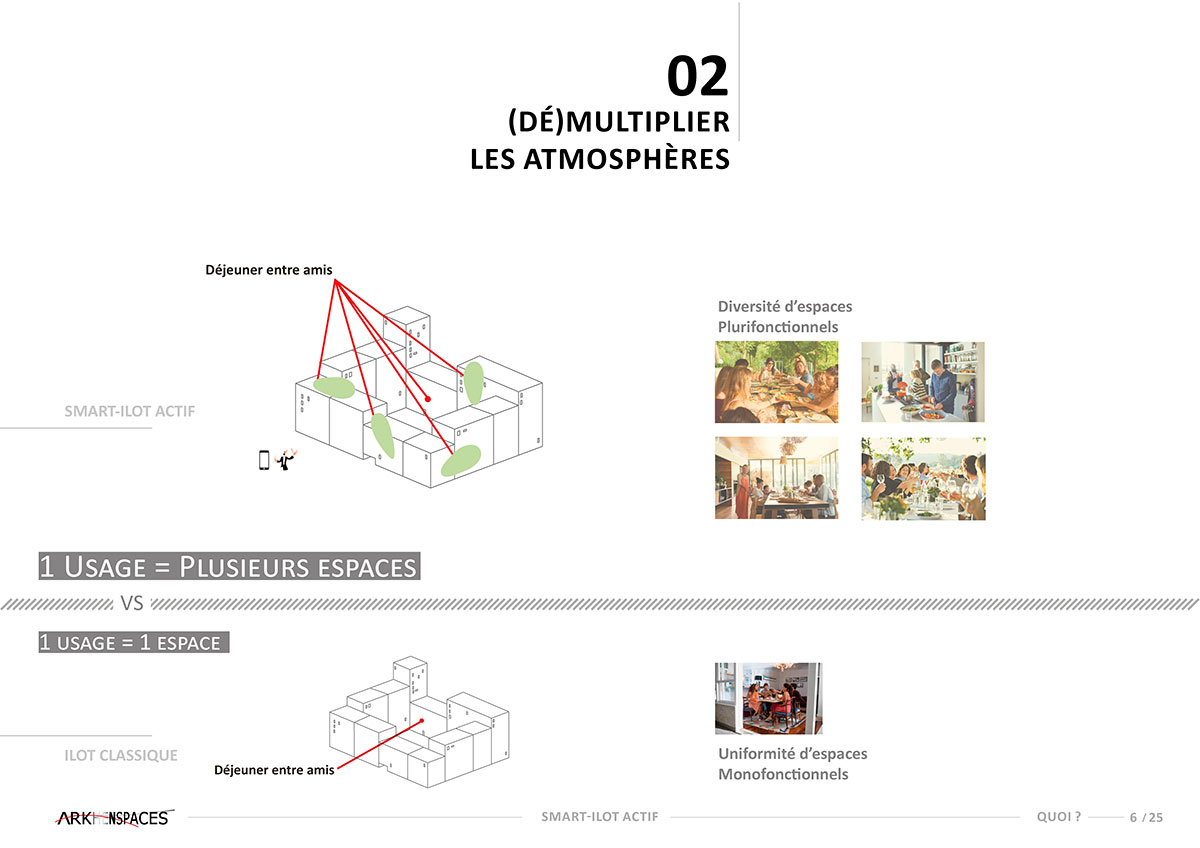
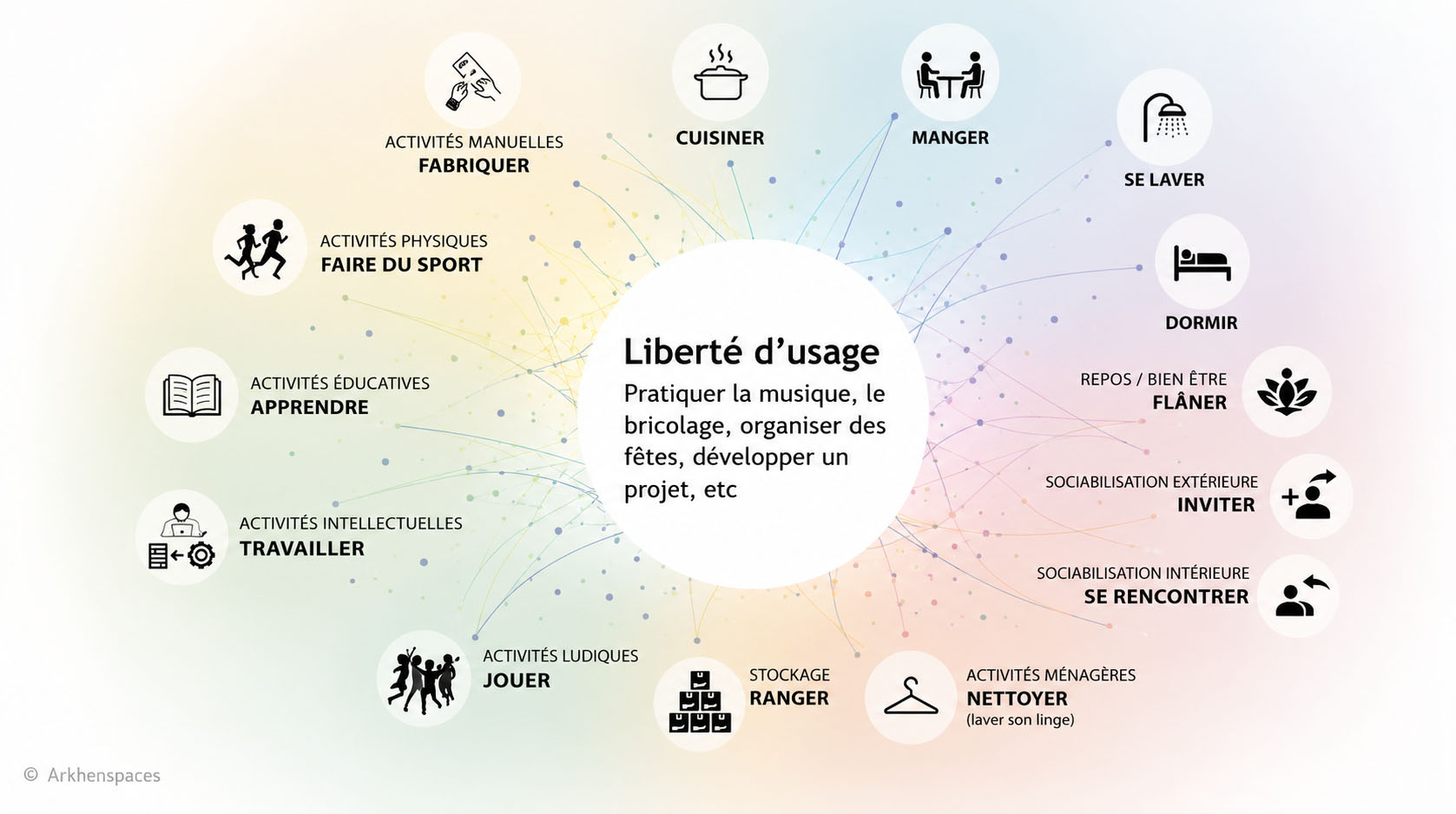
Multiplying possibilities of use
Uses are multiplied. Inhabitants can access different places according to their activities and needs.
An architecture, Bienveilleurs and a digital infrastructure
This place operates through the interaction between an adapted architecture (n-spaces), Bienveilleurs — simultaneously human coordinators, facilitators and caretakers — and a digital infrastructure including a Compass or usage-based application.
These research projects open new perspectives on the ways we inhabit, work and share the city.