

City Interstices _ Kaohsiung Taïwan
Excerpt from the documentary
“2013 Kaohsiung International Container Arts Festival: The Inhabitables”.
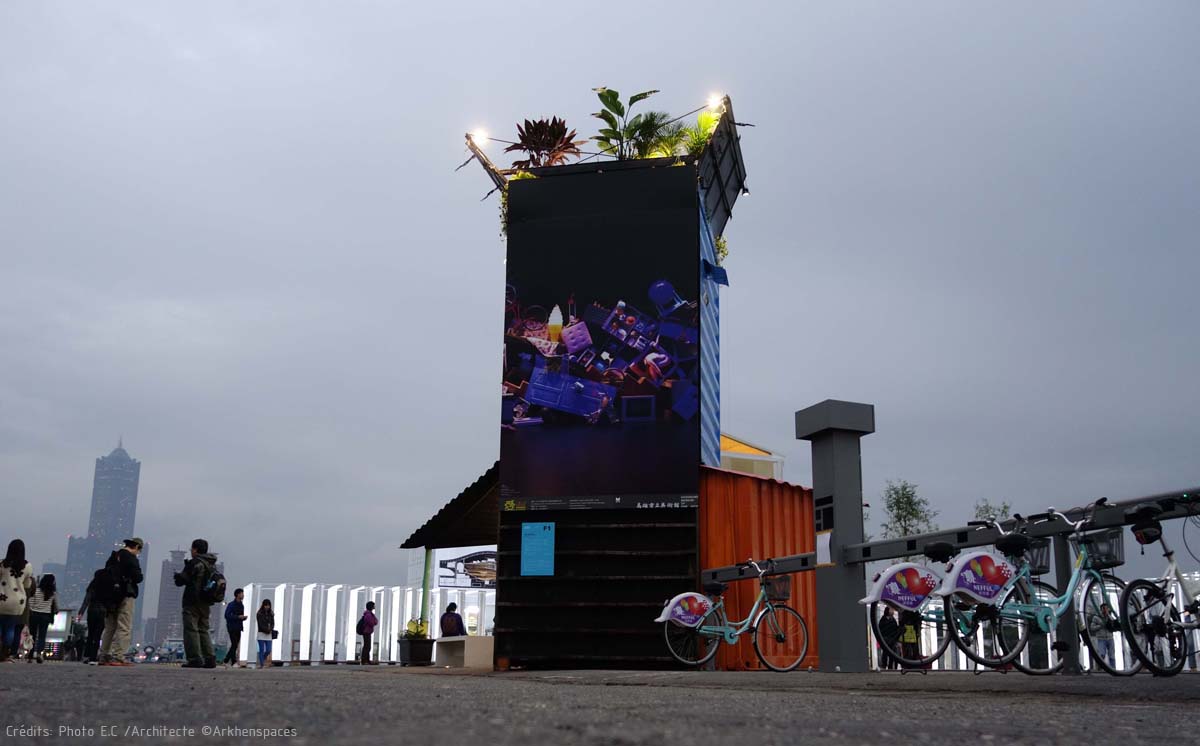

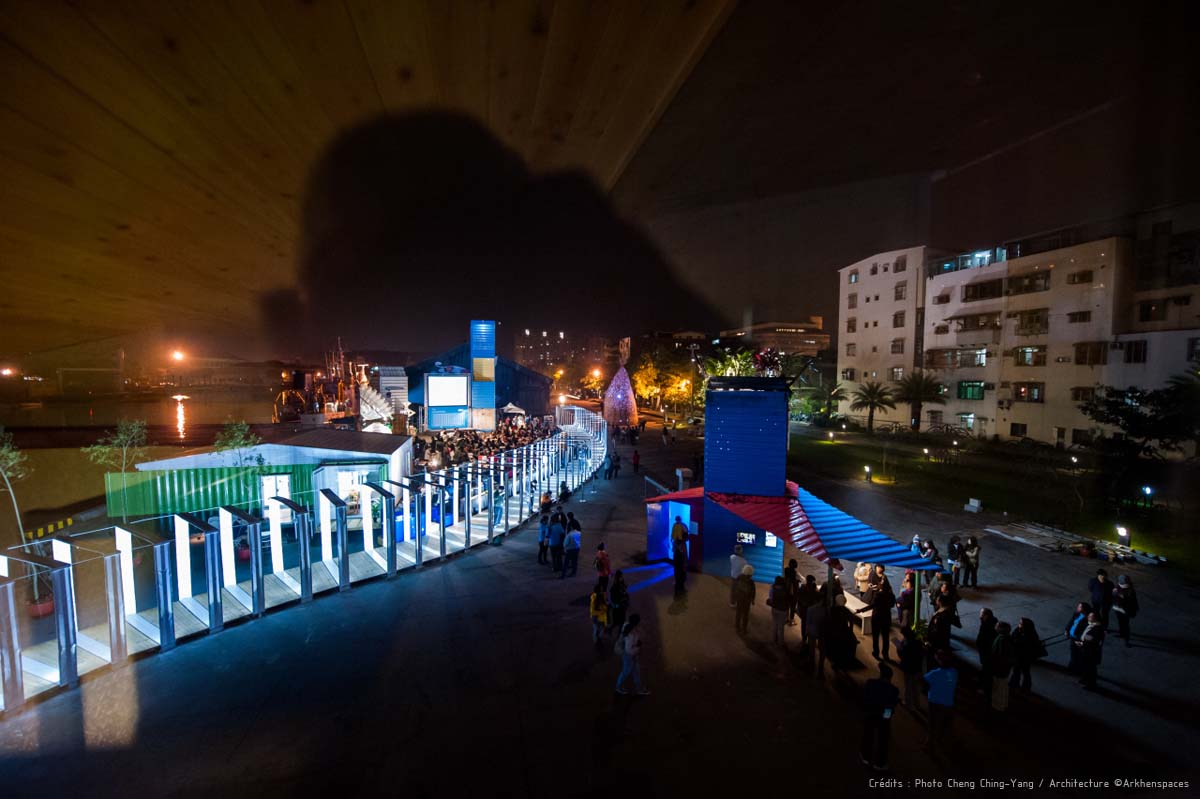


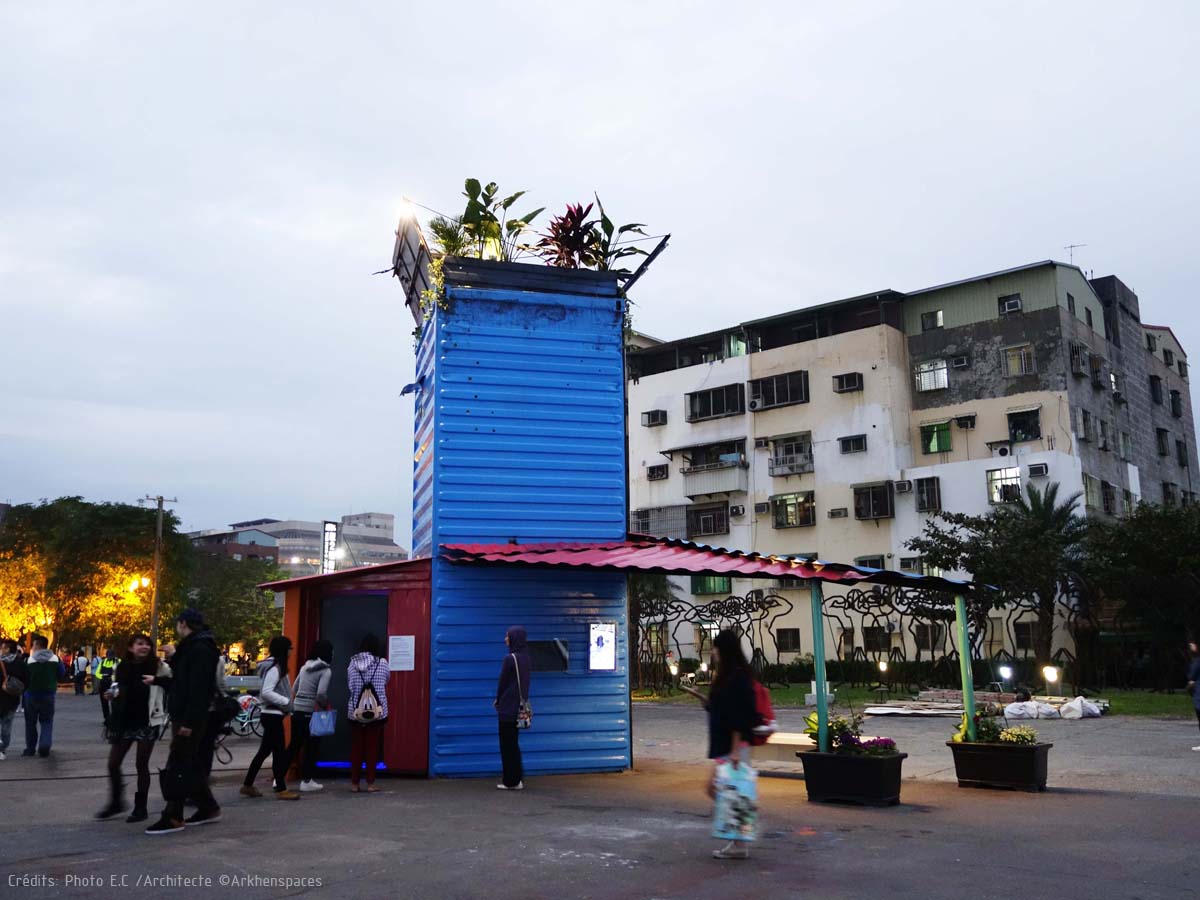
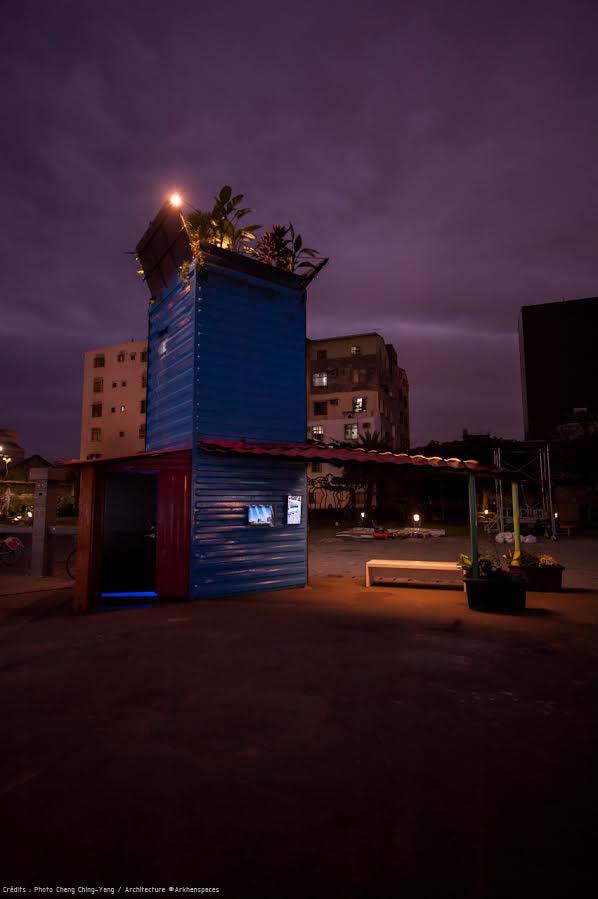
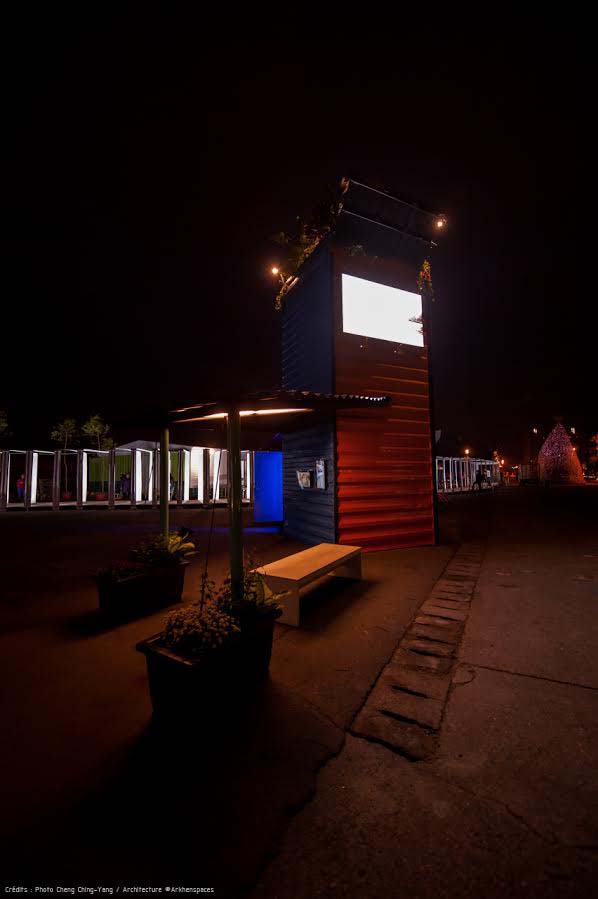
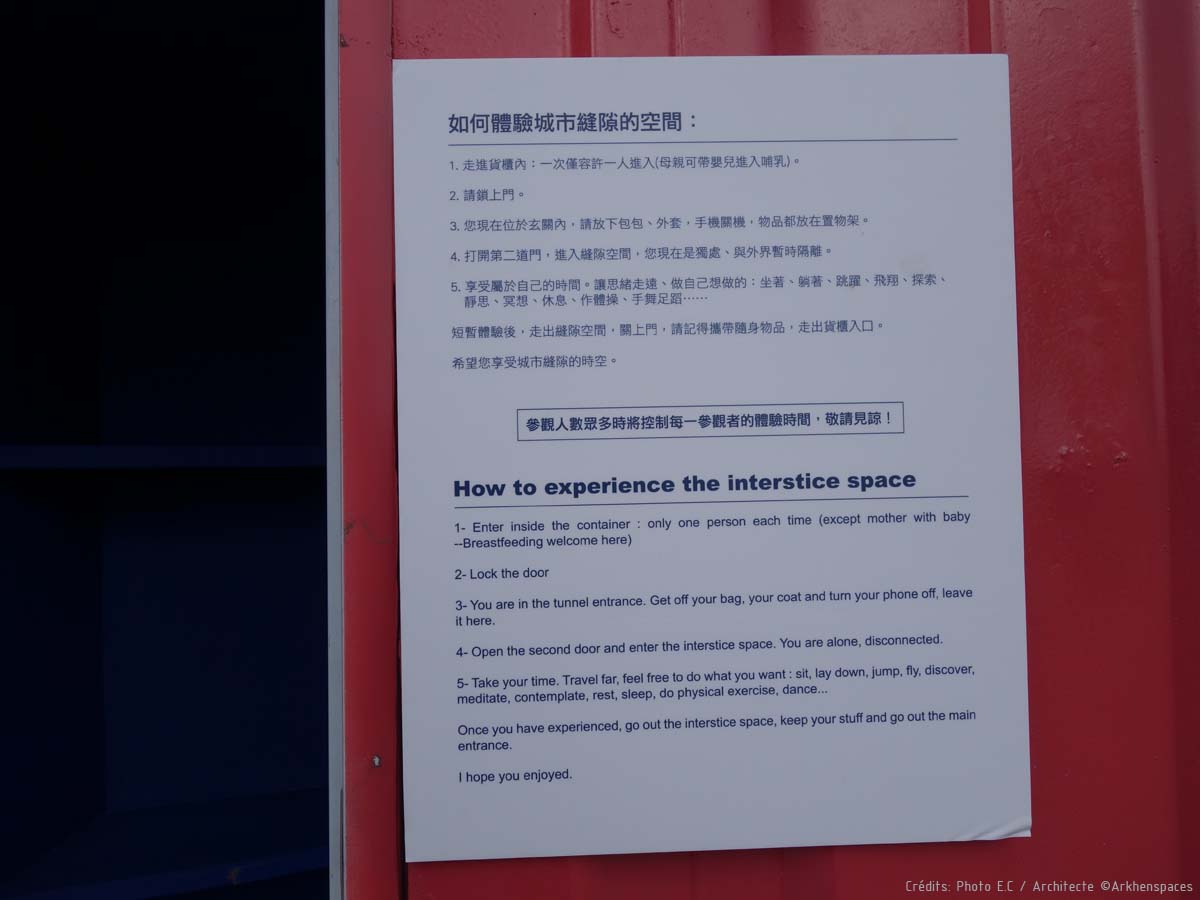


Project City Interstices, heterotopias in Kaohsiung
Program City Interstices, a new typology of public space: connected urban furniture, spaces for disconnection or meditation, micro-museum
Location Kaohsiung, Taiwan
Schedule 2013–2014 (The exhibition, inaugurated in December 2013, was extended five consecutive times until December 2014.)
Context Kaohsiung International Container Arts Festival – Kaohsiung Museum of Fine Arts
Invited architects Eric Cassar (Arkhenspaces – FR), Sou Fujimoto (Sou Fujimoto Architects – JP), Francine M. J. Houben (Mecanoo Architecten – NL), Chia-hsuan Chang (TW), Leching Chiang + Zihao Chen (TW), I-ching Huang (TW), Chih-feng Lin + Chi-tsun Wang (TW), Pei-huan Tsai (TW)
Team Eric Cassar, Juan Jesus Alfaro Reta, Shenglin Yang, Juvénal Rubinos Flores
Artist / contractor Lui Ding-Zan (metal artist and sculptor)
General principles
Invited by the Kaohsiung Museum of Fine Arts, I [Eric Cassar – Arkhenspaces] was free to invent a program using a recycled container.
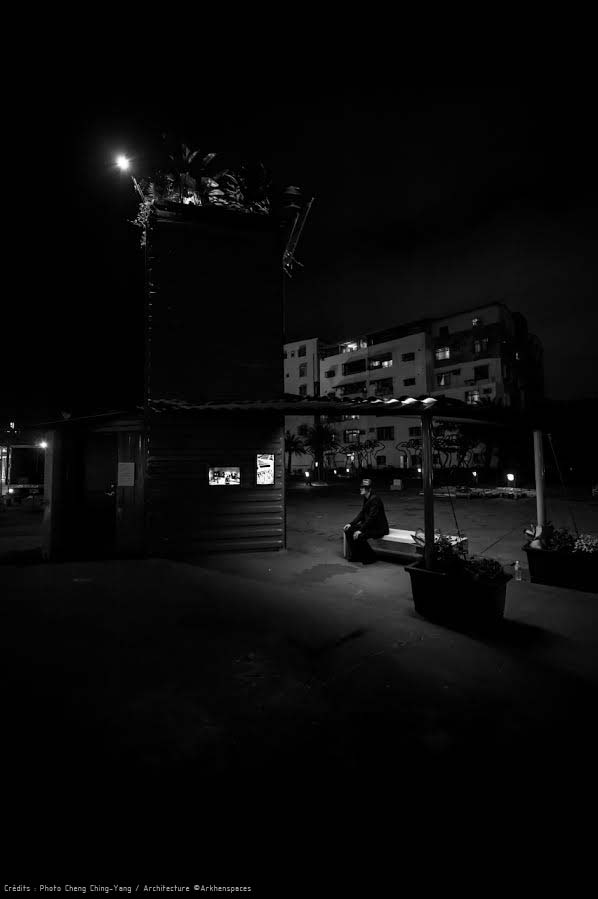
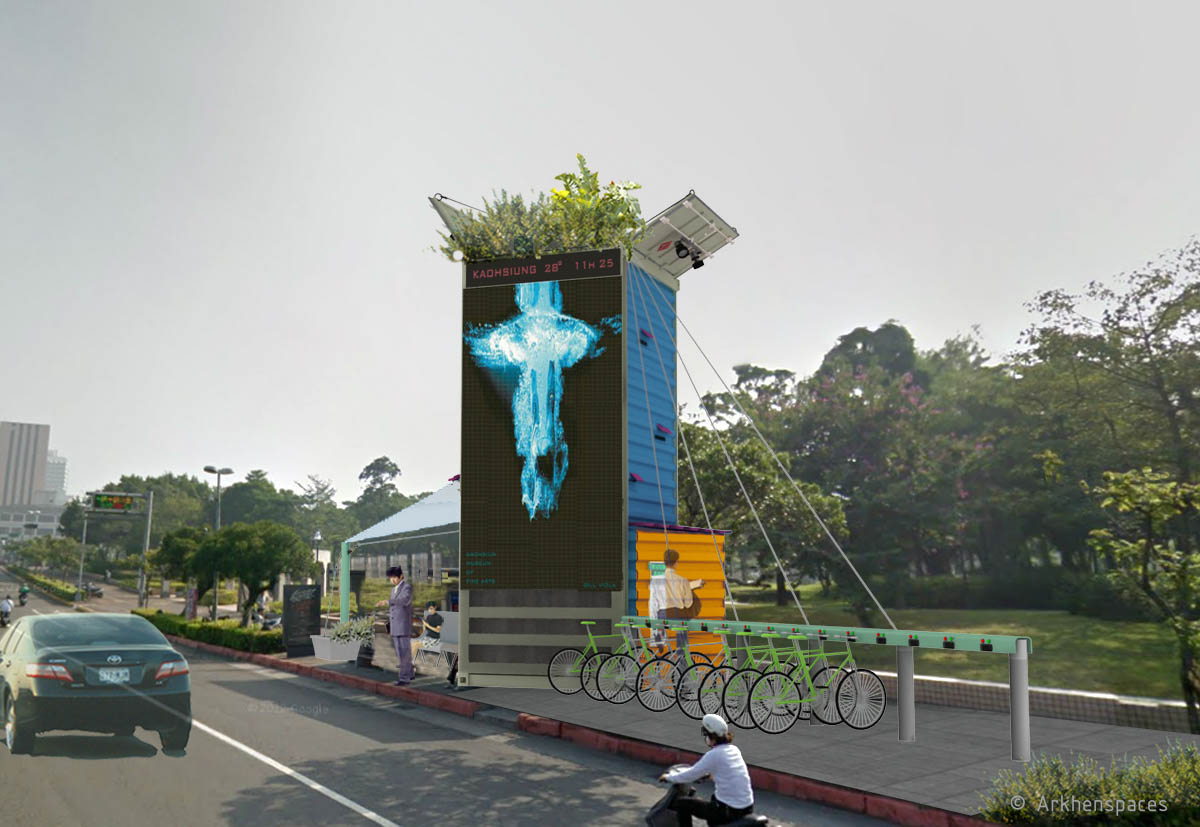
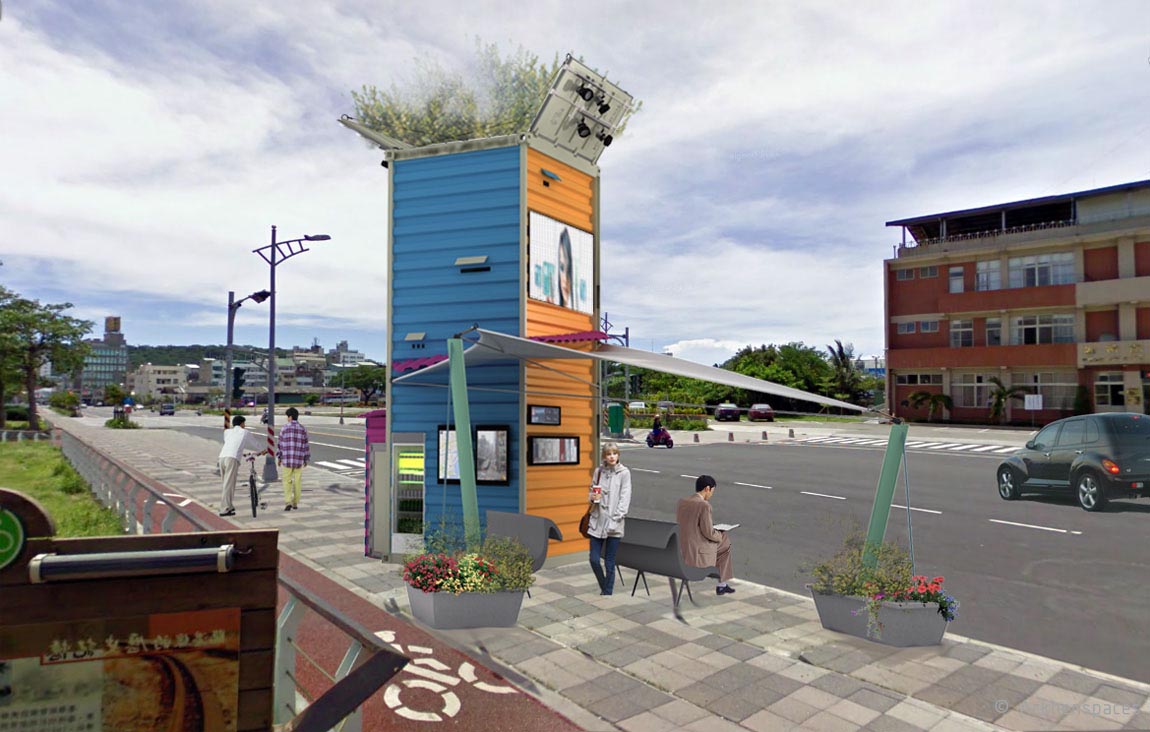
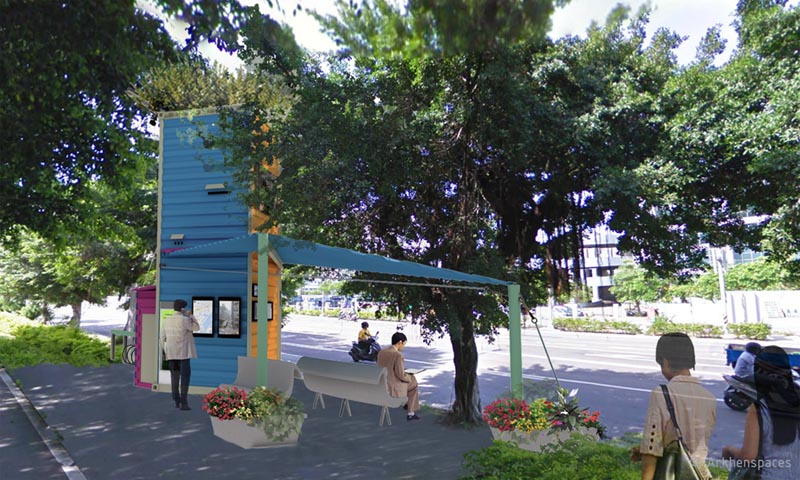
I proposed a new typology of public space bringing together several urban services (bus stop, bicycle station, urban information…) while introducing into the city a space for disconnection, meditation and sensitive experience : the insterstice space.
The project explores the relationships between physical and digital connections, presence and absence, public space and counter-space.
Heterotopias spread through the city like new interstices within the urban fabric.
The container and its void
Thirty spokes share the wheel’s hub;
It is the center hole that makes it useful.
Shape clay into a vessel;
It is the space within that makes it useful.
Cut doors and windows for a room;
It is the holes which make it useful.
Therefore profit comes from what is there;
Usefulness from what is not there.
Lao Tzu — Tao Te Ching — Chapter 11
A container is a support: a parallelepiped composed of an envelope and an interior void.
The envelope
The exterior colors of the container interact with those of the Kaohsiung logo, identifying the city while allowing variations from one container to another across the network.
The outer surfaces integrate several screens connected to other physical and digital spaces through new technologies (nspaces).
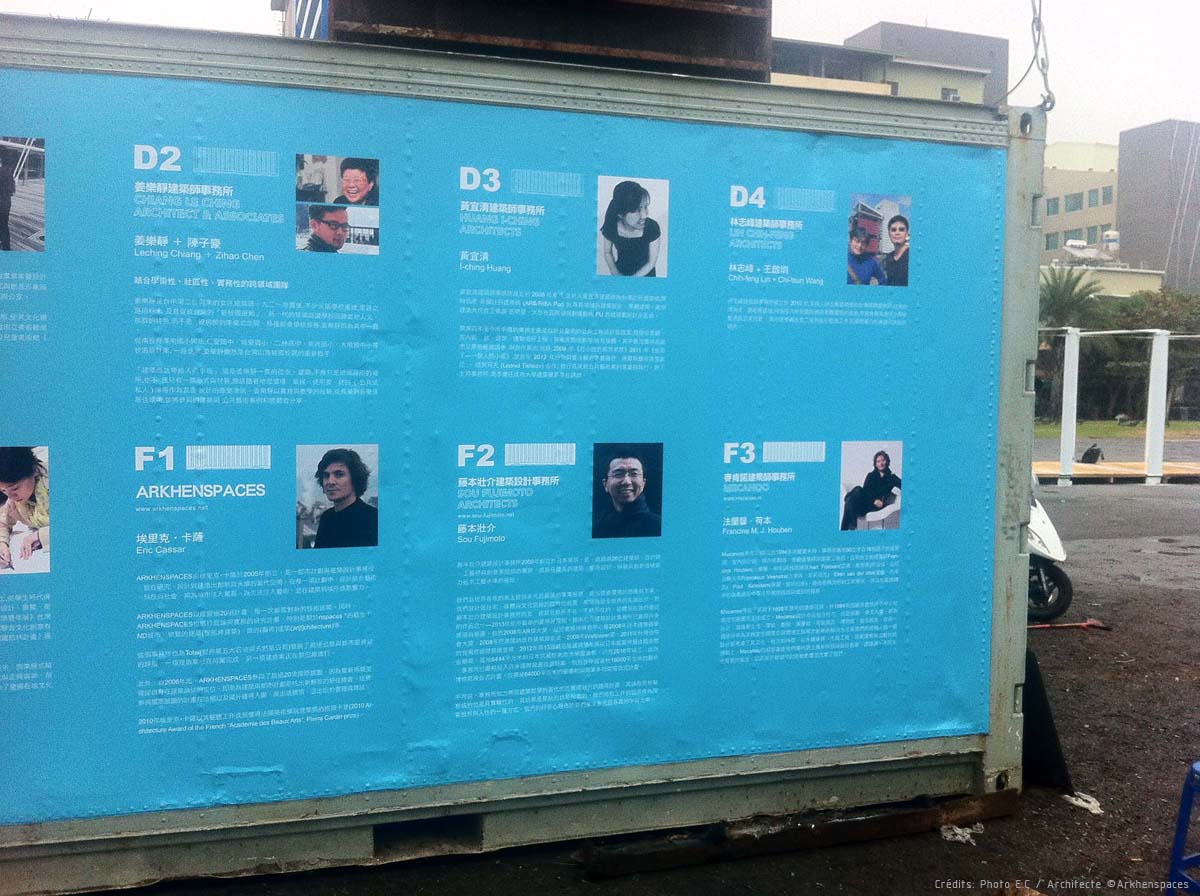
(Note: in the project built for the festival, the large screens were replaced by posters for budgetary reasons.)
The envelope becomes a connection: a membrane linking different spaces.
The screens act as windows opening onto other parts of the city and provide access to local information: events, restaurants, shops, transport, traffic, weather or nearby services.
The support
As a physical object, the container is an independent structure comparable to a hollow column.
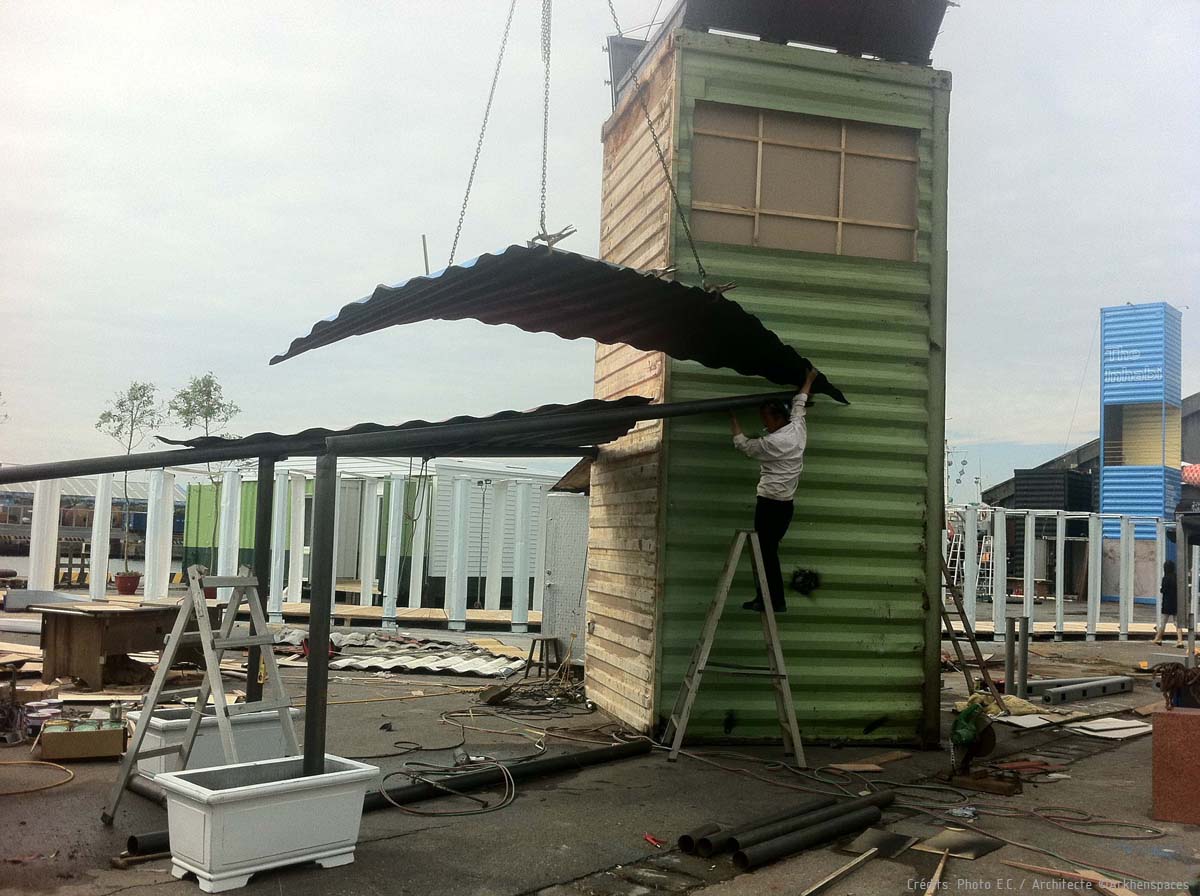
It becomes a support for various urban elements: bus stop canopies, shared bicycle stations, streetlights, video screens or urban furniture.
These devices produce effects on the surrounding environment while offering new services to pedestrians.
The void
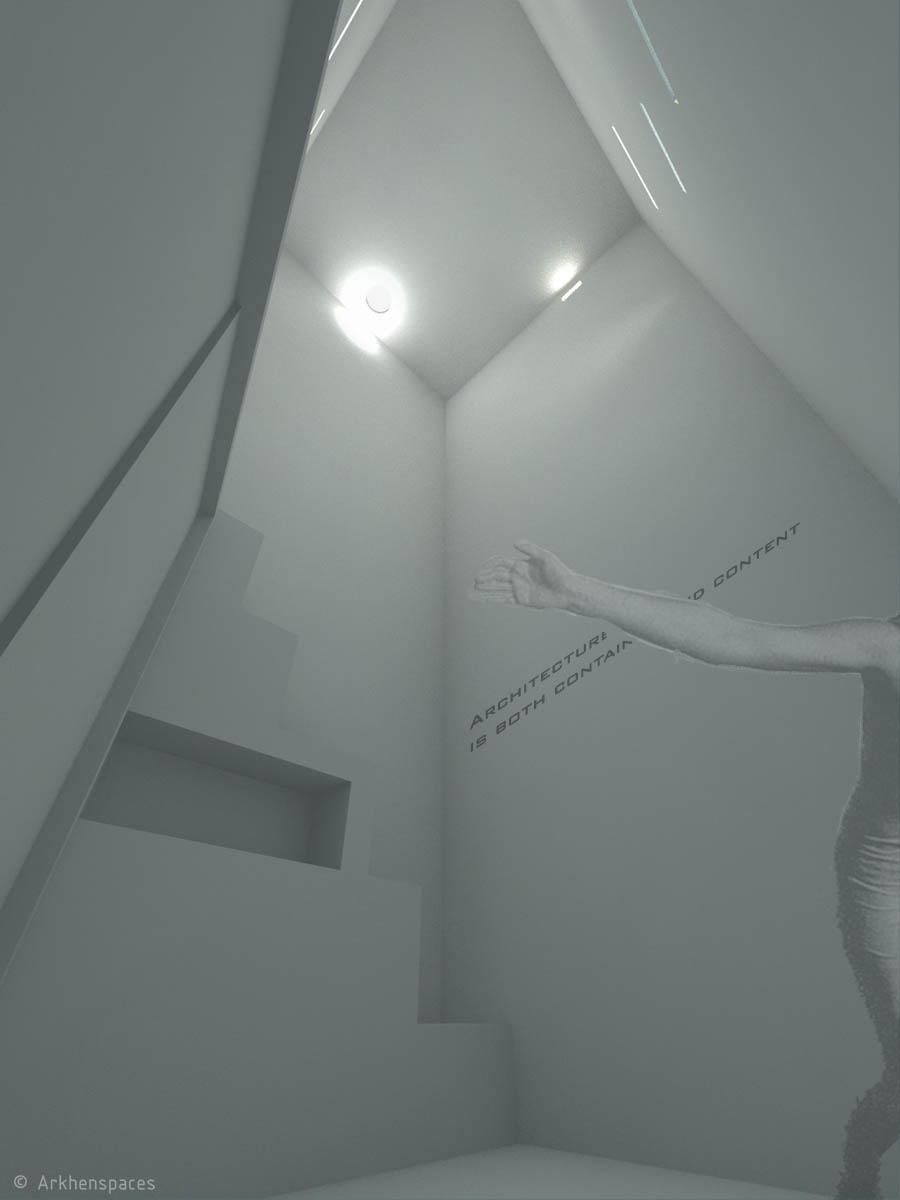
The interior volume is the interstice: a closed, disconnected space; a void, a counter-space: an interstice within space-time.
A hole within the network, a place of freedom and individual meditation in the middle of the city, accessible to all.
Alone in the heart of Kaohsiung.
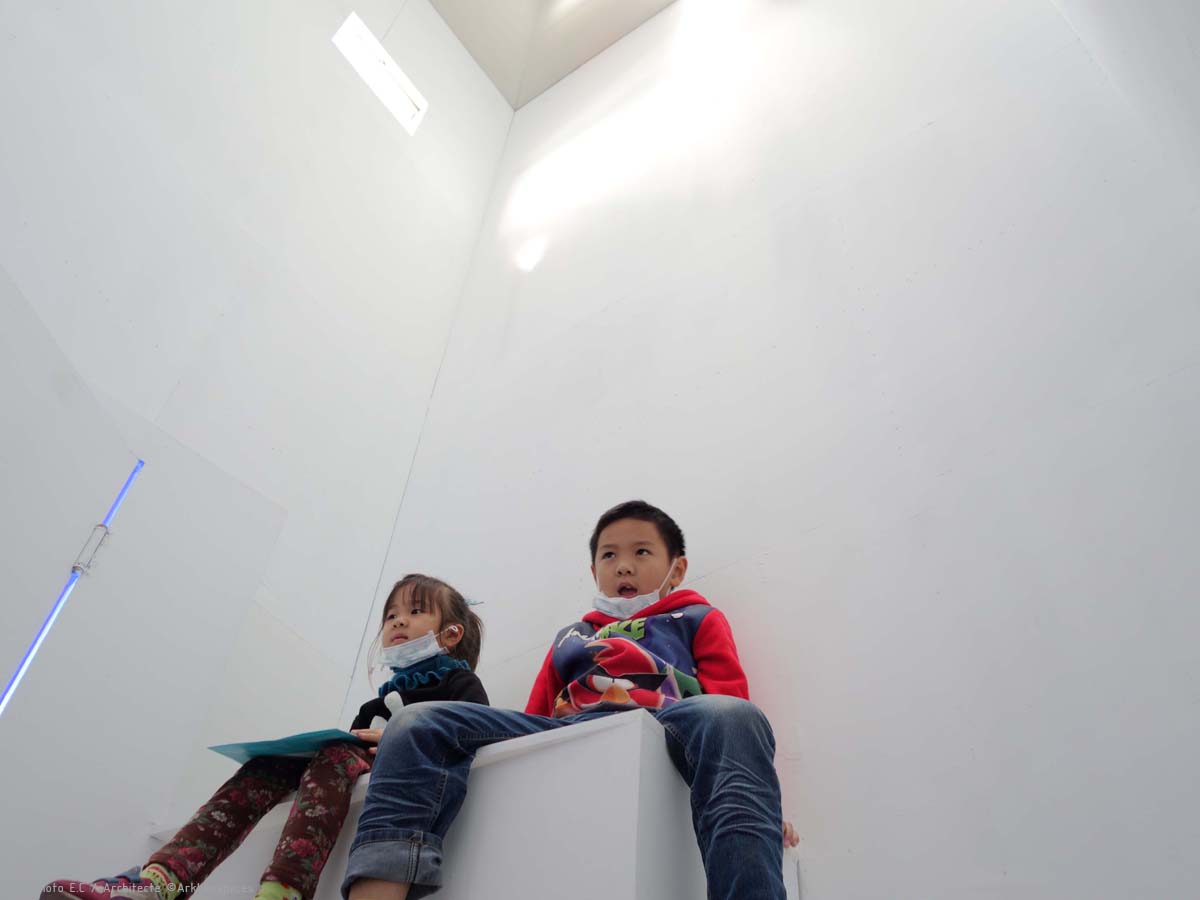
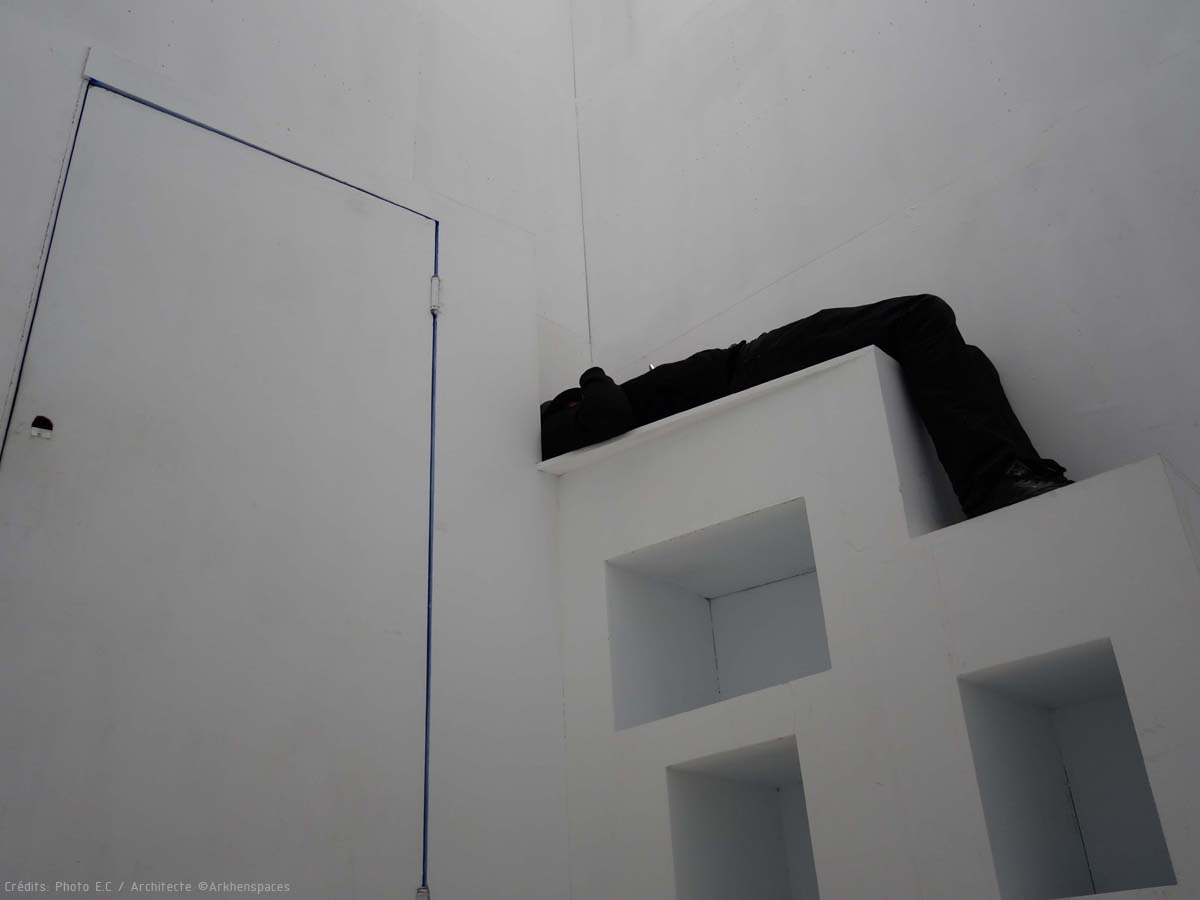
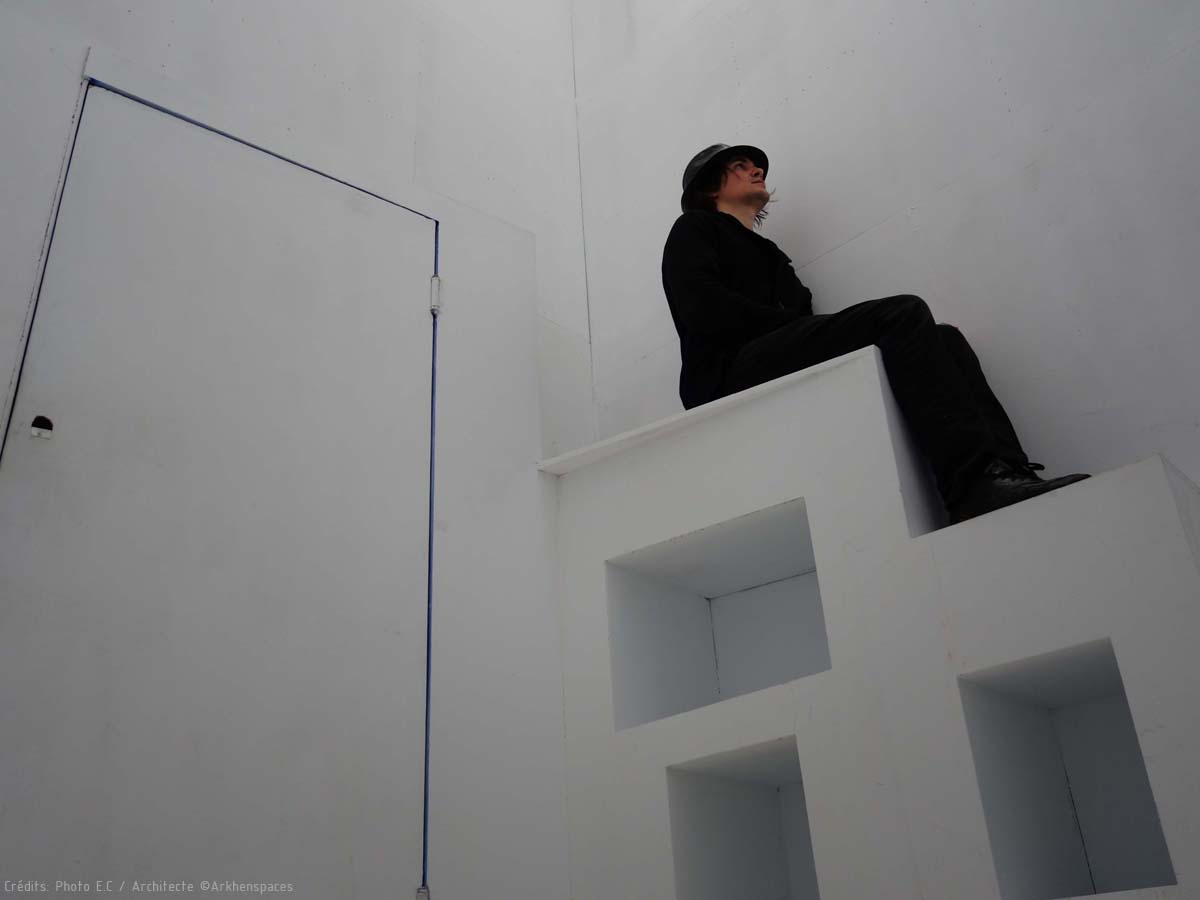
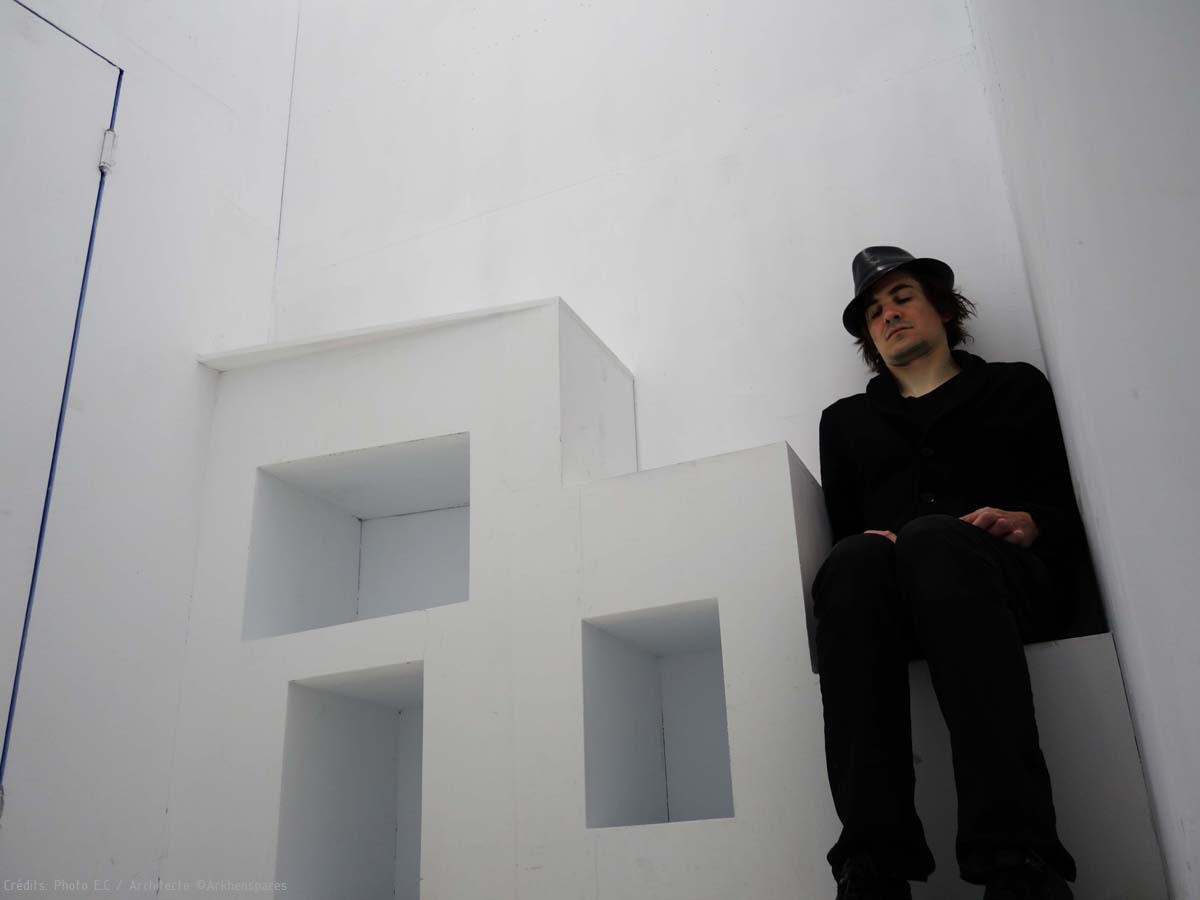
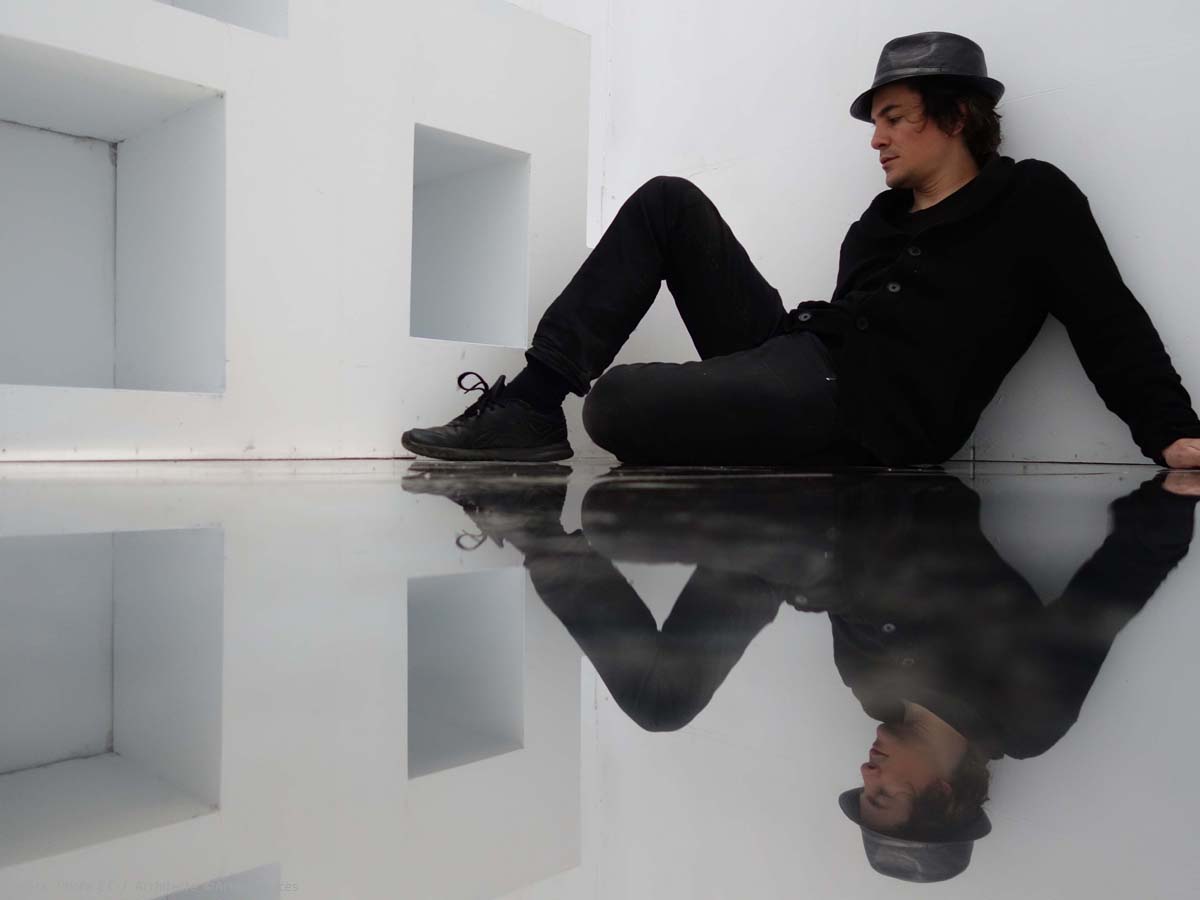
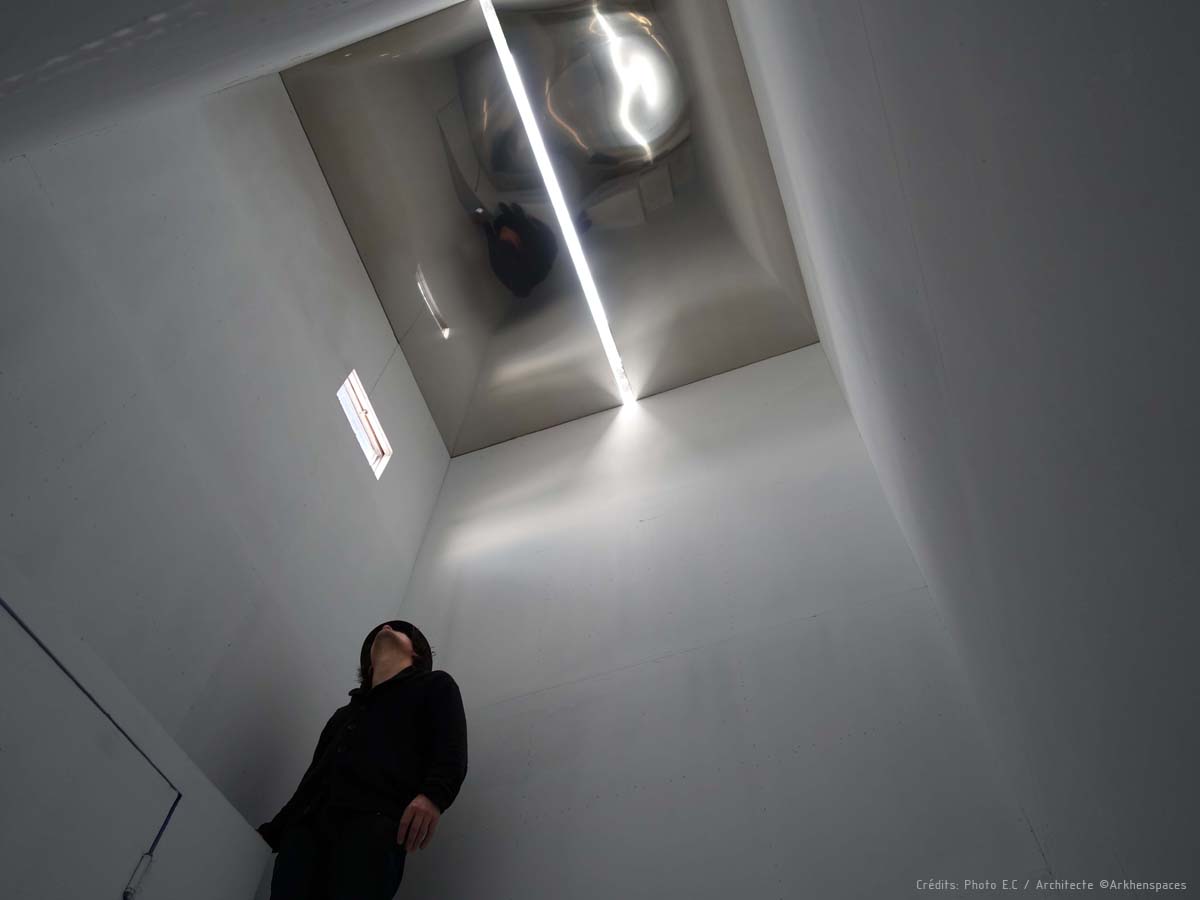
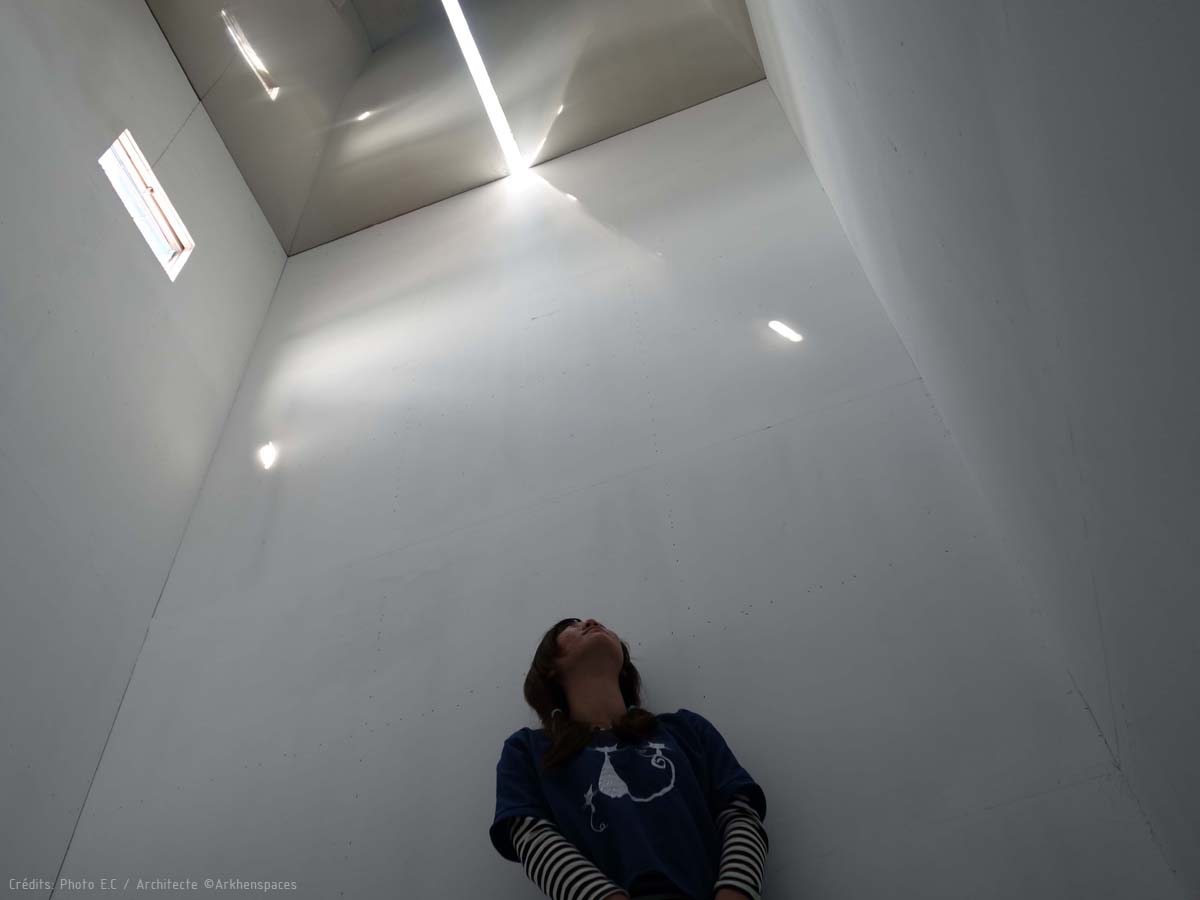
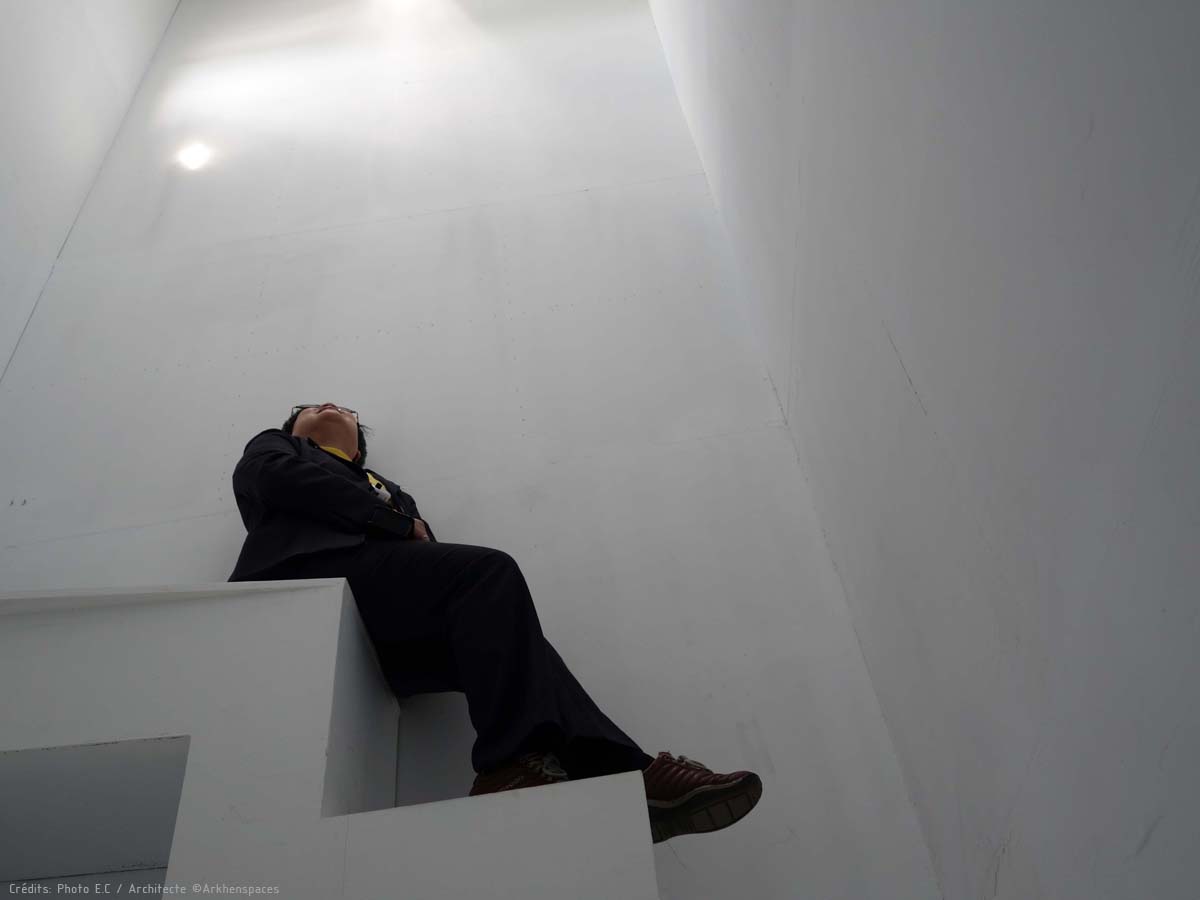
Designed for only one person at a time (except mothers with babies), this space becomes the smallest exhibition space in the world.
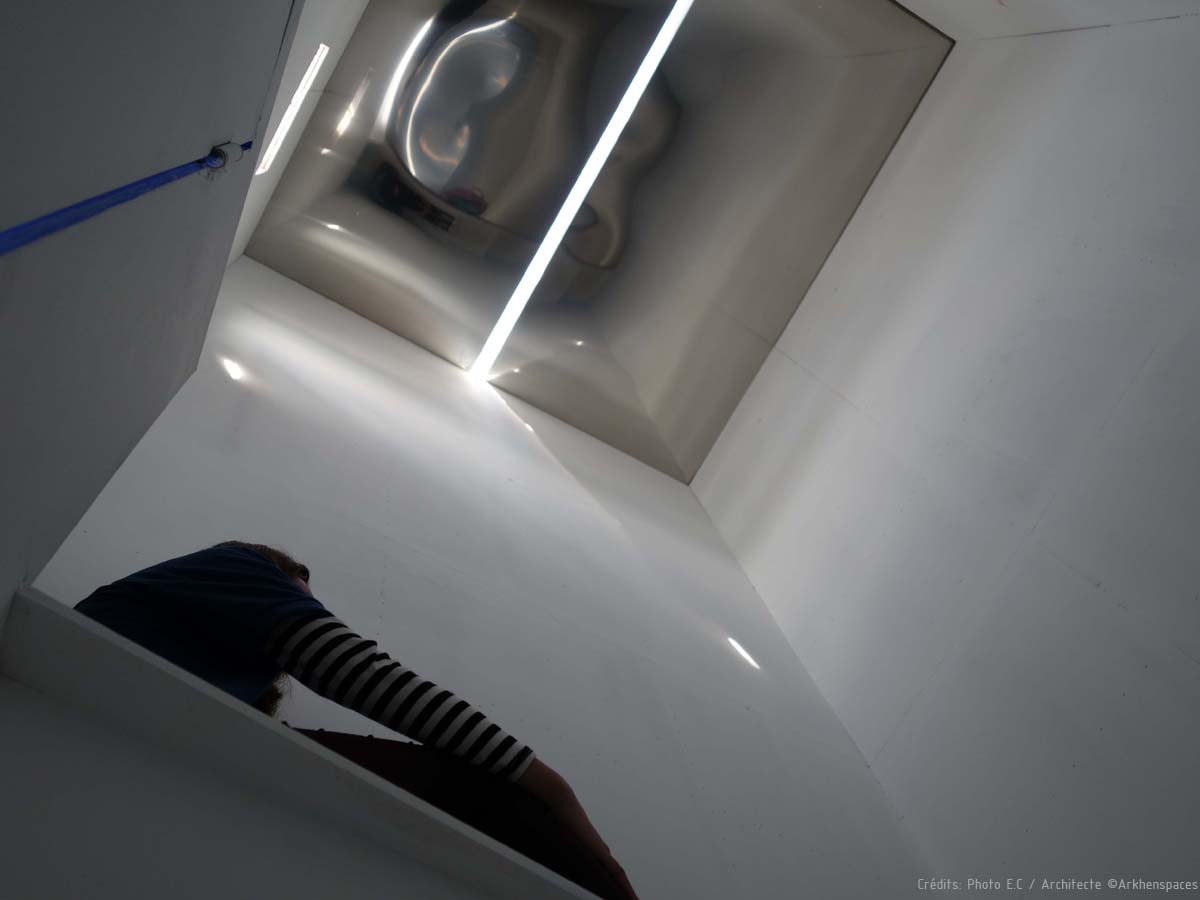
Like a museum — a temple of the muses — it presents architecture, installations and fragments of environments. It offers a variety of sensory effects related to sound, light, temperature, humidity, touch or smell.
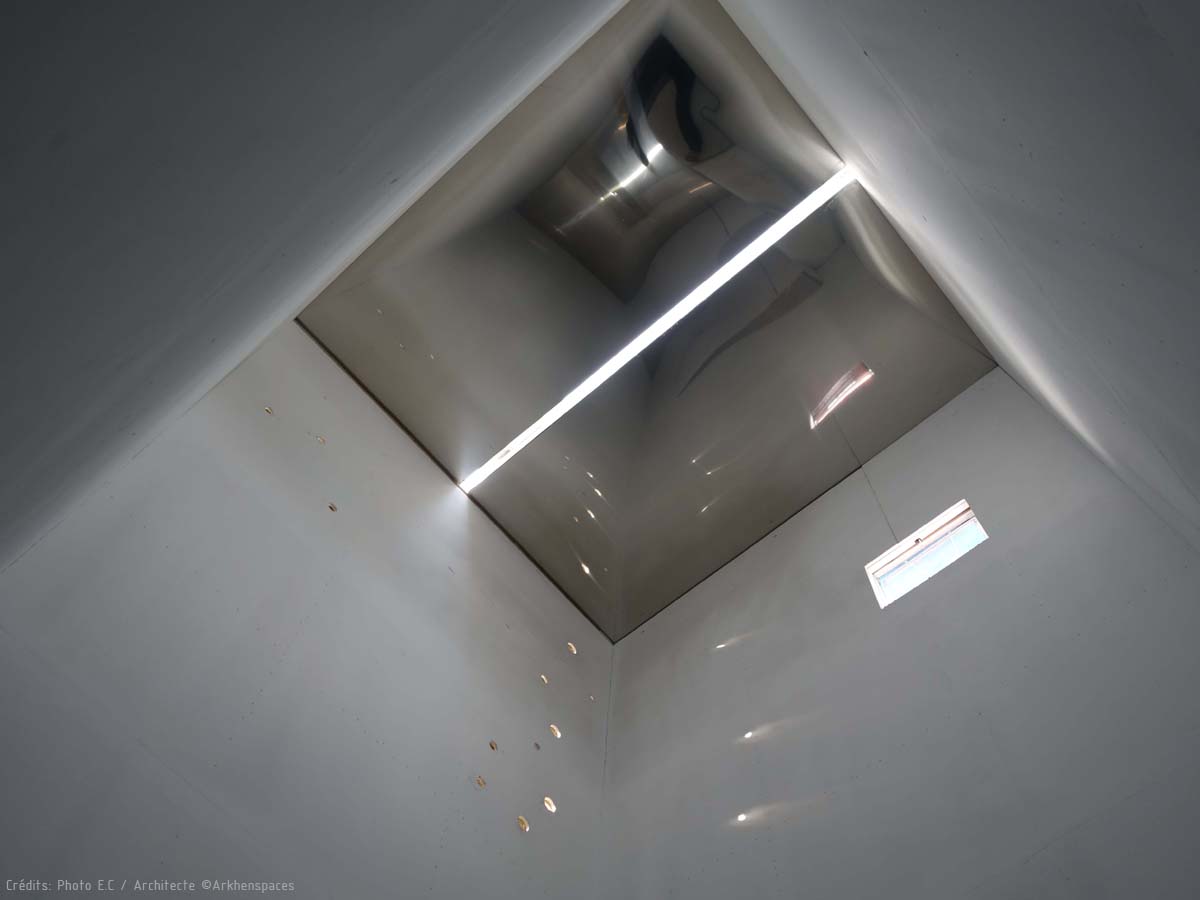
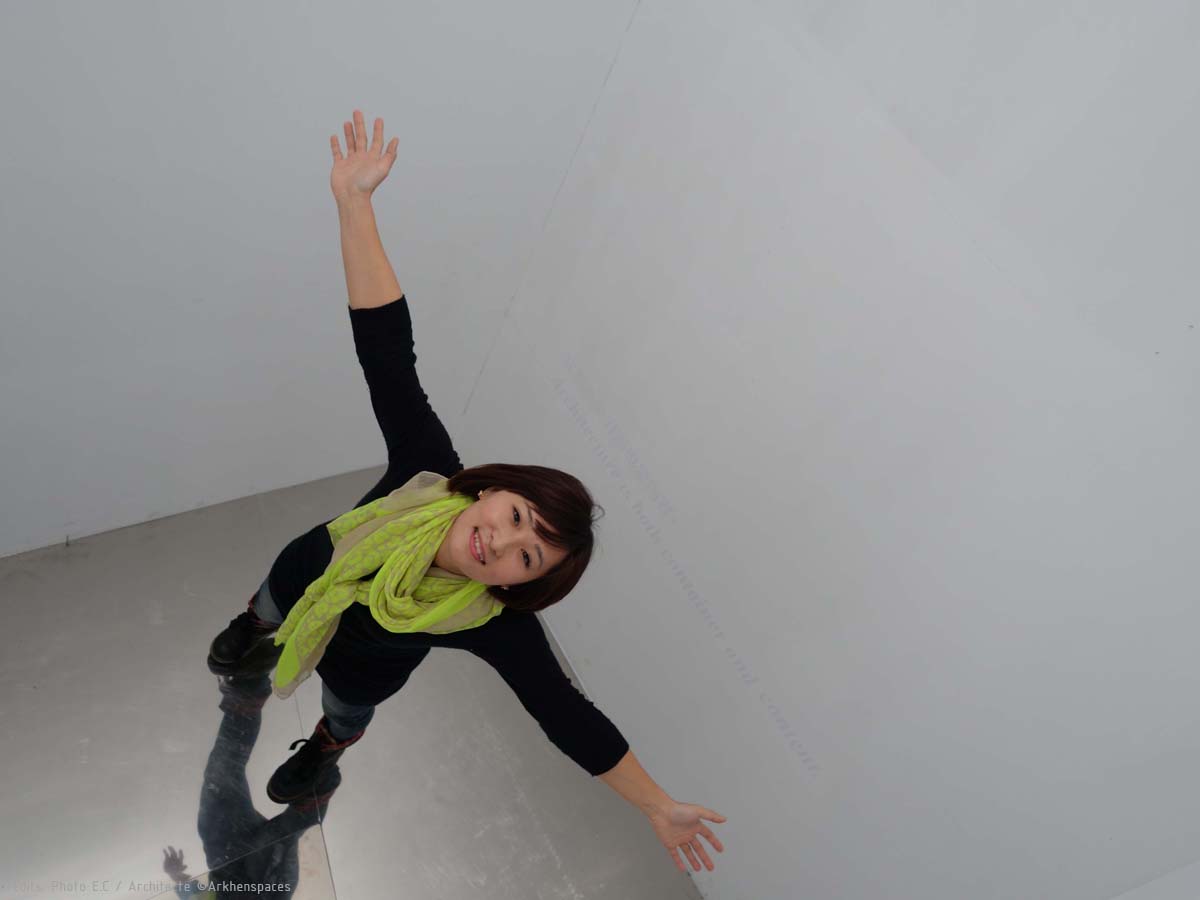
The interstice presented at the Kaohsiung Container Arts Festival is white and soundproofed. The visitor stands between two mirrors in a sensation of weightlessness, suspended on multiple levels within a white space transformed by natural light effects.
The visitor is the color, the visitor is the content.
At the center of urban activity, it inhabits a place for meditation, rest, dance, breastfeeding, encounters with space, light or art; etc. — a large number of uses remain to be invented.
There are passageways, streets, trains, subways; there are the open spaces of temporary stops, cafés, cinemas, beaches, hotels, and there are the closed spaces of rest and home.
Yet among all these places that distinguish themselves from one another, there are some that are absolutely different: places opposed to all others, places somehow destined to erase, neutralize or purify them.
These are, in a way, counter-spaces.
Michel Foucault — Of Other Spaces
A network
As they spread through the city, the City Interstices extend the art museum into the urban space.
Each interior space is different and functions as an architectural or artistic variation based on the same volume.
Outside, a large screen broadcasts video art into public space in order to make art more accessible and promote exhibitions.
All containers are connected to one another as well as to the Kaohsiung Museum of Fine Arts.
Only the outer envelope remains connected.
This network of counter-spaces is not a utopia: it proposes practical heterotopias accessible to everyone in the heart of the city.
Meaning & sign
Seen from the outside, the container becomes an urban sign identifying a place of physical and digital services.
From the inside, it becomes a counter-space.
The whole becomes both meaning (sens) and sign. Architecture becomes both container and content.
Architecture is both container and content.