

Memory Caskets (Funeral Park)
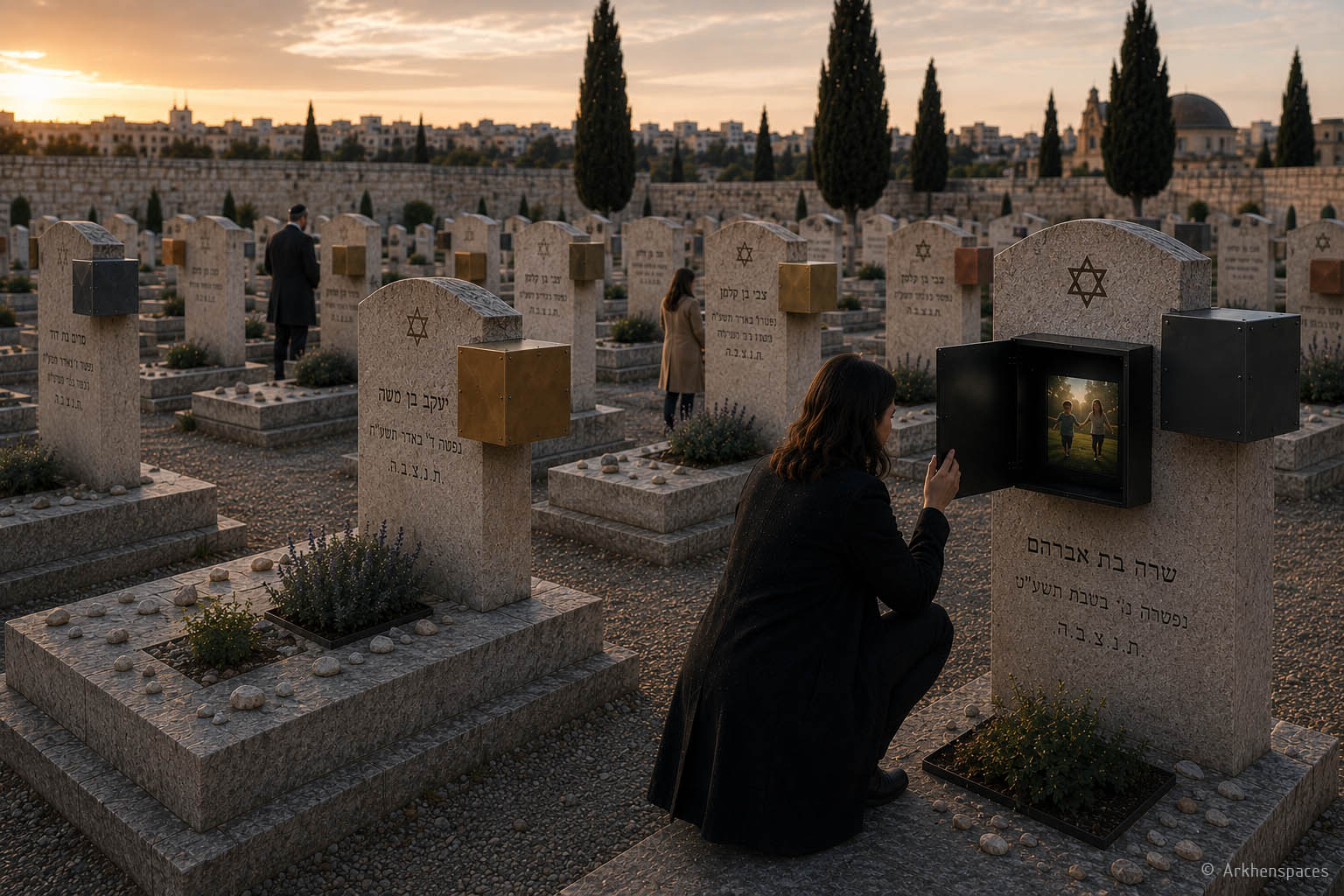
Project Memory Caskets — Funeral Park
Date 2005
Team Éric Cassar
General principles
A cemetery is a place of memory where different temporalities overlap: those of the dead, of memories and of the continuous movement of life.
The project seeks to reintroduce a form of movement into this often static space, to reposition life within death itself and to restore a sensitive dialogue between past and present. The idea is to shake the past, reactivate fragments of life and reposition life at the heart of death in order to disrupt the flow of time less brutally.
The cemetery thus becomes a place of encounter between the living and the deceased, where memories are no longer only evoked but momentarily reactivated.
Preserving fragments of life
Traditionally, the grave preserves a body beneath the ground. The project proposes associating it with a second element intended to preserve and reveal fragments of the deceased’s life.
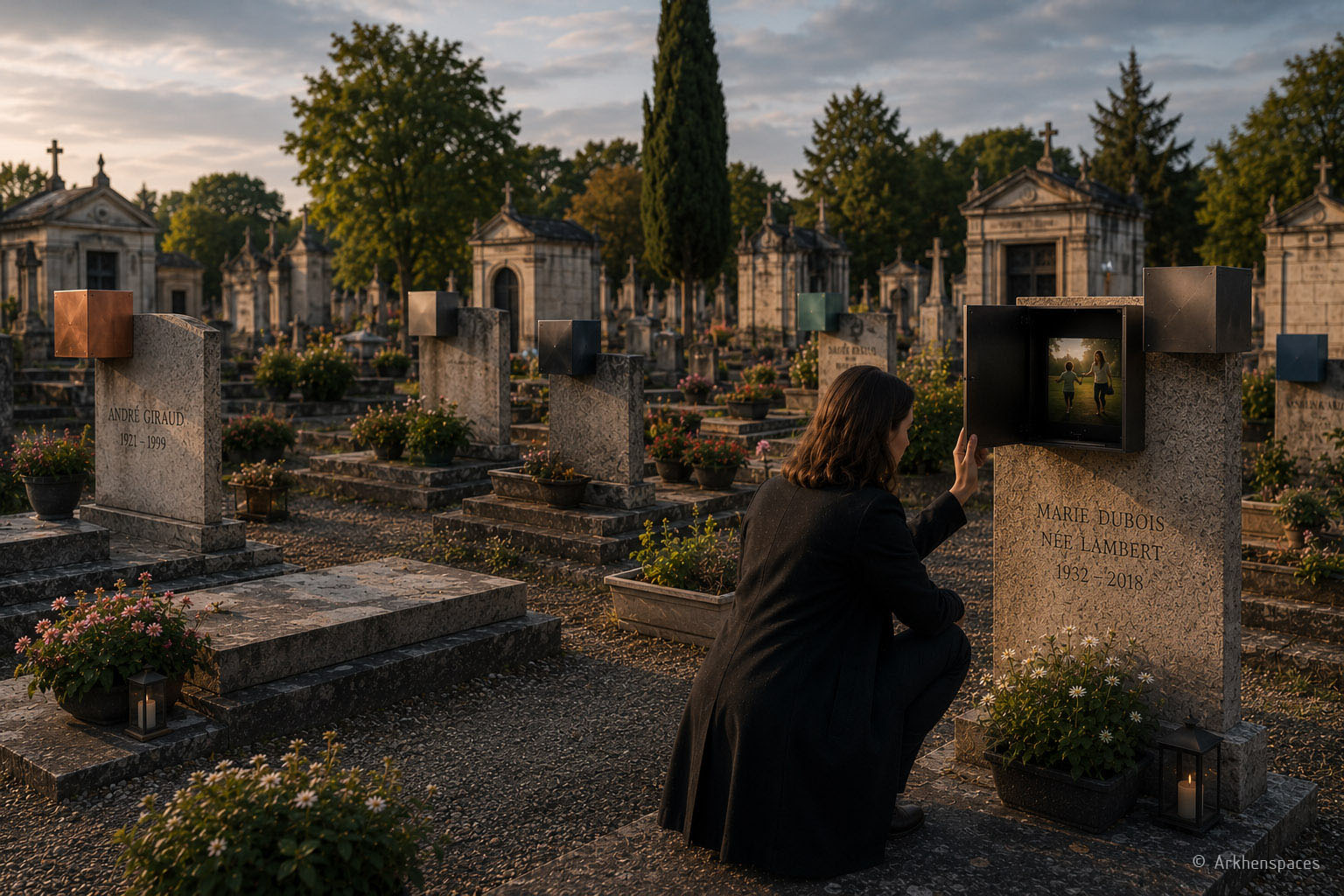
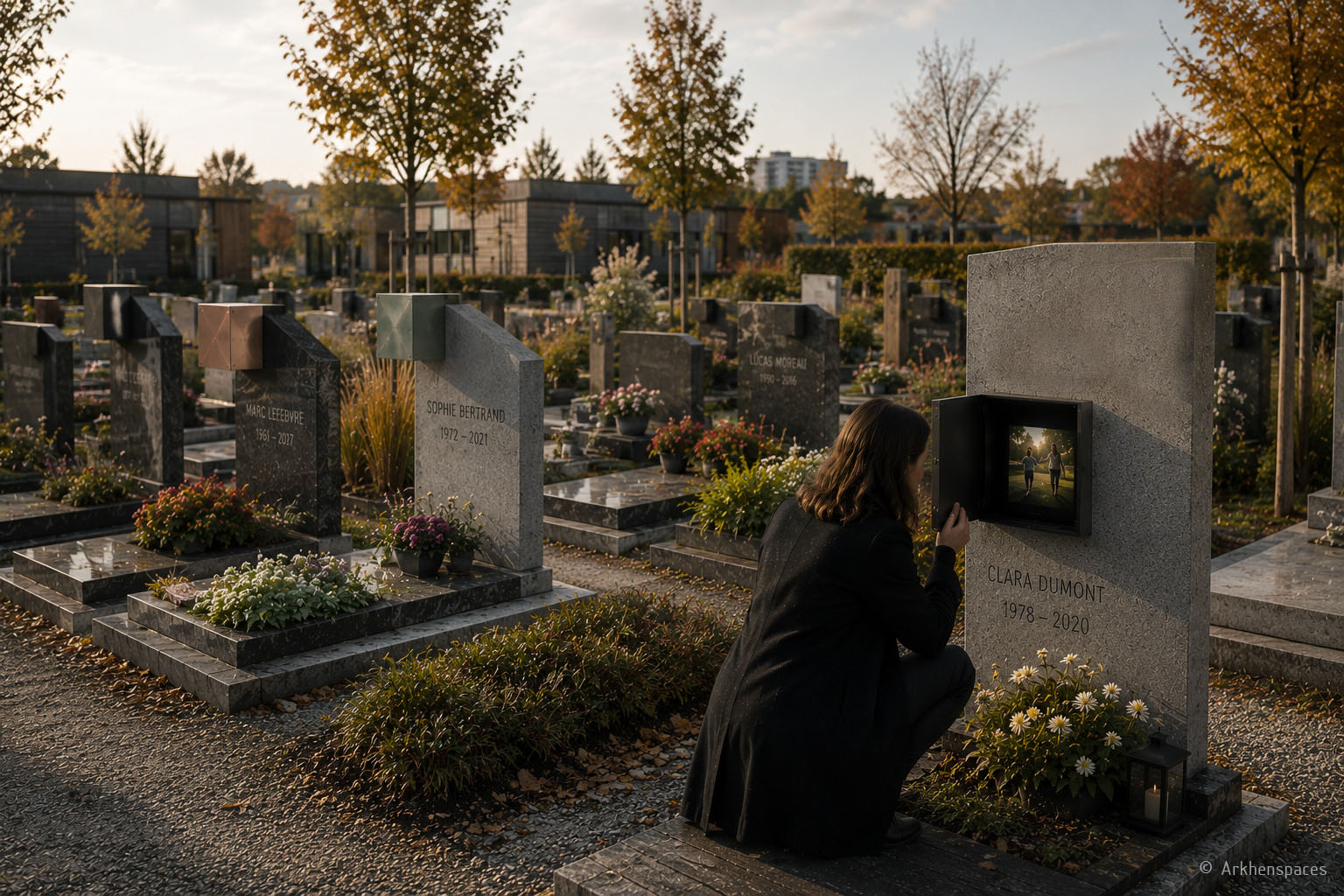
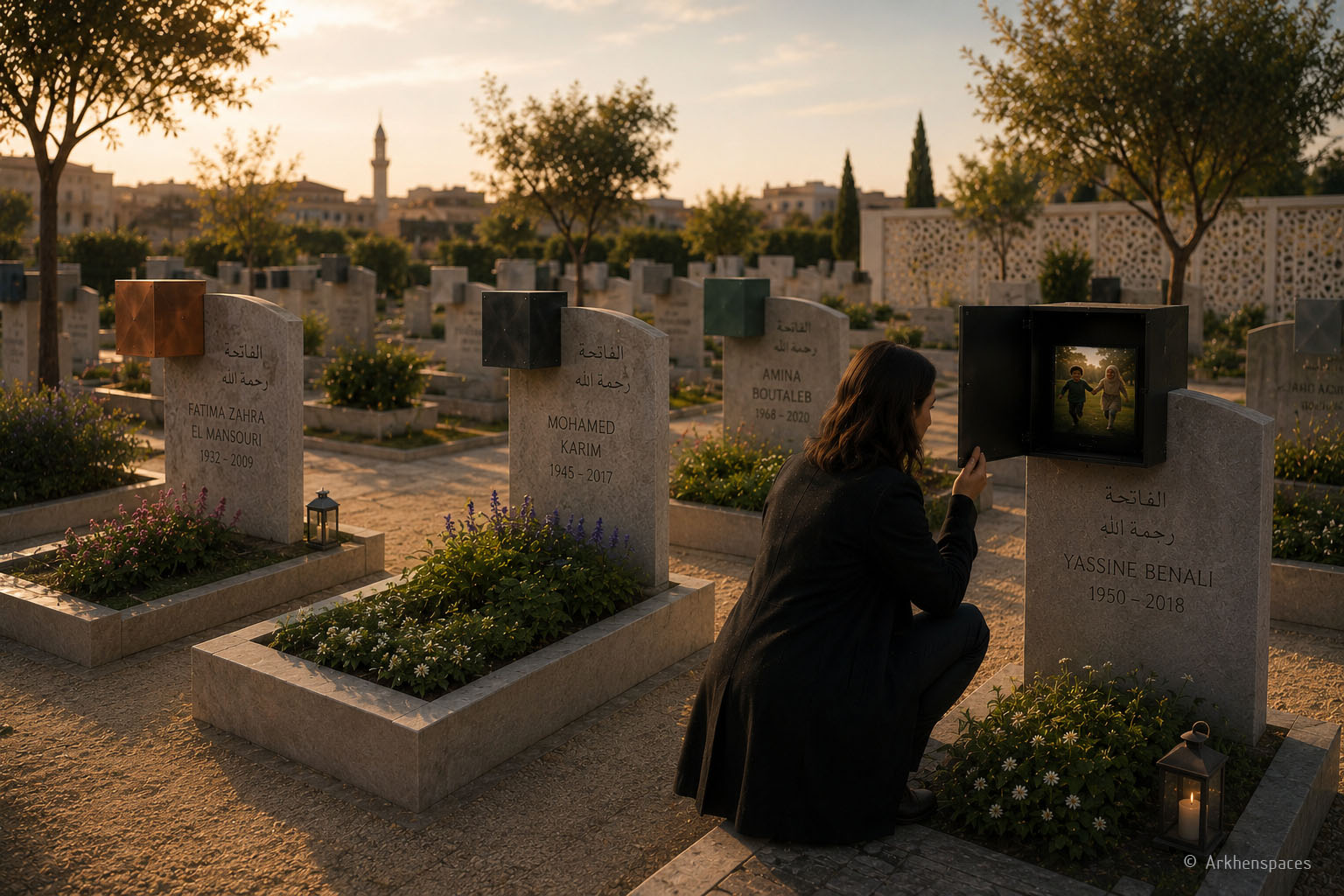
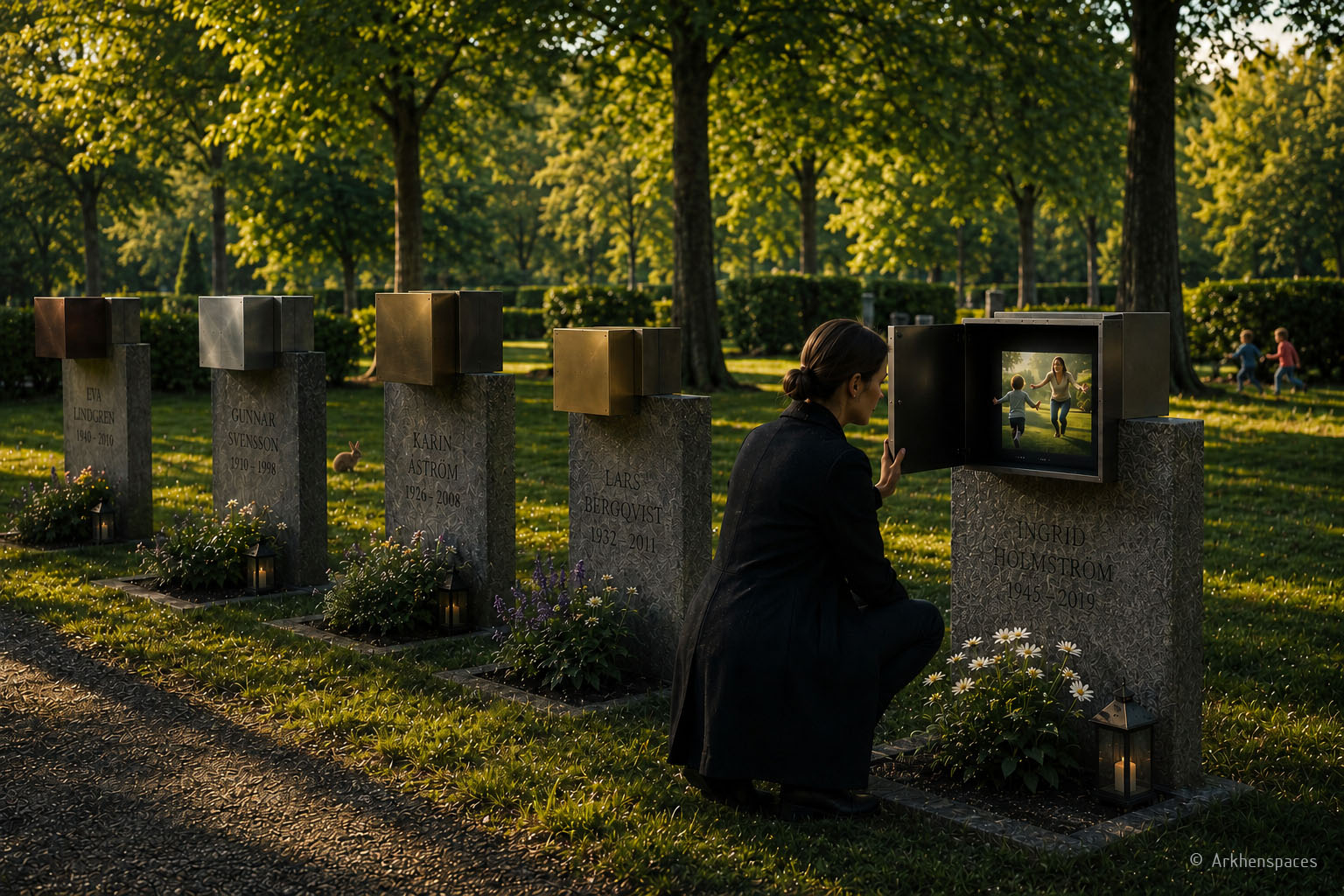
Beside the stele appears a memory casket: a box containing filmed moments, sensitive traces of the past entering into dialogue with the visitor’s present.
The deceased thus offers a fragment of his or her existence to the living, reminding us that life endlessly succeeds life in an almost infinite cycle.
The device
The project consists of adding a second box to the grave — a cube or rectangular parallelepiped approximately 50 to 60 cm wide — fixed to the stele and placed in direct contact with the air and the sky.
Inside is a screen protected behind a small door. Once opened, a short video sequence broadcasts a few moments from the deceased’s life before disappearing again when the box closes.
The images may have been chosen during the person’s lifetime or selected afterward by relatives.
These videos do not seek to summarize an existence. They appear instead as tiny fragments of time, delicate traces of life enclosed within the casket and released for a few moments each time it is opened.
Between sky and earth
Closed, the box protects the screen from weather conditions. Opened, its depth limits light reflections and creates an intimate relationship between the visitor and the moving images.
Any visitor, whether acquainted with the deceased or not, may thus discover a fragment of life behind a carved name.
The device symbolically reintroduces life into the very heart of the cemetery.
The positioning of the box in direct contact with the air and the sky acts as a counterweight to the coffin buried in the earth. To the materiality of the disappeared body responds the fragile persistence of moments transformed into memories.
Memories intensify presence.