

The Seasons Villas : a living habitat
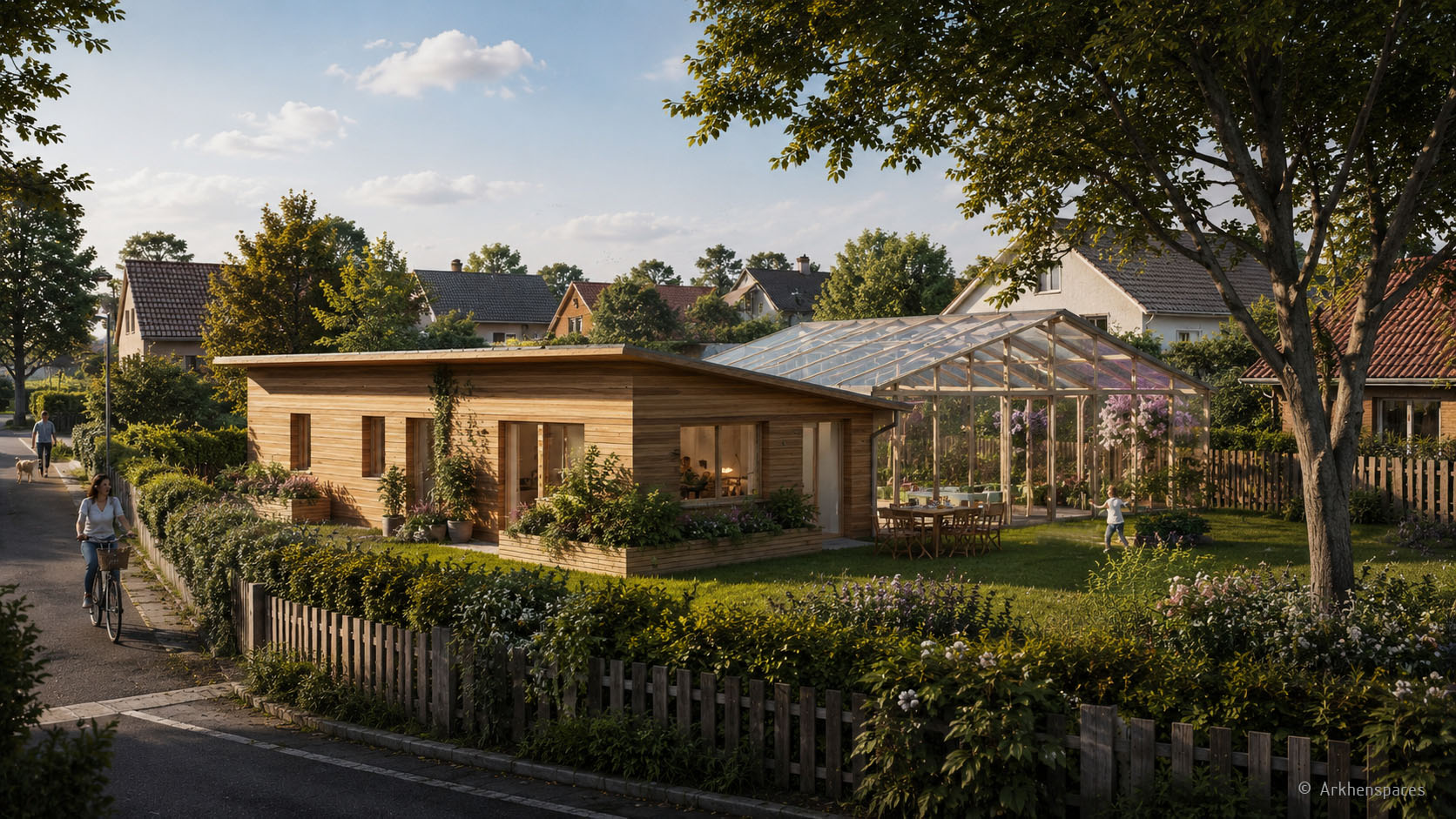
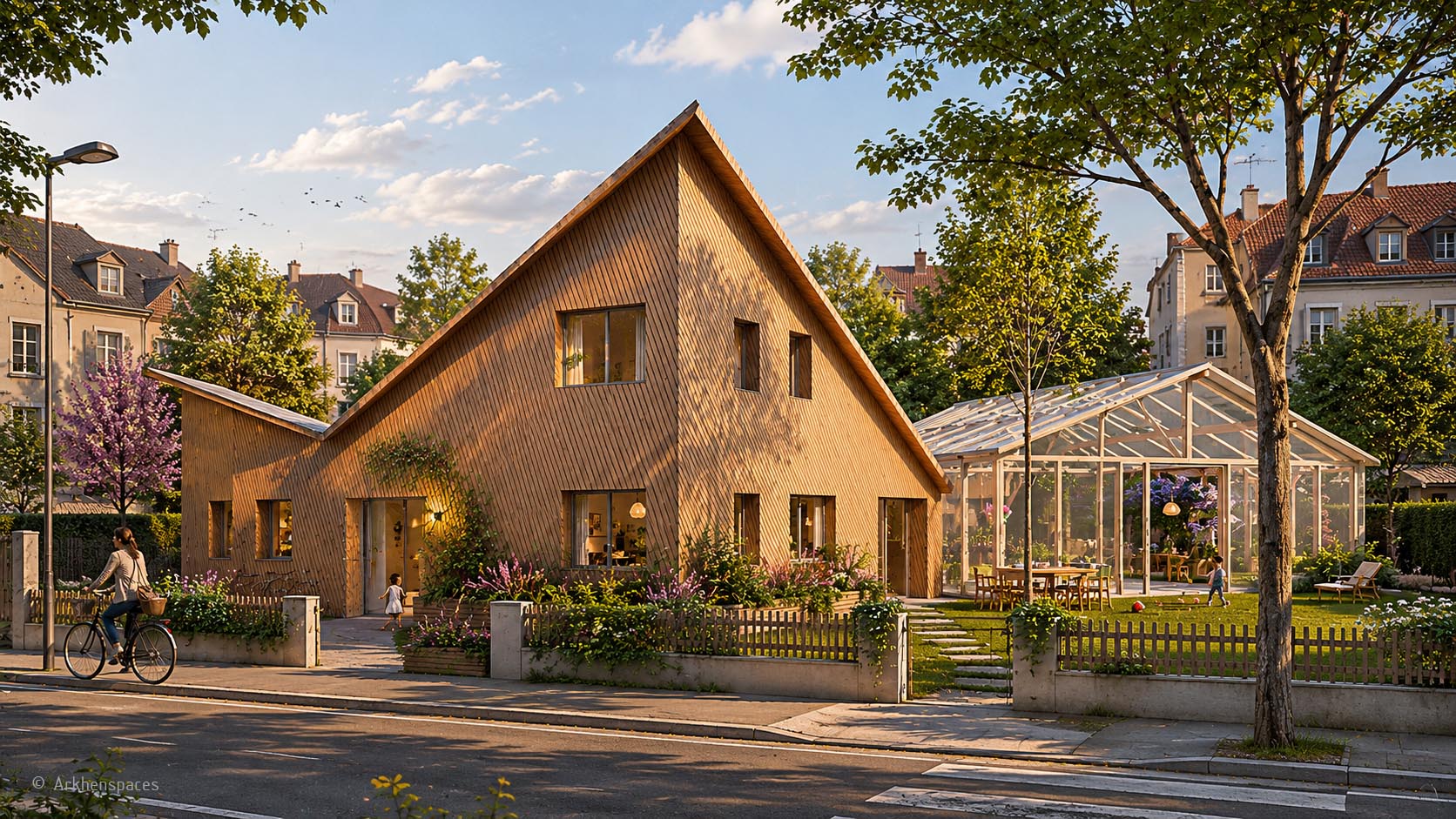
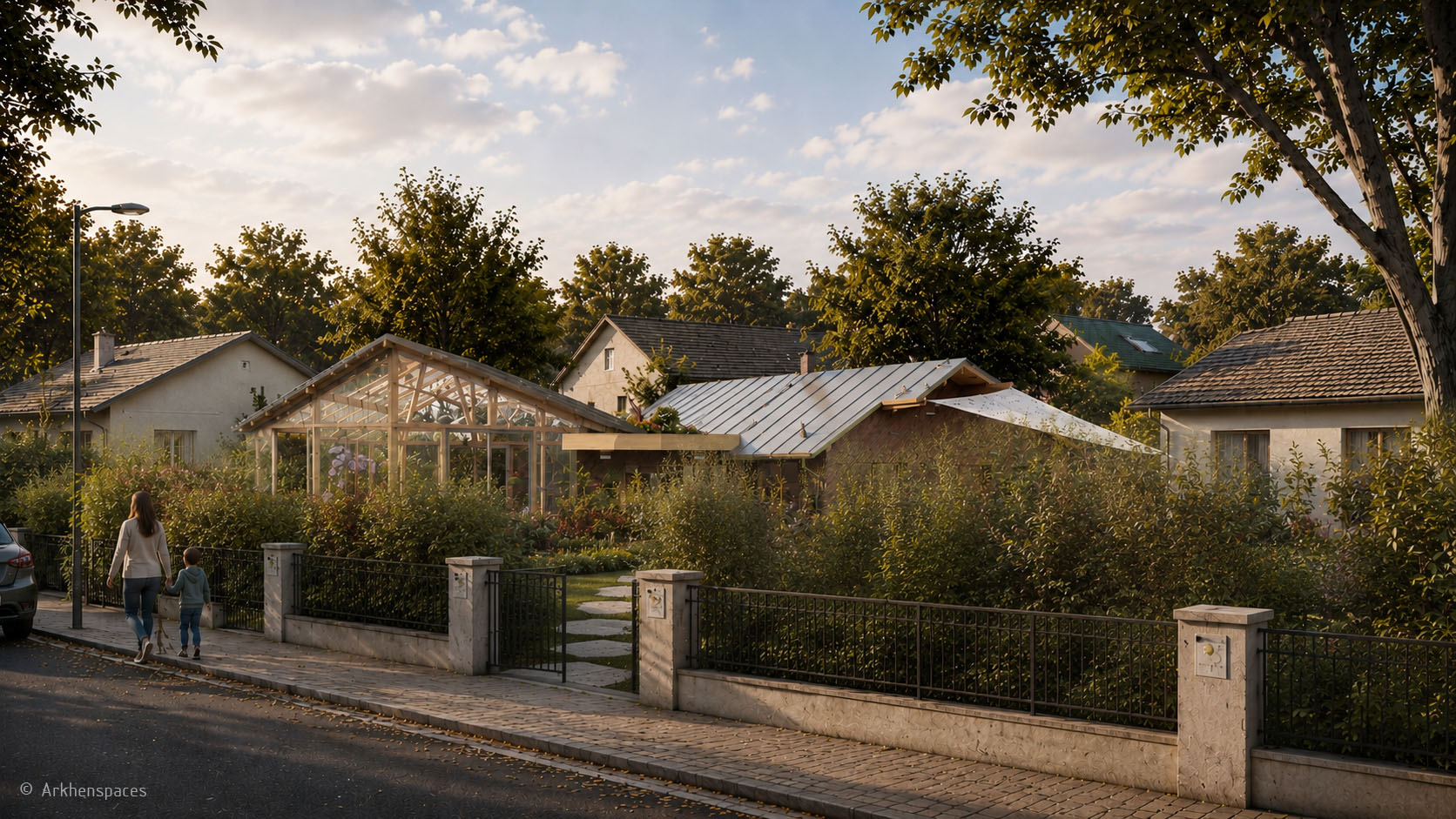
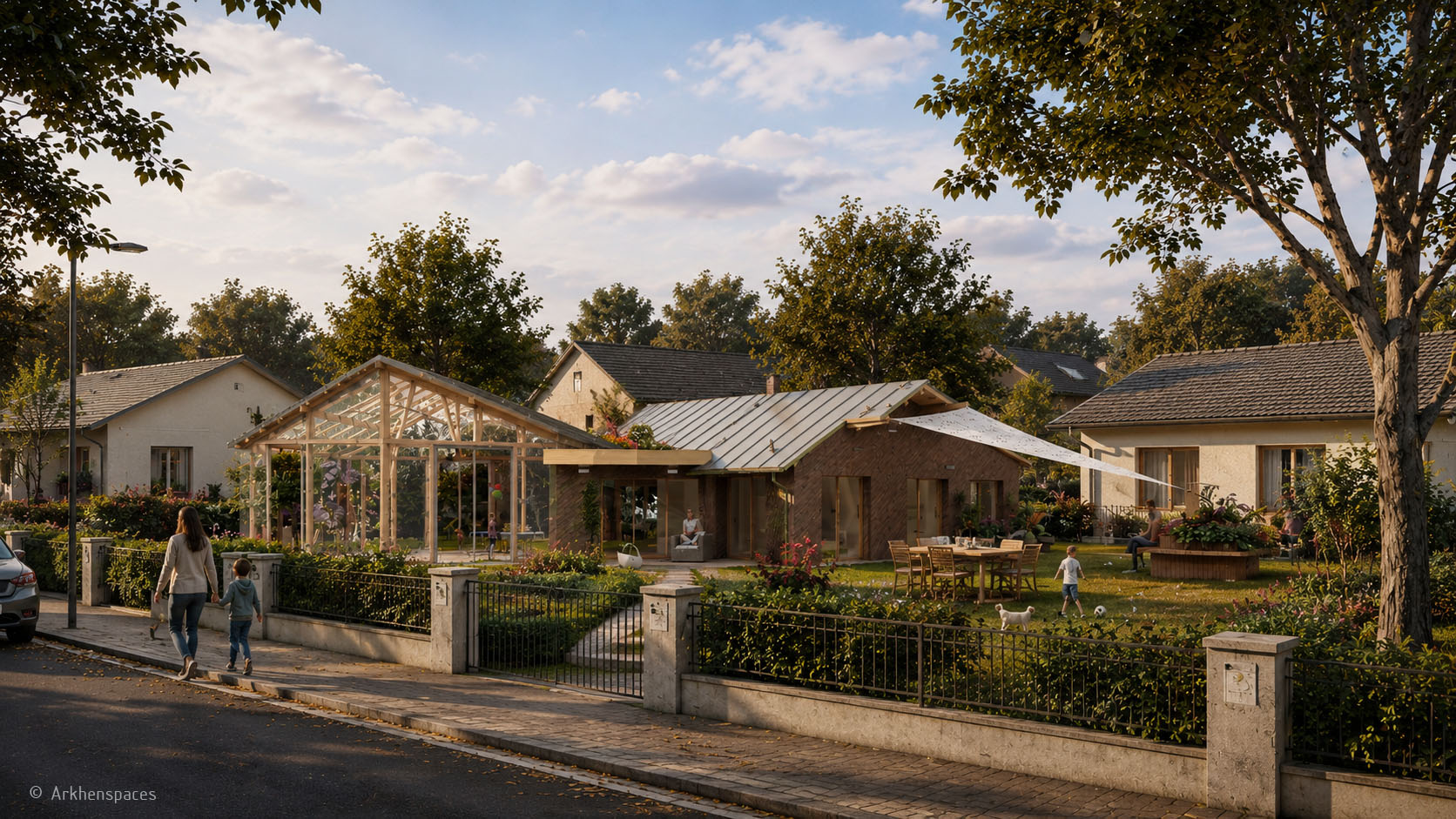
Program Range of ecological, evolutive and energy-efficient villas
Surface 133 m² (69+64) to 223 m² (159+64) per villa
Location _
Year 2024
Owner Arkhenspaces initiative
Team Eric Cassar, Zeïd Abdou, Marina Florent
Technical Partner Maison Maugy (feasibility study, cost estimation and timber prefabrication)
General principles
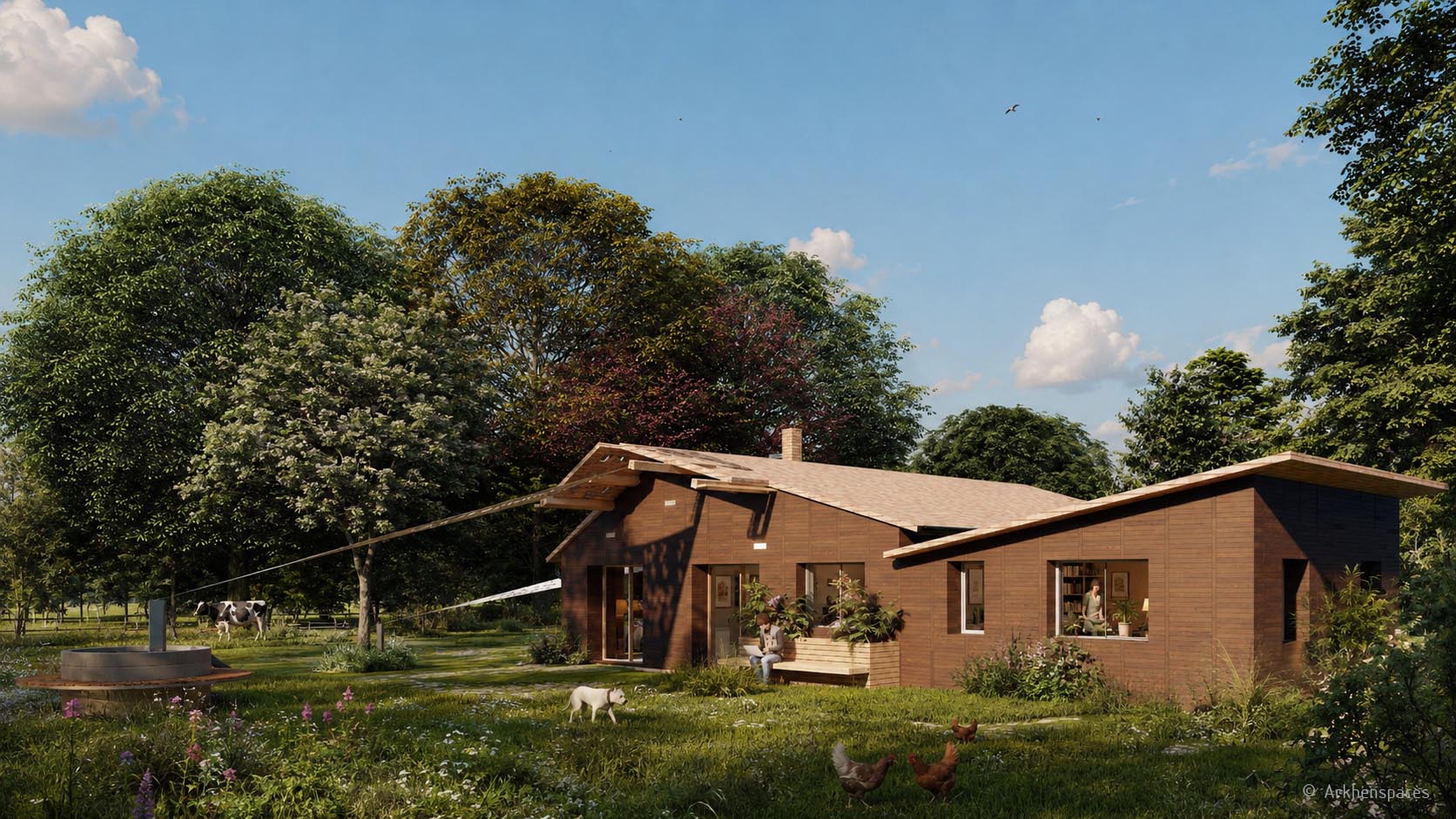
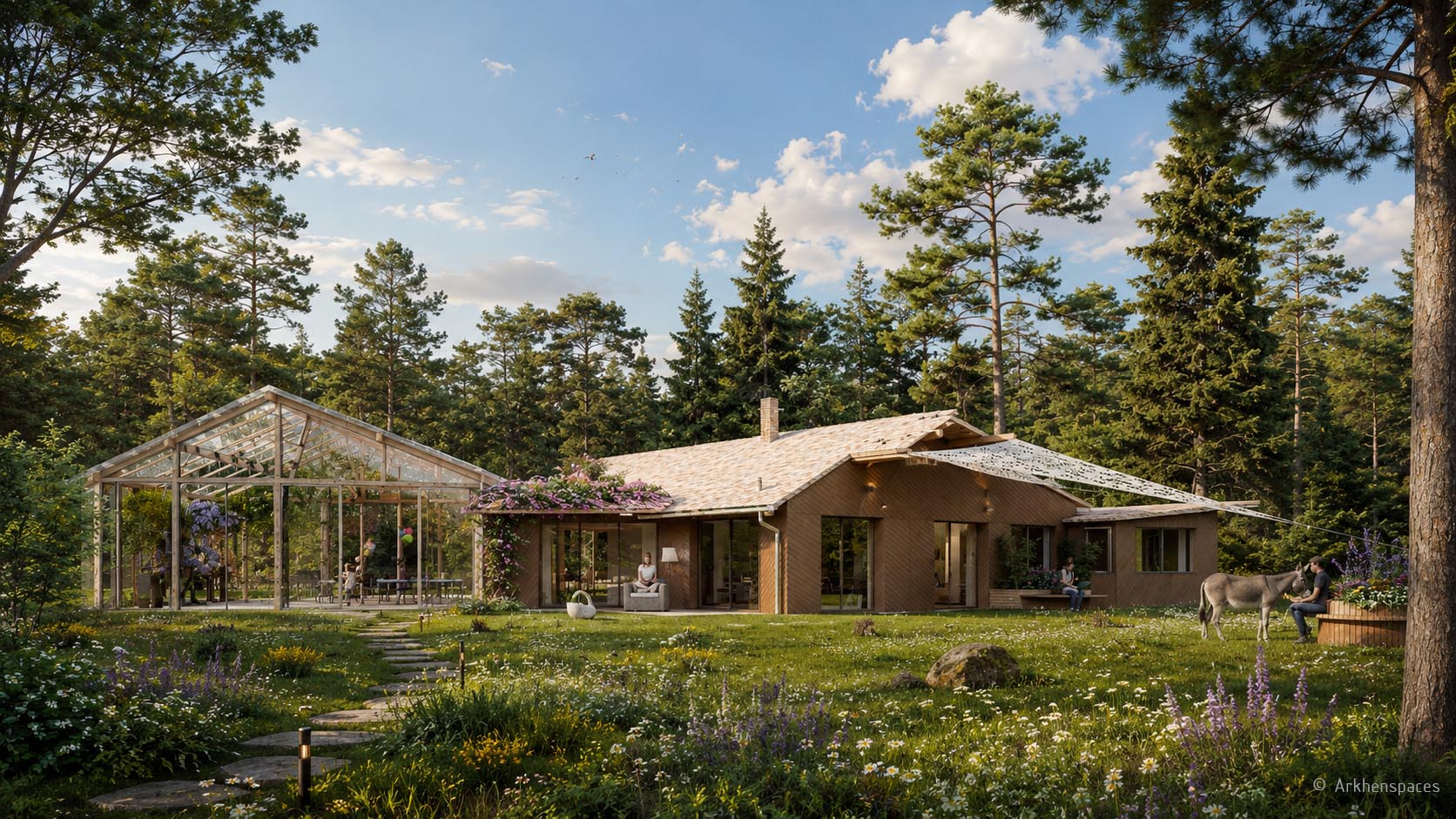
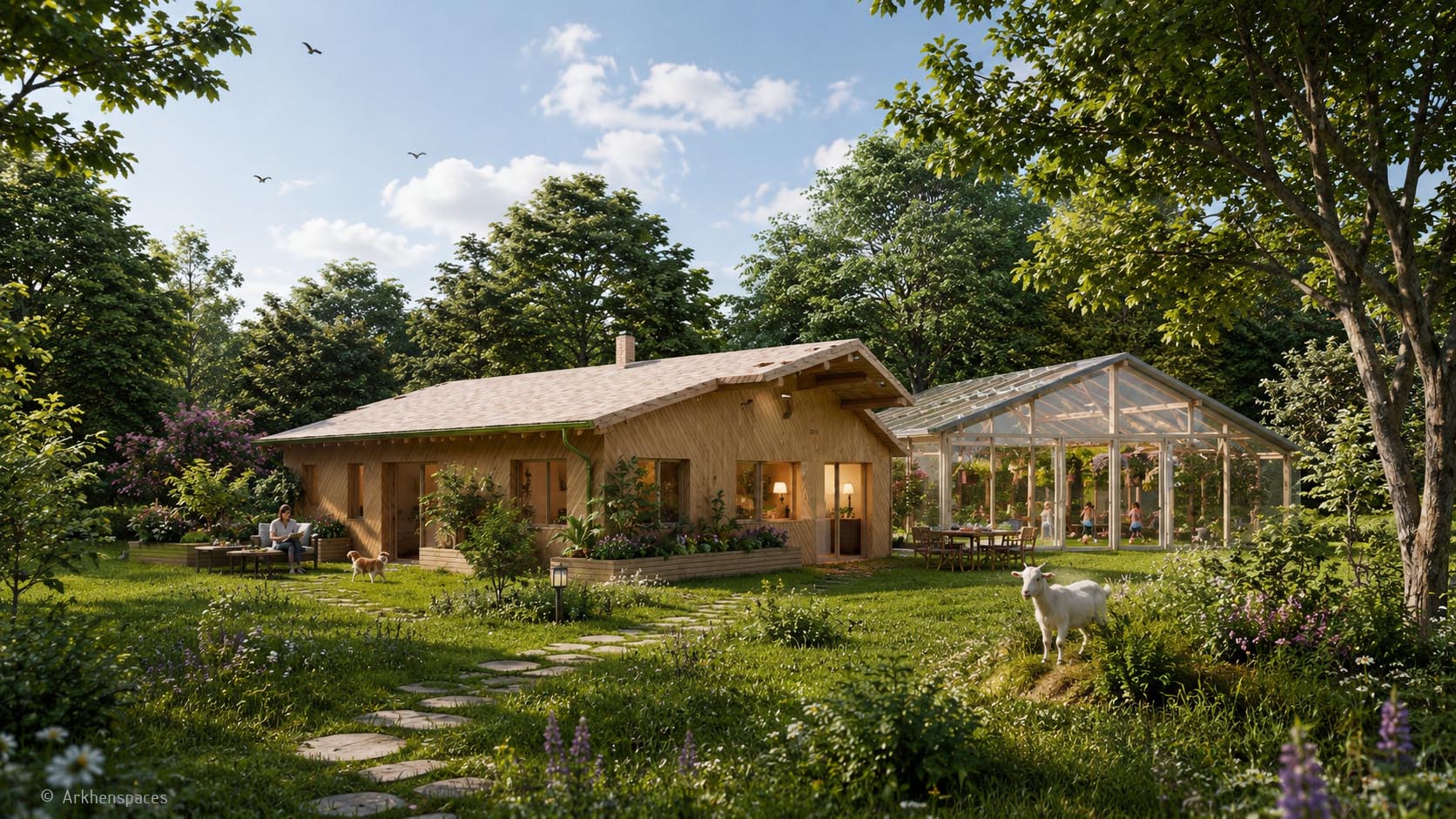
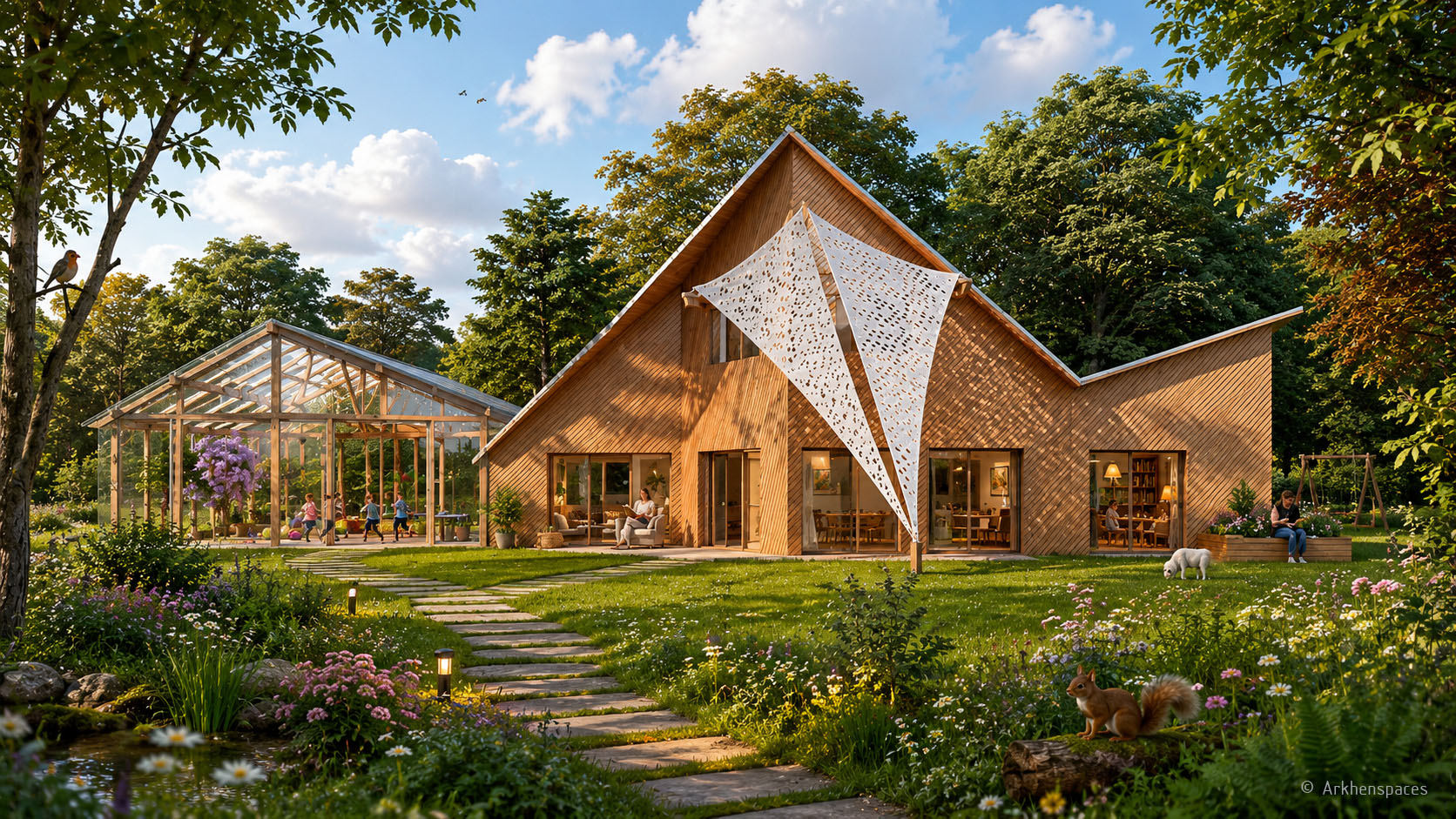
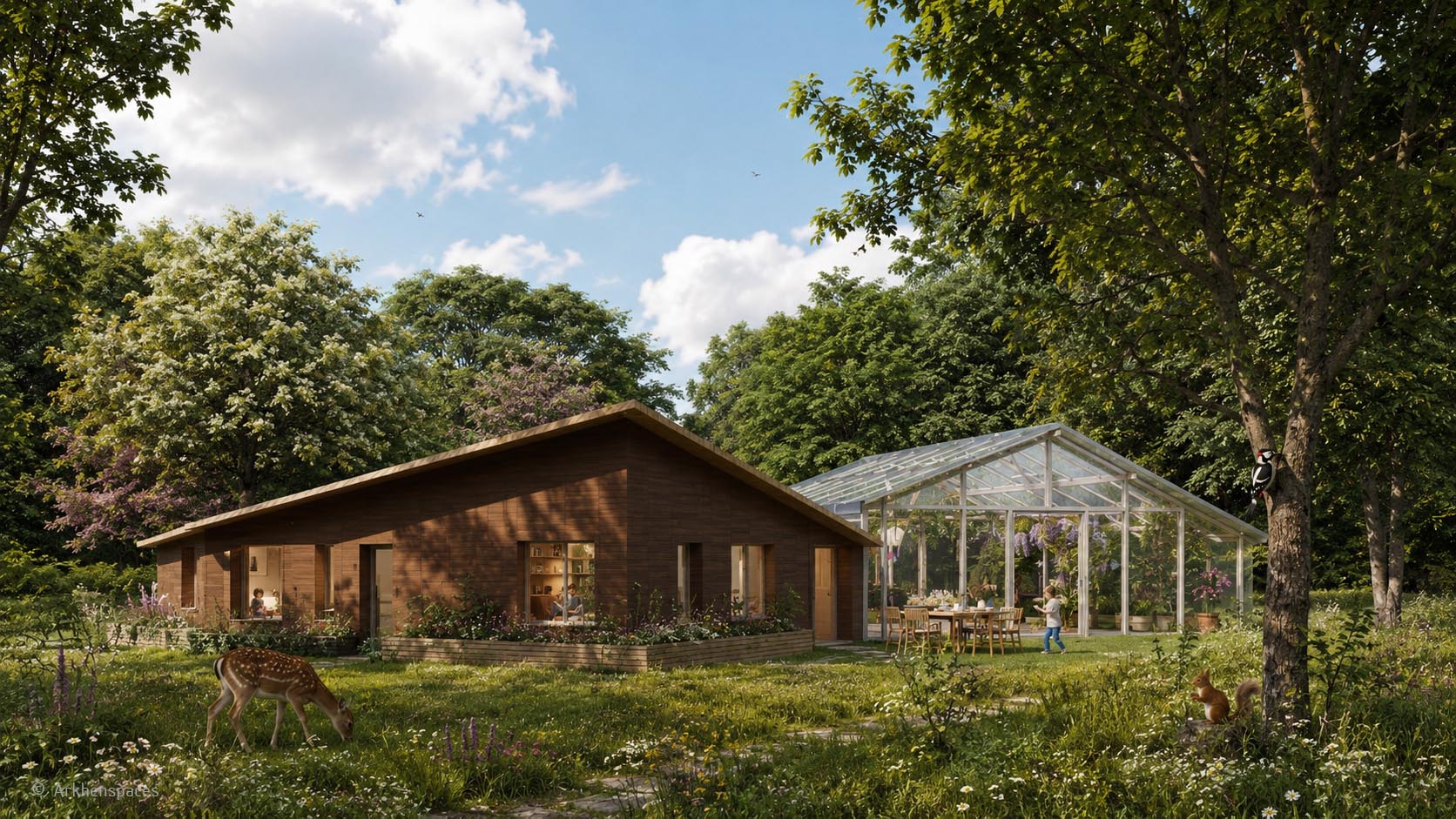
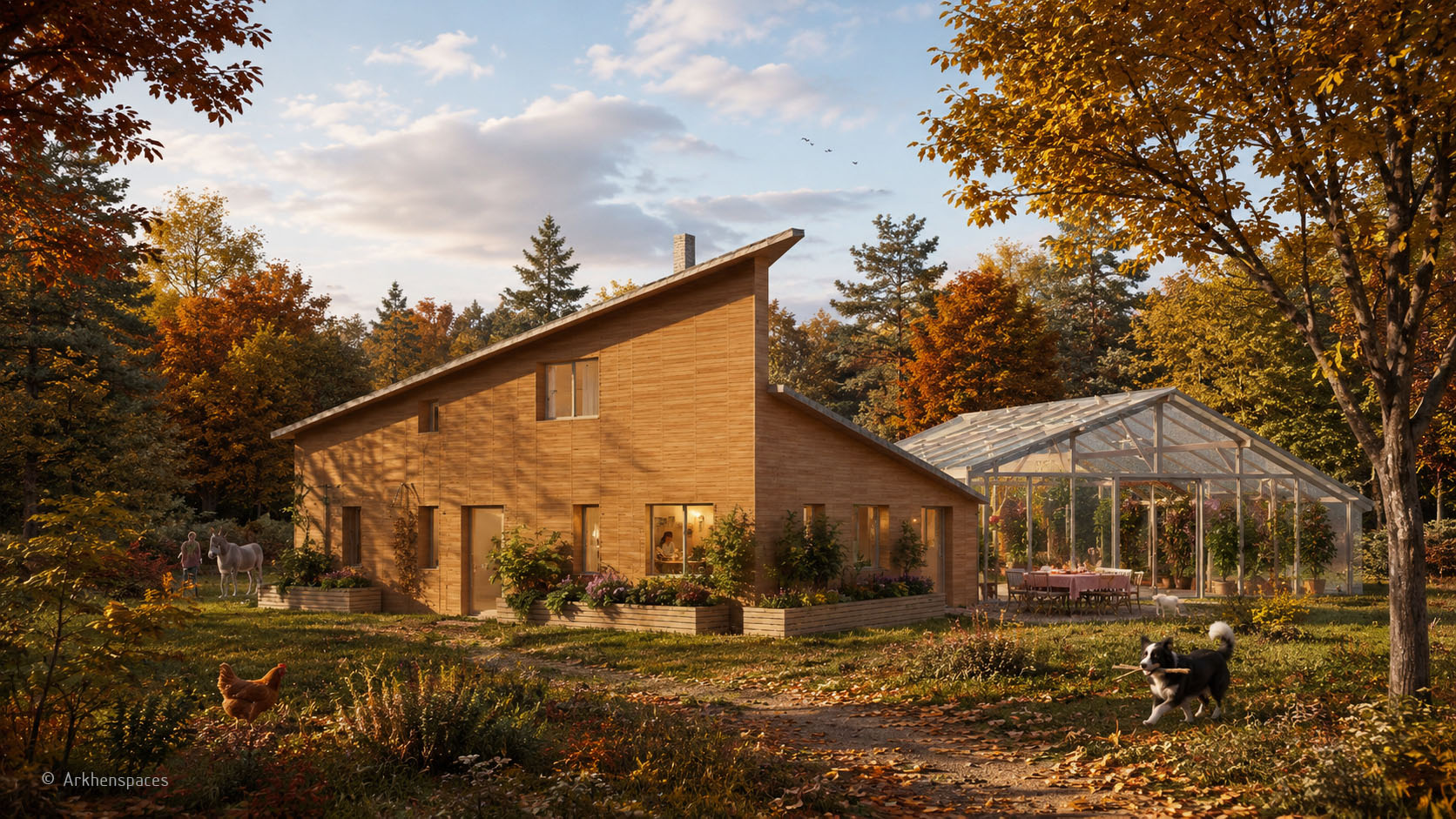
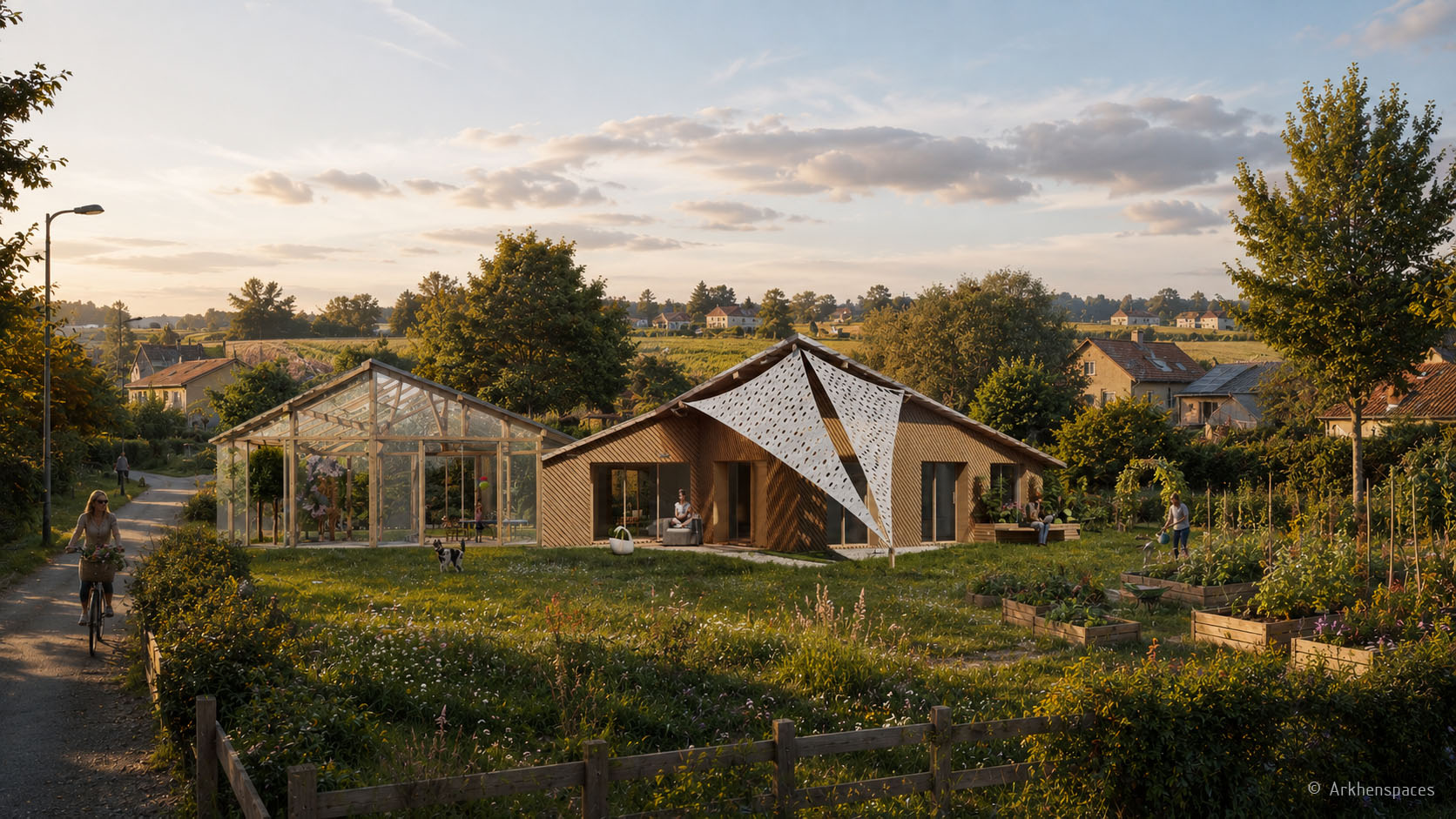
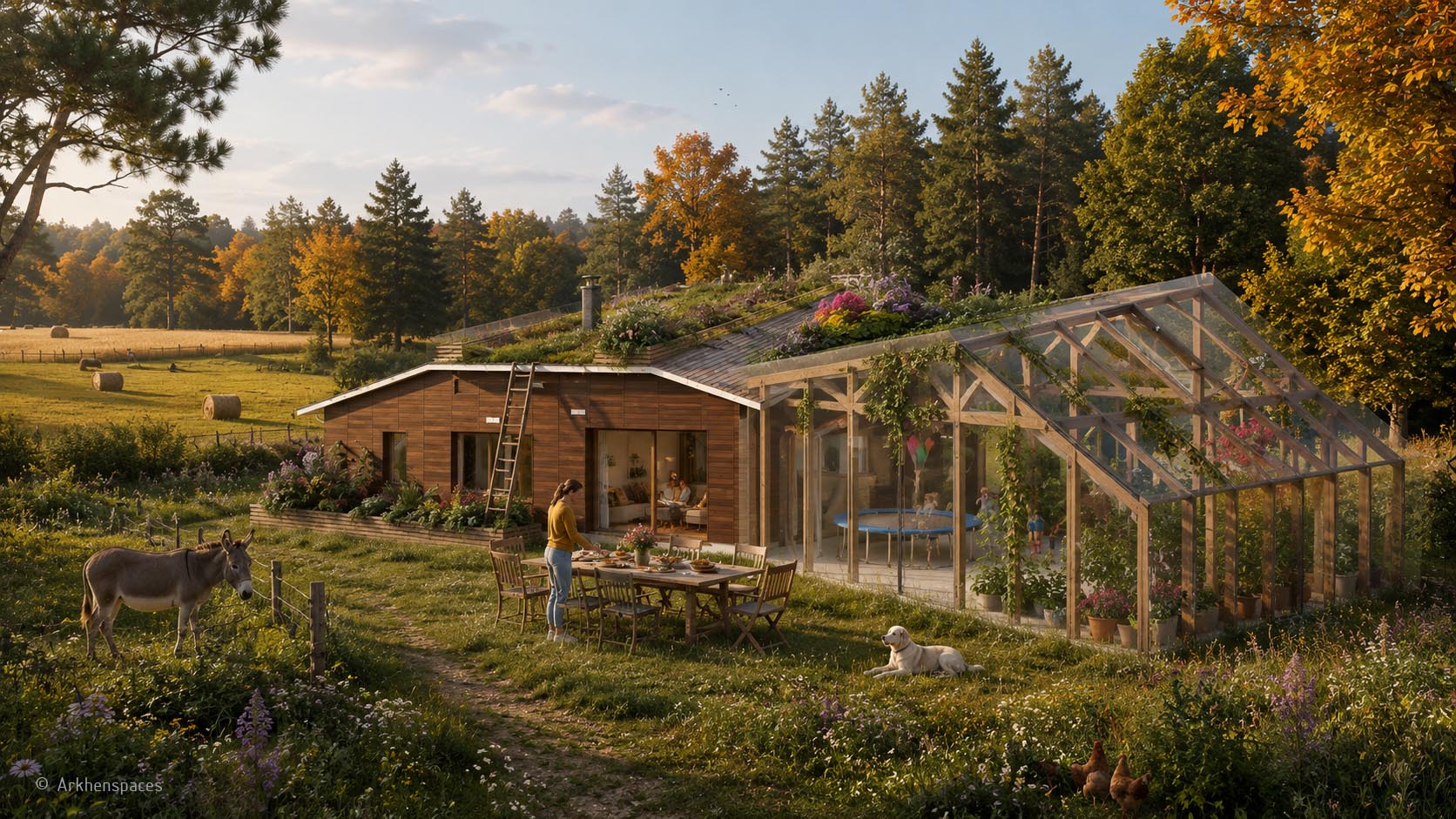
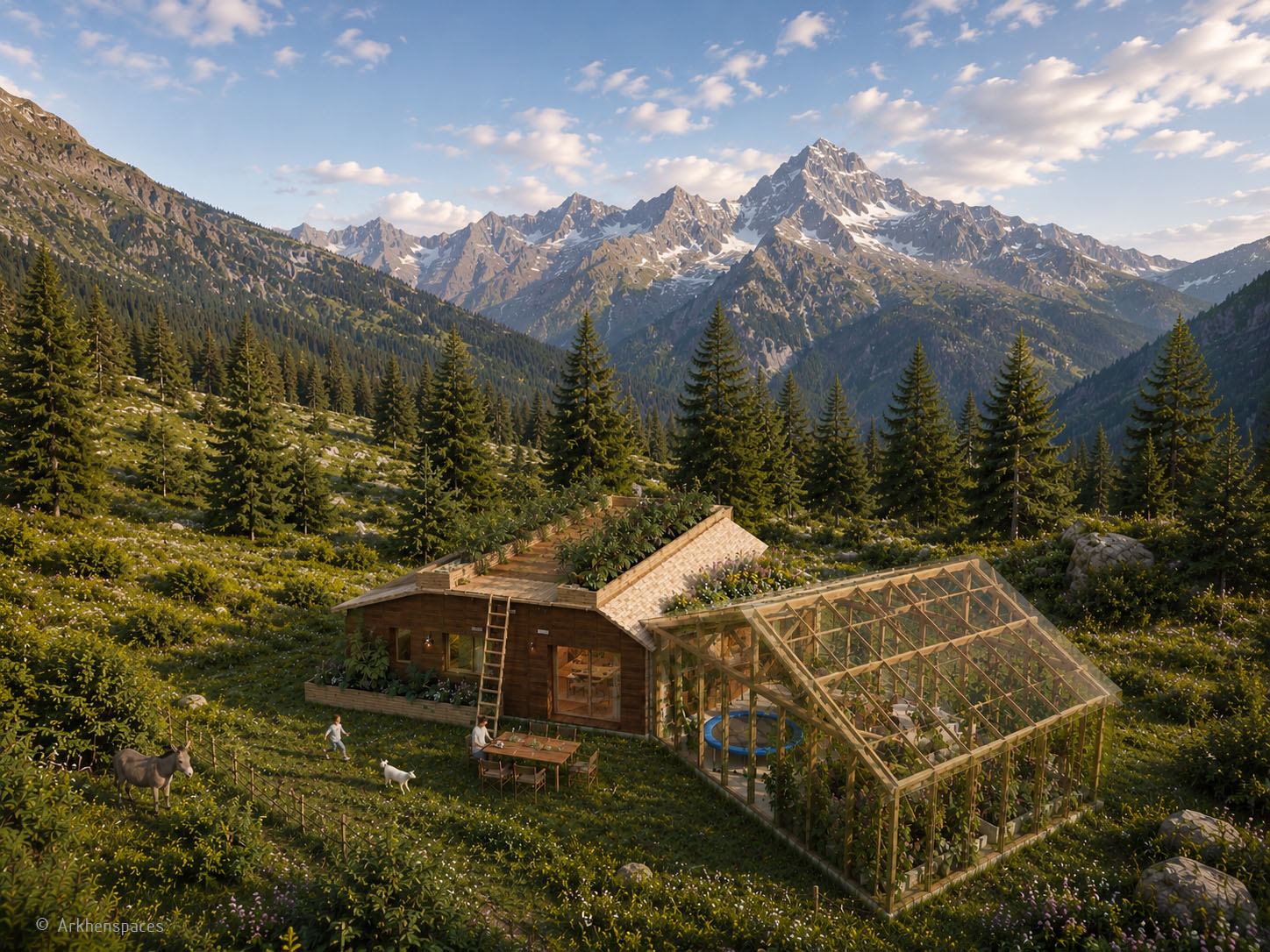
Series of prefabricated ecological timber villas, combinable and customizable, integrating a multifunctional bioclimatic greenhouse and various extension possibilities. Developed in several sizes and configurations, the project explores an adaptable architecture capable of responding to seasons, uses and transformations in family life. The bioclimatic greenhouse acts as a true spatial multiplier, considerably increasing available surfaces while limiting construction and energy costs.
THE SEASONS VILLAS — An architecture evolving with/in time
The Seasons Villas is a family of ecological houses imagined for rural landscapes and open territories. More than a simple series of prefabricated houses, the project explores a simple question: why should a house remain identical throughout the year or throughout an entire life?
The villas are conceived as architectures capable of transforming according to different temporalities: a few hours, several months or many years. They adapt to everyday uses, seasonal changes and the evolution of family life.
A house changing with the seasons
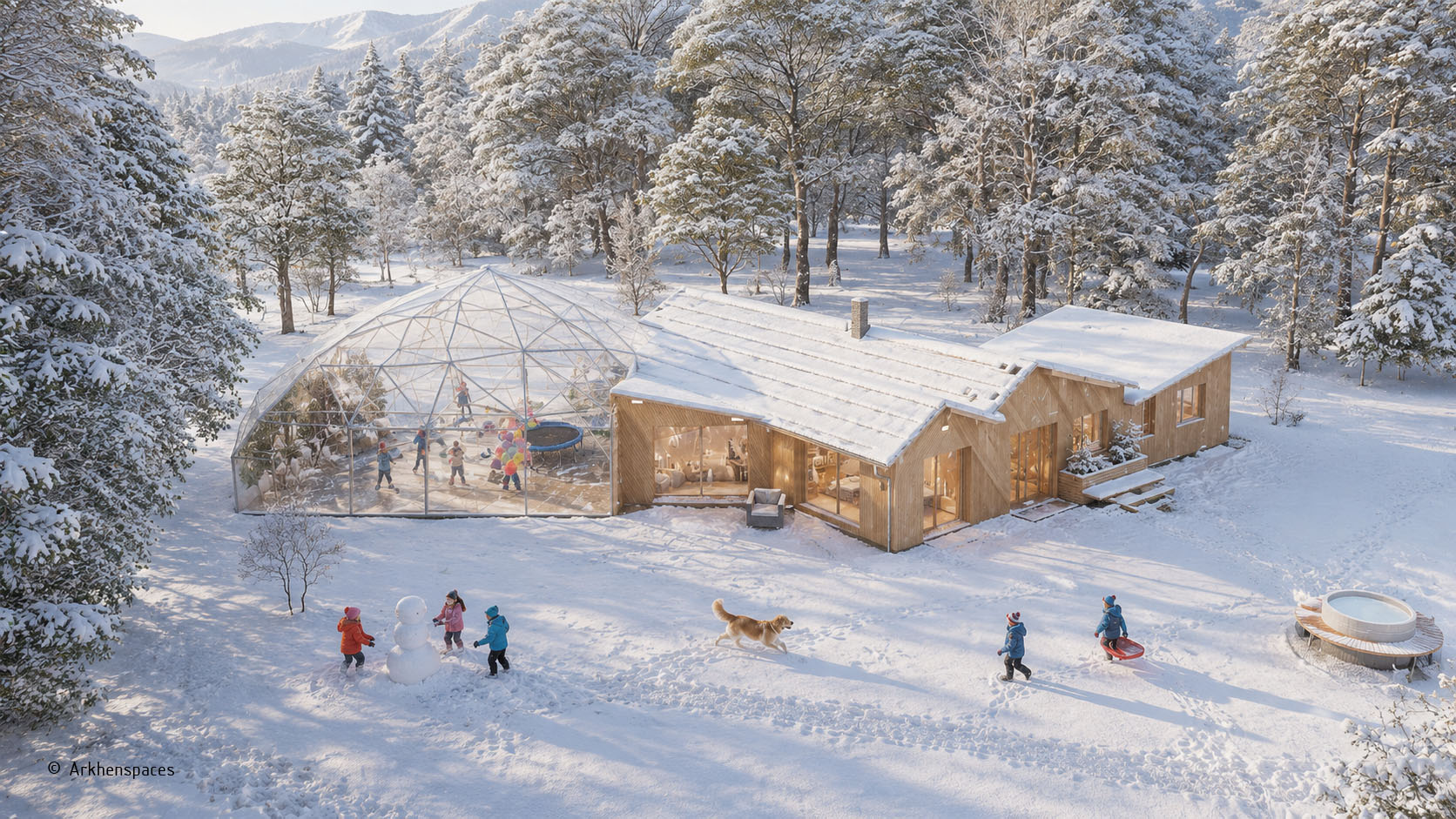
At the heart of the project lies a large bioclimatic greenhouse, an unheated multifunctional space considerably extending the living areas. This space acts as an intermediate room between interior and exterior.
In spring or autumn, the greenhouse becomes a natural extension of the house: reception area, indoor garden, vegetable garden, workshop, children’s play area, sports space, cultivation area or free space to invent. In winter, it contributes to the passive heating of the house, while in summer it participates in cooling through shading systems and natural ventilation.
An evolutive architecture
The villas are available in XS, S, M and M2 versions in order to respond to a wide range of needs. Additional elements can easily be added: master suite, garage, storage spaces or new bedrooms.
The project considers the house as a structure capable of evolving with its inhabitants rather than as a definitively fixed form. The arrival of a child, children leaving home, new activities or changing needs can progressively transform the spatial organization.
Living according to multiple temporalities
Interior layouts can evolve over very short periods of time. A room may change use within a few hours, a bedroom becoming a playroom, office or child’s bedroom. Some spaces are intentionally left open to appropriation in order to accommodate still unknown future uses.
Rather than designing a perfect and fixed house, the project seeks to create a living framework capable of accompanying the permanent transformations of everyday life.
A house attentive to its environment
The morphology of the villas allows adaptation to a wide variety of sites. Orientation, roof slopes, greenhouse inclination and implantation can all be adjusted in order to optimize solar exposure, views and the specific characteristics of each location.
The living room is conceived as a multi-oriented space benefiting from several simultaneous exposures — double, triple or almost quadruple orientation — offering evolving daylight throughout the day and an expanded relationship with the landscape. Connected to the kitchen, it extends through several terraces associated with different orientations, allowing inhabitants to choose outdoor situations adapted to seasons, times of day and uses: morning sunlight, summer shade, autumn light or more protected and sunny areas at the end of the day. The house therefore does not propose a single exterior space but a diversity of micro-situations capable of accompanying rhythms of life and climatic variations. The architecture seeks less to rest on the site than to establish a dialogue with it.
An active house through time
The main innovation of The Seasons Villas lies in another way of conceiving the house: no longer as a fixed and passive object, but as an architecture capable of transforming according to multiple temporalities.
At the scale of short time — a few hours or a few days — spaces change use and are reconfigured according to everyday needs. Certain areas successively become workspace, reception area, play area or simple extension of domestic life. Some parts of the house are intentionally designed to remain open to appropriation and future evolutions.
At the scale of seasons, the house transforms itself in dialogue with climatic conditions. The bioclimatic greenhouse becomes an intermediate space with high spatial efficiency: a relatively inexpensive area capable of considerably increasing available surfaces and multiplying possible uses. Complementary systems such as shading fabrics also participate in climatic adaptation by modulating light, heat and comfort according to periods of the year.
At the scale of long time — several years or decades — the house accompanies transformations in family life: arrival or departure of children, evolution of needs, addition of a master suite or reorganization of spaces.
This approach also possesses an ecological and economic dimension. In winter, when the greenhouse becomes more of a buffer space than a daily inhabited area, the heated house retains a smaller and more energy-efficient surface. Conversely, in spring and autumn, living spaces expand considerably without requiring an equivalent increase in construction costs or energy consumption.
The Seasons Villas therefore seeks to produce a less static and more living architecture: a house whose uses, perceived dimensions and modes of inhabiting evolve through hours, seasons and lives.
Advantages
- Largely prefabricated timber construction
- Low energy consumption
- Multifunctional bioclimatic greenhouse (+64 to +72 m²)
- Seasonally adaptive house
- Adaptation to everyday uses
- Possibility of future extensions
- Different sizes: XS, S, M, M2
- Adaptation to different sites and orientations
- Innovative spatial typologies
- Transformable rooms and spaces
- Customization options: roof, cladding, vegetation, envelope
- Possibility of grouping several villas with shared spaces
- Passive climatic architecture
- Strong architectural identity
Architecture is not seen, it is lived.