

YAWL – system of timber buildings
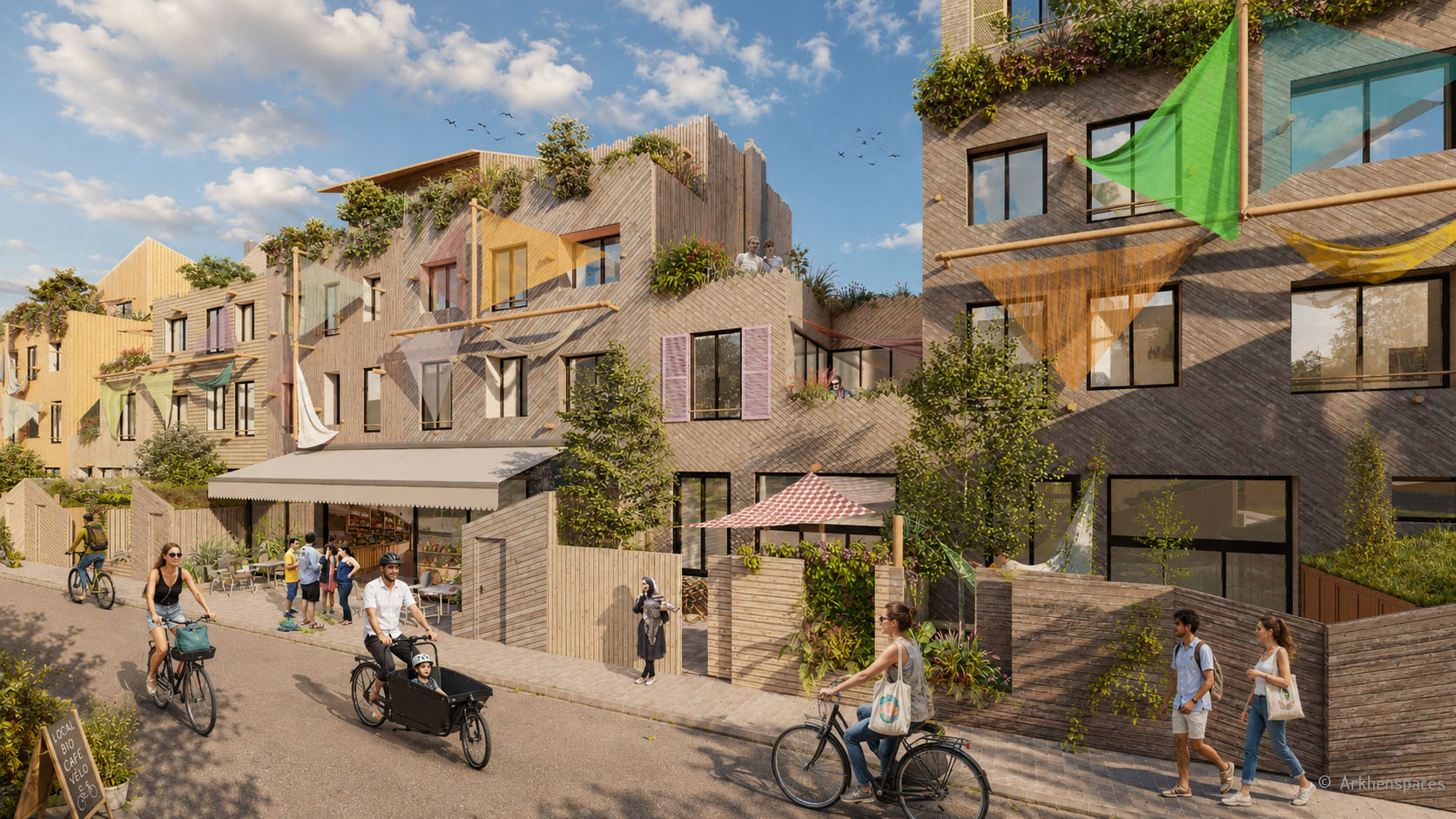
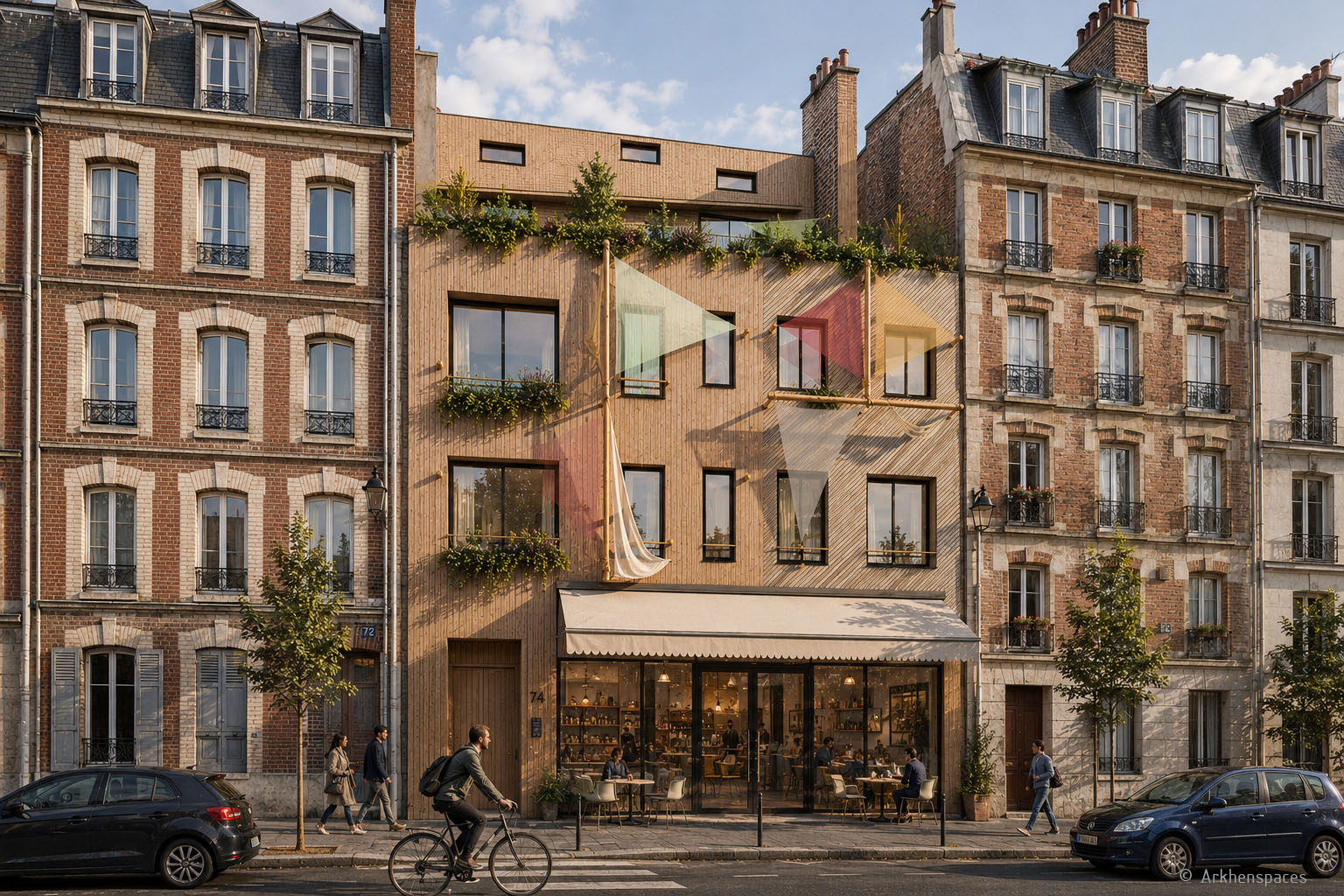
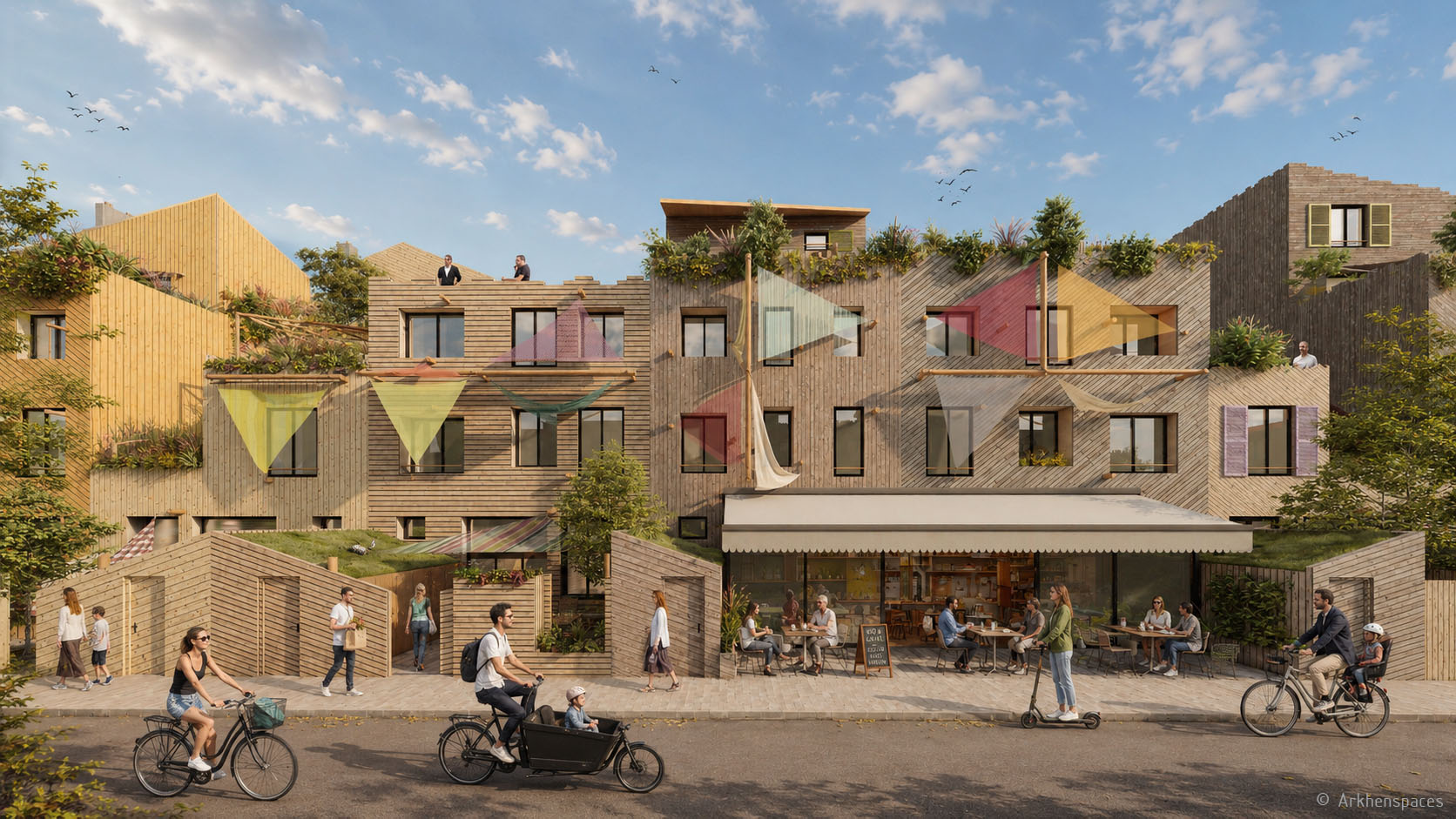
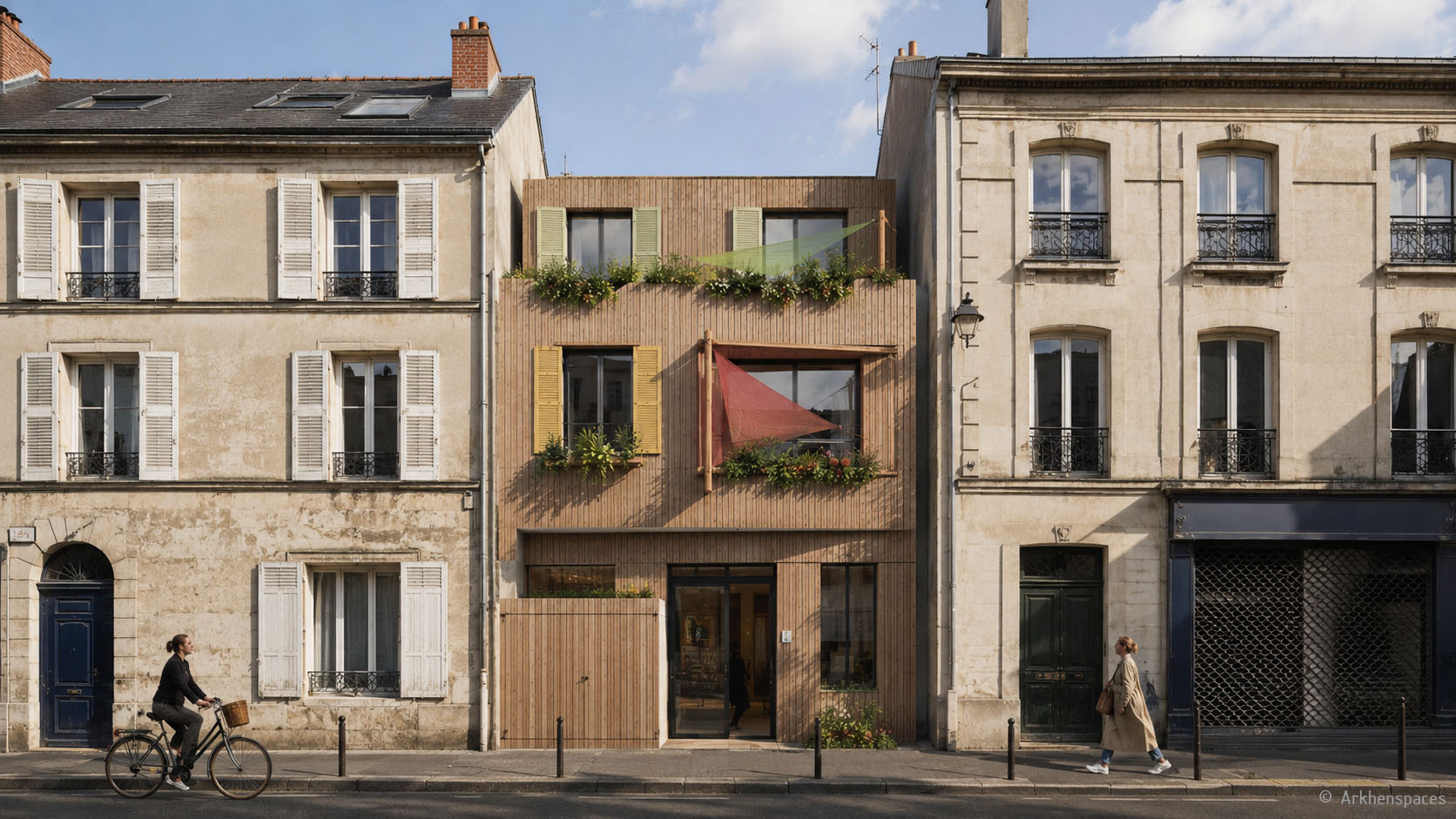
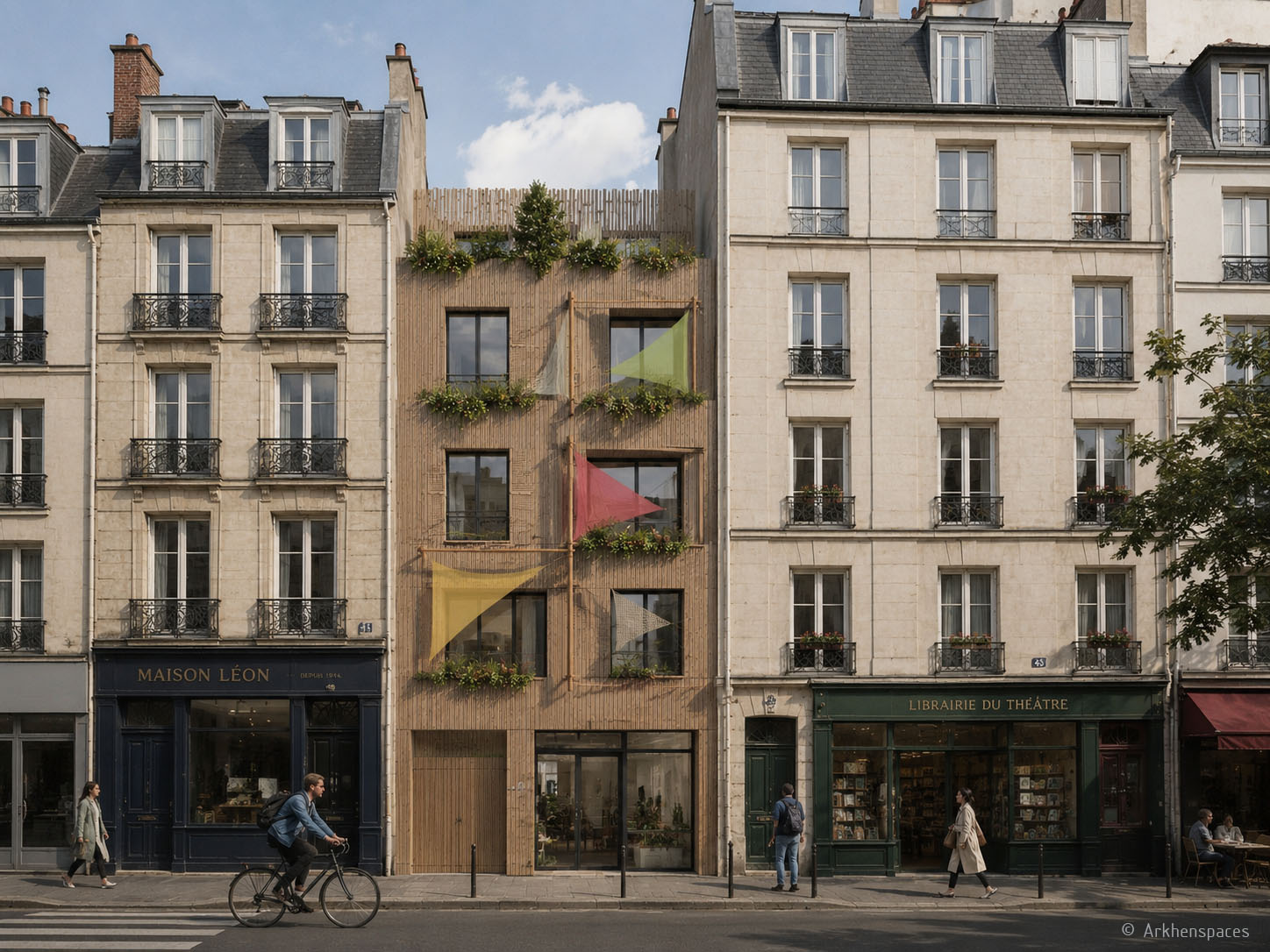
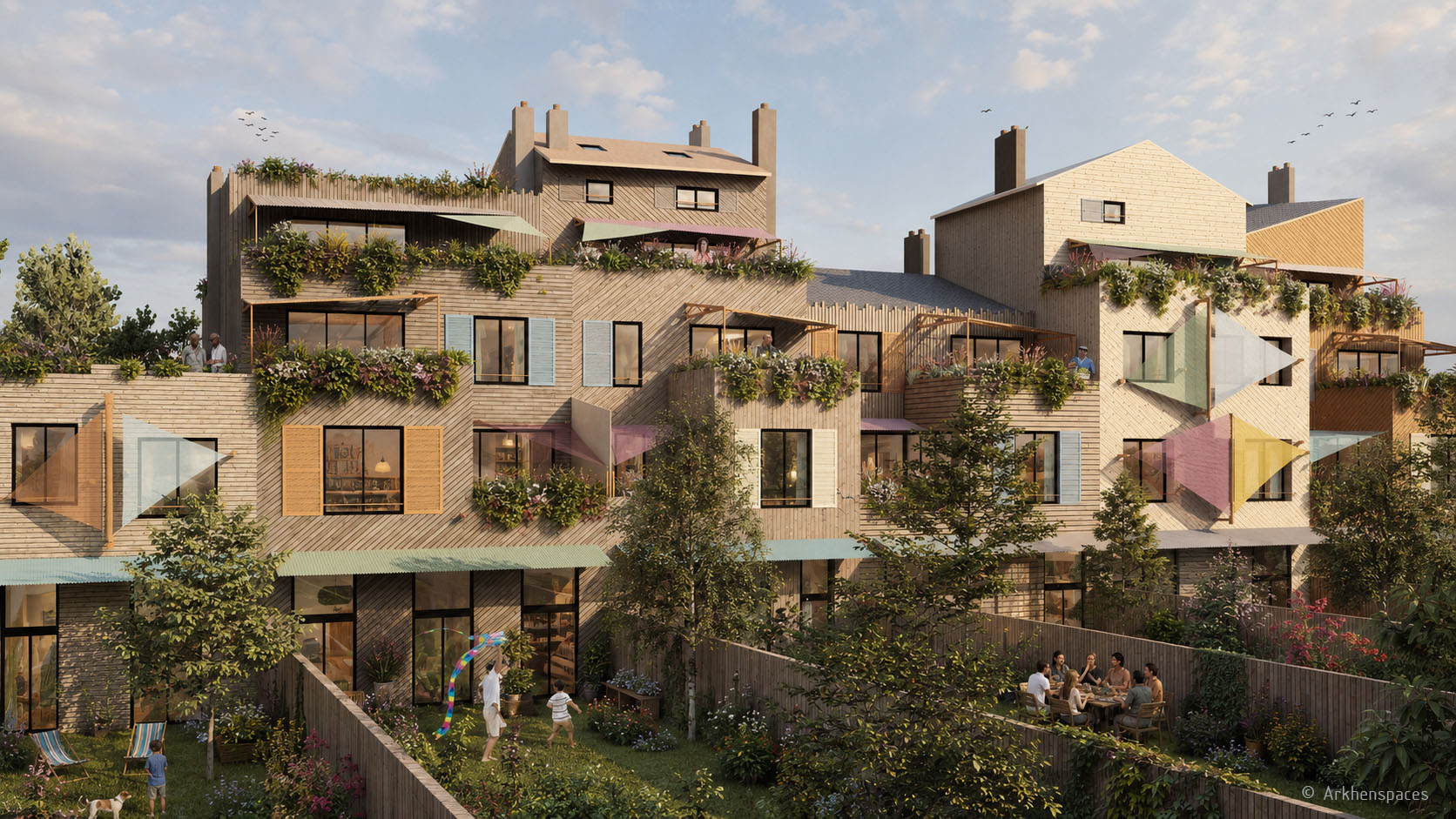
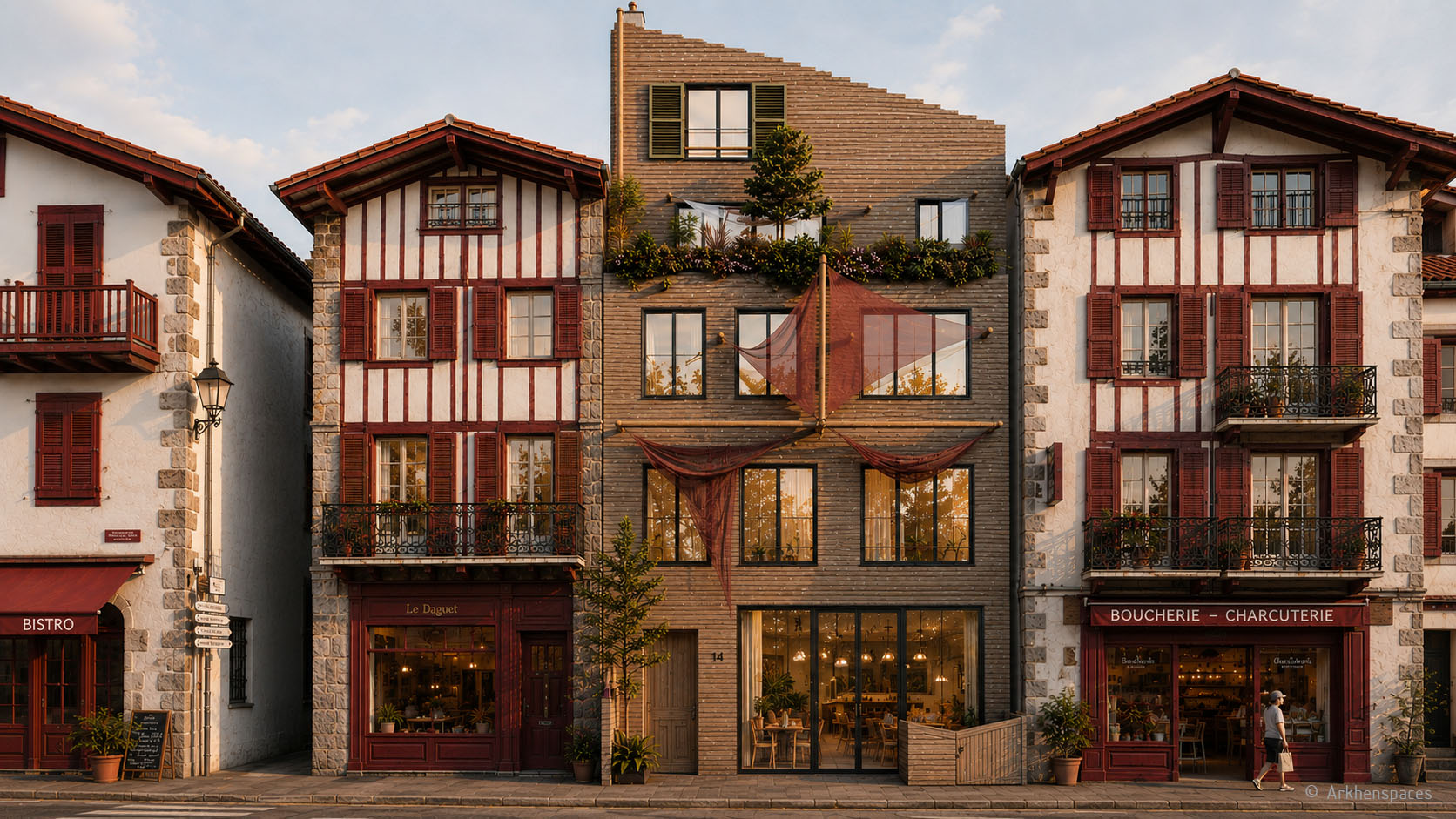
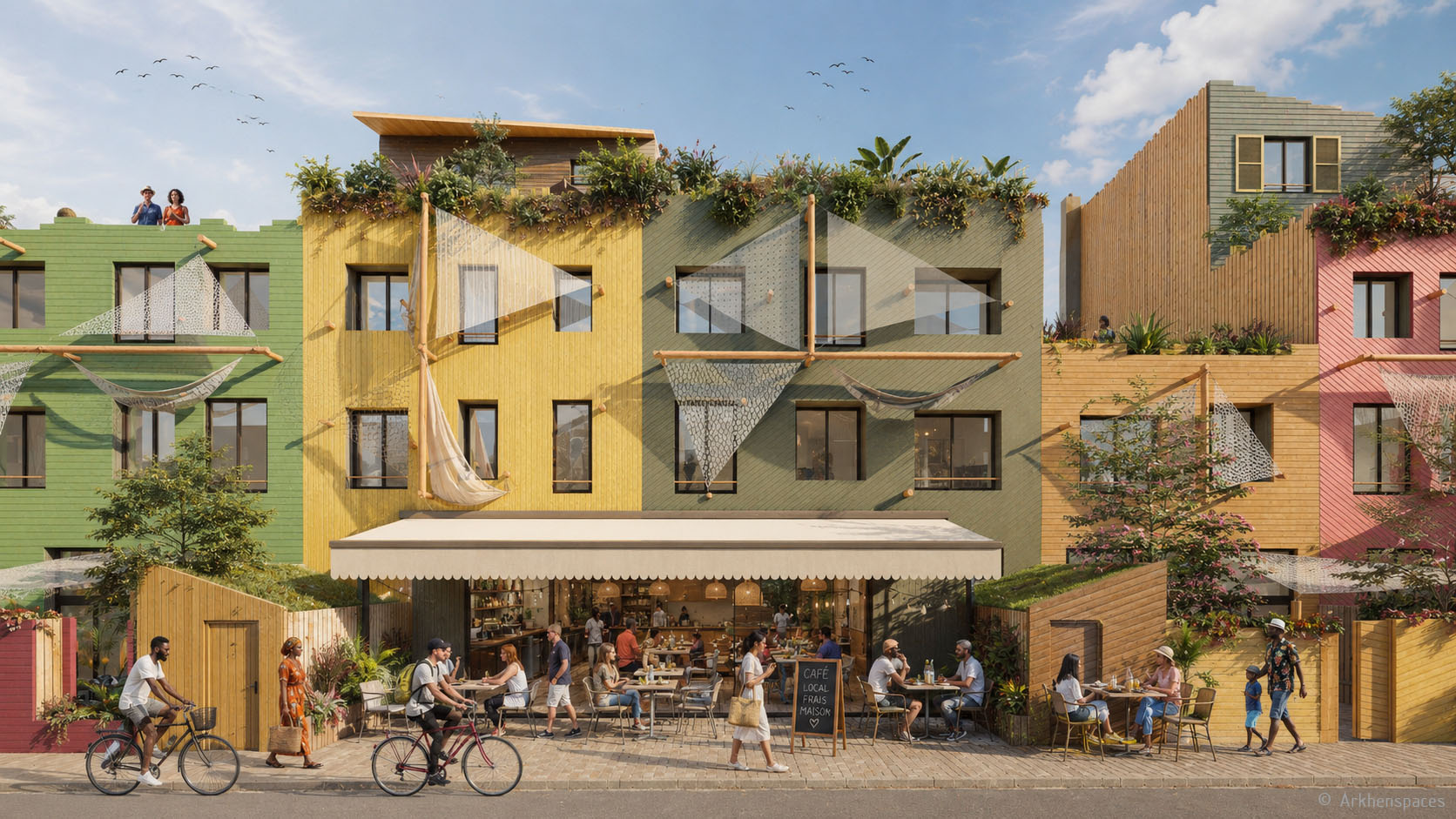
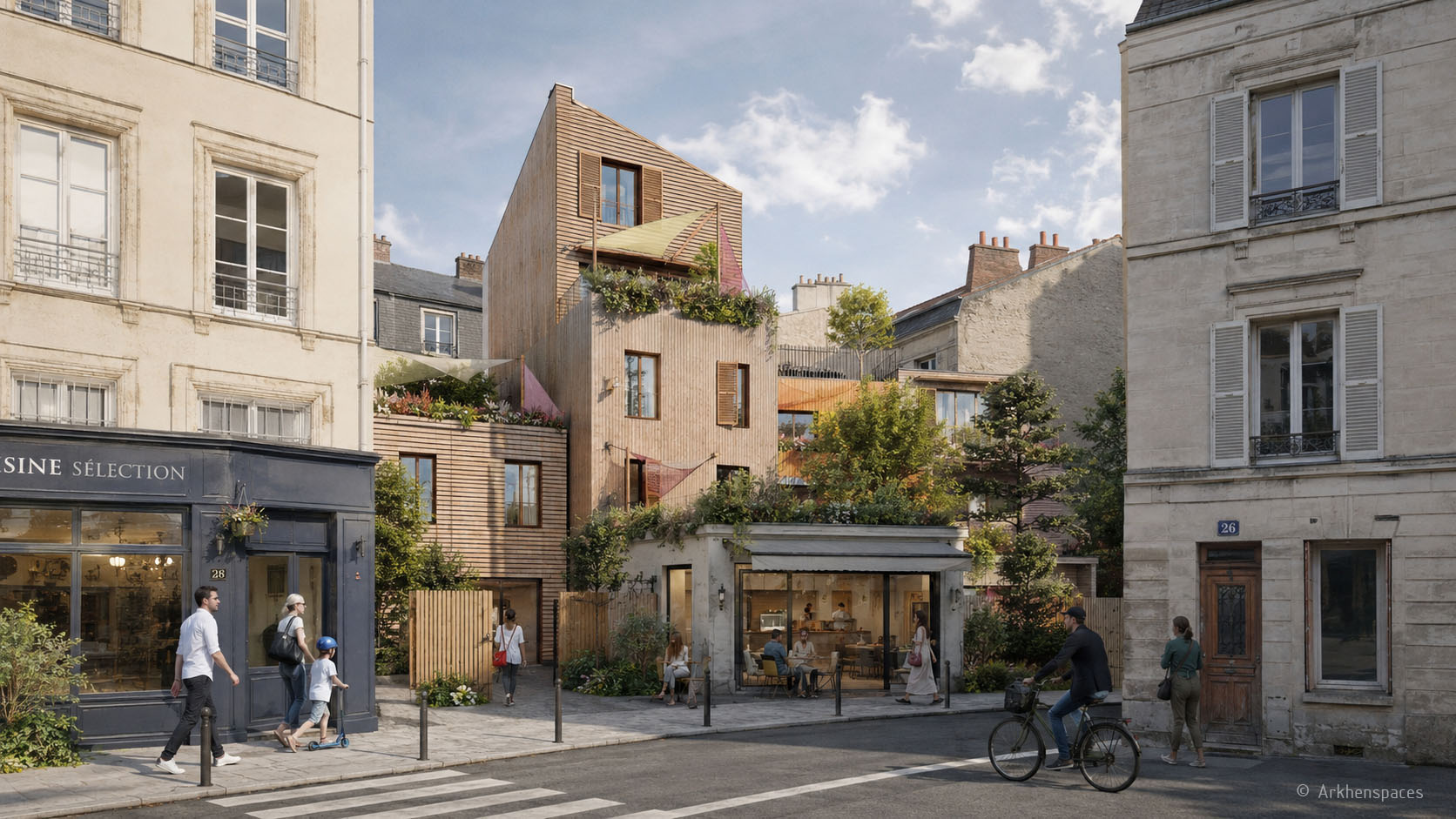
Program Range of small prefabricated ecological timber buildings of various sizes, designed to be combined / from 2 to 8 housing units per building with workshop, shop or activity space on the ground floor
Surface 220 to 820 m² per building
Location _
Year 2025
Owner Arkhenspaces initiative
Team Eric Cassar, Ibrahima Baldé
Technical Partner Maison Maugy (feasibility study, cost estimation and timber prefabrication)
General principles
Family of small prefabricated timber buildings without elevators, designed to occupy urban infill sites or be assembled into larger residential ensembles and complete neighborhoods. Developed in multiple sizes, heights and configurations, these buildings combine prefabrication, construction frugality, climatic adaptation and architectural diversity in order to propose an ecological, economical and evolutive alternative to contemporary collective housing.
YAWL — Adaptable and combinable timber buildings
Yawl is a family of small prefabricated timber buildings imagined as an ecological, economical and sensitive alternative to traditional collective housing.
Halfway between the house and the apartment building, Yawl explores a new scale of density: a soft density capable of intensifying the city without losing its human qualities, its relationship to the street or its architectural diversity.
Initially conceived to respond to the housing shortage in Mayotte, the project progressively evolved in order to adapt to highly varied contexts: historic centers, urban infill sites, transforming territories or new residential neighborhoods. Its modular system allows both the installation of a single isolated building and the composition of ensembles containing several dozen units.
The buildings are developed in S, M, L and XL versions, varying in width, height and accommodation capacity. A single unit can contain from two to eight dwellings, while the assembly of several buildings can create a true hybrid urban structure combining housing, workshops, shops, cafés or local activities.
Soft density
The substantial depth of the buildings optimizes usable surfaces while reducing façade lengths, simultaneously improving energy performance and economic efficiency. All apartments are dual-aspect, include outdoor spaces and benefit from natural ventilation improving thermal comfort.
An architecture adapting to the seasons
The name Yawl comes from a small two-masted sailboat. Like a sail unfolding according to wind and seasons, the project integrates textile devices, canopies and movable protections transforming the appearance of the buildings while contributing to their climatic regulation. The façades become living climatic interfaces capable of evolving between summer and winter, shadow and light, openness and protection.
Assembling urban bricks
Rather than producing a repetitive object, Yawl seeks to create a form of inhabited landscape. Variations in height, width, colors, cladding, sails, roofs or vegetation generate a multitude of configurations and a diversity close to vernacular urban fabrics progressively built over time.
A single unit can complete an urban infill site while an assembly of several buildings can progressively constitute an entire neighborhood. The objective is not to produce identical buildings but a family of architectures capable of composing a richer and more vibrant city.
The ground floor as a living space
Particular attention is given to the relationship with the street and to the treatment of the ground floor. A shop, artist studio, professional activity, café or accessible dwelling can be installed there in order to activate public spaces and encourage daily interactions.
Living differently
The dwellings integrate reversible spaces and devices capable of accompanying evolving lifestyles: double rooms, alcoves, variable ceiling heights, evolutive spaces or areas that can be appropriated over time.
With Yawl, Arkhenspaces continues its research into an ecological architecture attentive both to inherited knowledge and future possibilities. Although the studio has long been interested in digital transformations, connected buildings and new uses induced by technologies, ecological architecture cannot be conceived solely as an accumulation of technical devices. It must also look toward the past and learn from forms of intelligence already present within vernacular architectures.
With Yawl, this research deliberately shifts toward a more frugal and low-tech approach: natural ventilation, passive climatic adaptation, reversible spaces, inhabited thickness, shading, transformation of uses and reduction of energy needs. A way of exploring another modernity, where innovation does not necessarily consist in adding more technology but sometimes in doing less.
Advantages
- Timber prefabrication
- Low carbon footprint
- Urban infill densification
- Soft density between house and apartment building
- Dual-aspect dwellings with outdoor spaces
- Passive climatic architecture
- Reduced construction costs
- Great architectural and typological diversity
- Evolutive assembly from building to neighborhood scale
- Mixed uses: housing, shops, workshops, liberal professions
- Architecture adapting to the seasons
- Strong non-standardized architectural identity
Architecture makes sense both in and out of context.